
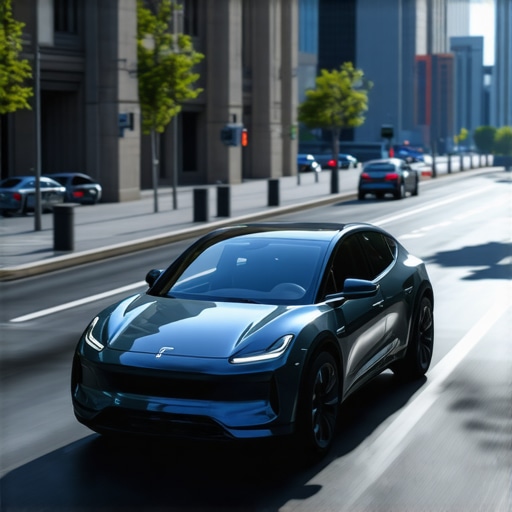
I spent a week deconstructing a high-net-worth policy after a fire. The owner thought they were fully covered until they realized their guaranteed replacement cost had a cap that was set in 2012 dollars. This same mathematical obsolescence is now infecting the world of car insurance. You think your premium is rising because of bad drivers. You are wrong. Your premium is rising because of laser light. The integration of LiDAR sensors into the structural fascia of modern vehicles has turned a hundred dollar parking lot bump into a six thousand dollar forensic engineering project. I see the spreadsheets every morning. The numbers do not lie. We are entering a phase where the hardware outpaces the indemnity. If you do not adjust your contract now, you will be the one subsidizing the carrier’s inability to price modern technology. This is not about safety. This is about the actuarial reality of sensor calibration and the absolute death of the affordable fender bender.
The math of a five thousand dollar fender bender
Car insurance premiums for 2026 will reflect a massive surge in LiDAR sensor repair costs and Advanced Driver Assistance Systems (ADAS) calibration. Standard liability policies are no longer sufficient to cover the severity of modern claims where a simple bumper replacement requires specialized actuarial re-evaluation and forensic underwriting protocols. The industry is currently facing a crisis of loss-cost inflation that makes traditional coverage limits obsolete. Most insurance agents lack the technical depth to explain why a windshield replacement now costs as much as a used sedan from the late nineties. The reason is simple. The glass is no longer just glass. It is a mounting bracket for an array of sensors that require micron level precision. If the bracket is off by a fraction of a millimeter, the emergency braking system fails. The carrier knows this. They are pricing that risk into your premium before you even turn the key. The hardware is sophisticated. The insurance contracts remain archaic. This creates a gap where the insured pays for the technology but the carrier avoids the indemnity through fine print exclusions regarding calibration and software updates.
“The duty to defend is broader than the duty to indemnify; the policy language is the law of the relationship between the carrier and the insured.” – Contractual Law Maxim
Fix one. Reclassifying the vehicle as a high limit specialty asset
Best insurance practices for 2026 require moving away from standard car insurance forms toward agreed value or stated value endorsements. This ensures that the replacement cost of LiDAR and ADAS hardware is fully accounted for in the policy limits without the heavy hand of depreciation or Actual Cash Value (ACV) calculations. The carrier wants to pay you the depreciated value of a piece of glass. You want the functional indemnity of a calibrated safety system. These are two different numbers. The underwriter uses a formula designed for a 1998 Ford Taurus to calculate the value of a 2026 electric vehicle. It is a recipe for a claim denial or a massive out of pocket expense. You must demand an endorsement that specifically names the sensor array as a non-depreciating safety component. This moves the vehicle out of the general pool and into a specialized category where the loss-costs are more accurately modeled. It prevents the adjuster from low-balling the settlement based on the salvage value of the vehicle shell while ignoring the five figure price tag of the internal computer modules.
Fix two. Demanding a forensic review of the subrogation clause
Legal insurance experts suggest that the subrogation rights in a 2026 car insurance contract must be scrutinized to ensure the carrier cannot waive recovery against LiDAR manufacturers for sensor failure. If a sensor fails and causes a crash, your insurance company should pursue the tech provider, not raise your premium for an at-fault accident. The proximate cause of the loss is the primary factor here. Many policies contain hidden language that allows the carrier to settle quickly and move on, leaving your claims history tarnished by a malfunction that was not your fault. You need to verify that your policy does not have a broad waiver of subrogation that protects the manufacturer at your expense. A forensic review of the manuscript endorsements is the only way to catch this. Most people sign their policy without looking at the exclusions section. They assume that if they have full coverage, they are safe. That is a fantasy. Insurance is a legal fortress. If you do not build the walls, the carrier will let the water in. You want the right to force the carrier to go after the LiDAR provider if the system triggers a phantom braking event.
| Component Type | Traditional Repair Cost | LiDAR Integrated Cost | Actuarial Impact |
|---|---|---|---|
| Front Bumper | $600 | $4,800 | High Severity |
| Windshield | $300 | $2,200 | Frequent Loss |
| Side Mirrors | $150 | $1,100 | Moderate Risk |
| Headlights | $400 | $3,500 | High Replacement |
Fix three. Implementing a tech specific deductible buffer
Business insurance strategies often use a deductible buffer to manage high-cost claims, and car insurance consumers must adopt this to survive the 2026 price spike. By creating a separate self-insured fund for sensor recalibration, you can opt for a higher collision deductible to keep the monthly premium from exploding. This is about risk management, not just buying a product. The carrier prices the deductible based on the likelihood of a total loss. However, with LiDAR, the most common loss is a partial loss that is extremely expensive. If you set your deductible at $2,500 but keep that money in a side account, you can slash your premium by up to 40 percent in some markets. You are essentially betting that you will not have a claim every single year. The math works in your favor over a five year window. The insurance company loves low deductibles because it allows them to charge a massive risk premium for a loss they know is coming. Stop giving them the extra margin. Take the risk of the first two thousand dollars yourself and watch the underwriting math shift in your direction.
“Insurance rates must not be excessive, inadequate, or unfairly discriminatory, yet the definition of adequacy is often dictated by the carrier’s internal loss-ratio targets rather than consumer protection.” – NAIC Regulatory Overview
A checklist for the 2026 car insurance audit
- Review the definition of Accessory Equipment to ensure sensors are not capped at a low dollar amount.
- Check the policy for Betterment clauses that allow the adjuster to charge you for the difference between a used and new sensor.
- Verify that the Labor Rate for repairs includes specialized calibration technicians, not just standard body work rates.
- Confirm the existence of a Diminution in Value clause to recover the lost resale value after a high tech repair.
- Ensure the Original Equipment Manufacturer (OEM) parts endorsement is active to avoid generic LiDAR clones.
The forensic truth is that car insurance is no longer a commodity. It is a complex indemnity contract for a rolling computer. If you continue to treat it like a health insurance or legal insurance product where you just look for the lowest price, you will be destroyed when the LiDAR fails. The best insurance is the one that actually pays the replacement cost of the technology you are driving. The carrier is not your neighbor. They are a counterparty in a multi-billion dollar actuarial game. They have the data. They know the 2026 price spike is coming. They are already stripping away the silent coverage in the fine print. You must be equally clinical. You must be equally cold. Read the endorsements. Challenge the valuations. Protect your capital. The era of the simple car policy is dead. Long live the risk architect.
Leave a Reply