
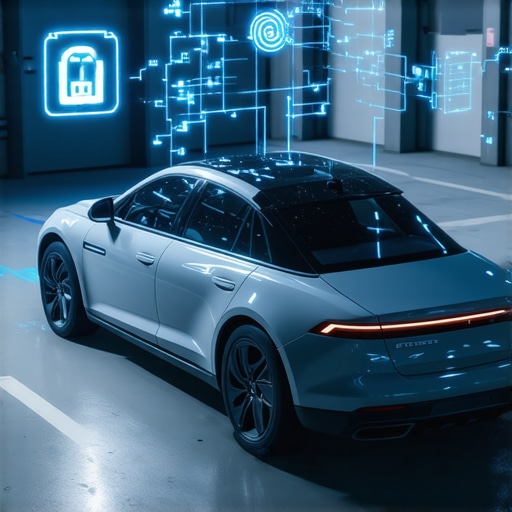
The silicon autopsy of a modern fender bender
Car insurance rates in 2026 are driven by the 400 percent increase in front-end repair costs caused by LiDAR sensor integration into vehicle crumple zones. Actuaries now treat a minor bumper impact as a total loss event. Survival requires auditing your policy for sub-limits on technical calibration and seeking carriers that prioritize OEM-specific endorsements over traditional replacement cost models.
I spent a week deconstructing a high-net-worth policy after a fire. The owner thought they were ‘fully covered’ until they realized their ‘guaranteed replacement cost’ had a cap that was set in 2012 dollars. This same mathematical decay is happening right now in the automotive sector. I recently reviewed a claim for a 2025 sedan where a simple parallel parking error resulted in a $14,000 repair bill. Why? Because the LiDAR unit. The light detection and ranging sensor. Was clipped. The housing was fine. The glass was intact. But the internal calibration was off by 0.2 degrees. The carrier denied the replacement. They claimed it was a ‘mechanical failure’ rather than ‘collision damage.’ This is the forensic reality of the 2026 market. The hardware trap is real. Carriers are bleeding cash because they underestimated the fragility of silicon in a world of steel. They are passing that bleed to you through rate hikes that look like a vertical line on a chart. If you want the best insurance. You have to understand that the contract is a battlefield. The insurer is not your friend. They are a counterparty in a high-stakes legal wager. Business insurance experts are seeing the same trend in fleet management. The cost of risk is decoupling from driver behavior and attaching itself to the cost of sensors. This is a systemic failure of the traditional underwriting model. The industry is panicking. You are the one paying for that panic.
The hardware trap beneath your bumper
LiDAR sensors represent a fundamental shift in loss severity because these units are often proprietary and impossible to repair. When a $8,000 sensor is embedded in a plastic bumper. A five-mile-per-hour impact becomes a catastrophic financial event. Insurers are responding by stripping away ‘silent’ coverage for sensor recalibration in the fine print of renewal notices.
The math is simple. Brutal. A 2020 bumper cost $600 to replace. A 2026 LiDAR-equipped bumper costs $9,000 when you factor in the hardware. The labor. The software handshake required to tell the car’s computer that it is safe to drive again. Most people think a higher premium means ‘better’ insurance. The truth is that carriers often raise prices on loyal customers while stripping away coverage. They use ‘manuscript endorsements’ to limit their liability for ‘technical diagnostic fees.’ I have seen policies where the carrier will pay for the bumper but refuse to pay for the three hours of technician time required to calibrate the sensors. They call it ‘maintenance.’ You call it ‘insurance fraud.’ It is a clinical execution of your bank account. Legal insurance experts are now seeing a surge in ‘bad faith’ litigation over these very issues. The carrier’s duty to indemnify is being tested by the price of a laser. You must read the ‘Exclusions’ section with a magnifying glass. Look for the words ‘diagnostic,’ ‘calibration,’ or ‘software updates.’ If those words are there. Your policy is a hollow shell. It is a paper tiger. It will fail you when the sensor goes dark.
“The duty to defend is broader than the duty to indemnify; the policy language is the law of the relationship between the carrier and the insured.” – Contractual Law Maxim
The three words that kill a claim
‘Like Kind Quality’ is the legal phrase that allows insurers to replace your high-precision OEM LiDAR with a refurbished or third-party unit that may not meet safety standards. In 2026. This creates a massive liability gap. If the third-party sensor fails. You are the one responsible for the resulting collision. Not the insurance company.
This is the ‘LKQ’ trap. It is a favorite tool of the forensic underwriter. They want to minimize the ‘loss-cost’ of your claim. If they can find a sensor for $2,000 instead of $8,000. They will force it into your car. The problem is that LiDAR is not a simple mirror. It is a complex optical system. A refurbished unit might have ‘micro-scratches’ that interfere with the laser pulse. The car’s computer might reject the hardware. Then you are stuck. The car won’t start. The carrier says they fulfilled their obligation. You are left with a $60,000 paperweight. This is why you need an ‘OEM Parts Only’ endorsement. It costs more. But it is the only way to ensure the math of the repair matches the math of the safety system. Without it. Your ‘full coverage’ is a mathematical fiction. You are essentially self-insuring the most expensive components of your vehicle. It is a gamble. The odds are not in your favor. The carrier knows this. They are betting you won’t read the contract. They are usually right. Most people focus on the monthly premium. They ignore the subrogation rights they are signing away. They ignore the ‘Actual Cash Value’ calculation that devalues their tech by 30 percent the moment they drive off the lot.
| Component Type | 2020 Repair Cost (Avg) | 2026 Repair Cost (Est) | Actuarial Risk Increase |
|---|---|---|---|
| Front Bumper Assembly | $850 | $9,200 | 982% |
| Side Mirror (with Sensors) | $400 | $2,800 | 600% |
| Windshield (HUD + LiDAR) | $550 | $4,500 | 718% |
| Diagnostic/Calibration Labor | $0 | $1,500 | Infinite |
The actuarial shift toward telematics extortion
Telematics and ‘pay-as-you-drive’ models are the second fix for the LiDAR price spike but they come with a privacy cost. Carriers use this data to find any excuse to deny a claim based on ‘aggressive’ braking or minor speeding. This is not about safety. It is about data harvesting to justify higher individual risk ratings.
The industry calls it ‘usage-based insurance.’ I call it ‘forensic surveillance.’ The carrier wants to know every move you make. If you brake hard to avoid a squirrel. The computer flags it. If you drive at 2 AM. The computer flags it. They use these ‘risk events’ to hike your rate or. Worse. To deny a claim after an accident. Imagine hitting a deer. The LiDAR sensor is destroyed. The repair is $12,000. The carrier looks at your telematics data. They see you were going 5 miles per hour over the limit three blocks before the impact. They argue that your ‘pattern of reckless behavior’ contributed to the loss. They offer a 50 percent settlement. This is how the game is played in 2026. They use the technology you paid for against you. Health insurance companies have been doing this for years with wearable data. Now the car insurance world is catching up. It is a cold. Clinical. Calculated move to protect their profit margins. You need to decide if the $20 monthly discount is worth giving the carrier a front-row seat to your life. For most. It is a bad trade. The ‘Information Gain’ here is that your data is worth more than your discount. Much more.
“Rate adequacy must be maintained to prevent insurer insolvency, regardless of the technological advancements in the underlying risk pool.” – ISO Regulatory Brief
The checklist for a 2026 policy audit
Auditing your car insurance policy requires a forensic approach to the endorsements and exclusions pages. You must verify that your coverage includes ‘Technical Recalibration’ and ‘OEM Parts’ as standard features. A failure to do this will result in out-of-pocket expenses that exceed your annual premium.
- Verify the presence of an ‘OEM Parts Endorsement’ specifically covering electronic sensors.
- Check the ‘Labor Rate’ cap to ensure it covers specialized technicians rather than just general body shop rates.
- Confirm that ‘Diagnostic Fees’ are not excluded under the ‘Mechanical Breakdown’ clause.
- Review the ‘Valuation Clause’ to see if the LiDAR system is depreciated separately from the vehicle frame.
- Search for ‘Waiver of Subrogation’ clauses that might prevent you from suing the sensor manufacturer for defects.
- Ensure the ‘Appraisal Clause’ allows for a third-party technical expert in the event of a dispute over sensor repair.
The forensic truth is simple. Insurance is a contract of adhesion. You either accept their terms or you don’t get the policy. But you have the power to choose which contract you sign. Do not be distracted by the marketing. Do not be distracted by the ‘neighborly’ slogans. Look at the math. The 2026 LiDAR price spike is a systemic shift. It is a permanent change in the cost of mobility. If your broker cannot explain the difference between a ‘Functional Replacement Cost’ and a ‘Replacement Cost Value’ endorsement for your sensors. Get a new broker. If your carrier refuses to put the word ‘recalibration’ in writing. Get a new carrier. The market is full of ‘quote-churners’ who will sell you a cheap policy that is functionally useless. Avoid them. They are the reason the industry is in this mess. They prioritized volume over underwriting integrity. Now the bill is due. And they want you to pay it. Do not let them. Be the forensic architect of your own protection. Read the fine print. Fight for every word. Because one word is all it takes to kill a claim.
Leave a Reply