
I spent a week deconstructing a high-net-worth policy after a fire. The owner thought they were fully covered until they realized their guaranteed replacement cost had a cap that was set in 2012 dollars. They lost four hundred thousand dollars because they did not account for the inflation of construction materials or the shifting definitions of indemnity. This same disconnect is now arriving in the automotive sector. By 2026, the car insurance industry will transition from historical risk assessment to real-time surveillance. Your vehicle is no longer a machine, it is a mobile data laboratory that transmits every friction event and lateral acceleration to a server in the cloud.
The surveillance state inside your wheel well
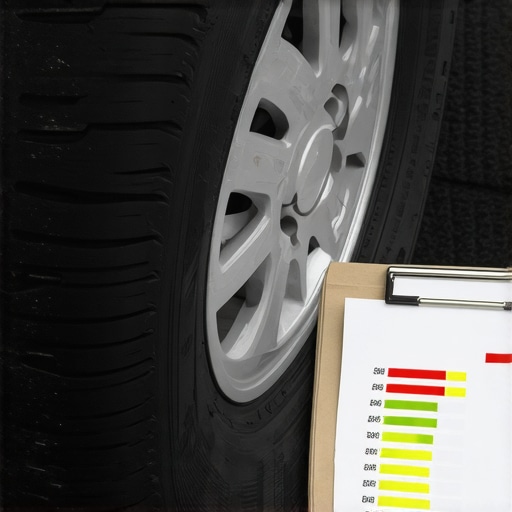
Tire wear monitoring in 2026 car insurance uses telematics sensors to track tread depth and friction heat. This predictive underwriting identifies aggressive driving patterns through piezoelectric data, allowing carriers to adjust monthly premiums based on the lateral G-force exerted on the rubber during transit. The carrier is not just looking at your speed. They are looking at the molecular degradation of your tires. High-speed cornering generates specific heat signatures. If your sensors record consistent temperature spikes in the outer shoulder of the tire, the actuarial model flags you as a performance driver. This classification bypasses your safe driver history. It focuses entirely on the physics of the drive. The loss-cost ratio for performance drivers is significantly higher than the median. You are not being rated on where you go, but on the mechanical stress you choose to inflict on the vehicle. This is the new frontier of risk management where the machine tells on the operator.
The ghost in the fine print
Insurance endorsements and manuscript clauses often hide the data-sharing agreements that permit carriers to harvest sensor telemetry. These policy exclusions can void coverage if the on-board diagnostics detect maintenance neglect, such as driving on balding tires or ignoring brake pad alerts. Most policyholders never read the updated terms of service. They treat their car insurance like a utility bill. However, the 2026 contracts contain a specific clause regarding the material condition of the vehicle. If the tire wear sensor indicates a tread depth below the legal limit for three consecutive days, the policy may automatically shift into a high-risk tier. The carrier views a worn tire as a voluntary increase in the probability of a hydroplaning event. In the eyes of a forensic underwriter, driving on bad tires is a breach of the duty to mitigate risk. This is not just about a ticket from a police officer. It is about the fundamental validity of your indemnity contract.
“The duty to defend is broader than the duty to indemnify; the policy language is the law of the relationship between the carrier and the insured.” – Contractual Law Maxim
The three words that kill a claim
The phrase Material Change in Risk allows a forensic underwriter to deny a commercial claim if the vehicle usage differs from the initial application. If your business insurance assumes low-speed delivery but telematics show high-speed transit, the indemnity agreement becomes void. This is particularly dangerous for those who use personal vehicles for side gigs. The sensor data does not lie. It tracks the frequency of stops, the duration of idling, and the specific torque applied during acceleration. If you claim to be a suburban commuter but your tire wear patterns match those of a delivery driver in a dense urban environment, the carrier will invoke the material change clause. They will argue that the premium collected was insufficient for the actual risk profile. You will be left holding the bill for the liability. The legal precedent here is clear. Misrepresentation of risk, even if unintentional, is grounds for policy rescission.
Why your full coverage is a mathematical fiction
Replacement cost value and actual cash value are often confused by consumers who believe full coverage protects their entire financial investment. In reality, the depreciation curve of modern vehicles is calculated by actuarial algorithms that prioritize market volatility over the purchase price of the asset. The term full coverage does not exist in a standard ISO car insurance form. It is a marketing term used by brokers to simplify a complex legal structure. Every policy has limits. Every policy has exclusions. By 2026, the gap between what a car is worth and what the insurance will pay is widening. This is due to the rising costs of repair for integrated sensor systems. A simple bumper tap now involves recalibrating LIDAR and replacing ultrasonic sensors. If your policy has a limit set three years ago, you are underinsured. You are operating on a mathematical fiction that will crumble the moment you file a claim for a total loss.
| Metric | Traditional Underwriting | 2026 Predictive Analytics |
|---|---|---|
| Mileage | Self-reported or yearly check | Real-time GPS and odometer sync |
| Braking | Assumed standard | G-force sensor impact analysis |
| Maintenance | Ignored | Tire wear and sensor fault monitoring |
| Risk Pool | Demographic based | Individual behavioral modeling |
The forensic audit of your driving soul
Behavioral biometrics in vehicle operation will soon dictate the liquidity of your insurance carrier. By analyzing micro-steering corrections and throttle modulation, the underwriting engine can predict fatigue or distraction before an accident occurs. This is the ultimate expression of forensic underwriting. We are moving away from what happened to what is likely to happen. The actuarial math is cold. If you exhibit signs of aggressive lane changes, your premium will spike in the next billing cycle. There is no human intervention. There is no appeal process. The algorithm has determined that your driving soul is a liability. For those seeking the best insurance, the only path forward is total compliance with the digital observer. The alternative is being relegated to the high-risk residual market where premiums are three times the national average.
The Policy Audit Checklist
- Verify the Material Change in Risk clause in your current endorsement package.
- Review the Telematics Data Usage disclosure to see who owns your tire wear data.
- Confirm the Actual Cash Value versus Replacement Cost on all technological add-ons.
- Audit the Right to Privacy waiver in the fine print of your mobile app agreement.
- Check for any ‘Maintenance Compliance’ requirements that link coverage to service records.
“Insurance is not a commodity, it is a contract of adhesion where the stronger party dictates the terms of the risk transfer.” – ISO Regulatory Commentary
The subrogation trap you never saw coming
Waivers of subrogation in service contracts can inadvertently void your legal insurance protections during a complex litigation event. If you allow a third-party shop to install aftermarket parts or non-standard tires, you might be signing away your right to recover. Subrogation is the process where your carrier pays you and then sues the responsible party. If you have signed a waiver, your carrier cannot sue. Therefore, they may refuse to pay you in the first place. I have seen countless claims denied because a driver signed a simple digital waiver at a repair shop without reading it. The carrier argues that by signing the waiver, you have impaired their right to recovery. This is a breach of the policy conditions. You are left alone to fight a legal battle against a manufacturer or a contractor. It is a lonely and expensive place to be.
Leave a Reply