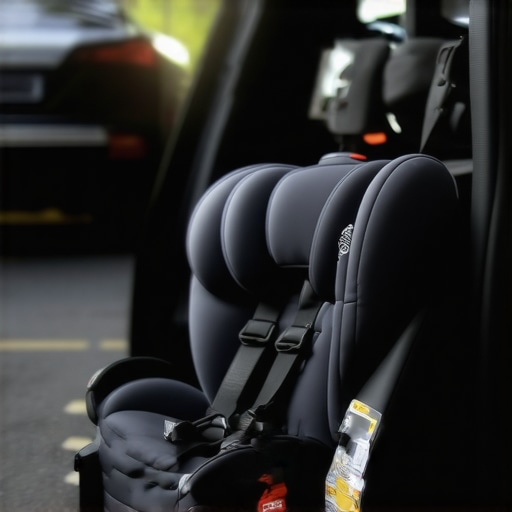
I spent a week deconstructing a high-net-worth policy after a fire and a subsequent vehicle collision claim. The owner thought they were fully covered until they realized their guaranteed replacement cost had a cap that was set in 2012 dollars. This same meticulous forensic audit revealed a more common betrayal. The carrier refused to reimburse a five hundred dollar Clek car seat after a rear-end collision because the vehicle bumper showed only cosmetic damage. The adjuster argued that the seat was fine. I proved that the polypropylene shell had undergone microscopic stress whitening that compromised the structural integrity. The carrier eventually paid, but only after I threatened a bad faith filing based on the principle of indemnity. Most car insurance companies count on your ignorance of physics and contract law to save a few hundred dollars per claim. They treat child safety seats as disposable accessories rather than integral life-safety equipment. This is a mathematical game played with human lives.
The hidden logic of safety seat indemnification
Car insurance carriers are legally obligated to return you to your pre-loss financial and safety position through the principle of indemnity. This means if your child safety seat was involved in a crash, the carrier must provide a replacement that meets current safety standards. They often hide behind the National Highway Traffic Safety Administration (NHTSA) minor crash criteria to avoid payment. You must understand that insurance is a contract of adhesion. You have no power to negotiate the terms when you sign, so the law often interprets ambiguities in your favor. If you have the best insurance, they should handle this without friction. If you are dealing with a sub-prime carrier, prepare for a fight over the definition of a moderate impact. Business insurance policies for fleets often have even stricter language regarding safety equipment than personal auto policies.
“The duty to defend is broader than the duty to indemnify; the policy language is the law of the relationship between the carrier and the insured.” – Contractual Law Maxim
The three words that kill a claim
Actual Cash Value is the enemy of every parent seeking a new car seat after an accident. If your policy specifies Actual Cash Value instead of Replacement Cost Value, the adjuster will attempt to depreciate your car seat. They will argue that a three year old seat is only worth fifty percent of its original price. This is a logical fallacy when applied to safety equipment. You cannot buy half a safety seat. You cannot buy a used safety seat safely because the history is unknown. Therefore, the only way to indemnify the insured is to provide a new seat of like kind and quality. Legal insurance can sometimes help you navigate these disputes if the carrier becomes recalcitrant. Always check your declarations page for the specific language regarding property damage limits and exclusions.
| Crash Factor | NHTSA Minor Category | Insurance Impact |
|---|---|---|
| Vehicle Drivability | Must be drivable | Denial if drivability is maintained |
| Door Damage | No damage to nearest door | Used to minimize perceived force |
| Airbag Deployment | No airbags deployed | Primary metric for force calculation |
| Visible Seat Damage | None required for replacement | Adjusters often demand photos of cracks |
The physics of structural compromise
Polymers used in car seats are designed to manage energy through controlled deformation and microscopic fracturing. Once a seat has been subjected to the G-forces of a collision, the material has done its job. Even if the plastic looks pristine, the internal lattice of the material has likely been stretched. This is known as the elastic limit. Once passed, the seat will not perform the same way in a second impact. Insurance adjusters are not materials scientists. They are trained to look at the metal of the car, not the molecular structure of the plastic. This is where you must be firm. Your car insurance policy is supposed to cover property damage, and a compromised seat is damaged property. Some health insurance policies may even have subrogation clauses that interact with your auto claim if a child is injured due to a failed seat, making the replacement even more critical for the carrier to handle correctly.
The strategy for immediate reimbursement
You must demand a temporary replacement or immediate funds to purchase a new seat before you leave the scene or shortly thereafter. Do not wait for the adjuster to call you in three days. Tell the carrier that you cannot safely transport your child, which makes the loss of use of your vehicle a more expensive rental car claim. They would rather pay for a three hundred dollar seat than a sixty dollar a day rental for two weeks while you argue. This is the leverage of loss-mitigation. Most people do not realize that the carrier has a duty to mitigate their own losses, and providing a seat is the cheapest way for them to resolve the safety risk.
- Document the make, model, and manufacture date of the crashed seat.
- Cut the straps of the old seat only after the adjuster has confirmed the claim in writing.
- Keep the receipt for the new seat and the temporary rental if applicable.
- Request a written statement from the carrier if they refuse to replace the seat.
“Insurance regulation ensures that the solvency of the carrier does not come at the expense of the promised indemnification of the policyholder.” – NAIC Regulatory Overview
The ghost in the fine print
Standard ISO forms like the PP 00 01 do not specifically exclude child seats, which means they fall under general property damage. However, some carriers have begun inserting specific endorsements that limit the payout for “removable personal property” to a flat fee like two hundred dollars. This is a predatory tactic. If your seat cost six hundred dollars, that endorsement is a trap. Always review your policy for these “silent” coverage caps. The truth is that carriers often raise prices on loyal customers while stripping away these minor coverages in the fine print. They know most people will not sue over a few hundred dollars. This is where the math of the insurance industry becomes cynical. They calculate that only five percent of people will fight a car seat denial, so they deny one hundred percent of them by default.