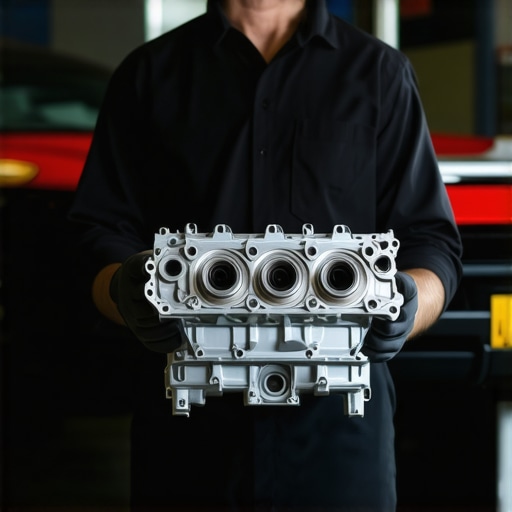
The OEM battleground in your auto policy
I spent a week deconstructing a premium car insurance policy after a high speed collision involving a 2023 Porsche. The owner thought they were fully covered until they realized their guaranteed replacement cost clause had a hidden cap that forced the use of used salvage parts from a 2018 model. The adjuster insisted the parts were Like Kind and Quality, yet the metallurgical integrity of a five year old bumper cannot match a factory new component. This is the reality of the insurance industry today. It is a world of calculated loss ratios where the carrier treats your vehicle as a liability to be minimized rather than an asset to be restored.
The ghost in the fine print
To force an insurance company to use OEM parts, you must prove that aftermarket alternatives compromise the vehicle safety, void the manufacturer warranty, or that your specific policy language mandates Original Equipment Manufacturer components. Most standard car insurance contracts contain an option for the carrier to use Like Kind and Quality parts. This phrase is the primary loophole used by adjusters to reduce claim payouts. Like Kind and Quality or LKQ typically refers to parts harvested from salvage yards or manufactured by third party companies that do not hold the original vehicle blueprints. The insurer calculates the indemnity based on the cheapest available part that functionally fits the vehicle. If you want a different result, you must look at the endorsement page. Many drivers unknowingly opt out of OEM coverage to save a few dollars on their monthly premium. Without a specific OEM endorsement, you are fighting a contractual uphill battle. You must argue that the aftermarket part is not actually of like kind. This requires technical documentation from a certified repair facility showing that the fit, finish, or structural composition of the aftermarket part is inferior. For example, some aftermarket hoods do not have the same crumple zone triggers as the factory version. This creates a legitimate safety concern that can force a carrier to reconsider. They do not want the liability of a future injury claim caused by a sub-standard part they mandated.
The math of the aftermarket shift
Insurance carriers utilize aftermarket parts to reduce the severity of physical damage claims which can lower their combined ratio by several percentage points annually. By substituting a 1,200 dollar OEM headlight with a 400 dollar CAPA certified alternative, the insurer keeps more capital in their reserves. This is not about your car. This is about the actuarial probability of loss across a pool of millions of policyholders. The business insurance side of these carriers operates on the same logic. They want to settle for the lowest possible amount that satisfies the legal definition of indemnification.
“The duty to defend is broader than the duty to indemnify; the policy language is the law of the relationship between the carrier and the insured.” – Contractual Law Maxim
The insurance company will argue that as long as the car looks and drives the same, they have fulfilled their contract. You must counter with the concept of Diminished Value. Even if the car is repaired, the use of non-OEM parts must be disclosed in a future sale. This disclosure lowers the resale value of the vehicle. In some jurisdictions, you can claim this loss in value as part of the total indemnity. This makes the cheap part more expensive for the insurer in the long run. They would rather pay for the OEM part now than pay for a Diminished Value claim later. You have to speak the language of money to get their attention.
| Part Type | Cost Impact | Warranty Status | Safety Rating |
|---|---|---|---|
| OEM (Original) | High (100%) | Full Factory Support | Manufacturer Tested |
| Aftermarket | Low (40-60%) | Third Party Only | Varies (CAPA) |
| Salvage (LKQ) | Variable | None | Unknown History |
Your right to a safe repair
Safety is the strongest leverage point when dealing with car insurance adjusters who refuse to pay for factory parts on a modern vehicle. Modern cars are equipped with Advanced Driver Assistance Systems or ADAS that require precise calibration which aftermarket parts often fail to support. If a sensor is off by a fraction of a millimeter because a non-OEM bracket is slightly warped, the automatic braking system might fail. You must obtain a written statement from the manufacturer or a certified technician stating that the use of non-OEM parts will interfere with the vehicle safety systems. No insurance company wants to sign off on a repair that a technician has labeled unsafe. This shifts the risk from the repair shop to the insurer. Most adjusters will fold once they realize they are assuming the legal liability for a potential system failure. This is especially true for legal insurance situations where a lawyer is reviewing the claim for potential bad faith. Bad faith occurs when an insurer puts its own financial interests above the safety of the insured.
“The insurer must give at least as much consideration to the welfare of its insured as it gives to its own interests.” – NAIC Unfair Claims Settlement Model Act
The appraisal clause as a weapon
The appraisal clause is a standard provision in most car insurance policies that allows you to demand an independent evaluation when you and the carrier disagree on the cost of the repair. This is the most effective way to bypass a stubborn adjuster and force a fair payout. When you invoke the appraisal clause, you hire an independent appraiser and the insurance company hires one. If those two cannot agree, an umpire is selected to make the final decision. This process is binding. It takes the decision out of the hands of the insurance company and puts it into the hands of professionals who understand the difference between a cheap plastic knockoff and a high quality OEM part. It costs money to hire an appraiser, but on a large claim, the difference in part quality can be thousands of dollars. It is often the best insurance you have against a lowball estimate. Most people never read their policy closely enough to know this clause exists. It is the secret weapon of the informed policyholder. You should also check if your state has a Valued Policy Law. While these usually apply to total losses in home insurance, the principle of full indemnification remains the core of the legal argument. You paid for a policy to restore your car to its pre-loss condition. A car with aftermarket parts is not in its pre-loss condition.
Checklist for an OEM repair
- Review the declarations page for an OEM parts endorsement
- Obtain a written safety statement from a factory-certified technician
- Document the resale value loss associated with non-OEM parts
- Request a copy of the carrier internal guidelines for part substitution
- Invoke the appraisal clause if the price gap exceeds 1,000 dollars
- Contact the state Department of Insurance if safety concerns are ignored
State laws that protect your vehicle
State regulations vary significantly regarding the use of aftermarket parts and many states require the insurance company to get your written consent before using them. In states like California or Illinois, specific disclosures must be printed on the estimate in large bold type. If the insurance company fails to provide these disclosures, they are in violation of state insurance codes. This can lead to heavy fines and a mandatory reversal of the decision. You must check your local Department of Insurance website to see the specific rules for your region. Some states mandate that for the first three years of a car life, only OEM parts can be used. Others require the insurer to pay for the original part if the consumer simply insists on it, though you might have to pay the price difference. However, if you can prove the aftermarket part is not of like kind, that price difference becomes the responsibility of the insurer. This is why forensic documentation is vital. Take photos of the aftermarket part next to the OEM part. Show the gaps in the seams. Show the thinner metal. Show the lack of sound dampening material. The more evidence you provide, the harder it is for the carrier to deny the claim. They rely on policyholders being lazy. If you are the most difficult person they deal with this week, they will likely give you what you want just to close the file. In the world of business insurance and personal auto, the squeaky wheel gets the OEM parts. “, “image”: {“imagePrompt”: “A high-end luxury car in a professional repair shop with a side-by-side comparison of a shiny factory OEM bumper and a dull, slightly warped aftermarket bumper, forensic lighting, 8k resolution.”, “imageTitle”: “OEM vs Aftermarket Part Comparison”, “imageAlt”: “A comparison showing the quality difference between original manufacturer parts and aftermarket insurance replacements.”}, “categoryId”: 0, “postTime”: “”}