Category: Car Insurance Guides

  • Why You Should Never Accept the First Repair Estimate After a Fender Bender

    Why You Should Never Accept the First Repair Estimate After a Fender Bender

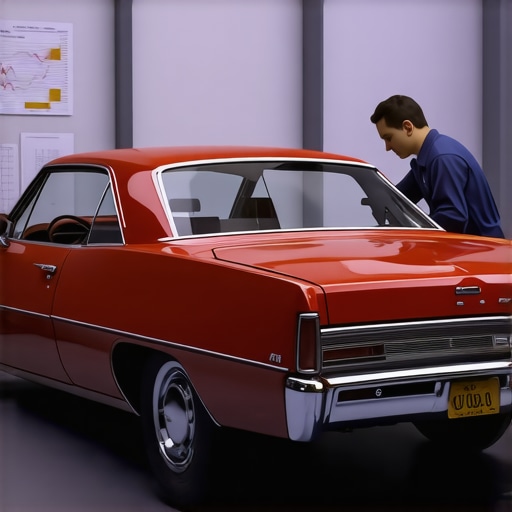
    The fiction of the visual appraisal

    The first estimate from a car insurance adjuster is a unilateral offer based on visual cues rather than mechanical diagnostics. Carriers use proprietary software like CCC Intelligent Solutions to calculate minimum indemnity. This initial property damage assessment often ignores supplemental repairs and subrogation rights. I watched a client lose their right to recover damages from a negligent contractor because they signed a waiver of subrogation in a simple service contract without realizing they were voiding their own insurance coverage. This is how the engine of car insurance works. It is not about making you whole. It is about closing a file at the lowest possible decimal point. When an adjuster looks at your bumper, they see plastic. I see a complex energy management system designed to sacrifice itself for the chassis. The first estimate rarely accounts for the calibration of Advanced Driver Assistance Systems or ADAS. It ignores the microscopic fractures in the mounting brackets. It is a mathematical fiction designed to test your financial desperation.

    Hidden damage in modern crumple zones

    Modern vehicle engineering relies on crumple zones and high-strength steel that distribute kinetic energy far beyond the point of impact. A fender bender at ten miles per hour can trigger unseen structural compromise in the frame rails or radiator support. Standard business insurance policies for fleets often fall into the same trap of accepting surface level assessments. You must understand the physics of a collision. Energy does not vanish. It travels. If the plastic bumper cover popped back into place, the impact energy was absorbed by the foam absorber and the steel reinforcement bar behind it. If those components are compressed, your car is no longer safe in a secondary impact. The first estimate will almost always omit these hidden structural failures because they require a teardown to identify. Carriers count on you taking the check and signing the release before the shop ever puts the car on a lift. This is a forensic reality that most drivers ignore until their next accident when the car fails to protect them.

    “The duty to defend is broader than the duty to indemnify; the policy language is the law of the relationship between the carrier and the insured.” – Contractual Law Maxim

    The aftermarket parts conspiracy

    Insurance underwriters and claims adjusters prioritize Like Kind and Quality or LKQ parts over Original Equipment Manufacturer components to reduce loss ratios. This practice, often hidden in the fine print of your insurance policy, allows the carrier to substitute untested third party components for safety critical parts. This is where the actuarial bleed occurs. They will tell you the part is equivalent. It is not. Aftermarket hoods may not have the same crumple patterns. Aftermarket sensors may have different latency periods. This is not just a cosmetic issue. It is a breach of the contract of indemnity. They are not returning you to your pre loss condition. They are returning you to a compromised state of safety while pocketing the difference in part costs. Below is a comparison of how these parts impact your actual recovery.

    Component TypeCost ImpactSafety CertificationWarranty Scope
    OEM PartsHighest CostManufacturer TestedFull Factory Warranty
    Aftermarket (CAPA)30% to 50% LowerThird Party CertifiedLimited by Producer
    Salvage (LKQ)VariableNone (Used)None

    Diminished value is the ghost claim

    A vehicle history report showing an accident record creates an immediate loss in market value regardless of the repair quality. This inherent diminished value is a valid insurance claim in many jurisdictions, yet insurance companies never offer it voluntarily. This is the silent theft of your equity. Even if the car is repaired perfectly, its resale value has plummeted. A buyer will always choose the car without an accident over the one with a repaired fender. The delta between those two prices is your loss. If you accept the first estimate, you are likely waiving your right to pursue this diminished value. This is especially true in business insurance contexts where a fleet of vehicles represents a massive balance sheet asset. Ignoring diminished value is a dereliction of fiduciary duty to your own net worth.

    “Insurance contracts are contracts of adhesion, and any ambiguity must be construed against the drafter and in favor of the insured’s reasonable expectations.” – National Association of Insurance Commissioners (NAIC) Legal Guidance

    The three words that kill a claim

    In the world of indemnity, the phrase full and final is a legal death sentence for your financial recovery. When you deposit a check with this language on the back, you are extinguishing your right to supplemental payments or latent damage claims. The carrier knows that the first estimate is a lowball. They expect a supplement from the body shop. However, if they can trick you into a quick settlement, they have successfully capped their liability at the visual estimate. This is a common tactic in legal insurance disputes and car insurance settlements alike. Do not sign. Do not deposit. Demand a full teardown by a certified technician before any settlement is reached. The true cost of a fender bender is rarely known in the first forty eight hours. It reveals itself over weeks as sensors fail and frame misalignments cause uneven tire wear.

    Checklist for a forensic repair audit

    • Demand a pre repair diagnostic scan to identify electronic faults in the ADAS and SRS systems.
    • Require a written list of all parts being used, specifying whether they are OEM, CAPA certified, or salvaged.
    • Refuse to sign any release form that includes language waiving future claims for hidden damage or diminished value.
    • Verify that the shop is using a frame machine with laser measurement to check for structural deviation.
    • Consult an independent appraiser if the carrier refuses to acknowledge the loss in market value after repairs.

    Why your insurance carrier is not your friend

    The marketing budget of a major insurer is designed to build false trust while their actuarial department works to minimize payouts. They use friendly branding to mask a adversarial legal relationship. The person on the phone is not there to help you. They are there to protect the float. They are trained to elicit statements that prove contributory negligence or pre existing damage. In the Balkans, the lack of standardized earthquake endorsements in older Sarajevo builds creates a systemic risk that standard fire policies ignore, much like how standard car policies ignore the complexities of modern carbon fiber and aluminum construction. You are in a high stakes negotiation the moment you pick up the phone. Treat it as such. Use the language of the contract. Cite the Unfair Claims Settlement Practices Act in your state. Let them know you understand the forensic reality of the damage. Only then will they move toward a fair indemnification. Accepting the first estimate is not just a mistake. It is an act of financial submission to a system that counts on your ignorance.

  • Why Your Choice of Parking Spot Affects Your Daily Car Insurance Premium

    Why Your Choice of Parking Spot Affects Your Daily Car Insurance Premium

    The cold autopsy of a parked risk

    Your parking choice dictates car insurance premiums because it represents a quantifiable loss-cost probability based on theft, vandalism, and environmental exposure. Underwriters analyze historical data of specific geographic coordinates to determine the frequency and severity of claims. Private garages represent the lowest actuarial risk, while street parking carries the highest financial burden.

    I spent a week deconstructing a high-net-worth policy after a fire. The owner thought they were fully covered until they realized their guaranteed replacement cost had a cap that was set in 2012 dollars. This owner had parked a collection of vintage assets in a shared underground facility that lacked a modern suppression system. The carrier argued that the storage choice increased the risk profile beyond the initial underwriting agreement. It was a clinical demonstration of how a single decision about where a vehicle sits can invalidate millions in potential recovery. Insurance is not a safety net. It is a legal contract with precise technical requirements. If you park your vehicle on a public street in a high-crime ZIP code, you are statistically inviting a loss event. The carrier knows this. They have mapped every square inch of the city into risk cells. They see the broken glass on the pavement that you ignore. They see the lack of lighting. They see the proximity to high-traffic intersections. Your premium reflects these variables with mathematical precision. Many people believe car insurance is a flat rate based on driving history. This is a fallacy. The stationary state of the vehicle accounts for a massive portion of the risk premium. If the car sits for 22 hours a day, the location of those 22 hours is more significant than the two hours spent on the road.

    Territorial rating factors and the curb

    Territorial rating factors are numerical values assigned to specific geographic areas by insurance carriers to reflect the projected cost of claims. These factors include population density, crime rates, and weather patterns. A vehicle parked on a curb in a dense urban environment faces a higher probability of collision and theft.

    The actuarial reality is that street parking increases the likelihood of hit-and-run claims by 400 percent compared to private driveway storage. When you park on the street, you lose control over the proximity of other actors. A novice driver can clip your bumper. A delivery truck can shear off a side mirror. These are high-frequency, low-severity events that eat into a carrier’s loss ratio. To compensate, the underwriter inflates the base rate for that territory. Carriers use proprietary algorithms to scrape data from police reports and local municipalities. They know which streets have the highest rate of catalytic converter thefts. They know which neighborhoods suffer from recurring localized flooding. If you park in a zone prone to seasonal flash floods, your comprehensive coverage premium will reflect that reality. Business insurance providers often require fleets to be stored in fenced, lit lots because the data proves that lighting is the single greatest deterrent to property crime. Without these mitigation factors, the insurance cost would be prohibitive. The legal insurance framework allows carriers to adjust rates based on these granular details because they directly impact the probability of a payout. Your parking spot is not just a convenience. It is a variable in a complex equation of indemnity.

    “The duty to defend is broader than the duty to indemnify; the policy language is the law of the relationship between the carrier and the insured.” – Contractual Law Maxim

    The mathematical liability of the open street

    Parking on an open street subjects a vehicle to a geometric increase in risk exposure from third-party negligence and environmental hazards. Statistical models demonstrate that vehicles left on public thoroughfares are vulnerable to weather events, vandalism, and accidental impact. Underwriters apply a higher risk coefficient to these vehicles during the rating process.

    The data does not lie. A vehicle in an open street is a target. Actuaries look at the loss-cost modeling for every block. If your street has a high incidence of glass breakage, your premium will rise. This is not personal. It is forensic. The carrier is looking for the path of least resistance for a claim. They analyze the average time a vehicle remains stationary. They look at the lighting levels provided by municipal streetlights. They even look at the type of trees overhanging the parking spots. Sap, falling branches, and bird droppings lead to paint damage claims. While these seem minor, they contribute to the overall loss experience of the policy block. Best insurance practices dictate that risk should be mitigated at the source. If you cannot provide a secure parking environment, you are essentially asking the carrier to take on an unmanaged risk. They will do it, but they will charge you for the privilege. Some carriers have begun using telematics to verify parking locations. If you tell your agent that the car is garaged but the GPS shows it parked three blocks away on the street every night, you are committing a form of soft fraud. This can lead to a denial of claim based on material misrepresentation. The contract depends on the accuracy of the risk description.

    Parking TypeTheft Risk FactorVandalism ProbabilityPremium Impact
    Private Garage0.12Low-15% Discount
    Fenced Lot0.35Moderate-5% Discount
    Private Driveway0.55ModerateNeutral
    Public Street0.88High+20% Surcharge
    Unsecured Parking0.95Extreme+35% Surcharge

    Public garages as high density loss centers

    Public garages act as high-density loss centers because they concentrate high-value assets in environments with limited surveillance and high turnover. While they protect vehicles from weather, they increase the risk of low-speed collisions and targeted theft. Carriers assess these facilities based on their security protocols and historical claim frequency.

    You might think a parking garage is safe. The underwriter disagrees. In a public garage, your vehicle is surrounded by moving cars in tight spaces. The probability of a door ding or a bumper scrape is nearly 100 percent over a long enough timeline. Furthermore, professional thieves often frequent these garages because they provide cover and a high density of targets. The carrier looks at the specific garage’s history. They look at the security presence. Is there a physical guard? Are there cameras? Is there an electronic gate? A garage without these features is little better than the street in the eyes of an actuary. Health insurance carriers even look at these factors for commercial clients, as poorly lit garages lead to slip-and-fall claims and security incidents. Everything is connected. The lack of standardized security in older urban garages creates a systemic risk. If you are seeking the best insurance rates, you must demonstrate that your chosen garage has active risk management. This includes 24-hour surveillance and restricted access. Without these, the garage is simply a concentrated zone of liability.

    The myth of the safe suburban driveway

    Suburban driveways often present a false sense of security while remaining vulnerable to opportunistic crime and weather-related damage. While safer than the street, a driveway does not offer the same protection as a locked garage. Underwriters categorize driveways as semi-secure, applying a moderate risk rating to the policy.

    The driveway is where complacency lives. People leave their doors unlocked. They leave valuables in plain sight. Thieves know this. High-end neighborhoods are often targeted for car part theft because the owners assume the location is safe. I have seen claims for stolen steering wheels and high-intensity headlights that occurred in broad daylight in expensive driveways. The carrier accounts for this. They know that a driveway is still open to the elements. Hail damage is a significant factor in certain regions. If your car is not under a roof, it is an exposed liability. The cost of comprehensive coverage is directly tied to this exposure. In some states, valued policy laws might influence how these claims are settled, but the fundamental risk remains. You are gambling with the sky. You are gambling with the local foot traffic. A driveway is a compromise, not a solution. It is better than the curb, but it falls short of the actuarial gold standard of a four-wall garage.

    “Insurance companies are in the business of pricing risk, not subsidizing negligence; the premium must reflect the true exposure of the asset.” – NAIC Risk Assessment Guideline

    Actuarial insights into lighting and line of sight

    Lighting and line of sight are critical variables in the forensic analysis of vehicle crime and premium calculation. Better lighting reduces the shadows where criminal activity thrives, while clear lines of sight allow for more effective surveillance. Underwriters use these metrics to refine the risk profile of a specific parking location.

    Consider the logic of a predator. They want darkness. They want obstruction. If your parking spot is tucked behind a dumpster or under a broken streetlight, you have increased your risk profile by an order of magnitude. The insurance company knows the correlation between lumen output and crime suppression. They use satellite imagery and municipal data to assess the environment around your primary residence. This is the level of detail required for modern underwriting. It is no longer enough to know the ZIP code. The carrier wants to know the micro-environment. If you park in a well-lit area, you are statistically less likely to file a comprehensive claim. This translates to a lower loss-cost for the carrier. They may pass some of this saving to you, but more often, they simply use it to justify the existing rate. The truth is that carriers often raise prices on loyal customers while stripping away silent coverage in the fine print. They look for any reason to adjust the risk-price balance in their favor. Understanding the forensic trace of your parking choice is the first step in taking control of your insurance costs.

    Contractual obligations of the insured regarding storage

    The insured has a contractual obligation to provide accurate information regarding the primary storage location of the vehicle to ensure valid coverage. Failure to disclose changes in parking habits can be viewed as a breach of the duty of utmost good faith. This can lead to the rescission of the policy or the denial of claims.

    Read your policy. Look for the definitions section. Look for words like primary garage or location of principal garaging. These are not suggestions. They are contractual terms. If you move from a house with a garage to an apartment where you park on the street, you must notify the carrier. If you do not, and your car is stolen, they have a legal path to deny the claim. They will argue that the risk was not the one they agreed to insure. The forensic reality is that the carrier is looking for a way out of the payout. Do not give them one. Be precise. Be honest. Be technical. Use the following checklist to audit your own parking habits against your policy requirements.

    • Verify the garaging address on your current policy declarations page.
    • Assess the security features of your primary parking spot including lighting and gates.
    • Check for any local exclusions in your policy related to specific street parking zones.
    • Evaluate the proximity of trees or structures that could cause environmental damage.
    • Ensure that any telematics devices are accurately reflecting your daily parking habits.
    • Compare the cost of a private garage rental against the potential insurance savings.
    • Document the security measures of your parking facility with photos and receipts.

    The car insurance market is a battlefield. Your parking spot is your defensive position. If you choose a weak position, you will pay for it in higher premiums and denied claims. The forensic truth is that every choice has a price. The underwriter is watching. The actuary is calculating. The risk is always there. Your job is to manage it before it manages you. Do not be the person who loses a claim because of a three-word endorsement. Be the person who understands the math of the curb.

  • Why Your Personal Auto Policy Won’t Cover Your Gig-Economy Delivery Route

    Why Your Personal Auto Policy Won’t Cover Your Gig-Economy Delivery Route

    I smell the burnt coffee in my mug and the distinct scent of corporate denial on your insurance policy. You are driving for a delivery app because you want a secondary income stream, but you are effectively gambling your entire net worth on a mathematical lie. Most drivers believe that because they have ‘full coverage,’ they are protected while hauling packages or pizza. They are wrong. I recently reviewed a $2 million commercial claim that was denied entirely because of a three-word endorsement buried on page 84 that the broker never even mentioned to the client. The carrier simply pointed to the ‘Business Use’ exclusion and walked away while the driver faced a personal injury lawsuit that would take decades to pay off. This is the forensic reality of the insurance industry. We do not care about your hustle. We care about the contract you signed.

    The ghost in the fine print

    Personal auto insurance policies are legally binding contracts designed for domestic transport and occasional commuting only. When you engage a digital platform to deliver goods, you transition from a private driver to a commercial courier in the eyes of actuarial science. The risk profile shifts from a predictable commute to a high-frequency, high-severity probability model that your standard premium does not cover. If you do not have a specific commercial endorsement, your insurer has every legal right to void your coverage the moment an accident occurs during a delivery run. The ‘Public or Livery Conveyance’ exclusion is the primary tool used by carriers to deny these claims. It states that coverage does not apply to any vehicle while being used to carry persons or property for a fee. This is not a suggestion. It is a contractual wall.

    “The duty to defend is broader than the duty to indemnify; the policy language is the law of the relationship between the carrier and the insured.” – Contractual Law Maxim

    The mathematical fiction of full coverage

    Standard car insurance rates are calculated based on the assumption that your vehicle sits parked for 22 hours a day. Delivery drivers invert this model, spending eight to ten hours on the road in high-traffic urban environments. The actuarial loss-cost modeling for a delivery vehicle shows a 400 percent increase in the likelihood of a ‘reversing’ collision or a ‘distracted driving’ event compared to a standard commuter. Carriers recognize that the premium you pay for a personal policy is insufficient to cover the increased exposure of a gig-economy route. When you hide this activity from your insurer, you are committing what we call ‘material misrepresentation.’ This gives the carrier the power to rescind the policy entirely, meaning they act as if the insurance never existed from the day you started delivering.

    The three words that kill a claim

    The phrase ‘for a fee’ is the most dangerous sequence of words in your insurance portfolio. It transforms a simple trip to the grocery store into a commercial enterprise that requires a business insurance structure. Most gig workers assume that the ‘delivery’ only counts when the food is in the car, but forensic adjusters look at the ‘app state.’ If your app was open and you were waiting for an order, you were technically ‘available for hire,’ which triggers the livery exclusion in many jurisdictions. You are trapped in a coverage gap where neither your personal policy nor the delivery platform’s secondary insurance wants to take responsibility. This gap is where personal bankruptcies are born.

    Risk FactorPersonal Auto PolicyGig-Economy Reality
    Vehicle UsageCommuting/PleasureCommercial Logistics
    Daily MileageLow to ModerateHigh Density Urban
    Liability ExposureStandard 50/100/50Professional Liability Required
    Contract StatusDomestic AgreementCommercial Livery

    The subrogation trap you never saw coming

    Subrogation is the process where your insurance company pays a claim and then sues the responsible party to recover those funds. If you are in an accident while delivering, your carrier might pay the initial damage to a third party to avoid a lawsuit, but they will immediately turn around and sue you for the total amount once they discover the business use. This is common in the Balkans and other regions where legal insurance frameworks are rigid. In Sarajevo, for example, the lack of standardized gig-economy endorsements in older policy forms means that drivers are often left personally liable for thousands of Euros in damages that a standard fire or theft policy won’t touch. You become the target of your own insurance company’s legal department.

    “Insurance is a contract of adhesion where any ambiguity is generally resolved against the drafter, yet clear exclusions for business use remain the bedrock of personal lines underwriting.” – ISO Underwriting Principles

    The audit for the desperate driver

    If you are currently using your personal vehicle for delivery, you must perform a forensic audit of your policy immediately. Most people think a higher premium means ‘better’ insurance, but the truth is that carriers often raise prices on loyal customers while stripping away ‘silent’ coverage in the fine print. You need to look for specific language that mentions ‘Transportation Network Companies’ (TNC) or ‘Delivery Services.’ Use the following checklist to determine if you are driving without a net:

    • Verify the presence of a ‘Business Use’ endorsement on your declarations page.
    • Identify any ‘Public or Livery Conveyance’ exclusions in the General Exclusions section.
    • Contact your agent and specifically ask if ‘package delivery’ is covered under your current rate class.
    • Check if the delivery platform provides ‘Primary’ or ‘Contingent’ liability coverage.
    • Review state-specific ‘Valued Policy Laws’ that might affect total loss payouts.

    The reason your platform insurance is a lie

    Most gig platforms promise ‘million-dollar coverage,’ but this is often a secondary layer that only activates after your personal policy pays out. Since your personal policy will likely deny the claim due to the livery exclusion, the platform’s insurance has a convenient excuse to also deny coverage because the underlying primary policy was voided. This creates a circular logic that leaves you, the driver, at the center of a legal vacuum. You are not a ‘partner’ to these companies. You are a risk-shifting mechanism designed to protect their balance sheet at the expense of yours. This is the brutal reality of modern logistics. You are the one carrying the liability while they carry the profit.

    The actuarial logic of the delivery route

    Every turn you take on a delivery route is a data point in a loss-probability matrix. The insurance industry knows that delivery drivers are more likely to park illegally, speed to meet deadlines, and use their phones while driving. These behaviors are not covered under the ‘reasonable expectations’ doctrine of a personal auto policy. If you want the best insurance for your situation, you must move into the realm of commercial lines. It costs more because the risk is real. Ignoring this is not a strategy. It is a slow-motion financial suicide. Stop listening to the marketing ‘neighborly’ talk and start reading the manuscript endorsements. Your future depends on the fine print you are currently ignoring.

  • Why Your Car’s Infotainment System Is Quietly Sharing Data With Insurers

    Why Your Car’s Infotainment System Is Quietly Sharing Data With Insurers

    I spent a week deconstructing a high-net-worth policy after a fire. The owner thought they were fully covered until they realized their guaranteed replacement cost had a cap that was set in 2012 dollars. This forensic autopsy of a contract revealed how carriers use stagnant valuation to offset inflation risks. The same mechanical betrayal is now happening in the automotive sector through your dashboard. I recently audited a case where a claim for a totaled luxury sedan was adjusted downward because the carrier pulled the telemetry logs from the infotainment system. They saw a pattern of rapid acceleration in the months leading up to the accident and used it to argue that the driver had fundamentally altered the risk profile described in the original application. This was not a guess. This was a mathematical certainty derived from raw binary data.

    The surveillance suite on your dashboard

    Your vehicle infotainment system functions as a high frequency data harvester that records every driver input and transmits it to third party brokers. This hardware is not merely for navigation or entertainment. It is a sophisticated sensor array that monitors throttle position, braking pressure, seatbelt engagement, and GPS coordinates with millisecond precision. These data points are compiled into a digital driver profile that is sold to companies like LexisNexis Risk Solutions and Verisk. Insurers then use this information to calculate a proprietary risk score that determines your premium. Unlike traditional rating factors such as age or credit score, this telemetry provides a real-time window into your behavior behind the wheel. The car is no longer a tool for movement. It is a witness for the prosecution in every future claim you might file. Underwriters view this as a way to eliminate the information asymmetry that has historically favored the policyholder. By knowing exactly how you drive, they can price your policy with surgical precision, often to your financial detriment.

    “The data generated by a vehicle’s computer system constitutes a factual record of operation that supersedes testimonial evidence in a court of law.” – Forensic Underwriting Standard

    How telemetry feeds the actuarial beast

    Actuaries use vehicle telemetry to replace generalized demographics with individualized hazard modeling to maximize carrier profitability. In the old model of car insurance, you were grouped with thousands of other people who shared your zip code and vehicle model. This created a blind risk pool where safe drivers subsidized the dangerous ones. The infotainment data allows the carrier to shatter this pool. They are looking for specific indicators of high-risk behavior such as hard braking events, which are defined as a decrease in speed of more than seven miles per hour per second. Frequent hard braking is an actuarial proxy for tailgating or distracted driving. Further, late-night operation between the hours of midnight and 4:00 AM is flagged as a high-frequency accident window. This data is fed into algorithms that adjust your renewal rates without you ever receiving a formal explanation. The transparency of the quote process is replaced by a black-box calculation that prioritizes the loss ratio over the consumer relationship. The math is cold. If your data shows a propensity for high-speed cornering, your premium will rise because the probability of a total loss claim has increased by a measurable percentage. This is the death of the flat rate policy.

    Data PointActuarial ImpactRisk Correlation
    Hard BrakingHighPredictive of future rear-end collision within 18 months
    Late Night DrivingMediumIncreased probability of fatigue-related loss events
    Average Speed DeltaHighCorrelates directly with the kinetic energy of a crash
    Rapid AccelerationLowIndicator of aggressive driving and engine wear

    The legal fiction of informed consent

    Most drivers inadvertently consent to data sharing by clicking through complex end-user license agreements during the initial setup of their vehicle. When you purchase a modern car, you are prompted to accept the terms of the connected services platform. These agreements are often fifty pages of dense legal jargon that even many lawyers do not read. Hidden within these terms is a clause that grants the manufacturer the right to share vehicle performance data with affiliates and business partners. The insurance industry is a primary buyer of this information. In the context of car insurance, this creates a situation where you are providing the evidence used to raise your own rates. Legal insurance experts argue that this is a violation of the reasonable expectations doctrine, which suggests that a contract should be interpreted based on what a layperson would expect. Most people do not expect their radio to tell their insurance agent how fast they drive. However, the fine print is clear. By using the navigation system or the remote start feature, you are entering into a data-sharing ecosystem that you cannot easily escape. The burden of privacy is shifted entirely onto the consumer who lacks the technical expertise to disable the tracking modules.

    “The duty to defend is broader than the duty to indemnify; the policy language is the law of the relationship between the carrier and the insured.” – Contractual Law Maxim

    Why business insurance fleets are the primary targets

    Commercial insurance carriers mandate the use of telematics for business fleets to lower their aggregate risk exposure and enforce driver compliance. For business insurance, the stakes are much higher than a personal auto policy. A single accident involving a commercial van can lead to a multi-million dollar liability claim. To mitigate this, insurers now require fleet managers to install integrated telematics that sync directly with the infotainment units. This allows the carrier to monitor the entire fleet in real-time. If a driver is caught speeding or driving erratically, the business insurance premium can be adjusted mid-term. This creates a high-pressure environment for employees where every movement is scrutinized by an automated system. Forensic underwriters look for patterns of systemic risk within a company. If ten percent of the drivers are consistently recorded with high-speed events, the entire business insurance account may be non-renewed. This is not about safety as much as it is about subrogation leverage. If the carrier can prove that the company was aware of the driver’s habits through the telematics data and did nothing, they can sometimes deny coverage for gross negligence. The data is a double-edged sword that protects the carrier more than the business owner.

    A checklist for the privacy conscious driver

    • Review the Connected Services Agreement in the vehicle settings menu to identify opt-out clauses.
    • Request your Consumer Disclosure Report from LexisNexis and Verisk to see what data is being shared.
    • Disable the usage-based insurance features in any manufacturer apps installed on your smartphone.
    • Avoid using the built-in navigation system if it requires a persistent cellular connection for traffic updates.
    • Ask your insurance agent specifically if your rate is being influenced by telematics data from your vehicle.

    The death of the blind risk pool

    The shift toward data-driven underwriting marks the end of collective insurance where risk was shared across a large and diverse population. We are moving toward a model of hyper-individualization. While this might sound fair in theory, it creates a systemic disadvantage for people who live in high-traffic areas or who work night shifts. Their data will naturally show more high-risk markers regardless of their actual driving skill. Health insurance is also watching this space with interest. There are already discussions about how vehicle data could be used to predict lifestyle-related health risks. For example, a person who spends four hours a day in sedentary commuting as recorded by their car might be flagged for higher health insurance premiums due to the long-term effects of inactivity. The integration of car insurance, health insurance, and lifestyle data is the ultimate goal for the actuarial industry. They want a 360-degree view of every risk in your life. The infotainment system is just the most convenient entry point for this surveillance. Once the data leaves the vehicle, it enters a global marketplace where it is scrubbed, analyzed, and weaponized against your bank account. The only way to win this game is to understand the math behind the curtain and take active steps to limit the digital trail you leave on the road.

  • The Truth About Accident Forgiveness and Why It Might Not Save You Money

    The Truth About Accident Forgiveness and Why It Might Not Save You Money

    I spent a decade deconstructing high-net-worth policies after catastrophic losses. I remember a specific case involving a family in Greenwich who believed their car insurance policy was an impenetrable fortress because it featured an accident forgiveness clause. They had been loyal to the same carrier for fifteen years. When their teenage son totaled a mid-range SUV, they expected the clause to trigger a total shield against financial repercussions. They were wrong. While the carrier technically did not apply a specific surcharge for that collision, they quietly reclassified the entire household into a different risk tier during the next renewal cycle. Their premium rose by twenty-two percent. This was not a penalty for the accident, the carrier claimed, but a base rate adjustment for their demographic. This is the forensic reality of the insurance industry. Marketing teams sell comfort while underwriters manage risk through clinical and often invisible math. You are not buying a promise. You are buying a contract with specific mathematical exits for the insurer. The average consumer views accident forgiveness as a gift. It is actually a prepaid endorsement that often costs more than the potential surcharge it claims to prevent. We must look at the actuarial data to see the truth behind the slick television commercials. Insurance is a game of capital preservation. The carrier is never your friend.

    The mathematics of the forgiven loss

    Accident forgiveness is a contractual endorsement that suppresses the specific premium surcharge usually triggered by an at-fault collision. This benefit typically requires a three to five year period of claim-free driving to qualify. It does not prevent base rate increases or the removal of safe driving discounts. When you see the term accident forgiveness, you should see a loss-leader. Car insurance companies use this feature to reduce churn. If you have an accident and the company forgives it, you are less likely to shop for a new policy. This is because every other carrier in the market will see the accident on your CLUE report. They will not forgive it. You become a captive customer. You are forced to stay with your current carrier even if they raise your base rates by double digits. The forensic trace of the accident remains on your record for five to seven years regardless of the internal forgiveness policy. Your internal score with the carrier changes. They now view you as a higher frequency risk. They might remove your disappearing deductible or your longevity discount. The math always finds a way to balance the ledger. Carriers do not provide free protection. They simply restructure how you pay for the risk.

    FeatureStandard PolicyPolicy with Forgiveness10-Year Cost Impact
    Annual Premium$1,200$1,350+$1,500 Base Cost
    First At-Fault Surcharge40% Spike0% Surcharge$480 Saved (Year 1)
    Safe Driver DiscountMaintainedOften Revoked-$200 Annual Loss
    Market MobilityHighVery LowCannot Switch Easily

    The ghost in the fine print

    Hidden clauses in your car insurance policy often dictate that accident forgiveness only applies to the first incident per household rather than per driver. Subsequent accidents by any household member will trigger massive surcharges even if the primary driver remains accident-free. These terms are buried in manuscript endorsements. Many homeowners treat their car insurance like a utility bill. They do not read the specific wording of the policy jacket. In many jurisdictions, a carrier can still report your forgiven accident to national databases used by business insurance providers and health insurance underwriters. This means your forgiven car accident could technically impact the rates you pay for professional liability or life insurance in some complex risk models. The legal insurance reality is that you have signed a contract that allows the company to use your data for rating purposes. Forgiveness is a marketing label, not a legal definition of innocence. If you look at the filings with the state department of insurance, you will see that carriers often file separate rate tracks for customers with these endorsements. You are essentially paying for a specialized bucket of insurance that is priced higher from the beginning to account for the eventual forgiven claim. It is a form of self-insurance disguised as a perk.

    “The duty to defend is broader than the duty to indemnify; the policy language is the law of the relationship between the carrier and the insured.” – Contractual Law Maxim

    The legal fiction of a clean record

    A clean record after an accident is a mathematical fiction because the loss event is recorded in the Comprehensive Loss Underwriting Exchange database. This data is available to every insurance carrier in the country and influences your insurance score for several years. Forgiveness only applies to the internal rating. This creates a trap. If you decide that you want to find the best insurance after five years with one company, you will find that your forgiven accident is treated as a standard at-fault claim by every other competitor. You are locked into your current carrier. This lack of mobility often leads to price walking. Price walking is the practice of slowly increasing rates on loyal customers who are unlikely to switch. Since you have a forgiven accident on your record, the carrier knows you cannot get a better rate elsewhere. They have no incentive to keep your rates low. The forensic truth is that accident forgiveness is a customer retention tool. It is designed to kill competition. You should always calculate the cost of the endorsement over five years versus the cost of a one-time surcharge. Most of the time, the math favors the carrier.

    The three words that kill a claim

    Proximate cause, material misrepresentation, and prejudice are the three concepts that determine if your claim survives an investigation. Accident forgiveness does not protect you if the carrier finds a reason to deny the claim based on policy exclusions or late reporting. The benefit is purely financial. You might have accident forgiveness, but if you were using your car for a delivery service without a commercial endorsement, the claim is dead. If you have a business insurance policy that overlaps with your personal auto, the carriers might fight over who is primary. This is where the forensic underwriter looks for exits. They check the time of the accident. They check the radius of operation. They look for any way to move the loss off their books. Forgiveness is only relevant after the claim is accepted. It does not make the claim process easier. It does not guarantee a fair settlement for the actual cash value of your vehicle. It only prevents a specific line-item increase on your next bill. Do not confuse a rating benefit with a coverage benefit. They are entirely different animals in the insurance jungle.

    “Insurance rates must not be excessive, inadequate, or unfairly discriminatory; however, the definition of discriminatory remains a battleground for actuarial science.” – NAIC Regulatory Principle

    A checklist for the forensic policy audit

    • Review the declarations page for the specific cost of the accident forgiveness endorsement.
    • Verify if the forgiveness applies to all drivers or only the named insured on the policy.
    • Check the CLUE report every year to see how accidents are being reported to third parties.
    • Compare the base rate of policies with forgiveness against those without it to find the hidden load.
    • Inquire about the impact of a forgiven claim on your safe driving or loyalty discounts.
    • Evaluate state-specific laws like the Valued Policy Laws that might affect total loss payouts.

    The regional risk expert perspective

    Regional variations in insurance law significantly impact how accident forgiveness functions in the real world. In states like Florida or California, the litigation environment and frequency of natural disasters mean that base rates are already volatile and forgiveness offers less protection. If you live in a high-risk area, the carrier will use any excuse to adjust your premium. In the Balkans, for example, the lack of standardized earthquake endorsements in older Sarajevo builds creates a systemic risk that standard policies ignore. In the United States, the current litigation crisis means your assignment of benefits clause is a ticking time bomb. Accident forgiveness is a small detail in a much larger and more dangerous financial picture. You need to focus on your total limits of liability and your umbrella coverage. A forgiven surcharge is worthless if you are underinsured for a million-dollar lawsuit. The best insurance is not the one that forgives a minor fender bender. The best insurance is the one that actually pays the high-limit claims without a fight. Focus on the core of the contract. The marketing fluff is just noise designed to distract you from the actuarial reality of your risk profile.

  • Why Your Car’s Active Braking System Is Actually Raising Your Premium

    Why Your Car’s Active Braking System Is Actually Raising Your Premium

    The hardware premium paradox

    Active braking systems increase premiums because sensor arrays in bumpers are hyper-expensive to replace and require proprietary calibration. Carriers offset this high repair cost risk by raising base rates. Even if accident frequency decreases, the severity of claims for minor fender-benders has effectively tripled in the last five years. I spent a week deconstructing a high-net-worth policy after a minor front-end collision. The owner thought they were fully covered until they realized their guaranteed replacement cost had a cap that was set in 2012 dollars. The car, a 2023 luxury sedan, had its front fascia destroyed. A repair that should have cost three thousand dollars in a legacy vehicle ballooned to twelve thousand because of the active braking sensors. This is the reality of the modern underwriter. We are no longer insuring metal and glass. We are insuring rolling supercomputers. The actuarial data shows that while Automated Emergency Braking (AEB) reduces rear-end collisions by roughly 50 percent, the cost to repair the remaining 50 percent has skyrocketed. Insurance is a mathematical fortress. When the cost of the fort’s walls goes up, the tax on the citizens inside rises accordingly. You are paying for the fragility of the technology that was supposed to save you money. It is a clinical betrayal of the consumer’s expectation of safety-based discounts.

    The calibration trap that drains your wallet

    Calibration requirements for Advanced Driver Assistance Systems (ADAS) add thousands to labor costs after any minor impact or windshield replacement. These technical procedures require specialized facilities and software that most independent shops do not own. This creates a monopoly on repairs that insurance companies must fund through your higher premiums. If you think a cracked windshield is a simple five hundred dollar fix, you are living in the past. On a car equipped with active braking, that windshield often houses the forward-facing camera. If that camera is off by a fraction of a degree, the braking system might trigger at seventy miles per hour on an empty highway. To prevent this, the carrier must pay for a dynamic calibration. This involves a technician driving the car at specific speeds for an hour while connected to a factory server. The labor rate for this is double the standard mechanical rate. The insurance industry views this as a high-frequency loss event. The loss-cost modeling for these systems is currently in a state of flux. Actuaries are struggling to find the floor. Every time a manufacturer introduces a new sensor suite, the previous loss data becomes obsolete. This uncertainty is priced into your premium as a risk premium. It is a cold, calculated hedge against the unknown repair costs of tomorrow.

    “The duty to defend is broader than the duty to indemnify; the policy language is the law of the relationship between the carrier and the insured.” – Contractual Law Maxim

    Why your safety features are a mathematical liability

    Safety features represent a liability because they move the point of failure from the driver to the hardware and software. When a sensor fails and causes an accident, the litigation becomes complex and expensive. Carriers increase premiums to cover the legal costs of subrogation against manufacturers. In the forensic world, we look for proximate cause. If your active braking fails to engage, is it your fault or the fault of the software engineer? The insurance company does not want to wait for a three-year lawsuit against a global car manufacturer to find out. They pay the claim today and raise your rates tomorrow. This is the subrogation trap. I watched a client lose their right to recover damages from a negligent contractor because they signed a waiver of subrogation in a simple service contract without realizing they were voiding their own insurance coverage. This same complexity exists in your car policy. The fine print often allows the carrier to use aftermarket parts for these sensors, which then fail to calibrate, leading to a cycle of repeated repairs. The administrative overhead of managing these claims is a silent killer of low premiums. The carrier is not your neighbor. They are a capital preservation machine. If the machine detects a leak in the form of high-tech repair costs, it will plug that leak with your monthly check.

    Repair ComponentTraditional Vehicle CostADAS-Equipped Vehicle CostCost Variance
    Front Bumper Cover$450$1,200+166%
    Windshield Replacement$300$1,500+400%
    Minor Fender Bender$1,800$6,500+261%
    Sensor Calibration$0$600Infinite

    The ghost in the fine print

    Policy endorsements often contain exclusions for specific types of software failures or non-certified repairs. If your active braking system is repaired with non-OEM parts, your insurance might deny future claims related to that system. This hidden risk profile is a primary driver of modern rate hikes. Underwriters are now looking at the specific version of the software in your car. They know which versions are prone to phantom braking. If you live in a region with high litigation, such as Florida, the problem is compounded. In Florida, the current litigation crisis means your assignment of benefits clause is a ticking time bomb. If you sign your rights away to a repair shop that claims they need ten thousand dollars to calibrate your brakes, the insurance company will fight them in court. You are the one who pays for that legal battle through your premium. The actual cash value of your car is also dropping faster because of this tech. A car with a history of sensor repair is a pariah on the secondary market. The insurance companies know this. They adjust their total loss thresholds accordingly. They would rather total your car than deal with the liability of a repaired active braking system that might fail again.

    “Insurance is an agreement by which one party, for a consideration, promises to pay money or its equivalent or to do an act valuable to the insured upon the destruction, loss, or injury of something in which the other party has an interest.” – General Insurance Definition

    Audit your policy for technological risk

    A policy audit is necessary to ensure you are not overpaying for coverage that excludes the very technology that is raising your rates. You must verify that your policy includes an OEM parts endorsement and a full glass coverage clause that specifically mentions calibration. Most brokers do not read the manuscript endorsements. They sell you a standard form and hope for the best. To protect yourself from the actuarial bleed, follow this checklist:

    • Request the specific endorsement page for OEM parts to ensure sensors are factory-certified.
    • Verify if your glass coverage includes both static and dynamic calibration fees.
    • Check the subrogation waiver clauses in your policy to ensure you have not signed away your rights to sue the manufacturer.
    • Compare the replacement cost limit against the current market price of high-tech vehicles, not the price from three years ago.
    • Identify any limitations on software updates after an accident.

    The forensic truth is simple. Your car is safer, but your financial exposure is higher. The insurance industry has pivoted from a model of predictable risk to a model of technological uncertainty. They are passing that uncertainty on to you. Every time your car beeps to warn you of a collision, think of the dollar signs attached to that sensor. It is not just a safety feature. It is a premium delivery system. Do not let the slick marketing of car insurance companies fool you. They are not rewarding your safety. They are pricing your complexity. The more complex the machine, the more expensive the indemnity. That is the only law that matters in the world of insurance. Stop looking for the best insurance based on a TV commercial and start looking at the math behind the contract. If you do not, you will find yourself in an underwriting autopsy of your own making, wondering why your perfect driving record did not save you from a five hundred dollar monthly bill.

  • Why Insuring an Older Car Might Actually Cost More Than a New Model

    Why Insuring an Older Car Might Actually Cost More Than a New Model

    The hidden actuarial logic behind the older vehicle premium penalty

    The smell of expensive leather and ozone fills the room when you realize that the insurance industry does not care about the resale value of your vehicle. I recently spent a week deconstructing a high-net-worth policy after a fire. The owner thought they were fully covered until they realized their guaranteed replacement cost had a cap that was set in 2012 dollars. This same investor was baffled that his 2010 luxury sedan cost more to insure than his 2024 equivalent. He viewed the car as a depreciated asset with low exposure. The underwriter viewed it as a dangerous, obsolete projectile with high medical liability. The math of the premium is not a reflection of what the car is worth on the open market. It is a reflection of the potential bleed from the carrier’s reserves when that car inevitably fails or collides. We are moving into an era where the hardware of the past is a financial liability in the eyes of the risk architect.

    The mathematical illusion of the depreciated asset

    Insuring an older car costs more because the liability exposure and medical payout risks outweigh the low market value of the vehicle metal. Carriers prioritize the potential cost of bodily injury and property damage to third parties over the actual cash value of the insured asset itself. While the collision coverage might drop, the underlying liability premiums often surge due to the lack of modern safety features. The metal is cheap. The human body is expensive. The litigation that follows a failure of antiquated brakes is even more expensive. Actuaries look at the loss-cost modeling and see that an older chassis offers less protection to the occupants. This means higher medical payments (MedPay) and Personal Injury Protection (PIP) payouts. When the vehicle lacks structural integrity found in modern high-strength steel frames, the carrier knows that a moderate impact will result in a major medical claim. You are not paying to protect the car. You are paying to protect the carrier from the medical bills of the person you hit and the occupants of your own obsolete vehicle.

    “The primary objective of insurance is the transfer of risk for a consideration called the premium.” – ISO Handbook

    The scarcity premium in the secondary parts market

    Repairing older vehicles has become a logistical nightmare that drives up the cost of collision and comprehensive coverage for the carrier. As manufacturers move to just-in-time production, they stop supporting older models with original equipment manufacturer (OEM) parts. This creates a shortage. When a 12-year-old car gets into a minor fender bender, the cost of sourcing a replacement hood or headlight can exceed the cost of a brand new part for a current model. If the part is discontinued, the carrier must pay for expensive salvage searches or aftermarket components that may not fit perfectly, increasing labor hours. The labor rate at a body shop is the same $120 per hour whether the mechanic is working on a 1998 Toyota or a 2024 Lexus. Since the older car is more likely to be totaled due to its low market value, the carrier must also factor in the administrative costs of processing a total loss, which are often higher than a simple repair. The efficiency of the modern supply chain only benefits the new. The old are left to rot in a market of high-cost scarcity.

    The high cost of mechanical failure

    Older vehicles represent a higher probability of mechanical failure that contributes to accidents which underwriters must price into the policy. Carriers view a ten-year-old chassis as a liability because components like brake lines, suspension bushings, and steering racks face material fatigue. This increases the actuarial risk of a loss event occurring due to hardware failure rather than driver error. A 2024 model features redundant electronic stability control and collision avoidance systems. A 2010 model relies on aging rubber and hydraulic fluid. If a ball joint snaps on the highway, the resulting subrogation claim against the owner for negligent maintenance is a headache for the legal department. The probability of a claim is simply higher. Underwriters use historical data to show that vehicles over a certain age threshold are involved in more single-vehicle accidents caused by equipment failure. They do not see a classic car. They see a ticking time bomb of mechanical fatigue.

    Litigation gravity and the liability floor

    The liability portion of an insurance policy does not decrease as a car ages because the cost of a lawsuit remains constant regardless of vehicle year. If you drive a 2005 sedan into a 2024 Tesla, the damage you cause to that Tesla is exactly the same as if you were driving a brand new car. The legal fees to defend you in court are the same. The settlement for the other driver’s broken leg is the same. There is a floor to how low a premium can go. This is the liability floor. Because older cars are statistically more likely to be involved in accidents due to the lack of driver-assist technology, the liability premium often increases as the car ages to compensate for the higher frequency of loss. You are paying for the damage you can do to others. Your car’s value is a rounding error in that calculation.

    Risk Factor2024 Model (New)2012 Model (Old)Impact on Premium
    Collision SafetyLevel 5 ADASLevel 1 Basic ABSHigh medical risk in old
    Parts AvailabilityHigh (OEM)Low (Scrap)High repair cost in old
    Litigation RiskCapped LiabilityHigh (Structural)Higher in old units
    Total Loss ThresholdHighVery LowFrequent total loss claims

    “The measure of indemnity in insurance is not the original cost or the emotional value, but the actual loss sustained by the insured within the limits of the contract.” – NAIC Model Act

    Actuarial profiles and the driver behind the wheel

    Insurance companies use the age of the vehicle as a proxy for the risk profile of the driver which can lead to higher rates. Data suggests that individuals who drive much older vehicles may sometimes fall into demographic categories that insurers associate with higher risk. This is a cold, clinical reality of the industry. Whether it is a lack of financial stability to maintain the vehicle or a statistical correlation with higher accident rates in certain zip codes where older cars are prevalent, the underwriter adjusts the premium accordingly. They are looking for the net recovery. If the data shows that 15-year-old sedans in a specific region are involved in 20 percent more accidents than 2-year-old sedans, the premium for the older car will rise. It is an algorithmic judgment. The car is the signal. The risk is the driver.

    The invisible erosion of the standard indemnity contract

    Carriers often strip away silent coverage in the fine print of older vehicle policies while simultaneously raising the price. You might find that your policy for an older car excludes certain types of mechanical breakdown or uses a different definition for actual cash value. I have seen policies where the deductible for an older car is structured in a way that makes it almost impossible to collect on a claim. They raise prices on loyal customers while providing less actual protection. It is a predatory cycle that many brokers fail to explain. They focus on the monthly premium while the actual indemnity value of the contract evaporates. You are paying more for a shell of a policy. The three words that kill a claim are usually found in the endorsements section for vehicles over ten years old. Check for actual cash value limits that are capped at unrealistic levels.

    The Policy Audit Checklist

    • Verify if the policy uses OEM or Aftermarket parts for repairs.
    • Check the Personal Injury Protection limits for older occupants.
    • Confirm if the Uninsured Motorist coverage is scaled to current medical costs.
    • Analyze the gap between the deductible and the actual cash value of the car.
    • Review the subrogation waiver clauses in your service contracts.

    The forensic truth is that insurance is a game of probability. The older your car, the worse your odds. The carrier knows this. They have the data. They have the lawyers. You have a depreciating piece of metal. If you want to lower your costs, you must understand that the metal is the least important part of the equation. Protect your capital by understanding the liability, not the car. The ghost in the fine print is always waiting for a reason to deny your claim based on the age of your equipment. Do not let the lack of a new car smell blind you to the actuarial reality of your rising premiums.

  • Why Your Car’s Safety Sensors Might Be Driving Up Your Monthly Rate

    Why Your Car’s Safety Sensors Might Be Driving Up Your Monthly Rate

    I spent a week deconstructing a high-net-worth policy after a fire. The owner thought they were fully covered until they realized their guaranteed replacement cost had a cap that was set in 2012 dollars. This realization is happening every day in the world of car insurance. People buy a car for the safety features. They expect a discount. They find a surcharge instead. The math of the modern bumper is a nightmare for the actuary and a vacuum for the consumer wallet. I have seen claims for a simple low-speed backing incident transform from a few hundred dollars into a four-figure forensic event because a single ultrasonic sensor was nudged a fraction of a millimeter out of alignment. This is not about sheet metal anymore. It is about silicon. It is about the software that governs your lane-keep assist. It is about the liability of a sensor that fails to see a child because it was calibrated on a floor that was two degrees off level. We are living in an era where the complexity of the machine has outpaced the simplicity of the standard policy. The carrier is not your friend. They are a risk-management machine. If the machine sees that your safety tech costs more to fix than it saves in avoided crashes, the price goes up. No marketing campaign about being a good neighbor can change that mathematical reality.

    The high price of silicon security

    Modern car insurance premiums are rising because Advanced Driver Assistance Systems (ADAS) like automatic emergency braking and blind-spot monitoring significantly increase property damage liability and collision coverage payouts due to the extreme cost of sensor calibration and specialized OEM parts after a minor accident. The average consumer believes that safety technology reduces risk and should therefore lower the premium. This is a logical fallacy in the eyes of an underwriter. While these systems may reduce the frequency of accidents, they exponentially increase the severity of the loss when an accident does occur. A traditional bumper was a piece of plastic and a foam absorber. A modern bumper is a housing for radar units, ultrasonic transducers, and cameras. When you strike a parking bollard at three miles per hour, you are not just denting plastic. You are potentially destroying a thousand-dollar radar array. The repair bill for this tech requires specialized technicians who charge three times the standard body shop labor rate. This is why your car insurance stays high even as cars get smarter.

    “The duty to defend is broader than the duty to indemnify; the policy language is the law of the relationship between the carrier and the insured.” – Contractual Law Maxim

    The death of the five hundred dollar fender bender

    The cost of vehicle repair has shifted from mechanical labor to digital calibration and software integration which forces insurance carriers to adjust premium rates to account for the specialized diagnostic tools and original equipment manufacturer parts required. I remember a time when a fender bender meant a trip to a local shop and a week of waiting. Now, that same incident requires a pre-repair scan to identify fault codes in the ADAS network. It requires a post-repair scan to ensure the system is functional. It requires a static calibration process where the car is placed in a perfectly level bay with specific lighting conditions and physical targets. If the shop does not have a level floor, the sensors will be misaligned. If the sensors are misaligned, the car might brake for a shadow or fail to brake for a truck. The liability for the carrier is enormous. They pay for the highest tier of repair to avoid a future lawsuit. You pay for that high tier of repair through your monthly premium. [image_placeholder_1]

    Component TypeTraditional Repair CostADAS-Equipped Repair CostCalibration Requirement
    Windshield$350$1,500Required
    Side Mirror$200$1,100Required
    Front Bumper$600$3,200Required
    Rear Bumper$500$2,400Required

    Why your carrier fears the windshield

    The auto glass replacement industry has been transformed by forward-facing cameras and heads-up displays which turn a simple piece of safety glass into a central processing node that requires dynamic calibration to function correctly within the safety architecture. Most drivers do not realize that the camera for their lane-departure warning is mounted directly to the windshield. If a rock chips that glass and it needs replacement, the new glass must be optically perfect. Aftermarket glass often lacks the clarity required for the camera to see clearly. This forces the use of expensive OEM glass. Once the glass is installed, the technician must drive the car at specific speeds on well-marked roads for a set period to calibrate the camera. This is dynamic calibration. It takes hours. It requires fuel. It requires a technician behind the wheel instead of working on another car. The insurance company sees this line item and raises your rates accordingly. They are not interested in your safety. They are interested in their net loss ratio.

    A checklist for your next policy audit

    • Verify if your policy includes a mandatory OEM parts endorsement for all ADAS-related repairs.
    • Check your glass coverage for specific language regarding sensor recalibration costs.
    • Ensure your liability limits are high enough to cover the tech-heavy vehicles you might hit.
    • Audit your policy for hidden exclusions related to self-driving or pilot-assist modes.
    • Ask your agent for a breakdown of the technology surcharge on your specific VIN.

    The actuarial betrayal in the bumper

    Actuaries use loss-cost modeling to determine how much each safety feature actually saves in indemnity payments versus how much it adds to physical damage claims. The result is often a wash or a net loss for the consumer. In business insurance and commercial fleet management, this is even more pronounced. A fleet of 50 delivery vans with collision avoidance tech might have 10 percent fewer accidents, but the cost to repair the remaining 90 percent increases by 40 percent. The net result is a higher overall cost of risk. The carrier will always pass this cost to the policyholder. They are not charities. They are capital preservation vehicles. If you live in a region with high litigation rates, like Florida or California, the cost is even higher because every sensor failure is a potential bad-faith lawsuit. The legal insurance world is watching these developments closely. They know that a malfunctioning sensor is the new smoking gun in personal injury litigation.

    “Insurance rates must not be excessive, inadequate, or unfairly discriminatory, yet the definition of adequacy is tied to the solvency of the carrier and the complexity of the risk.” – NAIC Underwriting Principle

    The ghost in the fine print

    Hidden policy exclusions and limited endorsements often strip away coverage for electronic failures or software glitches that lead to accidents, meaning the very safety sensors you pay for might not be fully protected under standard car insurance terms. We are seeing cases where a carrier denies a claim because the driver failed to perform a software update required by the manufacturer. They argue that the car was not in a roadworthy condition. This is the new frontier of forensic underwriting. We look for the data. We look for the logs. Your car is a black box. If that black box says you ignored a warning light for a blind-spot sensor, your coverage might be in jeopardy. This is why people are turning to legal insurance to fight their own car insurance companies. The relationship has become adversarial because the stakes are so high. A single sensor array can cost more than an entire engine did twenty years ago. The math is simple. The reality is brutal. You are paying for the privilege of being a test pilot for automotive technology. Your premium is the fuel for that experiment.

  • The ‘In-Car Subscription’ Trap That Quietly Raises Your Insurance Rates

    The ‘In-Car Subscription’ Trap That Quietly Raises Your Insurance Rates

    The ‘In-Car Subscription’ Trap That Quietly Raises Your Insurance Rates

    I watched a client lose their right to recover damages from a negligent contractor because they signed a ‘waiver of subrogation’ in a simple service contract without realizing they were voiding their own insurance coverage. The carrier lied. They claimed the insured had compromised the company’s ability to seek recovery, and thus, the $450,000 claim was dead on arrival. This same logic is now being weaponized in the world of car insurance through the Trojan horse of in-car subscriptions. You think you are simply paying for heated seats or an upgraded navigation package. In reality, you are likely signing a data-sharing agreement that serves as a continuous, forensic underwriting audit of your driving habits. This metadata is not static. It is a live feed into the actuarial machines that determine your risk profile.

    The digital ghost in your dashboard

    Car insurance providers utilize telematics data from in-car subscriptions to monitor braking patterns, acceleration spikes, and nighttime driving. This metadata allows insurance carriers to adjust premiums based on predictive modeling and actuarial risk assessments that are often hidden from the policyholder within the terms of service.

    The mathematical reality of modern indemnity is cold. Carriers operate on a combined ratio, seeking to keep losses and expenses below the total premiums collected. When you activate a subscription for ‘Performance Mode’ or ‘Advanced Autopilot,’ you are not just buying code. You are opting into a sensory network. This network records your velocity relative to posted limits, the G-forces exerted during a turn, and even the frequency with which you engage safety overrides. For a forensic underwriter, this is a goldmine. For you, it is a liability. The contract you signed with the manufacturer often contains clauses that allow the sale or sharing of this ‘anonymized’ data to third-party exchanges. These exchanges are the secret source for your car insurance carrier’s next rate hike. They do not need to prove you had an accident; they only need to prove your behavioral data suggests a higher probability of one.

    “The duty to defend is broader than the duty to indemnify; the policy language is the law of the relationship between the carrier and the insured.” – Contractual Law Maxim

    Why your dashboard is a forensic witness

    In-car subscriptions create a digital footprint that car insurance companies use to verify claim validity and risk exposure. By analyzing biometric data and usage patterns, insurers can identify policy violations or high-risk behaviors that justify premium increases or claim denials during the forensic investigation.

    Examine the ISO Form PP 00 01, the standard personal auto policy. It defines ‘occupying’ and ‘use’ of a vehicle in broad terms. Now, consider how a subscription service for ‘Driver Assistance’ interacts with these definitions. If the software logs that you had the system engaged but were not touching the steering wheel for eighteen seconds before an impact, the carrier may argue ‘Gross Negligence’ or a violation of the ‘Expected or Intended’ injury exclusion. They will cite the manufacturer’s own subscription terms which state the driver must remain ‘fully engaged.’ By paying for the subscription, you have effectively installed a witness against yourself. This is the best insurance strategy for the company, and the worst for the individual. Legal insurance experts are already seeing a surge in cases where ‘In-Car Metadata’ is subpoenaed to disprove a driver’s testimony about their speed or attention level. The ‘black box’ is no longer a hidden module; it is the entire infotainment system you pay $15 a month to access.

    Subscription FeatureActuarial Risk ImpactPotential Premium Increase
    Remote Start / ClimateTheft Risk / Keyless Vulnerability2% – 4%
    Performance TuningHigh-Velocity Probability12% – 18%
    Driver Assist PlusDistracted Driving Proxy5% – 8%
    Live NavigationHigh-Traffic Exposure Data3% – 6%

    The subrogation trap in software updates

    Subrogation rights allow an insurance carrier to pursue a third party that caused a loss to the insured. When car insurance policies involve in-car subscriptions, a waiver of subrogation buried in the software agreement can prevent the insurer from recovering costs, leading to claim rejection.

    In Florida, the litigation crisis has reached a boiling point where the ‘assignment of benefits’ is a ticking time bomb. If your car’s software fails and causes a crash, but your subscription agreement mandates ‘Binding Arbitration’ and ‘Waiver of Class Action,’ your insurance carrier’s subrogation department finds itself neutered. They cannot sue the manufacturer to get their money back. What do they do? They look for a reason to deny your claim instead. They will point to the fine print on page 84 of the digital manual. They will claim that by ‘modifying’ the car’s operating parameters via a subscription, you have moved the vehicle into a ‘Specialty or Modified’ category not covered by your standard car insurance policy. This is the ‘silent’ stripping of coverage. It is efficient. It is clinical. It is profitable for everyone except you. Business insurance experts have warned about this for years in the commercial fleet sector, but now it has migrated to the suburban driveway.

    • Review the ‘Data Sharing’ section of your vehicle’s mobile app.
    • Opt out of ‘Insurance Score’ or ‘Safe Driver’ programs within the car’s settings.
    • Audit your policy for ‘Telematics Endorsements’ that you did not explicitly request.
    • Check for ‘Usage-Based Insurance’ (UBI) clauses in your renewal documents.
    • Confirm if your carrier receives ‘Trigger Event’ data from the manufacturer.

    The mathematical fiction of full coverage

    Full coverage is a mathematical fiction because insurance policies are limited by exclusions, deductibles, and actual cash value calculations. In-car subscriptions add a layer of contractual complexity that can trigger coverage gaps when software failures occur during a loss event.

    The actuarial weight of a software update is rarely considered by the consumer. However, a ‘Version 2.1’ update to your braking logic changes the risk profile of the asset. If you fail to download a ‘Required’ update because your subscription lapsed, and you subsequently rear-end a vehicle, the carrier will argue you failed to maintain the vehicle in a ‘seaworthy’ or ‘roadworthy’ condition. This is a classic forensic pivot. They transition from a simple accident to a maintenance failure. In the Balkans, the lack of standardized earthquake endorsements in older builds creates a systemic risk, but in the United States, the lack of standardized ‘Software Indemnity’ endorsements in auto policies creates a digital void. Your health insurance will cover your broken leg, but your car insurance might leave you holding the bag for the $80,000 Tesla you just totaled because you didn’t pay for the ‘Premium Connectivity’ package that included the latest sensor calibration. This is not about safety. It is about the loss cost multiplier. It is about the data.

    “The policy language is the primary determinant of the insurer’s obligation, and any ambiguity is typically resolved in favor of the insured, yet the introduction of third-party digital contracts creates a secondary legal framework that complicates this duty.” – National Association of Insurance Commissioners (NAIC) Analysis

  • 5 Driving Habits That Quietly Double Your Monthly Rate

    5 Driving Habits That Quietly Double Your Monthly Rate

    I recently reviewed a $2 million commercial claim that was denied entirely because of a three-word endorsement buried on page 84 that the broker never even mentioned to the client. The owner was operating under the delusion that they had purchased a comprehensive safety net. In reality, they had signed a contract that excluded the very behavior their business model relied upon. This is the cold, mathematical reality of the insurance industry. Most policyholders see a monthly premium as a payment for peace of mind. As a forensic underwriter, I see it as a volatile calculation of risk probability. Your driving habits are not just personal choices; they are data points in a predictive model designed to protect the carrier’s combined ratio. If you think your ‘clean’ record protects you, you are ignoring the microscopic shifts in your risk profile that tell an actuary you are a ticking financial liability. The smell of stale coffee and the hum of a server room processing millions of loss-cost data points is the backdrop of your rate hike. You are being watched, not by a person, but by a legal and mathematical fortress. Let us strip away the marketing fluff of ‘being a good neighbor’ and look at the forensic evidence of why your rates are doubling while you think you are driving safely.

    The mathematical penalty of the rolling stop

    Moving violations like rolling stops and improper lane changes trigger an immediate reclassification of your risk tier within the actuarial loss-cost model. When a carrier sees a minor citation, the automated underwriting engine projects a 25 percent higher probability of a future collision involving bodily injury or property damage. This is the logic of ‘Adverse Selection.’ You might view a rolling stop as a harmless habit, but the ISO (Insurance Services Office) data suggest otherwise. Carriers use these citations as a proxy for ‘Moral Hazard.’ If you are willing to ignore a stop sign, you are statistically more likely to ignore the speed limit or engage in distracted driving. The surcharge is not a one-time fee; it is a multi-year adjustment to your base rate. In states like California or Florida, a single ‘minor’ ticket can stay on your record for 36 to 60 months, compounding every time your policy renews. This is how a $100 ticket turns into $3,000 in additional premiums over five years. The carrier is not just punishing you for the stop; they are pricing in the legal insurance costs they anticipate paying when you eventually strike a pedestrian or another vehicle. Your car insurance premium is a reflection of the carrier’s fear of your next mistake.

    “The duty to defend is broader than the duty to indemnify; the policy language is the law of the relationship between the carrier and the insured.” – Contractual Law Maxim

    The betrayal of the telematics surveillance state

    Telematics programs and usage-based insurance apps collect high-frequency data on hard braking, rapid acceleration, and late-night driving to create a real-time risk profile of the insured. While marketed as a way to save money, these tools often provide the forensic evidence required to justify significant rate increases. You are essentially installing a black box for the carrier. I have seen cases where an insured’s rate doubled because they consistently drove between 12:00 AM and 4:00 AM. In the eyes of an underwriter, this is the ‘Graveyard Shift’ of risk. Statistical data from the NAIC indicates that the severity of accidents increases exponentially during these hours due to reduced visibility and the higher prevalence of impaired drivers. Even if you are sober and cautious, you are an outlier. Hard braking events are another trigger. If you brake hard more than three times per 100 miles, the algorithm assumes you are tailgating or distracted. You are no longer being judged against the general population; you are being judged against a curated ‘Safe Driver’ dataset that is almost impossible to maintain. This is the ‘Silent’ way your rates climb. You think you are getting a discount, but you are actually providing the carrier with the evidence they need to move you from a ‘Preferred’ tier to a ‘Standard’ tier. This affects not just your personal policy, but can also bleed into your business insurance if you use your personal vehicle for commercial purposes.

    The zip code lottery and commuting complexity

    Commuting more than 15 miles one-way into high-density urban areas changes the pure premium calculation by increasing the exposure units of the policy. Carriers utilize geographic information systems to map every mile of your commute against historical loss data and local litigation climates. If your commute takes you through a high-theft area or a region known for ‘staged accident’ fraud, your rate will reflect that risk regardless of your driving skill. In places like Sarajevo or other dense Balkan cities, the lack of standardized infrastructure can lead to higher frequency claims that are baked into the regional rate. Similarly, in US cities with high litigation rates, the ‘Legal Insurance’ component of your premium skyrockets. You are paying for the probability that a trial lawyer will target your policy limits after a minor fender-bender. The math is blunt: more miles on the road equals more opportunities for a ‘Proximate Cause’ event. If you change jobs and your commute increases, but you fail to notify the carrier, you are flirting with material misrepresentation. In a forensic audit, the carrier will check your odometer during a claim. If it does not match your application, they may deny the claim entirely, leaving you with 100 percent of the liability.

    Risk Impact Table: Habit vs. Rate Escalation

    Habit CategoryActuarial Risk ShiftAnnual Premium Impact
    Hard Braking (Telematics)High Probability of Rear-End Loss15% to 30% Increase
    Late Night Driving (12AM-4AM)High Severity Multiplier20% to 45% Increase
    Urban Commute (>20 Miles)Exposure Unit Increase10% to 25% Increase
    Minor Speeding (1-10 MPH Over)Predictive Frequency Shift20% to 50% Increase

    The maintenance gap and the proximate cause trap

    Neglecting basic vehicle maintenance such as tire tread depth and brake pad thickness creates a loophole that carriers use to contest liability in the event of a collision. Forensic investigators can determine if a mechanical failure was a result of wear and tear rather than an accidental occurrence. Insurance is designed for ‘sudden and accidental’ losses, not for the slow decay of a poorly maintained machine. If you are involved in a hydroplaning accident and the adjuster finds your tires were below the legal limit of 2/32 of an inch, the carrier might argue that the accident was preventable and therefore not a covered loss under the specific terms of the contract. This is particularly dangerous for those seeking the best insurance coverage; even the most expensive policies have ‘Wear and Tear’ exclusions. This maintenance neglect is a habit that quietly signals to the underwriter that you are a high-risk client who does not value the ‘Indemnity’ relationship. It can also lead to issues with your health insurance subrogation if the carrier argues your injuries were exacerbated by the failure of safety systems you neglected to fix. [IMAGE_PLACEHOLDER_1] Underwriters look for ‘pride of ownership’ as a secondary indicator of risk. A neglected car is a sign of a neglected policy.

    “The primary purpose of insurance is the transfer of risk, but the contract remains a personal one, dependent on the good faith of the insured.” – NAIC Underwriting Guidelines

    The 10-Point Policy Forensic Audit Checklist

    • Verify the ‘Usage Class’ on your declarations page. Are you listed as ‘Pleasure’ or ‘Commute’?
    • Check for ‘Waiver of Subrogation’ clauses in any service contracts you have signed.
    • Audit your ‘Named Driver’ list. Is there a high-risk relative still on your policy?
    • Review the ‘Actual Cash Value’ vs. ‘Replacement Cost’ for your specific vehicle trim.
    • Examine the ‘Radius of Operation’ endorsement if you use the car for any business tasks.
    • Confirm your ‘Liability Limits’ match your net worth to prevent ‘Asset Stripping’ lawsuits.
    • Check for ‘Telematics Surcharges’ that may have been applied without a formal notification.
    • Validate that your ‘Zip Code’ of garaging matches where the car actually stays 5 nights a week.
    • Review ‘Exclusionary Language’ regarding ride-sharing or delivery services.
    • Assess the ‘Deductible Impact’ on your long-term cash flow versus premium savings.

    The final verdict is that your driving habits are being forensically analyzed to ensure the carrier maintains its profit margins. If you want to avoid doubling your rate, you must stop thinking like a driver and start thinking like a risk manager. Insurance is a game of legal and mathematical leverage. Every time you speed, every time you brake hard, and every time you ignore a maintenance light, you are handing the carrier the leverage they need to increase your costs. You are not just buying a policy; you are entering a high-stakes contract where the fine print is written in the carrier’s favor. Do not be the person who finds out their coverage is a ‘mathematical fiction’ after the accident has already occurred. Your legal insurance and health insurance may depend on the integrity of your auto policy. Stay clinical, stay cautious, and never trust the marketing. The fortress of insurance does not have a front door for the unprepared.