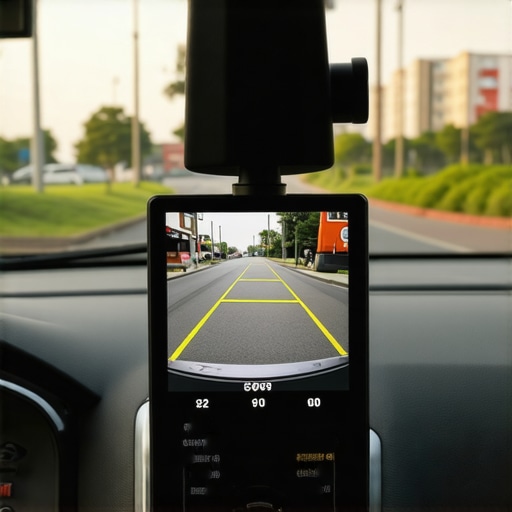
Insurance companies thrive on ambiguity. They love the gray area between your word and the other driver’s word. I watched a client lose their right to recover damages from a negligent contractor because they signed a waiver of subrogation in a simple service contract without realizing they were voiding their own insurance coverage. This same principle of contractual silence applies to the road. Without a dashcam, you are at the mercy of the adjuster’s loss-cost algorithm. That algorithm assumes you are at fault unless proven otherwise. A rate hike is not just a price change. It is a penalty for a risk profile they have assigned to you based on incomplete data. If you lack the digital proof to challenge their narrative, you will pay for it every month for the next five years. This is the reality of the forensic underwriter. We look for reasons to justify the premium, and your dashcam is the only tool that can force us to look elsewhere.
The electronic eye in the courtroom
A dashcam provides objective forensic evidence that overrides the subjective interpretation of an insurance adjuster during a fault determination process. By capturing the precise velocity, lane position, and timing of an incident, the video footage serves as an immutable witness that eliminates the he-said-she-said dynamics that typically lead to a 50/50 fault split. In states like Florida or New York, where no-fault laws and comparative negligence dominate, even a ten percent reduction in assigned fault can save you thousands in long-term premium surcharges. The carrier wants a clean file. They want to close the claim and move on. Your job is to make it impossible for them to ignore the truth of the proximate cause.
“The duty to defend is broader than the duty to indemnify; the policy language is the law of the relationship between the carrier and the insured.” – Contractual Law Maxim
Why your carrier ignores the truth
Insurance carriers often default to industry-standard fault charts that do not account for the specific nuances of an accident captured on camera. These charts are designed for efficiency, not accuracy. They categorize accidents into buckets, like rear-end or left-turn, and assign blame automatically. When you present dashcam footage, you are disrupting their automated workflow. You are forcing a human adjuster to perform a forensic review. This is where the mathematical fiction of your rate hike begins to crumble. If the video shows the other driver was distracted or violated a specific traffic statute, the carrier’s ability to subrogate, or recover costs from the other insurer, increases significantly. When the carrier recovers their costs, your risk profile remains neutral, and your rate hike can be successfully contested.
The math of a premium spike
The actuarial impact of an accident on your premium is determined by the severity of the loss and the frequency of your claims. Even a minor scrape can lead to a 20 percent increase if the adjuster deems you the primary cause. This is because the algorithm views a single at-fault accident as a precursor to future, more expensive claims. Using dashcam footage to move from 51 percent at fault to 49 percent at fault is the difference between a surcharge and a clean record in many jurisdictions. Below is a breakdown of how evidence impacts the financial outcome of a claim over time.
| Evidence Type | Fault Allocation | Premium Impact (3 Years) | Subrogation Success |
|---|---|---|---|
| Verbal Testimony Only | 50% to 100% | $1,200 to $3,500 Increase | Low |
| Police Report (Non-Witness) | 40% to 70% | $800 to $2,000 Increase | Moderate |
| High-Def Dashcam Video | 0% to 20% | $0 to $400 Increase | High |
The subrogation trap and the digital escape
Subrogation is the legal process where your insurance company seeks reimbursement from the party responsible for the loss. If your carrier cannot prove the other party was at fault, they cannot recover their payout. If they cannot recover their payout, they pass that cost to you in the form of higher premiums. This is the subrogation trap. Most policyholders do not realize that their own insurance company might not fight that hard to win a subrogation case if the evidence is weak. A dashcam provides the leverage your carrier needs to win. When you hand over a clear video of the incident, you are handing the subrogation department a winning lottery ticket. They will use that video to bully the other carrier into a 100 percent settlement, which directly protects your wallet.
“Insurers must conduct a timely and thorough investigation of all claims, considering all available evidence including electronic records provided by the insured.” – NAIC Model Unfair Claims Settlement Practices Act
The three words that kill a claim
Failure to disclose, contributory negligence, and proximate cause are the terms adjusters use to justify a rate hike despite your protests. Contributory negligence is particularly dangerous in states like North Carolina or Virginia, where if you are even one percent at fault, you can be barred from recovery. A dashcam is the only way to prove you had no contributory role. It shows you were not speeding, you were not on your phone, and you took evasive action. It establishes the proximate cause of the accident as the other driver’s negligence, not your presence on the road. Without this video, the adjuster will likely find a way to assign you some small percentage of blame just to close the file.
Tactical checklist for policy audits
To effectively use your dashcam evidence to fight a rate hike, you must follow a strict protocol of preservation and presentation. If the footage is grainy, missing timestamps, or does not show the lead-up to the event, its value drops. Follow these steps to ensure your digital witness stands up to forensic scrutiny.
- Verify that your dashcam records in at least 1080p resolution with a 140-degree field of view.
- Ensure the internal clock is synced with GPS time to provide an accurate chronological record.
- Hardwire the camera to your vehicle’s fuse box to ensure it records even when the ignition is off.
- Never hand over the original SD card; provide a copy and keep the master file in a secure location.
- Draft a written statement that references specific timestamps in the video to guide the adjuster.
The ghost in the fine print
Many modern policies contain clauses regarding telematics and data sharing that can work against you if you are not careful. While a dashcam is your tool, the car’s internal black box, or Event Data Recorder, belongs to the manufacturer and can be subpoenaed. The carrier will look for discrepancies between your video and the vehicle’s telemetry. If your video shows a green light but the black box shows you didn’t brake until 0.5 seconds after impact, they will use that delay to argue for partial fault. You must be prepared to explain these gaps. The forensic truth is often found in the milliseconds between the video frame and the sensor log. Being a proactive insured means understanding that the carrier is always looking for a way to mitigate their loss at your expense. Use your video to close the door on their speculation. The rate hike is not inevitable. It is a negotiation based on evidence, and the person with the best data usually wins.