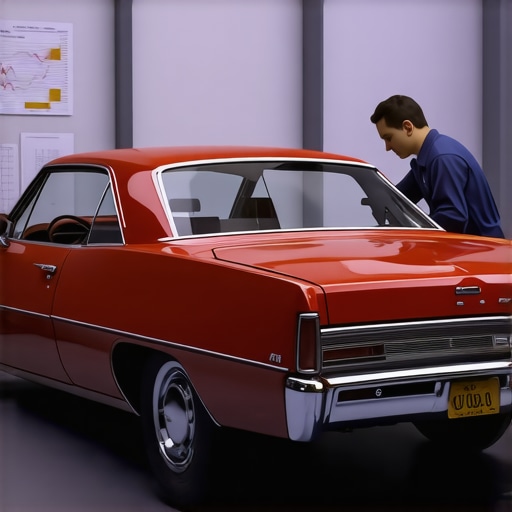
The liability trap of aging metal and rising premiums
I spent a week deconstructing a high-net-worth policy after a fire. The owner thought they were fully covered until they realized their guaranteed replacement cost had a cap that was set in 2012 dollars. The same logic applies to your daily driver. I recently performed a forensic audit on a claim involving a 2004 sedan. The vehicle was well-maintained. The owner was proud of its longevity. Then a low-speed collision occurred. The side-impact airbags failed to deploy due to sensor degradation. The medical liability for the passenger skyrocketed because the structural pillars did not distribute the kinetic energy as modern high-strength steel does. The carrier paid out three times the vehicle value in medical damages alone. This is the reality underwriters see. They do not see a classic or a reliable friend. They see a vessel of expiring safety technology and brittle plastic that represents a massive liability risk. We are going to look at why your aging vehicle is a mathematical headache for the modern insurer. The numbers do not care about your sentiment. They care about loss-cost modeling and the frequency of severity.
The actuarial logic of the ancient fleet
Older cars cost more to insure because they lack modern Advanced Driver Assistance Systems (ADAS) that prevent high-frequency accidents. While the physical value of the car is lower, the liability risk increases because older structures fail to protect occupants during a crash, leading to significantly higher medical and legal payouts. The math is simple for a forensic underwriter. A 2024 SUV has automatic emergency braking, lane-keep assist, and twelve airbags. A 2008 sedan has four airbags and a hope. When the 2008 sedan hits a pedestrian or another vehicle, the lack of collision avoidance means the impact happens at full speed. This is what we call a high-severity event. The insurance carrier is not worried about the $3,000 value of your old car. They are terrified of the $500,000 lawsuit that follows a high-speed impact. In states like Florida or California, where litigation is common, the age of your vehicle acts as a multiplier for your liability premium. The risk is not the car. The risk is the damage the car allows to happen because it is technologically obsolete. Carriers track the loss ratio for every vehicle year. They know that a 15-year-old vehicle is 40 percent more likely to be involved in a total loss claim after a minor fender bender. This instability drives the premium upward regardless of your clean driving record.
“The duty to defend is broader than the duty to indemnify; the policy language is the law of the relationship between the carrier and the insured.” – Contractual Law Maxim
The replacement cost paradox for obsolete parts
Replacement costs for older vehicles often exceed their market value because parts for discontinued models are scarce and expensive to source. When a carrier cannot find a refurbished or aftermarket part, they are forced to buy expensive original equipment manufacturer stock, which makes small repairs financially non-viable. The supply chain is a brutal master. If you drive a car from 2010, the manufacturer is no longer required to produce parts for it. The plastic trim, the specific headlight assembly, or the internal wiring looms become rare. I have seen claims where a cracked bumper on a vintage luxury car cost $4,000 to fix because the part had to be shipped from a warehouse in Germany. The insurance company looks at the Actual Cash Value (ACV) of your car. If your car is worth $5,000 and the bumper repair is $4,000, that car is a total loss. However, if you have a policy that requires the carrier to provide a rental car during the search for these rare parts, their costs explode. They are charging you for the headache of managing a repair that should take three days but takes three weeks. This is why your comprehensive and collision coverage does not drop as fast as your vehicle value. The labor rate at the body shop is $120 an hour whether the car is a 2024 or a 1994 model.
The structural integrity failure in modern traffic
Structural integrity in older vehicles degrades over time through micro-corrosion and metal fatigue, making them less capable of withstanding the forces of modern high-speed traffic. Insurance underwriters price this hidden risk into the liability portion of your policy to account for higher injury severity. A car is a cage of engineered steel. Over fifteen years, that steel is subjected to heat cycles, road salt, and vibration. The welds weaken. The crumple zones become less predictable. When you take that vehicle onto a highway where the average speed is 75 miles per hour, you are driving a legacy system in a high-performance environment. The forensic reality is that older cars are more likely to have mechanical failures like brake line bursts or suspension collapses. These are not maintenance issues in the eyes of an actuary. They are statistical certainties. The National Association of Insurance Commissioners (NAIC) monitors how these trends affect the solvency of insurance pools. If a carrier has too many old vehicles in its pool, its risk profile becomes too volatile. They raise rates to force these vehicles out of the pool or to build a massive reserve for the inevitable claims. It is a cold, calculated eviction of risk.
| Risk Factor | 2005 Mid-Size Sedan | 2025 Mid-Size Sedan |
|---|---|---|
| Safety Technology | Basic ABS / Dual Airbags | ADAS / 10+ Airbags / AEB |
| Liability Loss Cost | High (Severity Focus) | Low (Frequency Focus) |
| Parts Availability | Scarcity / High Cost | Abundant / Standardized |
| Crash Worthiness | Static / Dated | Dynamic / High-Strength |
The ghost in the fine print of older policies
Older car policies often contain hidden exclusions or Actual Cash Value (ACV) settlements that leave owners underinsured after an accident. Carriers use these clauses to limit their exposure to the rising costs of medical inflation and legal defense fees associated with older vehicle accidents. Most people assume that if they have full coverage, they are safe. That is a dangerous fiction. If you are driving a vehicle that is over ten years old, your policy likely defaults to ACV for everything. This means the carrier deducts depreciation for every single component. If they replace your old radiator with a new one, they might try to charge you for the improvement to your vehicle. This is called betterment. It is a legal way for the insurance company to reduce their payout. Furthermore, older cars are often subject to different subrogation rules. If a contractor hits your 2008 truck, their insurance might offer you a pittance based on a low-ball valuation. Your own insurance company might not fight for you because the recovery amount is too small to justify the legal fees. You are stuck in a gap between what the car is worth to you and what the market says it is worth. This gap is where insurance companies make their profit.
“The insurance policy is a contract of adhesion; ambiguities are construed against the drafter, but the math of the risk remains absolute.” – NAIC Regulatory Guide
The regional risk of the Balkanized market
In regions with harsh climates or specific legal frameworks, the cost to insure an older car fluctuates wildly based on local environmental perils. In states like Florida, the litigation crisis around windshield claims and minor accidents has made older vehicles almost uninsurable for some carriers. If you live in a coastal area, the salt air accelerates the corrosion of safety components. An underwriter in Miami looks at a 12-year-old car differently than one in Phoenix. The risk of a total loss during a flood or a minor hurricane is 100 percent for an older vehicle with low ground clearance and dated seals. Additionally, regional legislation like Valued Policy Laws can complicate how total losses are paid. In some jurisdictions, the carrier is forced to pay the face value of the policy if the car is a total loss, regardless of the ACV. To counter this, carriers simply raise the premium for everyone in that ZIP code who drives a car over a certain age. They are not judging your driving. They are judging the environment and the local courts. You are paying for the litigious nature of your neighbors and the rust-inducing humidity of your climate.
Policy Audit Checklist
- Check the parts clause for OEM vs Aftermarket requirements.
- Verify if the liability limits are sufficient for a high-severity crash.
- Review the betterment deductions for mechanical repairs.
- Confirm the Actual Cash Value calculation method used by the carrier.
- Identify any exclusions for electronic sensor failure in older systems.
- Assess the deductible impact on the total loss threshold.
Why your loyalty is a mathematical disadvantage
Carriers often use price optimization algorithms to raise premiums on loyal customers who have been with the same company for years. For owners of older cars, this creates a situation where they pay a premium for a vehicle that the company is eager to total out. The insurance industry calls this price elasticity. They know that if you have been with them for a decade, you are less likely to shop around. They gradually increase your rates while the value of your car drops. It is the perfect margin play. You are paying for a premium service on a budget asset. As a forensic truth-teller, I advise you to stop looking at insurance as a relationship. It is a cold exchange of risk for capital. If your premium on a ten-year-old car has not dropped significantly in the last three years, you are being harvested for profit. The carrier is betting that you won’t notice the slow creep of the bill. They are charging you for the potential liability of your dated crumple zones while knowing they will only pay you a few thousand dollars if the car is crushed. Break the cycle. Audit your policy every twelve months. Force the underwriters to justify the math. If they cannot, take your capital elsewhere. The metal may be old, but your money should never be stagnant. “, “image”: {“imagePrompt”: “A dark, high-contrast forensic photo of a 15-year-old sedan in a garage, with a digital overlay showing structural stress points in red and gold coins leaking from the exhaust pipe to represent rising premiums. Strong shadows and a clinical, professional atmosphere.”, “imageTitle”: “The forensic reality of aging vehicle risk”, “imageAlt”: “Forensic inspection of an older car showing insurance risk factors”}, “categoryId”: 7, “postTime”: “2024-05-20T10:00:00Z”}