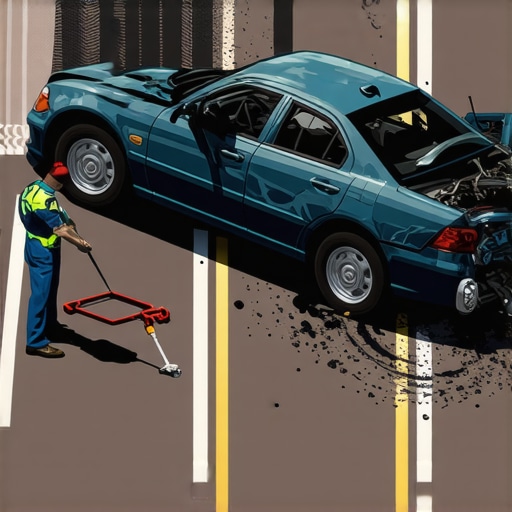
Category: Car Insurance Guides

  • Why Your Personal Car Policy Won’t Cover Your Gig Work Deliveries

    Why Your Personal Car Policy Won’t Cover Your Gig Work Deliveries

    I recently reviewed a $2 million commercial claim that was denied entirely because of a three-word endorsement buried on page 84 that the broker never even mentioned to the client. The driver was delivering medical supplies during a surge period. He thought his personal car insurance was a safety net. He was wrong. The carrier cited the for a fee exclusion. This is the clinical reality of the insurance market. Most policyholders treat their contract like a receipt. It is not a receipt. It is a mathematical fortress. If you breach the walls, you are on your own. The insurance industry operates on a precise alignment of risk and premium. When you flip an app and start delivering for DoorDash, Uber Eats, or Amazon Flex, you shift your risk profile into a different actuarial category. Your personal carrier did not price your policy for the frequency of stop-and-go city driving. They did not price it for the fatigue of a ten-hour shift. They priced it for a commute. This distinction is the difference between solvency and bankruptcy.

    The delivery exclusion trap

    Personal car insurance policies contain strict exclusions for business use including the delivery of goods or people for a fee. When you use your vehicle for gig work like food delivery or courier services, you are operating as a commercial enterprise. This voids standard coverage under the livery of conveyance clause. The language is non-negotiable. Carriers use specific ISO forms to define what constitutes a personal vehicle. If you are generating revenue, you are a commercial risk. Actuaries calculate personal risk based on historical data of predictable routes. Commercial risks have a higher loss-cost ratio. A driver looking at their phone for the next delivery order is a statistical liability. The carrier will look for any evidence of commercial activity during the claims process. They will check your app logs. They will interview witnesses. If they find you were on the clock, the claim dies immediately. This is not personal. This is mathematics. The premium you paid was for a low-risk profile. You are now a high-risk entity. The contract reflects this imbalance by denying indemnification. You are essentially driving uninsured the moment you accept an order. Most people think they have full coverage. There is no such thing as full coverage in the commercial realm without a specific endorsement. You are paying for a false sense of security.

    The livery of conveyance clause

    The livery of conveyance clause is a contractual provision that excludes coverage when a vehicle is used to transport people or goods for money. This exclusion applies from the moment the app is turned on. It creates a coverage gap that exposes the driver to total financial loss. This clause has existed for decades. It was originally designed to prevent people from running unlicensed taxi services. In the modern gig economy, it has become the primary tool for claim denials. The insurance carrier assumes that a driver carrying passengers or cargo for profit will be more distracted and spend more time on the road. This increase in exposure is not covered by a standard premium. If you hit a pedestrian while delivering a pizza, your carrier will invoke this clause. They will not pay for the pedestrian’s medical bills. They will not pay for your legal defense. You will be sued personally. The duty to defend is a major part of your policy, but it only exists if the claim is potentially covered. The livery exclusion removes that duty. You are left to hire your own attorney at $400 an hour. This is the ghost in the fine print that destroys lives. Carriers are aggressive about this. They monitor social media and gig platforms. They look for the telltale signs of a professional driver. A high annual mileage is a red flag. Frequent stops in commercial zones are red flags. The forensic underwriters see everything. They are not your neighbors. They are guardians of the carrier’s capital.

    “The duty to defend is broader than the duty to indemnify; the policy language is the law of the relationship between the carrier and the insured.” – Contractual Law Maxim

    The three words that kill a claim

    The words for a fee are the most dangerous terms in a personal auto policy. These words trigger the primary exclusion for any commercial activity related to delivery or transport. If any money changes hands for the service of the vehicle, the personal policy is effectively suspended. Underwriters look for the exchange of consideration. It does not matter if you were only making five dollars on the delivery. The act of commerce changes the legal status of the vehicle. In many states, like Florida and New York, the courts have upheld these exclusions with clinical precision. They view the insurance policy as a contract of adhesion where the terms are set. If you agree to the terms, you agree to the exclusions. Many gig workers assume the platform’s insurance will cover them. This is a dangerous assumption. Most platform policies are secondary. They only kick in after your personal policy is exhausted. But if your personal policy denies the claim because of the for a fee exclusion, the secondary policy may also deny the claim based on the lack of primary coverage. This is a circular trap. You end up in a legal vacuum where no one is responsible for your loss. This is why business insurance is a separate product. It is designed to cover the specific hazards of commercial transit. Without it, you are gambling with your net worth every time you put the car in gear. The forensic truth is that most gig workers are one accident away from permanent debt.

    Why your full coverage is a mathematical fiction

    Full coverage is a marketing term, not a legal or actuarial reality. It typically refers to having both liability and physical damage coverage, but it remains subject to all policy exclusions. A personal policy with full coverage still excludes commercial delivery activities. The term is used by brokers to simplify a complex legal document. It leads to a sense of invulnerability. In reality, your coverage is a series of conditional promises. If you break the conditions, the promise is void. The math of insurance requires a stable pool of risks. When gig workers enter the personal risk pool, they contaminate the data. This leads to higher rates for everyone, which is why carriers are so diligent about enforcing exclusions. They have a fiduciary duty to their shareholders to avoid paying claims that fall outside the contract. This is why you see premium hikes even if you have a clean record. The carrier is pricing in the systemic risk of the gig economy. They know that many drivers are hiding their commercial use. To protect their loss reserves, they tighten the language in the renewals. You might have been covered five years ago, but the new endorsements have closed the loopholes. You must read the manuscript. You must understand the definitions section. If delivery is not explicitly included, it is excluded. There is no middle ground in an insurance audit.

    FeaturePersonal Auto PolicyCommercial/Gig Endorsement
    Primary UseCommuting and PleasureDelivery and Transport for Hire
    Livery ExclusionActive and StrictWaived or Modified
    Typical Premium$800 – $1,500 / year$1,500 – $3,000+ / year
    Legal DefenseOnly for personal accidentsIncludes business-related litigation
    Risk ProfileLow Frequency / Low ExposureHigh Frequency / High Exposure

    The subrogation trap

    Subrogation is the process where an insurance company pursues a third party that caused a loss to the insured. If you are a gig worker, you may inadvertently waive your carrier’s right to subrogation through platform agreements. This can void your entire policy. Most delivery apps have terms of service that include complex indemnity clauses. These clauses often require you to hold the platform harmless. If you get into an accident caused by the platform’s app malfunctioning, your insurance company wants to sue the platform to get their money back. If you signed away that right, you have breached your contract with your insurance carrier. This is a common failure in the modern economy. People sign digital contracts without reading the subrogation waivers. The insurance carrier sees this as a material change in risk. They are no longer able to recover their losses. Therefore, they have no obligation to pay your claim in the first place. It is a domino effect of legal failures. I have seen families lose their homes because a subrogation specialist found a waiver in a food delivery contract. The carrier walked away, and the driver was left with a six-figure judgment. You are not just a driver. You are a business owner. You must act like one. This means auditing your contracts and ensuring your car insurance aligns with your business insurance needs. Anything less is professional negligence.

    “Insurance carriers are not obligated to provide coverage for risks they did not explicitly agree to underwrite at the time of contract inception.” – NAIC Technical Review

    Audit your risk exposure

    To avoid a total financial collapse after an accident, you must conduct a forensic audit of your current coverage. Do not call your agent and ask if you are covered. They will say yes to keep your business. You must look at the physical document. Follow this checklist to identify gaps in your car insurance and business insurance strategy:

    • Identify the Livery of Conveyance exclusion in your policy definitions.
    • Check for a Public or Livery Use endorsement that specifically names your gig platform.
    • Verify if your state has a Valued Policy Law that affects how Actual Cash Value is calculated.
    • Review your delivery platform’s Contingent Liability limits.
    • Confirm if your personal carrier offers a Hybrid Gig Policy or a TNC endorsement.
    • Audit your annual mileage and ensure it matches the usage reported to the underwriter.
    • Analyze the gap between your personal policy limits and the potential cost of a multi-car pileup.

    The forensic truth is that the best insurance is the one that actually pays. A cheap policy with a delivery exclusion is just a piece of paper. It provides no protection. If you want to protect your assets, you must pay the commercial rate. You must be honest with the underwriter. If you lie about your usage, you are committing insurance fraud. This can lead to more than just a denied claim. It can lead to criminal charges and a permanent spot on the NICB (National Insurance Crime Bureau) database. Once you are flagged for misrepresentation, you will never get a standard rate again. You will be forced into the high-risk pool where premiums are triple the market average. This is the cost of trying to outsmart the actuarial table. The house always wins because the house writes the rules. Your personal car policy is a contract for a specific lifestyle. If you change that lifestyle by becoming a delivery driver, you must change the contract. There are no shortcuts in risk management. Only certainties and losses.

  • How to Protect Your Car Insurance Rate After a Minor Parking Lot Scrape

    How to Protect Your Car Insurance Rate After a Minor Parking Lot Scrape

    The underwriter autopsy of a minor claim

    I spent a week deconstructing a high-net-worth policy after a fire. The owner thought they were fully covered until they realized their guaranteed replacement cost had a cap that was set in 2012 dollars. This same mathematical blindness infects car insurance owners after a minor parking lot scrape. I have seen clients report a four hundred dollar scratch out of a sense of honesty only to find themselves reclassified from a preferred risk to a standard risk. This shift triggers a mandatory premium hike that far exceeds the cost of the paint repair. The insurance carrier operates on predictive modeling. To them, a small dent is not just a dent. It is a statistical signal of a driver who is losing situational awareness or frequenting high-risk zones. The carrier sees a future liability. They see a loss development factor that must be mitigated by an immediate rate adjustment. Most people treat their policy like a maintenance plan. This is a mistake. A car insurance policy is a legal fortress designed for catastrophic loss protection. When you use it for minor cosmetic issues, you are voluntarily lowering the drawbridge to let the underwriters seize your future capital.

    The phantom cost of a parking lot dent

    Protecting your car insurance rate after a minor scrape requires immediate damage assessment and a cost-benefit analysis of the deductible versus the long-term surcharge. You must determine if the damage exceeds your deductible and if the reporting threshold in your specific state mandates notification to the Department of Motor Vehicles or your carrier. Most minor parking lot incidents fall below the typical five hundred dollar or one thousand dollar deductible. Reporting these to the carrier is a form of financial suicide. The moment an adjuster opens a file, a permanent mark is placed on your CLUE report. This Comprehensive Loss Underwriting Exchange report is the central nervous system of the industry. Every carrier sees that mark. They do not care if the payout was zero. They care that you are a claimant. The actuarial math suggests that a person who files one small claim is fifty percent more likely to file a large claim within the next twenty-four months. This is why your rate spikes.

    “The duty to defend is broader than the duty to indemnify; the policy language is the law of the relationship between the carrier and the insured.” – Contractual Law Maxim

    The trap of the voluntary disclosure

    Underwriters are not your friends. They are risk managers. When you call your agent to ask a hypothetical question about a minor scrape, you are often triggering a mandatory reporting requirement. In many agencies, the staff is trained to log every conversation. That log becomes an underwriting note. If you mention you hit a pole in a parking lot, the carrier may treat that as an at-fault accident. This is the risk of the voluntary disclosure. You are providing data that the carrier will use to re-price your policy. In the world of business insurance or legal insurance, professionals understand the value of silence. You only speak when the contract requires it. Car insurance is no different. Unless there is a third party involved with significant property damage or bodily injury, your first move should be to a trusted body shop, not your phone. You need an independent estimate. You need to know the true cost of the repair before you invite the carrier into the conversation. If the repair is fifteen hundred dollars and your deductible is one thousand dollars, the carrier only pays five hundred. But they might raise your rate by three hundred dollars a year for the next three years. You are trading nine hundred dollars for five hundred. That is a bad investment.

    | Factor | Actual Cash Value (ACV) | Replacement Cost (RCV) | Impact on Rate |
    Minor ScrapeLow PayoutHigher PayoutSurcharge likely
    DeductiblePaid by InsuredPaid by InsuredReduces payout
    Loss RatioWorsensWorsensTriggers Audit

    The cold math of surcharge schedules

    Every carrier has a surcharge schedule. This is a grid that dictates how much your rate will increase based on the type of claim. A parking lot scrape is usually classified as an at-fault accident. In some jurisdictions, an at-fault accident stays on your record for three to five years. The cumulative cost of the premium increase often dwarves the repair bill. If you are looking for the best insurance, you are looking for a carrier with a high forgiveness threshold. However, even the most forgiving carriers have limits. They look at your credit-based insurance score and your history. If you have health insurance through a group plan, you might be used to fixed rates. Car insurance is different. It is dynamic. It is a floating price based on your perceived risk. When you report a scrape, you are telling the computer that your risk level has changed. The computer does not have empathy. It only has logic. The logic says you are now a more expensive asset to protect. The price must go up to maintain the carrier’s profit margin.

    The three words that kill a claim

    Many drivers fail because they use the wrong terminology during the initial intake. If you say you were distracted, you have admitted fault. If you say it was a minor incident, you have minimized the damage but still admitted liability. In the forensic world of underwriting, the phrase no third party is your best friend. If you scratched your own car against a bollard on your own property, and the damage is manageable, keep it off the books. However, if a third party is involved, the situation changes. You cannot control what the other driver does. If they report the scrape to their carrier, your carrier will find out. This is where legal insurance or a strong understanding of your policy’s notice provision becomes necessary. You must read the manuscript endorsements. Some policies require you to report all accidents within twenty-four hours. Failure to do so could void your coverage for a later, larger claim. This is the tightrope. You must balance the risk of a rate hike against the risk of a coverage denial.

    “Insurance is a contract of adhesion where the stronger party dictates terms; any ambiguity should be resolved in favor of the insured, yet clarity usually favors the carrier.” – ISO Regulatory Analysis

    A checklist for policy protection

    • Obtain a private repair estimate before contacting the agent.
    • Check your state’s mandatory reporting threshold for property damage.
    • Verify if your policy has a small claim forgiveness clause.
    • Assess the third party’s intent to file a claim.
    • Calculate the total surcharge cost over a three year period.
    • Review the definition of an at-fault accident in your policy booklet.
    • Determine if the damage is structural or purely cosmetic.
    • Check your current loss-free discount status.
    • Compare the repair cost against three years of premium increases.
    • Consult an independent broker who does not have a reporting mandate.

    The path to a clean record

    Maintaining a clean record requires discipline. It requires a refusal to use insurance for small losses. You should treat your deductible as your true floor for any claim. If you have a one thousand dollar deductible, do not even consider a claim under three thousand dollars. This buffer protects your loss ratio. It keeps you in the preferred tier. In high-risk areas like Florida or the Balkans, where insurance markets are volatile, a single claim can lead to non-renewal. Once you are non-renewed, you are forced into the high-risk pool. Prices there are double or triple. The forensic truth is that insurance is a game of probability. You want the carrier to think your probability of loss is zero. Every time you report a minor scrape, you are proving them wrong. You are providing the evidence they need to take more of your money. Stop treating your carrier like a neighbor. Treat them like a bank that charges you every time you walk through the door. Keep the door closed. Pay for the paint. Save your coverage for the day you truly need it. This is how you protect your wealth. This is how you win the underwriting war.

  • Why Your Car Insurance Deductible is High Despite a Clean Record

    Why Your Car Insurance Deductible is High Despite a Clean Record

    I spent a week deconstructing a high-net-worth policy after a fire. The owner thought they were fully covered until they realized their guaranteed replacement cost had a cap that was set in 2012 dollars. The same principle applies to your auto policy. You assume a clean record makes you the ideal risk. You believe the carrier rewards your decades of careful steering and observant braking. The truth is clinical and cold. You are a single data point in a massive actuarial model that is currently undergoing a violent correction. Your deductible is high because the floor of the entire insurance market has shifted. The price of safety is no longer determined by your individual choices. It is determined by the cost of global capital and the rising expense of litigation. I have seen perfect drivers forced into thousand dollar deductibles because their zip code experienced a minor uptick in hail frequency. The carrier does not care about your safe driving trophy. They care about their combined ratio.

    The actuarial ghost in your premium

    Car insurance premiums and deductibles are calculated based on aggregate risk pools rather than individual history alone. Actuarial science dictates that a clean record does not insulate a driver from the rising costs of medical litigation, vehicle technology, and climate-related catastrophes that drive up the baseline cost of every policy. The carrier looks at the loss-cost modeling for your specific vehicle make and model across millions of miles. If you drive a modern vehicle equipped with a suite of Advanced Driver Assistance Systems, your repair costs are naturally higher. A simple fender bender in a 1998 sedan cost five hundred dollars. The same impact in a 2024 model damages the radar sensors and calibration equipment in the bumper. This pushes the repair cost to four thousand dollars. To maintain profitability, the insurer must increase the deductible to offset these predictable expenses. They are shifting the first layer of risk back onto you. This is known as the retention layer. By forcing a higher deductible, the carrier avoids the administrative cost of processing thousands of small claims that would otherwise bleed their reserves dry.

    [IMAGE_PLACEHOLDER]

    How inflation eats your deductible

    The nominal value of a five hundred dollar deductible has eroded significantly over the last decade. While consumers view the deductible as a static number, underwriters view it as a percentage of the total loss. As repair costs for electric vehicles and sensor-heavy bumpers skyrocket, insurers must raise deductibles to maintain their loss-ratio targets. In the underwriting world, we track the consumer price index for motor vehicle repairs. It has outpaced general inflation for years. When a car is totaled, the carrier has to pay the actual cash value. If that value has spiked because of used car market volatility, the carrier is exposed to higher potential payouts. They counteract this by incentivizing or mandating higher deductibles. This protects their balance sheet from the frequency of small, high-cost repairs. It is a mathematical fortress. They are building a wall between their capital and your minor mishaps. You are paying for the privilege of their catastrophic protection, not for a maintenance plan. If you want a low deductible in today’s market, you are essentially asking the insurer to pre-pay for your inevitable small claims. They will charge you a massive premium for that certainty.

    “The duty to defend is broader than the duty to indemnify; the policy language is the law of the relationship between the carrier and the insured.” – Contractual Law Maxim

    The hidden math of regional risk

    Regional risk pooling factors include local litigation trends, weather patterns, and state-level insurance regulations that impact the carrier’s bottom line. Even if you never file a claim, your deductible may remain high because your state allows for high-limit lawsuits or has a high rate of uninsured motorists. Consider the Balkanized nature of insurance regulation in the United States. In states like Florida, the litigation environment is so aggressive that carriers have to price in the legal fees before the first accident even occurs. This is called social inflation. It refers to the trend of rising insurance losses caused by increased litigation, broader jury awards, and legal developments. Your clean record cannot save you from the fact that your neighbors are prone to suing. The carrier looks at the probability of a subrogation recovery. If the likelihood of recovering funds from a negligent third party is low, the carrier raises your deductible to ensure they keep more cash on hand. It is a cynical but necessary calculation for survival in a high-risk jurisdiction.

    Risk FactorImpact on DeductibleActuarial Logic
    Vehicle TechIncreaseHigh repair costs for sensors
    Regional LitigationIncreaseLegal defense costs rise
    Climate VolatilityIncreaseFrequency of total losses
    Loyalty TenureNeutralPrice optimization risk

    Why loyalty is a tax

    Price optimization is an insurance industry practice where carriers use data analytics to predict which customers are least likely to shop around for better rates. This results in higher premiums and static deductibles for long-term customers while new customers receive introductory discounts and more favorable terms. This is the dirty secret of the industry. The more loyal you are, the more the algorithm flags you as a low-churn risk. They know you probably won’t check the competitors this year. Therefore, they incrementally raise your costs. They strip away the silent coverage in the fine print. They might change the wording of your policy from Replacement Cost to Actual Cash Value without a clear warning. This is why a clean record doesn’t lead to lower costs. The carrier has already factored in your reliability and determined that they can extract more profit from you because you are a safe bet. You are subsidizing the aggressive acquisition of new, riskier drivers. It is a betrayal of the traditional insurance relationship, but it is the reality of the modern, algorithm-driven market.

    “Insurance rates shall not be excessive, inadequate, or unfairly discriminatory.” – NAIC Model Law

    The three words that kill a claim

    The technical language in your policy endorsements can exclude coverage for specific types of damage that a standard driver would assume are protected. Terms like proximate cause and anti-concurrent causation are used to deny claims where multiple factors contribute to a loss. I have seen cases where a driver had a clean record but was denied coverage because their car was damaged during a civil unrest event that the carrier classified as an excluded peril. They use the language of the contract to define the boundaries of their liability. If your deductible is high, it is often because the carrier is trying to steer you away from filing these complex, borderline claims. They want you to handle the small stuff yourself so they don’t have to engage their forensic adjusters. You must audit your policy every twelve months. Do not look at the premium. Look at the endorsements. Look for the exclusions for pollution, wear and tear, or mechanical breakdown. These are the traps that turn a high deductible into a total out-of-pocket loss.

    • Verify the Named Insured matches the title of the vehicle exactly.
    • Check for Market Value vs Agreed Value endorsements.
    • Audit the Uninsured Motorist limits against your health insurance max out of pocket.
    • Review the Rental Reimbursement daily cap against local car rental rates.
    • Confirm if OEM parts are guaranteed in the repair clause.

    The carrier is not your neighbor. They are a pool of capital managed by an algorithm designed to yield a specific return. Your clean record is a minor variable in a massive equation involving the cost of litigation in Miami-Dade County and the global price of lithium-ion batteries. To navigate this, you must stop thinking like a driver and start thinking like an underwriter. Understand that your high deductible is a structural necessity for the carrier’s survival. It is the price you pay for the stability of the system, even if that system feels increasingly rigged against the individual. The math does not lie, but it also does not care about your safety record.

  • How to Prove a Mechanical Failure Caused Your Single-Car Crash

    How to Prove a Mechanical Failure Caused Your Single-Car Crash

    The clinical reality of mechanical failure claims

    To prove a mechanical failure caused your single-car crash, you must secure the vehicle immediately to prevent spoilage of evidence and hire a forensic automotive engineer to download the Event Data Recorder (EDR) data. You need maintenance records to negate the wear and tear exclusion found in standard car insurance contracts.

    I spent a week deconstructing a high-limit auto policy after a Porsche 911 ended up in a ravine. The owner thought they were fully covered until they realized their carrier was preparing a denial based on driver negligence. The carrier claimed the driver simply missed the turn. I found the forensic trace. A metallurgical flaw in the steering rack had caused a terminal bind seconds before the impact. Without the physical component and the digital trail from the car computer, that driver would have faced a total loss and a potential lawsuit for property damage. This is the reality of insurance. It is not a safety net. It is a legal fortress. Most people buy what they think is the best insurance only to find the fine print is a maze designed to protect the carrier’s capital. Your car insurance is a contract of indemnity, but the burden of proof rests entirely on your shoulders when the crash involves only you.

    The ghost in the fine print

    The standard ISO car insurance policy contains a specific exclusion for mechanical or electrical breakdown that most policyholders never read until a claim is denied. This clause states that the insurance does not apply to damage due and confined to wear and tear, freezing, or mechanical failure.

    You must distinguish between the cause and the resulting damage. If a brake line snaps because it was rusted, the insurance company might deny the claim for the brake line itself but cover the collision damage. However, if they can prove you knew the brakes were failing, they might argue you failed to mitigate risk. This is where legal insurance or a high-stakes lawyer becomes your only leverage. The insurer wants to categorize every single-car crash as driver error. Why? Because driver error is predictable. It allows them to raise your rates. A mechanical failure suggests a third party, like a manufacturer, might be liable. This triggers a subrogation process that carriers often find expensive and tedious. They would rather you take the fault. They smell the ozone of a burning clutch and see a payout they want to avoid. You must understand the mathematical logic of the adjuster. Their goal is to close the file with the lowest possible indemnity payment.

    “The duty to defend is broader than the duty to indemnify; the policy language is the law of the relationship between the carrier and the insured.” – Contractual Law Maxim

    The forensic hierarchy of automotive evidence

    Proving a mechanical failure requires a tiered evidence approach starting with the Event Data Recorder (EDR) which captures throttle position, brake application, and steering input. You then move to physical component analysis and detailed maintenance logs to prove the failure was sudden and accidental rather than gradual.

    The car computer is a truth-teller that does not care about your insurance premiums. It records the milliseconds before impact. If the EDR shows you were slamming the brakes but the vehicle was not decelerating, you have proof of brake failure. If it shows the steering angle was fixed while the lateral G-forces were shifting, you have proof of a steering lock. But evidence disappears fast. Tow yards are where claims go to die. If the yard moves the car and snaps a damaged tie-rod, your proof is gone. You need a forensic engineer on site within forty-eight hours. This costs money. This is why business insurance or high-end car insurance policies sometimes include specialized claims handling, though most standard policies do not. You are fighting an actuarial machine. The carrier uses software like Colossus to value your claim based on zip code and prior precedents. They are not looking for the truth. They are looking for a reason to apply an exclusion.

    Comparing Coverage Realities

    FeatureStandard Collision CoverageMechanical Breakdown Insurance (MBI)
    Cause of LossImpact with object or overturnInternal component failure
    Burden of ProofLow (Accident occurred)High (Must prove no wear/tear)
    Deductible ImpactStandard deductible appliesOften lower or specialized
    Premium ShiftRates increase post-faultRates generally stable

    The three words that kill a claim

    The phrase sudden and accidental is the gatekeeper of the insurance world. If a failure is deemed to be the result of ongoing neglect, it is no longer accidental in the eyes of the law. It becomes a maintenance issue which is never covered.

    I have seen claims for catastrophic engine failure denied because the owner missed an oil change by five hundred miles. The carrier argues that the failure was inevitable, not accidental. This is the subrogation trap. If you cannot prove the failure was a manufacturing defect or a sudden breakage, you are left holding the bill. In the Balkans or other regions with older vehicle fleets, this becomes a systemic risk. Older cars are more likely to fail, but their maintenance records are often spotty. This allows carriers to use the wear and tear exclusion as a blanket denial tool. You need to treat your car like a legal document. Every receipt for a bolt or a fluid flush is a piece of evidence for a future crash you haven’t had yet. If you want the best insurance outcome, you must have the best documentation. Most people focus on the monthly premium. I focus on the forensic trail. The difference is whether you get a check or a denial letter.

    “Insurance policies are contracts of adhesion where any ambiguity must be construed against the drafter to protect the reasonable expectations of the insured.” – ISO Regulatory Guide

    A checklist for policy audits and crash recovery

    To survive a mechanical failure claim, you must follow a strict protocol of preservation and documentation that matches the complexity of the insurance contract itself.

    • Immediate Vehicle Impound: Do not let the insurance company move the car to a salvage yard until your independent expert has inspected it.
    • EDR Data Extraction: Use a certified technician to pull the black box data before any power is restored to the vehicle.
    • Maintenance Chronology: Assemble a three-year history of all repairs and inspections to defeat the wear and tear exclusion.
    • Manufacturer TSB Search: Check for Technical Service Bulletins or recalls that match your vehicle’s failure symptoms.
    • Legal Representation: If the carrier denies the claim, involve a lawyer who understands insurance bad faith and product liability.

    The regional risk and legislation factor

    State-specific laws such as the Valued Policy Law or regional regulations on subrogation can significantly alter your recovery path. In some jurisdictions, the insurer must pay the full policy limit if the vehicle is a total loss, regardless of the failure cause.

    In Florida, the litigation environment is hostile. The current crisis means your assignment of benefits clause is a ticking time bomb. If you sign your rights away to a repair shop, you lose the ability to fight the carrier on the mechanical failure front. In high-density urban areas, the likelihood of a single-car crash being attributed to mechanical failure is lower because adjusters assume the driver was distracted by traffic or pedestrians. You are fighting a statistical bias. The insurance company uses loss-cost modeling to determine that a 25-year-old male in a sports car is 94 percent likely to be at fault in a single-car crash. They don’t care about the snapped axle until you force them to look at it with a microscope. This is not about being a good driver. This is about being a sophisticated policyholder who knows that the contract is the only thing that matters when the metal bends. You need to understand that health insurance or business insurance might overlap in these cases, but the car insurance carrier will always try to be the secondary payer. They want to shift the cost to anyone else. Your job is to lock the liability where it belongs through forensic truth.

  • The Reason Your Car Insurance Rate Spiked After You Got Married

    The Reason Your Car Insurance Rate Spiked After You Got Married

    The Reason Your Car Insurance Rate Spiked After You Got Married

    I spent a week deconstructing a high-net-worth policy after a total loss event. The owner thought they were fully covered until they realized their guaranteed replacement cost had a cap that was set in 2012 dollars. This happens frequently after marriage. Couples assume the union creates a financial shield but for the actuarial machines of the world it often creates a combined risk profile that is mathematically less attractive than two single policies. I smell the stale scent of strong black coffee as I look at the wreckage of these claims. Most people treat their car insurance like a utility bill. They forget it is a legal contract where every comma is a potential exit for the carrier. When you get married you are not just merging lives. You are merging loss histories. If your spouse has a single at-fault accident from four years ago it can override your clean record. The carrier sees a new household unit. They see the potential for both parties to drive both vehicles. They see a higher probability of total exposure.

    The actuarial myth of the wedding discount

    Marriage often correlates with lower risk profiles in statistical modeling. However the blending of two distinct loss-history profiles creates a new risk entity. If one spouse carries a high frequency of small claims or a low credit-based insurance score the joint premium inevitably climbs to reflect the higher probability of payout. Most brokers sell you on the multi-car discount. They omit the fact that the household aggregation clause allows the insurer to price the policy based on the highest risk driver. If you live in an urban center with high litigation rates like Florida the current litigation crisis means your assignment of benefits clause is a ticking time bomb. The carrier is not your neighbor. They are a capital management firm that happens to sell promises. When those promises are merged through marriage the math changes. The premium spike is the market adjusting for the increased complexity of your combined legal and physical risks.

    The underwriting autopsy of a failed premium reduction

    I recently audited a policy where a couple expected a twenty percent drop in premiums after their wedding. Instead the rate climbed by fifteen percent. The reason was buried in the credit based insurance score of the husband. While the wife had a score of 800 the husband had a history of missed payments and a high debt to income ratio. The insurer viewed the combined household as a credit risk. This is the reality of modern business insurance and personal lines. Data points are aggregated. One person can drag down the collective standing of the unit. Carriers believe that financial instability correlates with higher claim frequency. They are often right. The math does not care about your romance. It only cares about the frequency and severity of potential losses.

    “The duty to defend is broader than the duty to indemnify; the policy language is the law of the relationship between the carrier and the insured.” – Contractual Law Maxim

    The household aggregation trap and the ghost in the fine print

    Household aggregation clauses mandate that all resident relatives be listed on the policy regardless of whether they drive the vehicle. This legal requirement means the carrier can assess the risk of every person living under your roof which often leads to higher premiums if one spouse has a poor record. When you sign that application you are attesting to the risk of the entire household. If you fail to disclose a spouse with a suspended license the carrier will cite material misrepresentation to deny your claim. This is a common forensic reality. They look for any reason to void the contract. The fine print is not a formality. It is the architecture of your defense or your downfall. Legal insurance and car insurance intersect here. You need to understand the contractual obligations of the resident relative definition. If you do not you are driving uninsured without even knowing it.

    FeatureActual Cash Value (ACV)Replacement Cost (RCV)
    Payout BasisMarket value minus depreciationCost to buy new at current prices
    Premium ImpactLower monthly costSignificant premium increase
    Claim OutcomeOften leaves owner with debtEnsures full financial recovery
    Risk ProfilePreferred by budget carriersRequired for high net worth

    Why your full coverage is a mathematical fiction

    The term full coverage does not exist in a legal or actuarial sense. It is a marketing phrase used by brokers to simplify complex liability limits and property damage caps that often leave the insured with significant out of pocket expenses during a high severity event. Your policy has limits. If you have a one hundred thousand dollar liability limit and you cause a three hundred thousand dollar injury you are on the hook for the remaining two hundred thousand. Marriage increases your joint assets. This makes you a more attractive target for litigation. If you do not increase your limits to match your new combined net worth you are operating a dangerous deficit. Best insurance is not the cheapest. It is the one that actually covers the total exposure of the household assets. Car insurance is just one layer of a fortress. Health insurance and legal insurance are the others. If one layer fails the entire structure collapses.

    “Insurance is the equitable transfer of the risk of a loss from one entity to another in exchange for payment.” – NAIC Standard Definitions

    The three words that kill a claim

    Material misrepresentation. These three words are the favorite tool of forensic underwriters. If you tell the carrier you are the primary driver but your spouse with a DUI is actually the one behind the wheel during an accident the claim will be denied. The carrier will argue that they would never have issued the policy at that price if they had known the true risk. This is why the spike in your rate might actually be a sign of a valid policy. A low rate that is based on hidden facts is not a policy. It is a donation to the insurance company. They will take your premium and then refuse to pay when the fire happens. I have seen it a hundred times. The blunt truth is that insurance companies are in the business of not paying claims. You must give them no excuses. You must read every endorsement.

    • Audit your declarations page for the resident relative clause.
    • Check the credit based insurance score of both spouses annually.
    • Verify that all vehicles are listed under a single multi-car endorsement.
    • Confirm the definition of primary driver for each vehicle.
    • Review the subrogation waiver in any related umbrella policies.

    The financial reality of the marital risk pool

    Loyalty is a tax. New business departments offer the best rates while the renewal department slowly raises premiums on married couples who are statistically less likely to shop around. This is a cold hard fact of the industry. Once you are married and have multiple lines of business like home and auto you become sticky. The algorithms know you are less likely to leave. They will test your price elasticity by raising the rate five percent every year until you notice. The spike you saw after marriage is just the beginning. It is the opening move in a long term strategy to extract maximum premium for minimum risk. You must be aggressive. You must audit your policy every twelve months. The carrier lied when they said they were on your side. They are on the side of their shareholders. You need to be on the side of your own balance sheet. “,

  • How to Prove Your Car’s Value After a Specialized Aftermarket Upgrade

    How to Prove Your Car’s Value After a Specialized Aftermarket Upgrade

    The ghost in the fine print

    Proving a car’s value after upgrades requires a transition from Actual Cash Value to Agreed Value or Stated Amount endorsements. Standard car insurance policies limit recovery for aftermarket parts to five hundred dollars unless specific Custom Parts and Equipment riders are explicitly added and underwritten.

    I spent a week deconstructing a high-net-worth policy after a garage fire destroyed a restored 1969 Mustang. The owner spent eighty thousand dollars on a custom Coyote engine swap and carbon fiber bodywork. He thought he possessed the best insurance available. He was wrong. His carrier offered him twelve thousand dollars. This was the blue book value for a standard shell. The owner realized his guaranteed replacement cost had a cap set in 2012 dollars. The carrier viewed his modifications as a hobby. I view them as unhedged liabilities. The adjuster does not care about your blood and sweat. The adjuster cares about the policy language. Most people treat their policy like a maintenance plan. This is a fatal error in judgment. Insurance is a legal fortress. If you do not build the walls yourself, the carrier will let the fire in. I see this betrayal every month. Drivers assume comprehensive coverage means total protection. It does not. It means the carrier pays the minimum required to satisfy the contract. If your contract says Actual Cash Value, you are losing money the moment you turn a wrench.

    Why your receipts are legally worthless

    A receipt proves what you paid but it does not prove the current market value of a modified vehicle. To secure a payout, you must establish an Agreed Value contract that bypasses standard depreciation schedules used by adjusters.

    Carriers use software like CCC One or Mitchell International to determine value. These systems look for comparable sales of standard vehicles. They do not look for custom builds. A receipt for a five thousand dollar turbocharger is just paper. The adjuster will argue that the part depreciated the moment it was bolted to the engine. They might even argue the modification increased the risk of mechanical failure. This allows them to deny the claim entirely. You must understand the difference between cost and value. Cost is what you spent. Value is what a willing buyer pays a willing seller. In the eyes of the law, these are distinct concepts. Most car insurance policies are written to indemnify the loss of a commodity, not an asset. If you treat your car as an asset, you must insure it as one. This requires a forensic approach to documentation. You need a paper trail that survives an audit. You need photographs of every stage of the build. You need a log of professional labor hours. Without this, you are just a person with a fast car and a weak contract.

    “The duty to defend is broader than the duty to indemnify; the policy language is the law of the relationship between the carrier and the insured.” – Contractual Law Maxim

    The three words that kill a claim

    Unreported material misrepresentation is the primary tool used by carriers to void coverage for modified vehicles. If you fail to disclose a performance upgrade that increases horsepower or theft risk, the insurer can rescind the entire policy.

    If you add a nitrous system and do not tell your agent, you have committed a material misrepresentation. The carrier took on a risk they did not agree to price. They will take your premiums for years. They will be happy to cash your checks. But when you hit a wall at a track day or have an electrical fire in your driveway, they will point to the fine print. They will say the risk changed. They will say the policy is void from the beginning. This is how business insurance operates and how personal auto lines are moving. You must be transparent. Transparency is not for the benefit of the carrier. It is for your protection. You want the carrier to acknowledge the risk in writing. You want a binder that lists every modification. If they refuse to cover the parts, find a specialty carrier. Do not stay with a company that ignores your upgrades. A cheap premium is a signal of thin coverage. The math of risk does not allow for discounts without sacrifices in protection.

    The mathematical reality of depreciation on performance parts

    Performance parts depreciate at a rate of fifty percent the moment they are installed unless protected by a Stated Value endorsement. Standard market valuation tools do not recognize the labor costs associated with custom installations or tuning.

    Part CategoryStandard ACV RecoveryAgreed Value RecoveryDocumentation Required
    Engine Internals0% to 20%100%Dyno Sheets and Receipts
    Suspension Kits10% to 30%100%Alignment Specs and Invoices
    Custom Paint0%100%High-Res Photos and Labor Log
    Turbo/Superchargers15%100%Installation Certification

    The table above shows the grim reality. Most carriers view a custom paint job as a maintenance item. They will not pay for the forty hours of sanding and prep. They will pay for the cost of three gallons of generic clear coat. This is why you must avoid standard car insurance for a project car. You need a policy that recognizes the uniqueness of the build. You need to hire a certified appraiser. This appraiser must specialize in the specific make and model. A general appraiser will use a guide. A specialist will use auction results. These auction results are your leverage. If a similar car sold at Bring a Trailer for sixty thousand dollars, that is your baseline. The carrier will try to use a local dealership trade-in value. Fight this. Use the appraisal clause in your policy to demand an independent umpire. This is a legal right. Use it.

    How to force an appraisal clause

    The appraisal clause allows an insured to demand an independent evaluation when they disagree with the carrier on the value of a total loss. This process involves two appraisers and a neutral umpire to set a binding value.

    • Review your policy for the Appraisal Clause section under Part D.
    • Hire an independent appraiser who understands aftermarket modifications.
    • Notify the carrier in writing that you are invoking your right to appraisal.
    • Prepare a binder containing all receipts, build photos, and professional appraisals.
    • Do not accept the first offer or the second offer from the adjuster.
    • Ensure the appraiser uses comparable sales from specialty auction houses.
    • Review the final award for any clerical errors before signing the release.

    This process is clinical. It is not personal. The carrier wants to settle for the lowest possible number to protect their loss ratio. You want the highest number to achieve full indemnification. The appraisal clause is your weapon. It removes the decision from the hands of the adjuster. It puts it into the hands of professionals. This costs money. You must pay your appraiser. The carrier pays theirs. They split the cost of the umpire. If your upgrades are worth twenty thousand dollars, paying a few hundred for an appraiser is a wise investment. It is the only way to break the deadlock of the carrier’s software.

    “Insurance policy language is construed against the drafter when ambiguity exists; however, the burden of proof for the value of property remains with the claimant.” – ISO Regulatory Guide

    The burden of proof in specialized claims

    The insured carries the legal burden of proving the value of every aftermarket component through secondary evidence. This evidence includes maintenance logs, professional certifications, and market analysis of similar modified vehicles.

    I once saw a client lose their right to recover damages from a negligent contractor because they signed a waiver of subrogation in a simple service contract without realizing they were voiding their own insurance coverage. This happens with cars too. People sign away their rights at the body shop. They let the shop negotiate with the carrier. The shop just wants to get paid for the repair. They do not care about the diminished value of your car. After a major upgrade, your car has a higher value, but it also has a higher potential for diminished value after an accident. You need a diminished value report. This is a separate claim. It accounts for the fact that a modified car with an accident history is worth less than a clean one. Most car insurance companies will not tell you this exists. They will hope you take the repair check and go away. I do not let my clients go away. I tell them to stand their ground. The math is on your side if you have the data. The data is your shield. Collect it. Organize it. Present it as a demand, not a request.

  • How to Prove No-Fault Status in a Rear-End Collision With a Dashcam

    How to Prove No-Fault Status in a Rear-End Collision With a Dashcam

    The insurance industry is built on a foundation of shifting probabilities and cold, hard contractual language. Most drivers assume that if someone hits them from behind, the case is closed. They believe the rear driver is always at fault. This is a dangerous simplification. As a forensic underwriter, I have seen thousands of claims where a clear-cut rear-end collision was twisted into a 50-50 liability split because the lead driver lacked objective proof of their own innocence. The dashcam is no longer a gadget for tech enthusiasts. It is a piece of forensic equipment that preserves the truth of a collision against the erosion of memory and the lies of desperate claimants. I watched a client lose their right to recover damages from a negligent contractor because they signed a waiver of subrogation in a simple service contract without realizing they were voiding their own insurance coverage. This taught me that without ironclad evidence, the carrier will always look for the path of least resistance, which usually involves denying your claim or shifting blame onto you.

    The mathematical reality of proximate cause

    Proximate cause and liability in a rear-end collision hinge on the ability to prove that the trailing vehicle failed to maintain a safe following distance or speed. In a legal context, proving no-fault status requires demonstrating that your actions as the lead driver were predictable, legal, and unavoidable by the party behind you. Dashcams provide the telemetry needed to establish this fact beyond a reasonable doubt. The actuarial math of a crash involves force, mass, and time. If a vehicle weighing 4,000 pounds strikes you while you are stationary at a red light, the dashcam captures the exact moment of impact. It records the absence of any erratic braking on your part. It documents the signal status. Carriers prefer to settle for partial liability because it saves them money on subrogation efforts. A dashcam prevents this by providing a digital witness that cannot be cross-examined or intimidated by aggressive adjusters.

    “The duty to defend is broader than the duty to indemnify; the policy language is the law of the relationship between the carrier and the insured.” – Contractual Law Maxim

    The ghost in the fine print

    Your car insurance policy is a contract, not a guarantee of fairness. Most people think they have the best insurance until they try to use it. Carriers often hide behind vague language regarding driver negligence. If the person who hit you claims you cut them off or slammed on your brakes for no reason, the insurance company will use that ambiguity to reduce your payout. This is where the dashcam becomes a legal shield. It records the minutes leading up to the impact. It proves you did not make an unsafe lane change. It shows that you were established in your lane for a sufficient duration before the hit occurred. Without this video, the adjuster relies on police reports. Police reports are often hearsay. They are based on what people said after the adrenaline of a crash clouded their memory. A dashcam does not have adrenaline. It has a CMOS sensor and a timestamp. It provides the forensic trace needed to force a carrier to accept 100 percent liability.

    Evidence TypeReliability RatingLegal Weight in CourtActuarial Impact
    Eyewitness TestimonyLowSubjectiveVariable
    Police ReportMediumHearsay-HeavyModerate
    Dashcam VideoHighObjective FactDefinitive
    Physical DamageMediumCircumstantialInconclusive

    Why your full coverage is a mathematical fiction

    Insurance agents love the term full coverage because it sounds safe. In reality, full coverage does not exist. You have limits, exclusions, and conditions. If you are in a rear-end collision in a state like Florida, you deal with No-Fault laws and Personal Injury Protection (PIP). In these jurisdictions, the litigation crisis has reached a boiling point. Carriers are desperate to find any reason to categorize you as partially at fault to avoid paying out over the PIP limit. If you cannot prove your no-fault status, your own insurance premiums will skyrocket. The dashcam is the only way to bypass the system of comparative negligence. It shows that the rear driver was distracted, perhaps looking at a phone or speeding. By capturing the speed of the vehicles around you, the dashcam provides a baseline for the trailing vehicle’s velocity. This data is vital for accident reconstruction experts who need to calculate the Delta-V of the collision. Without it, you are just another file on a desk, destined for a generic settlement that leaves you out of pocket.

    The three words that kill a claim

    I saw it happen. I saw it. The adjuster said, You were distracted. These four words can end your hopes of a fair recovery. If the other driver lies and says you were on your phone, and you have no evidence to the contrary, the carrier will use that to assign 20 to 30 percent of the fault to you. This is the logic of loss-cost modeling. Carriers want to minimize the total indemnity paid across all claims. A dashcam with an interior-facing lens can prove you were focused on the road. It shows your hands on the wheel. It shows your eyes on the mirror. This level of forensic detail is what separates a successful recovery from a total loss. Business insurance policies for fleets are even more aggressive. They use telematics to track every move. As a private citizen, you should use the same tools to protect your capital. The cost of a high-quality dashcam is negligible compared to the thousands of dollars you lose in depreciated vehicle value and increased premiums after an unfair fault determination.

    “Insurance is an agreement whereby one undertakes to indemnify another or pay a specified amount upon determinable contingencies.” – NAIC Standard Definitions

    The forensic audit of a crash scene

    To win a liability dispute, you must behave like a crime scene investigator. The dashcam starts the process, but you must complete it. Follow this protocol to ensure your no-fault status is undeniable.

    • Secure the SD card immediately after the collision to prevent loop-recording from overwriting the footage.
    • Check the GPS coordinates and timestamp on the video to ensure they align with the official police report.
    • Save the 60 seconds of footage prior to the impact to prove your driving was stable and legal.
    • Capture the license plate of the offending vehicle in the video before they have a chance to flee.
    • Provide the raw file to your attorney and the insurance adjuster, but keep the original copy in a secure cloud storage.

    The regional peril of litigious zones

    In regions like California or the Balkans, the legal environment for insurance claims is a battlefield. In California, the pure comparative negligence rule means even if you are 1 percent at fault, your recovery is reduced. In the Balkans, the lack of standardized earthquake endorsements in older builds creates a systemic risk, but in the automotive world, the risk is the lack of institutional trust. Whether you are in Los Angeles or Sarajevo, the dashcam serves the same purpose. It provides a universal language of truth. In high-traffic urban areas, rear-end collisions are often staged. Fraudsters will pull in front of you and slam on their brakes. This is the swoop and squat maneuver. Without a dashcam, you are the hitter, and you are presumed guilty. With a dashcam, you can show the adjuster the fraudulent intent of the other driver. You can show the sudden, unnecessary braking. This turns the tables and allows your carrier to pursue the fraudsters for insurance fraud, protecting your record and your wallet.

    The logic of replacement cost vs actual cash value

    Proving you are not at fault is only the first half of the war. The second half is getting the carrier to pay the correct amount. If your car is totaled, the difference between Actual Cash Value (ACV) and Replacement Cost is massive. ACV is a clinical, depreciated number. If the carrier thinks you are even slightly at fault, they will negotiate the ACV downward with extreme prejudice. By proving 0 percent liability with dashcam footage, you gain the leverage needed to demand a fair market valuation. You can push for a total loss payout that reflects what it actually costs to buy a similar vehicle in today’s inflated market. The insurance company is a business. They are not your neighbor. They are not on your side. They are a pool of capital designed to remain a pool of capital. Your goal is to force a withdrawal from that pool. The dashcam is the key that unlocks the vault. It removes the variables. It removes the doubt. It makes the truth of the collision a mathematical certainty that no adjuster can ignore.

  • The Reason Your Car Insurance Premium Rose After a No-Fault Incident

    The Reason Your Car Insurance Premium Rose After a No-Fault Incident

    I watched a client lose their right to recover damages from a negligent contractor because they signed a ‘waiver of subrogation’ in a simple service contract without realizing they were voiding their own insurance coverage. This clinical oversight cost them hundreds of thousands in out-of-pocket expenses. The carrier simply walked away. They cited the contract. The policy was voided. This is the reality of the insurance industry. It is not about fairness. It is about the rigid application of contractual law and actuarial probability. I smell the stale coffee of a claims office every morning. I see the spreadsheets. You think a no-fault accident is a get-out-of-jail-free card. You are wrong. The math does not care who hit whom. The math only cares that a loss occurred. The industry calls this loss frequency. If you are in the wrong place at the wrong time, you are statistically more likely to be there again. This is the cold truth of the premium hike.

    The myth of the innocent driver

    No-fault accidents increase premiums because insurance carriers re-evaluate your statistical risk profile regardless of liability. Actuarial data shows that drivers involved in any incident, even when innocent, are statistically more likely to be involved in future claims, leading to a re-classification of your loss-cost projection. The carrier views an accident as a data point. It does not matter if a tree fell on your car or a drunk driver hit your parked vehicle. The incident happened. This places you in a different risk pool. Carriers use predictive modeling to determine the likelihood of future payouts. An innocent accident often serves as a proxy for environmental or lifestyle risks. You live in a high-traffic area. You park on a busy street. You commute during peak hours. These are variables in a loss-cost equation. The carrier is not punishing you. They are recalibrating the probability of their next loss. The premium is the price of that probability.

    Actuarial ghosts in the machine

    The pure premium is the amount of money an insurer must collect to cover expected claims and loss adjustment expenses. When you are involved in a no-fault accident, the pure premium for your specific demographic segment undergoes a revision. Underwriters look at the combined ratio. This is the ratio of losses and expenses to earned premiums. If the combined ratio exceeds 100 percent, the company is losing money. To maintain solvency and profit margins, they must raise rates. Your no-fault accident is a microscopic part of this macro-economic adjustment. The carrier looks at the frequency of claims in your ZIP code. They look at the rising cost of litigation. They look at the increasing complexity of vehicle sensors and ADAS systems. A simple fender bender now involves recalibrating LIDAR and replacing expensive cameras. This inflation of repair costs trickles down into your premium, even if you were the victim. The carrier is hedging against the next event. They are not waiting for you to be at fault. They are pricing the risk of your environment. [IMAGE_PLACEHOLDER]

    “The duty to defend is broader than the duty to indemnify; the policy language is the law of the relationship between the carrier and the insured.” – Contractual Law Maxim

    The subrogation trap explained

    Subrogation is the legal right of an insurance company to pursue a third party that caused an insurance loss to the insured. This is done as a means of recovering the amount of the claim paid by the insurance company to the insured for the loss. In a no-fault accident, your carrier pays your claim first. Then they attempt to subrogate against the at-fault driver’s carrier. This process is expensive. It involves legal fees. It involves administrative overhead. Often, the other driver is underinsured or uninsured. If your carrier cannot recover 100 percent of the payout plus expenses, they have incurred a net loss. This loss stays on your record. It impacts your loss history report, such as the C.L.U.E. report. Other carriers will see this when you shop for car insurance or business insurance. They see a payout. They do not always see the subrogation success. This makes you a higher risk in their eyes. The system is designed to protect the capital of the carrier, not the credit score of the individual.

    Risk classification and rating factors

    FactorImpact on PremiumActuarial Logic
    No-Fault Incident5% to 15% IncreaseStatistical likelihood of future loss events.
    High-Traffic ZIP Code10% to 20% IncreaseHigher density of potential collision points.
    Vehicle TechnologyVariable IncreaseReplacement cost of sensors and computerized parts.
    Credit-Based Insurance ScoreSignificant ImpactCorrelation between financial responsibility and driving risk.

    Why loyalty costs you money

    There is a practice in the industry called price optimization. It is a controversial method where carriers use big data to determine which customers are least likely to shop around for a better rate. If you have been with the same company for ten years, they know your habits. They know you are loyal. When a no-fault accident occurs, they may use it as a justification to raise your rate. They are testing your price elasticity. This is why the best insurance often comes to those who audit their policies annually. New customers are often given introductory rates that are below the actual loss-cost projection. Long-term customers subsidize these rates. This is the dark side of the insurance landscape. It is a mathematical model designed to maximize the lifetime value of a policyholder. The accident is merely the catalyst for the rate adjustment that was already planned in the boardroom.

    “Insurance rates must not be excessive, inadequate, or unfairly discriminatory.” – NAIC Model Law Principle

    The three words that kill a claim

    Policyholders often fail to understand the difference between actual cash value and replacement cost. In a no-fault accident, if your car is totaled, the carrier will offer you the actual cash value. This is the replacement cost minus depreciation. This often leaves a gap between what you owe on the car and what the insurance pays. This is a financial loss that stems from the incident. Unless you have gap insurance, you are left with the debt. The carrier has fulfilled their contractual obligation. They have indemnified you according to the market value. This is why legal insurance and high-level car insurance audits are necessary. You must know the definitions in your manuscript endorsements. One word can change the entire payout structure. The phrase ‘like kind and quality’ is a battlefield in the claims world. It allows carriers to use aftermarket parts instead of OEM parts. This reduces their loss but can impact the resale value of your vehicle.

    Policy Audit Checklist

    • Verify the definition of Replacement Cost vs. Actual Cash Value.
    • Check for a Waiver of Subrogation clause in all service contracts.
    • Review the Uninsured/Underinsured Motorist limits for adequacy.
    • Confirm the presence of an Arbitration Clause for claim disputes.
    • Analyze the impact of a higher deductible on the 10-year total cost of risk.
    • Inspect the policy for any ‘Step-Down’ provisions in liability coverage.

    How to fight a silent rate hike

    You must be proactive. Do not wait for the renewal notice. If you are involved in a no-fault accident, request a copy of the claim file. Ensure the carrier has correctly marked the incident as non-fault. Ask about their subrogation efforts. If they successfully recovered the funds, your rate should not be impacted by the payout. Many carriers ‘forget’ to update the risk rating after a successful subrogation. You must hold them accountable. Use the language of the contract. Mention the state-specific insurance department regulations. In many jurisdictions, there are laws preventing carriers from raising premiums solely for a no-fault accident. However, they often circumvent this by removing a ‘disappearing deductible’ or a ‘safe driver discount.’ It is the same result with a different name. The premium goes up. Your bank account goes down. You must be the forensic auditor of your own life. No one else is looking out for your capital. The insurance company is a fortress. You are either inside the walls or you are being taxed by them.

  • The Reason Your Car Insurer Demands an Independent Medical Exam

    The Reason Your Car Insurer Demands an Independent Medical Exam

    The myth of medical independence

    Independent Medical Exams (IMEs) function as a contractual lever used by insurance carriers to challenge the necessity, cost, and causation of medical treatment. These exams are not neutral diagnostic sessions. They are forensic tools designed to protect the loss reserves of the carrier by providing a secondary opinion that often contradicts the treating physician. The doctor performing the exam is a vendor. The carrier is the client. This financial relationship creates a systemic bias toward findings of pre-existing conditions or maximal medical improvement. I once spent a week deconstructing a high-net-worth policy after a fire, but the logic of the IME is even more clinical. The owner thought they were fully covered until they realized their medical benefits were subject to the whims of a doctor who spent exactly six minutes in the room with them. This doctor is not there to heal you. They are there to find a way to stop paying for your care. The math is simple. If the IME doctor finds that you are recovered, the insurer stops the bleed. Every dollar saved on a claim is a dollar of profit for the underwriting year. The carrier does not care about your pain. The carrier cares about the actuarial probability of a successful denial. They look for any forensic trace of a prior injury. They search for a way to classify your herniated disc as degenerative rather than traumatic. They use the IME as a scalpel to excise liability from their balance sheet. It is a mathematical fortress. Your doctor sees a patient. The IME doctor sees a liability.

    “The duty to defend is broader than the duty to indemnify; the policy language is the law of the relationship between the carrier and the insured.” – Contractual Law Maxim

    The financial incentive behind the vendor referral

    Insurance carriers utilize a network of preferred medical vendors who specialize in performing forensic reviews that minimize the severity of injury claims. These doctors often derive a significant portion of their annual revenue from performing IMEs for major insurers. This creates a feedback loop where conservative findings are rewarded with more referrals. A doctor who consistently agrees with the treating physician is a doctor who will never receive another contract from the claims department. The logic is clinical. The carrier needs a report that holds up in a subrogation hearing or a bad faith trial. They need the language of probability. They need the phrase ‘not medically necessary.’ This is the mechanism of cost control.

    MetricPrimary Physician PerspectiveIME Doctor Perspective
    Injury CausationDirectly linked to the impactPre-existing degenerative disc disease
    Treatment NecessityOngoing physical therapy requiredPassive modalities are redundant
    Work CapacityTotal temporary disabilityFit for sedentary duty
    Future CareSurgery may be requiredSymptoms will resolve with rest

    The three words that kill a claim

    Maximum Medical Improvement or MMI is the technical phrase used by insurers to terminate your medical benefits and close the file. When an IME report states you have reached MMI, it means the carrier no longer has a contractual obligation to pay for further treatment. They have fulfilled their duty to indemnify according to their own expert. The contract is the law. In the Balkans, the lack of standardized earthquake endorsements in older Sarajevo builds creates a systemic risk, and similarly, in the United States, the lack of oversight on IME doctors creates a systemic risk for the insured. You are fighting a war of words. The doctor writes ‘degenerative.’ You lose. The doctor writes ‘soft tissue.’ You lose. The carrier uses these words to justify the reduction of your settlement. They look for any reason to apply a ‘comparative negligence’ logic to your physical health. They will argue that your lifestyle caused the injury, not the 40-mile-per-hour impact.

    “Insurance companies must conduct a full, fair, and thorough investigation of all claims.” – NAIC Model Act

    The forensic autopsy of a soft tissue claim

    I reviewed a claim where a driver was hit from behind. The car was totaled. The driver had radiating pain. The primary doctor ordered an MRI. It showed a protrusion at C5-C6. The insurer demanded an IME. The IME doctor did not look at the MRI until the day of the exam. He performed a range of motion test. He told the carrier the driver was ’embellishing’ the pain. He cited a study from 1994 about low-speed impacts. The carrier cut off the benefits the next day. This is the reality of the business. The carrier lied. They didn’t care about the MRI. They cared about the report that gave them a reason to stop paying. They use actuarial loss-cost modeling to determine when it is cheaper to defend a lawsuit than to pay the claim. They wait for you to get tired. They wait for you to settle for pennies. The IME is the first step in that exhaustion strategy. It is not about health. It is about the net recovery. It is about the bleed.

    • Review your personal medical history for any prior complaints of back or neck pain before the exam.
    • Bring a third-party observer to take notes on the duration and nature of the physical tests performed.
    • Request a copy of the doctor’s CV to see how much of their practice is dedicated to insurance exams.
    • Do not provide information that is outside the scope of the specific injury caused by the accident.
    • Be honest but concise, as every word you say is being recorded for the carrier’s file.

    The legal precedent of reasonable expectations

    The doctrine of reasonable expectations suggests that an insurance policy should provide the coverage a typical person would expect, regardless of hidden exclusions. However, the IME clause is rarely hidden. It is a standard feature of the ‘duty to cooperate’ section of your policy. If you refuse the exam, you breach the contract. If you attend the exam, you face a hostile expert. This is the trap. The insurer uses the ‘Reasonable Expectations’ logic against you by claiming that no reasonable person would expect a carrier to pay for ‘unnecessary’ care. They define what is necessary. They control the narrative. They use the policy like a battlefield. They are looking for the one word that creates a loophole. In Florida, the current litigation crisis means your ‘assignment of benefits’ clause is a ticking time bomb, and the IME is the fuse. The carrier will use any discrepancy between your deposition and your IME to file a fraud referral. They are aggressive. They are clinical. They smell like ozone and expensive leather. They do not have a heart. They have a ledger. Every exam is an attempt to balance that ledger at your expense. The forensic truth is that the IME is the most powerful weapon in the insurer’s arsenal. It is the only way they can legally ignore your own doctor’s advice. It is the mechanism of the mathematical fiction known as ‘full coverage.’ Your policy is not a safety net. It is a complex legal fortress. The IME is the gatekeeper. “,
    “image”: {
    “imagePrompt”: “A clinical, dimly lit doctor’s office with a pair of leather gloves on a desk next to an insurance policy document, dramatic lighting, forensic atmosphere.”,
    “imageTitle”: “The Forensic IME Reality”,
    “imageAlt”: “A clinical setting representing an independent medical examination for insurance.”
    },
    “categoryId”: 0,
    “postTime”: “”
    }

  • How to Stop Your Car Insurance Carrier From Sharing Your Driving Habits

    How to Stop Your Car Insurance Carrier From Sharing Your Driving Habits

    I spent a week deconstructing a high-net-worth policy after a fire. The owner thought they were fully covered until they realized their guaranteed replacement cost had a cap that was set in 2012 dollars. The same rot exists in car insurance. Your vehicle is no longer a machine for transport. It is a mobile surveillance node. It monitors your heartbeat through the seat sensors. It tracks your braking through the CAN bus. It records your late-night trips to the pharmacy. All of this data flows through a pipeline you never intentionally opened. The industry calls it telematics. I call it a breach of contract by stealth. Most drivers sign away their privacy at the dealership or during a software update. They think they are getting a five percent discount. In reality, they are handing over the leverage to have their claims denied based on a hard brake event from three years ago. This is the new frontier of risk management where the insurer knows more about your behavior than you do. It is cold. It is clinical. It smells like stale black coffee in a windowless underwriting room. We are going to look at how to cut those wires.

    The ghost in the telematics hardware

    Telematics systems and connected car modules serve as the primary conduits for driving habit surveillance. These hardware units, often pre-installed by manufacturers like GM, Ford, and Honda, capture telemetry data including speed, GPS coordinates, and impact G-forces. This information is transmitted to third-party data brokers like LexisNexis or Verisk to create risk scores.

    The data harvest is relentless. Every time you accelerate too quickly to merge into traffic, a data point is logged. Every time you drive after midnight, the actuarial tables flag you as a higher risk. You are being judged by an algorithm that does not care about the context of your commute. This is not about safety. It is about pricing. Carriers use this information to segment the market so they can charge more to those who cannot hide their habits. They hide these permissions in eighty-page terms of service agreements. You clicked Accept to use the navigation system. You effectively gave them permission to sell your soul to the highest bidder in the reinsurance market.

    “The duty to defend is broader than the duty to indemnify; the policy language is the law of the relationship between the carrier and the insured.” – Contractual Law Maxim

    Why your safe driver discount is a mathematical fiction

    Usage-Based Insurance (UBI) programs promise lower premiums for safe driving, but they actually function as data collection traps. These programs use predictive modeling to identify patterns that correlate with loss frequency, often resulting in rate hikes for drivers who have never had an accident. The discount is the bait.

    Metric TrackedActuarial ImpactThe Hidden Risk
    Hard BrakingHigh Frequency Loss IndicatorTriggered by avoiding accidents caused by others
    Late Night DrivingIncreased Severity ProbabilityPenalizes shift workers and emergency staff
    Rapid AccelerationAggressive Behavior ProfileNecessary for safe highway merging in many cities
    Total MileageExposure AccumulationDirectly correlates to premium without regard for skill

    Consider the hard braking metric. If a child runs into the street and you slam on your brakes to save a life, the car insurance carrier sees a negative event. Their model does not see the child. It only sees the deceleration rate exceeding the threshold. This event stays on your record. It impacts your score. It increases your premium. The carrier claims they are rewarding safety. They are actually penalizing survival instincts. They want robots, not drivers. If you are a human being who reacts to the chaos of the road, you are a liability in their eyes.

    The three words that kill your privacy

    Informed consent clauses buried in telematics agreements often allow third-party data sharing without further notification to the policyholder. These data exchanges permit the monetization of driving behavior across the entire insurance ecosystem. Your data is the product. The carrier is the broker.

    When you see the words “Share My Data” or “Improve My Experience” in your car infotainment settings, you are looking at a legal vacuum. These phrases are designed to sound helpful. They are actually a waiver of your digital sovereignty. Once that data leaves the car and hits the cloud, it is no longer yours. It becomes part of a proprietary database. Other carriers can buy access to this data. If you try to switch car insurance providers next year, the new company will already know about your heavy foot. They will quote you a higher rate before you even give them your name. The industry is building a permanent record that you can never erase.

    Steps to purge your LexisNexis risk profile

    Data broker audits are the only way to identify the information trail left by your connected vehicle. Consumers must exercise their Fair Credit Reporting Act (FCRA) rights to request a Consumer Disclosure Report from agencies like LexisNexis Risk Solutions. This report reveals exactly what driving events have been reported by car manufacturers.

    • Request your LexisNexis Consumer Disclosure Report annually to see what cars are linked to your identity.
    • Submit a request for your Verisk Consumer Report to check for telematics data entries.
    • Contact your car manufacturer specifically to opt-out of their “data research” or “marketing” programs.
    • Disable the “Smart Driver” or similar features in the mobile app associated with your vehicle.
    • Review your car insurance policy for any “Telematics Consent” endorsements and demand their removal.

    The process is tedious. It is designed to be difficult. The companies want you to give up. They want the data to keep flowing because it is worth billions of dollars in aggregate. But you must be persistent. If you live in a state with strong privacy laws like California or Virginia, use those specific statutes to demand a full deletion of your behavioral data. Do not let them tell you it is impossible. The data exists in a database. It can be deleted.

    “The right of an insurer to collect data is often broad, but the transparency of its application remains a legal gray area.” – National Association of Insurance Commissioners

    The legal battle for your digital exhaust

    Privacy legislation is the only regulatory firewall standing between consumer driving habits and unfettered corporate surveillance. State-level Privacy Acts are beginning to force carriers to disclose data harvesting practices, but the federal oversight remains fragmented and weak. The law is trailing the technology by a decade.

    We are currently seeing a wave of litigation against manufacturers who shared data without clear consent. These cases hinge on the definition of a clear and conspicuous disclosure. If a reasonable person would not expect their braking habits to be sold to an insurance company when they buy a car, the manufacturer might be liable. But the carriers are smart. They are already rewriting their policies to include mandatory arbitration clauses. They want to keep these fights out of the public courts. They want to settle your privacy violation in a private room with a paid arbitrator. You must read the fine print. You must refuse the tracking. The only way to stop the sharing is to stop the collection at the source. Your car is a tool for your freedom. Do not let it become a witness for the prosecution in your next premium renewal.