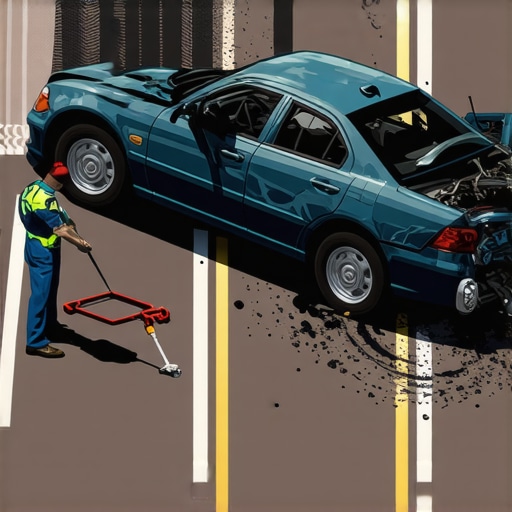
The clinical reality of mechanical failure claims
To prove a mechanical failure caused your single-car crash, you must secure the vehicle immediately to prevent spoilage of evidence and hire a forensic automotive engineer to download the Event Data Recorder (EDR) data. You need maintenance records to negate the wear and tear exclusion found in standard car insurance contracts.
I spent a week deconstructing a high-limit auto policy after a Porsche 911 ended up in a ravine. The owner thought they were fully covered until they realized their carrier was preparing a denial based on driver negligence. The carrier claimed the driver simply missed the turn. I found the forensic trace. A metallurgical flaw in the steering rack had caused a terminal bind seconds before the impact. Without the physical component and the digital trail from the car computer, that driver would have faced a total loss and a potential lawsuit for property damage. This is the reality of insurance. It is not a safety net. It is a legal fortress. Most people buy what they think is the best insurance only to find the fine print is a maze designed to protect the carrier’s capital. Your car insurance is a contract of indemnity, but the burden of proof rests entirely on your shoulders when the crash involves only you.
The ghost in the fine print
The standard ISO car insurance policy contains a specific exclusion for mechanical or electrical breakdown that most policyholders never read until a claim is denied. This clause states that the insurance does not apply to damage due and confined to wear and tear, freezing, or mechanical failure.
You must distinguish between the cause and the resulting damage. If a brake line snaps because it was rusted, the insurance company might deny the claim for the brake line itself but cover the collision damage. However, if they can prove you knew the brakes were failing, they might argue you failed to mitigate risk. This is where legal insurance or a high-stakes lawyer becomes your only leverage. The insurer wants to categorize every single-car crash as driver error. Why? Because driver error is predictable. It allows them to raise your rates. A mechanical failure suggests a third party, like a manufacturer, might be liable. This triggers a subrogation process that carriers often find expensive and tedious. They would rather you take the fault. They smell the ozone of a burning clutch and see a payout they want to avoid. You must understand the mathematical logic of the adjuster. Their goal is to close the file with the lowest possible indemnity payment.
“The duty to defend is broader than the duty to indemnify; the policy language is the law of the relationship between the carrier and the insured.” – Contractual Law Maxim
The forensic hierarchy of automotive evidence
Proving a mechanical failure requires a tiered evidence approach starting with the Event Data Recorder (EDR) which captures throttle position, brake application, and steering input. You then move to physical component analysis and detailed maintenance logs to prove the failure was sudden and accidental rather than gradual.
The car computer is a truth-teller that does not care about your insurance premiums. It records the milliseconds before impact. If the EDR shows you were slamming the brakes but the vehicle was not decelerating, you have proof of brake failure. If it shows the steering angle was fixed while the lateral G-forces were shifting, you have proof of a steering lock. But evidence disappears fast. Tow yards are where claims go to die. If the yard moves the car and snaps a damaged tie-rod, your proof is gone. You need a forensic engineer on site within forty-eight hours. This costs money. This is why business insurance or high-end car insurance policies sometimes include specialized claims handling, though most standard policies do not. You are fighting an actuarial machine. The carrier uses software like Colossus to value your claim based on zip code and prior precedents. They are not looking for the truth. They are looking for a reason to apply an exclusion.
Comparing Coverage Realities
| Feature | Standard Collision Coverage | Mechanical Breakdown Insurance (MBI) |
|---|---|---|
| Cause of Loss | Impact with object or overturn | Internal component failure |
| Burden of Proof | Low (Accident occurred) | High (Must prove no wear/tear) |
| Deductible Impact | Standard deductible applies | Often lower or specialized |
| Premium Shift | Rates increase post-fault | Rates generally stable |
The three words that kill a claim
The phrase sudden and accidental is the gatekeeper of the insurance world. If a failure is deemed to be the result of ongoing neglect, it is no longer accidental in the eyes of the law. It becomes a maintenance issue which is never covered.
I have seen claims for catastrophic engine failure denied because the owner missed an oil change by five hundred miles. The carrier argues that the failure was inevitable, not accidental. This is the subrogation trap. If you cannot prove the failure was a manufacturing defect or a sudden breakage, you are left holding the bill. In the Balkans or other regions with older vehicle fleets, this becomes a systemic risk. Older cars are more likely to fail, but their maintenance records are often spotty. This allows carriers to use the wear and tear exclusion as a blanket denial tool. You need to treat your car like a legal document. Every receipt for a bolt or a fluid flush is a piece of evidence for a future crash you haven’t had yet. If you want the best insurance outcome, you must have the best documentation. Most people focus on the monthly premium. I focus on the forensic trail. The difference is whether you get a check or a denial letter.
“Insurance policies are contracts of adhesion where any ambiguity must be construed against the drafter to protect the reasonable expectations of the insured.” – ISO Regulatory Guide
A checklist for policy audits and crash recovery
To survive a mechanical failure claim, you must follow a strict protocol of preservation and documentation that matches the complexity of the insurance contract itself.
- Immediate Vehicle Impound: Do not let the insurance company move the car to a salvage yard until your independent expert has inspected it.
- EDR Data Extraction: Use a certified technician to pull the black box data before any power is restored to the vehicle.
- Maintenance Chronology: Assemble a three-year history of all repairs and inspections to defeat the wear and tear exclusion.
- Manufacturer TSB Search: Check for Technical Service Bulletins or recalls that match your vehicle’s failure symptoms.
- Legal Representation: If the carrier denies the claim, involve a lawyer who understands insurance bad faith and product liability.
The regional risk and legislation factor
State-specific laws such as the Valued Policy Law or regional regulations on subrogation can significantly alter your recovery path. In some jurisdictions, the insurer must pay the full policy limit if the vehicle is a total loss, regardless of the failure cause.
In Florida, the litigation environment is hostile. The current crisis means your assignment of benefits clause is a ticking time bomb. If you sign your rights away to a repair shop, you lose the ability to fight the carrier on the mechanical failure front. In high-density urban areas, the likelihood of a single-car crash being attributed to mechanical failure is lower because adjusters assume the driver was distracted by traffic or pedestrians. You are fighting a statistical bias. The insurance company uses loss-cost modeling to determine that a 25-year-old male in a sports car is 94 percent likely to be at fault in a single-car crash. They don’t care about the snapped axle until you force them to look at it with a microscope. This is not about being a good driver. This is about being a sophisticated policyholder who knows that the contract is the only thing that matters when the metal bends. You need to understand that health insurance or business insurance might overlap in these cases, but the car insurance carrier will always try to be the secondary payer. They want to shift the cost to anyone else. Your job is to lock the liability where it belongs through forensic truth.