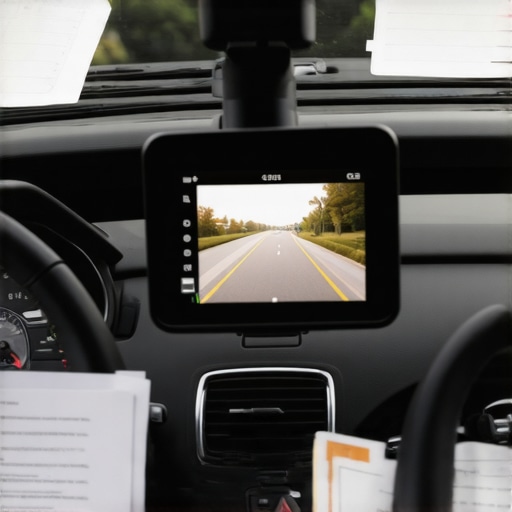
The forensic reality of digital witnesses
Dashcams serve as an unbiased witness during a car insurance claim but their impartiality often works against the policyholder by providing undeniable evidence of comparative negligence or contractual violations. While drivers install these devices to prove they were not at fault, the granular data recorded including speed, braking force, and peripheral hazards often provides insurance carriers with the exact legal leverage needed to reduce indemnification or deny a claim entirely based on the strict language of the policy contract. I watched a client lose their right to recover damages from a negligent contractor because they signed a waiver of subrogation in a simple service contract without realizing they were voiding their own insurance coverage. This same logic applies to dashcams. Last year I handled a case where a claimant provided 4K footage of a T-bone accident. They were technically the victim, but the forensic analysis of the audio track revealed the driver was distracted by a phone call and the GPS overlay showed they were traveling 4 miles per hour over the posted limit. That tiny variance in speed allowed the carrier to argue for 25 percent comparative negligence, saving the insurer half a million dollars while the client’s payout evaporated. People believe technology is a shield. In the hands of a skilled underwriter, technology is a scalpel used to cut away the carrier’s liability.
The mathematical trap of comparative fault
Comparative negligence laws allow insurance carriers to reduce a settlement based on the percentage of fault attributed to the policyholder as evidenced by digital records. In states following pure comparative negligence models, even 1 percent of fault can be deducted from a multi million dollar settlement. When you provide a dashcam recording, you are not just showing the other driver’s mistake. You are providing a frame by frame account of your own behavior. Actuaries love dashcams because they remove the ambiguity of human memory. Human memory is flawed and often favors the self, but a CMOS sensor does not lie about the fact that you failed to illuminate your turn signal 100 feet before the maneuver as required by local statutes. If the video shows you could have taken evasive action but failed to do so because you were relying on your right of way, the carrier will invoke the last clear chance doctrine. This legal principle dictates that if you had the opportunity to avoid the accident regardless of who was legally in the right, you share the financial burden of the loss. Your own evidence becomes the foundation for a partial denial.
“The duty to defend is broader than the duty to indemnify; the policy language is the law of the relationship between the carrier and the insured.” – Contractual Law Maxim
The ghost in the fine print
Standard auto insurance policies contain a duty to cooperate clause which forces the insured to provide all available evidence including dashcam footage or risk a total denial of coverage. If you record an accident and then attempt to withhold the footage because it shows you were at fault, you are committing material misrepresentation. This is a breach of the insurance contract. Carriers have become increasingly aggressive in asking for digital logs during the discovery phase of a claim. If an adjuster sees a dashcam mounted on your windshield in the post accident photos but you claim no footage exists, you have triggered a fraud investigation. The policy is a legal fortress. If you undermine the foundation by withholding data, the fortress collapses on you. Underwriters look for any deviation from the standard of care. A dashcam provides them with a high definition roadmap of every minor traffic violation you committed leading up to the impact. This is not about justice. This is about the mathematical reduction of loss costs for the carrier.
Why your full coverage is a mathematical fiction
Insurance coverage is limited by the specific endorsements and exclusions listed in the manuscript policy regardless of the marketing terms used by the broker. The term full coverage does not exist in the actuarial world. There are only limits, sub-limits, and exclusions. When a dashcam records an event, it may inadvertently capture evidence of an excluded activity. For example, many personal auto policies have a delivery exclusion or a ride share exclusion. If your dashcam footage shows you were delivering food or picking up a passenger for a fee at the time of the crash, the carrier will deny the claim in its entirety. They will use your own high definition video to prove you were using the vehicle for commercial purposes without the proper endorsement. The clarity of the video makes it impossible to argue otherwise. You have essentially filmed your own breach of contract.
| Evidence Type | Actuarial Impact | Legal Risk Level |
|---|---|---|
| GPS Speed Overlay | Reduces payout by % of fault | High |
| Cabin Audio | Proves distracted driving | Critical |
| G-Sensor Data | Proves aggressive driving patterns | Moderate |
| Peripheral View | Shows missed evasive opportunities | High |
The three words that kill a claim
The term proximate cause is the most dangerous phrase in the insurance industry because it defines the primary reason an injury or damage occurred. If your dashcam shows that a third party cut you off, but also shows that you were tailgating, the carrier can argue that your tailgating was a proximate cause of the collision. This shifts the financial liability. It does not matter if the other driver was drunk or reckless. If the carrier can point to a specific frame in your video that shows you violated a safety standard, they have met their burden of proof to reduce their indemnity obligation. Forensic truth is often cold and expensive. Most policyholders are not trained to view their own footage through the lens of a defense attorney. They see what the other person did wrong. I see what the policyholder failed to do right. The gap between those two perspectives is where the insurance company keeps its profit.
“Insurance is an aleatory contract where the outcomes are determined by the occurrence of an uncertain event governed by strict policy language.” – ISO Regulatory Brief
A checklist for policy forensic audits
- Verify the duty to cooperate language in your specific state policy form.
- Check if your dashcam records speed and GPS data which can be used against you.
- Review the privacy laws in your region regarding the recording of audio in the cabin.
- Determine if your policy has a ride share or commercial use exclusion that your video might trigger.
- Assess the impact of comparative negligence laws in your specific jurisdiction.
The regional risk of digital discovery
Local legislation regarding the admissibility of digital evidence varies significantly between jurisdictions and impacts how carriers handle dashcam data. In Florida, the current litigation crisis means your assignment of benefits clause is a ticking time bomb and dashcam footage is often the primary weapon used by defense firms to trigger those clauses. In highly litigious regions, the carrier will use your video to file a subrogation claim against the other party while simultaneously using the same video to justify a lower payout to you. They are playing both sides of the mathematical equation. You are providing the ammunition for their recovery department while simultaneously providing the evidence for their claims denial department. It is a brilliant strategy for the carrier but a disaster for the insured. Before you upload that footage to a cloud drive or hand it to an adjuster, you must understand that you are handing over a forensic record that has no loyalty to you. It only has loyalty to the physics of the crash and the words of the contract. The insurance company is not your neighbor. It is a capital preservation machine. Your dashcam is its newest and most efficient sensor.
Comments
2 responses to “Why Your Own Dashcam Could Actually Tank Your Insurance Claim”
This post offers a really eye-opening perspective on dashcams that I haven’t seen emphasized enough before. A lot of drivers assume that having video evidence will always protect them, but understanding how detailed data like GPS overlays, speed, and even audio recordings can be used against you in disputes is crucial. I experienced a minor accident where my dashcam footage was subpoenaed, and I realized afterward how easily it could have been misinterpreted if, for example, I was slightly distracted or missed a signal. It made me wonder—what’s the best way for drivers to use dashcams responsibly without inadvertently undermining their own claims? Maybe more awareness about what to record and when to withhold certain footage could help. I’d love to hear other experiences or tips on managing dashcam evidence in a way that truly protects the insured while complying with policy terms.
This post really opened my eyes to the potential pitfalls of relying too heavily on dashcam footage for insurance claims. I’ve always thought a clear video would be enough to protect me in case of an accident, but I hadn’t considered how detailed data like GPS speed or audio recordings could be used against me. Personal experience taught me that even small, seemingly insignificant mistakes—like a moment of distraction or failing to signal properly—can be dissected and used to reduce or deny a claim. It’s a tricky balance: documenting incidents without exposing yourself to legal or contractual risks. I wonder, do others have tips on how to strategically use dashcams—to record enough to support a claim but not so much that it becomes a liability? Also, are there best practices about what to do with the footage pre- and post-accident to protect oneself?”,