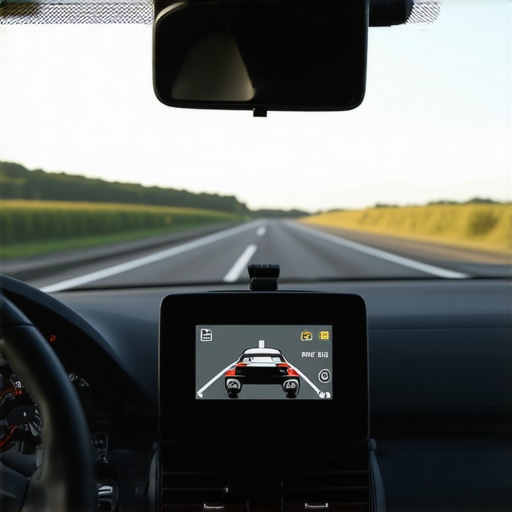
The smell of burnt wiring and stale black coffee fills the room during a forensic underwriting audit. Most policyholders believe that installing a dashcam is a simple path to lower premiums or ironclad claim protection. They are wrong. As a forensic truth-teller who has spent decades deconstructing the mathematics of risk, I see the reality. A dashcam is a double-edged sword that can provide the carrier with the exact evidence they need to deny your claim or increase your rating factor based on driving habits you didn’t even know were being recorded. Car insurance is not a service. It is a legal contract designed to minimize the liability of the carrier. If your dashcam usage does not align with the strict requirements of your policy endorsements, you are not buying protection. You are buying a surveillance device for the insurance company to use against you. I spent a week deconstructing a high-net-worth policy after a fire. The owner thought they were fully covered until they realized their guaranteed replacement cost had a cap that was set in 2012 dollars. The same logic applies to car insurance and telematics. If the hardware is not disclosed or the data is managed poorly, the actuarial risk increases, and so does your bill.
The surveillance paradox
Dashcams often make car insurance more expensive because they provide objective proof of contributory negligence that would otherwise remain ambiguous during a claim investigation. Carriers use this data to adjust loss-cost modeling. If your footage shows you were traveling three miles per hour over the limit, you have just handed the adjuster a tool to reduce your settlement through comparative fault statutes. This is the forensic reality of modern indemnity. The carrier is looking for any deviation from the standard of care that allows them to preserve their capital. In many jurisdictions, even a minor infraction caught on your own camera can shift the liability percentage enough to trigger a premium surcharge that lasts for years. This is not about safety. It is about the mathematical probability of loss.
“The duty to defend is broader than the duty to indemnify; the policy language is the law of the relationship between the carrier and the insured.” – Contractual Law Maxim
Material misrepresentation of hardware specs
Failing to accurately disclose the type and installation method of your dashcam can be viewed as material misrepresentation under many state insurance codes. If you claim a discount for having safety technology but install a consumer-grade unit that lacks hardwired power, the carrier may argue the policy was rated on false pretenses. This is the silent killer of many business insurance and car insurance contracts. When an underwriter looks at a file, they look for consistency. A dashcam that is poorly mounted and obscures the driver’s view is not a safety device. It is a hazard. If that device falls during a collision and contributes to the accident, the carrier will not only deny the claim but will likely move your policy to a high-risk tier, significantly increasing your costs. The actuarial logic is simple. If you cannot manage your hardware, you cannot manage your vehicle.
The resolution threshold for forensic evidence
Low resolution dashcam footage often creates more problems than it solves because it lacks the pixel density required for license plate recognition or traffic signal clarity. This ambiguity allows third-party carriers to dispute your version of events, leading to protracted legal battles that increase your own carrier’s defense costs. Those costs are eventually passed back to you. When an insurance company sees a history of disputed claims where the evidence was inconclusive, they re-evaluate your risk profile. They prefer clean, undisputed losses. Grainy footage that shows a blur instead of a red light is a liability. It forces the carrier to hire expensive accident reconstruction experts. In the world of high-stakes legal insurance, clarity is the only currency that matters. Without it, you are just providing a Rorschach test for the opposing counsel to interpret to your disadvantage.
| Hardware Feature | Actuarial Impact | Premium Risk Factor |
|---|---|---|
| Hardwired Power | Reduced risk of data loss | Low |
| 4K Resolution | High evidentiary value | Neutral |
| GPS Logging | Telematics surveillance | High |
| Interior Audio | Privacy liability risk | Moderate |
| Cloud Sync | Preservation of evidence | Low |
Self-incrimination by high-definition metadata
Modern dashcams record more than just video; they capture GPS coordinates, speed, and G-force data that can prove you are a higher risk than your zip code suggests. Many people seek the best insurance by looking for the lowest price, but they forget that the data trail they create is permanent. If your dashcam logs consistent hard braking or rapid acceleration, that data is discoverable in a lawsuit. Even if you do not volunteer the data, a forensic audit of the device after a major accident can reveal a pattern of aggressive driving. This creates a systemic risk for the insurer. They will react by stripping away preferred status and applying a more aggressive rating schedule. You are essentially paying for a private investigator to follow you every time you start the engine. The math of risk does not care about your intentions, only your patterns.
“Insurance is a contract of utmost good faith, where the insured must disclose all facts material to the risk being undertaken by the insurer.” – NAIC Model Act Concept
Storage gaps and the fraud presumption
Inconsistent data recording or missing footage during a critical window is often flagged as a red line for potential insurance fraud by special investigation units. If you have a dashcam and it miraculously stopped working ten seconds before an impact, the underwriter’s brain immediately goes to subrogation leverage and fraudulent concealment. This skepticism leads to a deeper dive into your entire insurance history. These investigations are expensive and the cost of the internal audit is factored into your future premiums. There is a legal precedent that missing evidence can lead to an adverse inference instruction in court. This means the jury is told to assume the missing footage was bad for you. Carriers know this, and they price that legal risk into your policy the moment they suspect you are tampering with the digital record. The forensic trace of a deleted file is easy to find for a pro.
Consumer grade hardware vs actuarial safety
Using cheap retail dashcams instead of enterprise-grade telematics units creates a reliability gap that can void specific commercial endorsements or safety discounts. In business insurance, the specific wording of a pollution or liability exclusion often hinges on the standard of equipment used. A $40 camera from a generic online marketplace does not meet the standards of a forensic-grade recording device. When these units fail due to heat or vibration, the insured is left with a gap in their defense strategy. The carrier views this as a failure to mitigate loss. They will use this failure to justify a higher deductible or a lower limit of liability on renewal. True risk management requires hardware that can withstand the rigors of the environment. Anything less is just a toy that increases your exposure to a catastrophic financial loss.
- Audit your policy for specific dashcam disclosure requirements.
- Verify that your hardware is hardwired to prevent power-loss gaps.
- Disable audio recording to avoid privacy liability in two-party consent states.
- Ensure the SD card is endurance-rated to prevent data corruption.
- Download and archive footage weekly to prove a consistent record of safe driving.
The truth about car insurance is that the house always wins unless you understand the rules of the game. A dashcam is a tool of the trade, not a gadget. Use it with the precision of a risk architect or do not use it at all. The three words that kill a claim are lack of evidence, but the three words that bankrupt a policyholder are evidence of negligence. Choose which path you are on before you start the car. The carrier is already watching. Your premium depends on whether you give them a reason to look away or a reason to dig deeper into your digital life.