I spent a decade deconstructing high-limit claims for a Tier 1 carrier. I watched a client lose their right to recover damages from a negligent contractor because they signed a ‘waiver of subrogation’ in a simple service contract without realizing they were voiding their own insurance coverage. This same contractual trap exists in the world of hit-and-run incidents. Carriers are not your neighbors. They are risk-managed capital entities that treat every unidentified motorist claim as a potential fraud attempt. If you lack a forensic trail, your claim is dead on arrival. Most policyholders assume that car insurance covers them automatically after a collision, but the fine print of an Uninsured Motorist (UM) endorsement often requires specific, verifiable evidence that the average driver never thinks to collect.
The vanishing phantom and the burden of proof
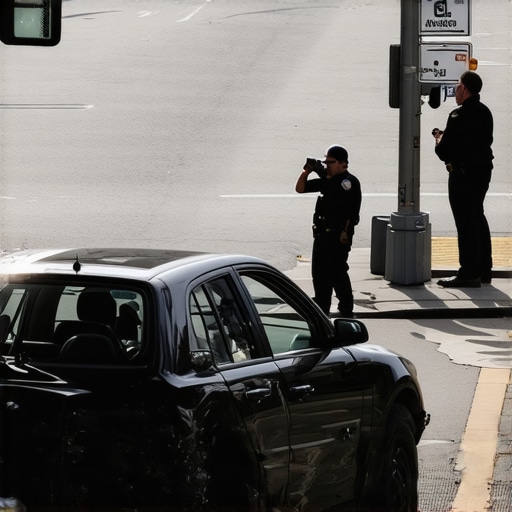
To win a hit-and-run claim, you must provide a police report filed within 24 hours and evidence of physical contact or a disinterested witness to verify the phantom vehicle existed. The burden of proof rests entirely on the insured to demonstrate that the accident was not a single-car loss. Carriers view these claims with extreme skepticism because a driver who hits a pole and claims a hit-and-run is a common source of insurance fraud. The actuarial math assumes that without a second party to subrogate against, the loss is a total drain on the carrier’s reserves. This is why legal insurance and high-end car insurance policies have strict ‘Conditions Precedent’ that must be met before a cent is paid out. If you fail to call the police from the scene, you have already compromised your legal standing. The carrier will argue that your failure to report prevented them from investigating the ‘phantom’ vehicle, thus prejudice their ability to recover funds.
“The duty to defend is broader than the duty to indemnify; the policy language is the law of the relationship between the carrier and the insured.” – Contractual Law Maxim
The physical contact rule and the legal threshold
The physical contact rule requires actual touching between the vehicles to trigger Uninsured Motorist coverage in many jurisdictions, meaning a ‘near miss’ that causes a crash is often excluded. Without physical evidence like paint transfer or a witness, the insurance company will likely categorize the event as a single-vehicle accident. This is where the forensic truth-teller sees the most claim denials. You might have the best insurance on the market, but if your state allows the ‘Physical Contact’ exclusion, and no paint from the offending vehicle is found on your bumper, you are facing an uphill battle. Some states allow a ‘Corroborating Witness’ to replace the physical contact requirement, but this person cannot be a family member or a passenger. They must be an objective third party who can testify to the existence of the other vehicle. This is not about what happened. It is about what you can prove within the four corners of the policy contract. Business insurance policies often have even stricter requirements for fleet vehicles, requiring immediate notification to the underwriting department to preserve the right to claim.
Why ‘full coverage’ is a dangerous marketing term
Full coverage is a mathematical fiction used by brokers to simplify complex risk layers, as it does not actually exist in the ISO standard policy forms. What people mean is a combination of Liability, Collision, and Comprehensive, which may still lack adequate Uninsured Motorist Property Damage (UMPD) limits. Many drivers believe their health insurance will cover medical bills after a hit-and-run, but health insurance often has a secondary position to car insurance. If your car insurance limits are exhausted or the claim is denied due to a lack of proof, you may find yourself stuck with high deductibles and co-pays. The reality of the insurance market is that carriers strip away ‘silent’ coverage in the fine print while keeping premiums steady. For example, a policy might cover the ‘Actual Cash Value’ of your vehicle but exclude the sales tax or registration fees in a total loss scenario, leaving a multi-thousand-dollar gap in your recovery.
| Evidence Type | Legal Weight | Insurance Carrier Action |
|---|---|---|
| Police Report | Primary | Establishes the 24-hour notice timeline |
| Paint Transfer | High Forensic | Proves physical contact for UM triggers |
| Witness Testimony | Variable | Corroborates the existence of a phantom car |
| CCTV Footage | Absolute | Identifies the tortfeasor for subrogation |
The forensic value of paint transfer and debris
Forensic evidence such as paint transfer, broken glass from a non-insured vehicle, and skid marks provide the objective data needed to overcome an insurer’s ‘phantom vehicle’ skepticism. Collecting paint chips from the point of impact is the most effective way to prove that a second vehicle was involved. When a claim hits the desk of an adjuster, they look for ‘matching’ damage. If your car has a dent that does not show signs of another car’s paint, they will suspect you hit a stationary object. This is a cold, clinical process. They do not care about your emotional distress. They care about the loss-cost modeling and whether they can successfully subrogate. Subrogation is the legal process where your insurance company sues the at-fault party to get their money back. If there is no one to sue, the insurer is more likely to scrutinize your claim for any reason to deny it. In high-net-worth circles, forensic underwriters will even analyze the speed of the impact to see if it matches your story of how the hit-and-run occurred.
The duty to cooperate and the twenty-four hour clock
The duty to cooperate is a mandatory policy provision that requires the insured to assist the carrier in investigating the loss, which includes filing a timely police report. Failure to report a hit-and-run to the police within 24 hours is often considered a material breach of contract. Many policyholders wait a few days to see if their neck hurts before calling the police. This is a fatal error. The policy is a contract, and the 24-hour reporting requirement is a condition of that contract. If you breach it, the carrier has no legal obligation to pay. They will cite ‘prejudice to the investigation’ as the reason for denial. This is especially true in business insurance where the ‘Notice of Loss’ provisions are even more stringent. You must treat the minutes following a hit-and-run as a forensic collection period. Take photos of everything, including the road surface and the surrounding buildings that might have cameras. Your car insurance company is looking for a reason to close the file without a payout.
“Insurance is a contract of adhesion where the stronger party dictates the terms, yet the weaker party must strictly adhere to the notice requirements to seek relief.” – Appellate Court Ruling on Bad Faith
Audit checklist for hit and run indemnification
- Did you call 911 or the local police department from the exact scene of the incident?
- Did the officer include the words ‘unidentified vehicle’ or ‘hit and run’ in the official report?
- Have you photographed the paint transfer or debris left by the offending vehicle?
- Have you identified any nearby businesses with external security cameras that might have caught the fleeing car?
- Did you obtain the names and contact information of any non-passenger witnesses?
- Is your Uninsured Motorist coverage limit high enough to cover both medical and property damage?
Subrogation hurdles in the unidentified motorist space
Subrogation is the primary driver of insurance company behavior, and hit-and-run cases offer zero subrogation potential, which makes carriers more aggressive in their defense. If the insurer cannot recover their loss from a third party, they view your claim as a pure loss. This creates a conflict of interest. Your carrier is supposed to be on your side, but in a UM claim, they effectively step into the shoes of the person who hit you. They will argue against you just like the other person’s lawyer would. This is why legal insurance is often a necessary secondary layer. You need someone to audit the carrier’s behavior. They might try to apply a ‘comparative negligence’ percentage to your claim, arguing that you could have avoided the hit-and-run driver, thereby reducing your payout by 20 or 30 percent. This is clinical, calculated risk reduction. Every dollar they shave off your settlement is a dollar added back to their bottom line.
The mathematical fiction of the deductible waiver
Deductible waivers for hit-and-run incidents are rare and usually require the identification of the at-fault driver, making the ‘no deductible’ promise a marketing gimmick in most unidentified loss cases. You should expect to pay your collision or UM deductible upfront. While some of the ‘best insurance’ policies claim to waive deductibles for hit-and-runs, the fine print usually says this only applies if the other driver is caught and confirmed to be uninsured. If the driver is never found, you are stuck paying. This is the reality of risk. You are paying a premium for the ‘transfer of risk,’ but the carrier always leaves a small portion of that risk—the deductible—on your shoulders to ensure you have ‘skin in the game.’ In the world of high-limit indemnity, the deductible is a tool used to discourage small claims, but in a hit-and-run, it functions as a tax on your misfortune. Do not let a broker tell you otherwise without seeing the specific endorsement in the policy jacket.