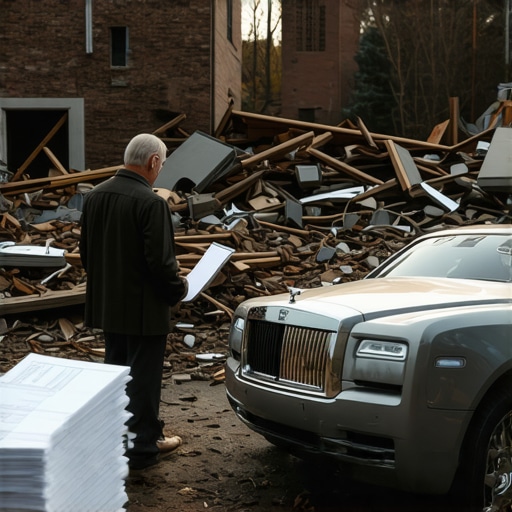
I spent a week deconstructing a high-net-worth policy after a fire. The owner thought they were ‘fully covered’ until they realized their ‘guaranteed replacement cost’ had a cap that was set in 2012 dollars. The carrier, a household name with an A+ rating, argued that the construction cost surge in the disaster zone was an ‘unforeseeable market distortion’ not covered by the primary indemnity agreement. This is the reality of the business. You buy a promise. You receive a contract. The two rarely align when the local economy collapses under the weight of a thousand simultaneous claims. Most people believe that the best insurance is the one with the most recognizable logo. They are wrong. The quality of a carrier in a post-disaster zone is measured by its claims-paying ratio and its ability to withstand a ‘hard market’ without resorting to bad faith technicalities. In my twenty-five years as an underwriter, I have seen ‘top-rated’ giants vanish into legal filings while smaller, specialized firms stood their ground. The problem is not the money. The problem is the math. Actuaries build models based on historical averages, but a disaster is, by definition, an outlier. When the outlier happens, the spreadsheet breaks.
The mathematical fiction of guaranteed replacement
Post-disaster zones create a localized inflation event where labor and material costs exceed standard actuarial projections. Top-rated carriers often rely on outdated price lists like Xactimate that fail to reflect real-time scarcity. This results in a massive gap between the claim payout and the actual reconstruction cost. This phenomenon, known as a ‘demand surge,’ can increase construction costs by 40 percent in a matter of weeks. If your business insurance policy has an inflation guard of only 2 percent, you are effectively self-insuring the difference. I have reviewed commercial claims where the ‘replacement cost’ was calculated at $150 per square foot while local contractors were charging $350. The carrier simply points to the policy limit and walks away. They satisfy the contract while failing the client. This is why the term ‘full coverage’ is a dangerous lie used by brokers to close a sale. There is no such thing as full coverage. There is only the limit of liability defined on the declarations page.
“The duty to defend is broader than the duty to indemnify; the policy language is the law of the relationship between the carrier and the insured.” – Contractual Law Maxim
Why a high rating fails the solvency test
Ratings from agencies like A.M. Best or Moody’s reflect a company’s ability to meet its ongoing obligations under normal conditions. They do not account for the systemic failure of a regional economy or the political pressure that follows a catastrophe. A carrier with an A rating can still be a nightmare to deal with if they decide to litigate every line item. In Florida, for example, the current litigation crisis has made even the most stable insurance products feel like a gamble. When a carrier is hit with 50,000 claims in a single zip code, they stop being a service provider and start being a fortress. They use ‘independent’ adjusters who are actually contractors incentivized to find ‘pre-existing damage’ or ‘wear and tear.’ This is the forensic truth. Your car insurance carrier might be great for a fender-bender, but they are not your friend when they are facing a billion-dollar loss event. They will use every tool in their arsenal to preserve their loss ratio. This includes the ‘anti-concurrent causation’ clause. This clause states that if two perils happen at once, like wind and flood, and one is excluded, the entire claim can be denied. It is the nuclear option of insurance law.
The three words that kill a claim
Exclusions for ‘earth movement’ or ‘surface water’ are common, but the real danger lies in the ‘efficient proximate cause’ doctrine. Carriers will argue that the non-covered peril was the primary driver of the loss. This technicality allows them to avoid paying for damage that looks, to the naked eye, like it should be covered. I once watched a business insurance claim for a collapsed warehouse get denied because the carrier argued the ground settled before the wind hit. They used a geotechnical engineer to find a microscopic fissure that predated the storm. They spent $50,000 on experts to avoid paying a $1 million claim. This is why legal insurance or a dedicated legal fund is vital for any property owner in a high-risk zone. You are not fighting a company. You are fighting an algorithm designed to minimize indemnity outflow.
| Policy Feature | Standard Policy Reality | Post-Disaster Reality |
|---|---|---|
| Replacement Cost | Covers 100% of cost | Capped by outdated 2021 data |
| Law and Ordinance | Usually 10% of limit | Required upgrades cost 30% |
| Loss of Use | 12 months coverage | Rebuilding takes 36 months |
| Debris Removal | 5% of total limit | Costs exceed $50,000 quickly |
The subrogation trap in service contracts
Subrogation is the right of an insurer to pursue a third party that caused a loss. If you sign a waiver of subrogation in a lease or a construction contract, you might be voiding your own insurance coverage without knowing it. Carriers hate losing their right to recover. I recently saw a case where a fire was caused by a faulty HVAC installation. The owner had signed a service agreement that waived all subrogation rights. When the carrier found out, they denied the claim based on the ‘impairment of recovery’ clause. It was a cold, clinical execution of contract law. The owner lost everything because of a paragraph on the back of a work order. Whether it is health insurance, car insurance, or complex commercial indemnity, the fine print is where the claim dies. Most people focus on the premium. They should be focusing on the ‘Exclusions and Limitations’ section. That is where the actual price of the policy is hidden.
“Insurance is a contract of adhesion where any ambiguity must be construed against the drafter to protect the reasonable expectations of the insured.” – General Legal Principle of Indemnity
A checklist for policy audits
Before the next disaster hits, you must conduct a forensic audit of your coverage. Do not rely on your broker’s summary. Read the actual manuscript endorsements. Look for words like ‘notwithstanding’ or ‘subject to.’ These are the linguistic triggers for coverage denials. Use this checklist to evaluate your current standing:
- Confirm if your policy has a ‘Valued Policy Law’ endorsement for total losses.
- Verify if ‘Law and Ordinance’ coverage is at least 25% of the dwelling limit.
- Check for an ‘Anti-Concurrent Causation’ clause in the exclusions section.
- Ensure ‘Additional Living Expenses’ or ‘Business Interruption’ lasts at least 24 months.
- Audit all service contracts for ‘Waiver of Subrogation’ clauses.
[image_1]
The regional peril logic of global carriers
In the Balkans, the lack of standardized earthquake endorsements in older Sarajevo builds creates a systemic risk that standard fire policies ignore. Similarly, in coastal regions, a global carrier might apply a ‘one size fits all’ approach to windstorm deductibles that makes no sense for the local architecture. They apply a percentage-based deductible that can reach $100,000 for a single home. This is not insurance. This is a catastrophic loss fund that you pay for the privilege of holding. The best insurance for these zones is often found in the ‘Excess and Surplus’ lines market, where policies are tailored to specific risks. These policies are more expensive, but they don’t have the same ‘cookie-cutter’ exclusions found in standard business insurance forms. You must understand that the carrier’s primary goal is not your recovery. Their primary goal is the protection of their capital. When those two goals conflict, the carrier wins every time. They have more lawyers, more time, and more data. Your only defense is a superior contract. Don’t settle for a slick marketing brochure. Demand the full policy jacket and hire a forensic expert to read it. It is the only way to ensure that your ‘top-rated’ carrier actually performs when the sky falls.