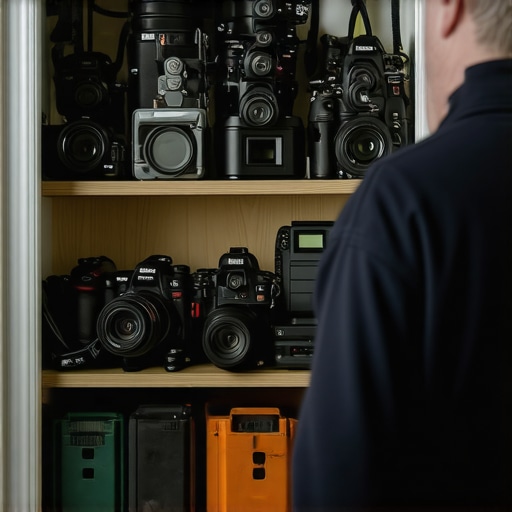
I recently reviewed a two million dollar commercial claim that was denied entirely because of a three-word endorsement buried on page 84 that the broker never even mentioned to the client. This is the reality of the insurance world. It is a world governed by strict syntax and actuarial coldness. If you are a photographer, an engineer, or a freelance consultant who keeps fifty thousand dollars worth of gear in a home studio, you are currently walking on a thin wire of risk. You likely believe you are covered under your standard homeowners policy. You are wrong. The carrier lied by omission. Most policyholders do not realize that the standard ISO HO-3 form, which is the backbone of the American residential insurance market, was never intended to protect the tools of a trade. It was designed for sofas, televisions, and clothing. When you introduce professional grade equipment into a residential space, you create a risk profile that the standard premium does not account for. The result is a systematic denial of coverage that leaves professionals bankrupt and blindsided.
The structural failure of the standard HO-3
Homeowners policies are designed for consumer grade chattels, not professional revenue generating assets. Most ISO standard HO-3 forms cap business property coverage at two thousand five hundred dollars. If your equipment is stolen while off-premises or used for trade, your recovery will likely hit a hard contractual ceiling regardless of total loss. The mathematical reality of an insurance policy is found in the Special Limits of Liability section. This is where the carrier lists the items they refuse to cover at full value. For most carriers, the limit for property used primarily for business purposes is capped at twenty-five hundred dollars on the residence premises. If that same equipment is in your car or at a client site, that limit often drops to a staggering fifteen hundred dollars. If you carry a red digital cinema camera or a set of survey equipment worth forty thousand dollars, a theft will result in a loss of thirty-eight thousand dollars that you must absorb personally. The carrier does not care about your livelihood. They care about the pool of risk. They have priced your policy based on the assumption that you do not own high-value portable business assets. When you do, you are effectively self-insuring the difference without even knowing it.
“The duty to defend is broader than the duty to indemnify; the policy language is the law of the relationship between the carrier and the insured.” – Contractual Law Maxim
The professional use trap
The definition of business in an insurance contract is dangerously broad and often encompasses any activity engaged in for money or other compensation. If you have ever accepted a single dollar for a project using your gear, a forensic underwriter can classify that gear as professional equipment. This classification triggers the sub-limits that decimate your claim. I have seen claims denied because a homeowner took photos for a friend’s wedding and accepted a small gift card. The carrier argued that the camera was now business property. The insured argued it was a hobby. The carrier won. This is because the contract of insurance is a contract of adhesion. You did not negotiate the terms. You simply accepted them. The carrier holds the leverage during the claims process. They will look at your social media. They will look at your tax returns. If they see a Schedule C filing, your claim for stolen equipment is effectively dead on arrival unless you have a specific endorsement. The logic is simple. Professional gear is used more often, transported more frequently, and subjected to higher theft risks than casual hobbyist gear. The premium you pay for a standard policy does not cover that increased frequency of loss.
Why your replacement cost is a mathematical fiction
Actual Cash Value remains the default settlement logic for most property claims involving professional gear unless a specific endorsement exists. Carriers use aggressive depreciation tables that slash the value of electronics and optics by twenty percent annually. Many homeowners pay extra for a Replacement Cost Value endorsement. They believe this means they will get a new version of what was stolen. This is a fantasy. Most policies state that the carrier will pay the Actual Cash Value until the property is actually replaced. If you do not have the cash flow to buy the gear upfront, you are stuck with the depreciated check. For high-end electronics, the depreciation curve is brutal. A three-year-old laptop or camera body might be valued at thirty percent of its original price. The carrier subtracts your deductible from that depreciated amount. If you have a two thousand dollar deductible and a three thousand dollar ACV settlement, you receive a check for one thousand dollars for gear that costs six thousand to replace. The math is designed to protect the carrier’s solvency, not your business’s continuity.
[image_placeholder]
The ghost in the fine print
Exclusions for mysterious disappearance and theft from an unattended vehicle are common traps for professional gear. If there are no signs of forced entry on your vehicle, the carrier may deny the claim entirely under a specific exclusion for property in or upon a motor vehicle. This is particularly relevant in high-crime jurisdictions like San Francisco or parts of Florida where smash-and-grab thefts are rampant. Some policies require physical evidence of a break-in. If you left the door unlocked for thirty seconds, you have no coverage. This is a forensic reality. The carrier will demand a police report. They will inspect the vehicle for tool marks. If the lock was picked or the signal was jammed, they may argue that you failed to exercise due diligence. Furthermore, the off-premises limit mentioned earlier applies globally. If your gear is stolen while you are on a shoot in Sarajevo or London, the standard HO-3 policy offers almost zero protection. You are operating in a vacuum of coverage. You need an Inland Marine Floater. This is a specific type of insurance that follows the equipment wherever it goes, regardless of the business use.
How to audit your policy for hidden limits
A professional insurance audit requires looking past the declarations page and into the specific definitions and exclusions sections of the full policy manuscript. You must identify the specific sub-limits for business property and the definition of a business pursuit. Use the following table to understand the gap between what you have and what you need.
| Feature | Standard HO-3 Policy | Inland Marine Floater || :— | :— | :— || Business Limit | $2,500 (On-premises) | Full Stated Value || Off-Premises | $1,500 Worldwide | Full Stated Value || Peril Basis | Named Perils Only | All-Risk Coverage || Deductible | Policy Standard ($1k+) | Flat $100 or $250 || Depreciation | Actual Cash Value | Agreed Value Options |
Actuarial ghosts in your garage
The location of the theft matters as much as the items stolen. If professional gear is stolen from a detached garage or a separate studio building on your property, it may be subject to different limit structures. Coverage B covers other structures, but it often excludes any structure used in whole or in part for business purposes. If you converted your garage into a professional editing suite, you have potentially voided the coverage for the building itself, let alone the gear inside. This is the forensic truth. The carrier looks for any breach of the insuring agreement. Using a residential structure for a commercial enterprise without a home-based business endorsement is a breach. You are essentially asking the carrier to take on commercial risk for a residential price. They will not do it. They will deny the claim and they might even cancel your policy for material misrepresentation of the risk. This happens daily to people who thought they were being smart by saving on commercial insurance premiums.
“Insurance policies are contracts of adhesion where any ambiguity is typically resolved in favor of the insured, yet clear exclusions for business activity remain enforceable pillars of risk management.” – National Association of Insurance Commissioners (NAIC) Briefing
The math of rapid depreciation
Actuaries use loss-cost modeling to determine how much they expect to pay out for certain classes of property. High-end professional gear has a high loss-cost because it is portable and high-value. To offset this, they build in aggressive depreciation schedules. This is not arbitrary. It is based on the secondary market value of the items. For a forensic truth-teller, there is no such thing as a fair settlement in the eyes of the insured. There is only the contractually obligated settlement. If your policy is an ACV policy, you are losing money every day you own your gear. The moment you walk out of the store, the gear loses twenty percent of its insurance value. By the end of year two, you are underinsured by half. This is why stated value or agreed value policies are the only real solution for professionals. In an agreed value policy, you and the carrier agree that the gear is worth fifty thousand dollars. If it is stolen, they pay fifty thousand dollars. There is no math. There is no argument. There is only the check. Most homeowners agents will not tell you about this because they do not have access to the commercial markets that offer these floaters.
Why best insurance is a marketing myth
There is no such thing as the best insurance, there is only the policy that matches your specific risk exposure. A cheap policy with a major carrier is often the worst insurance for a professional because it contains the most restrictive language. Carriers like State Farm or GEICO are built for the masses. They are built for the person with a standard home and a standard job. They are not built for the modern creator or the technical professional. The best insurance for you is likely a specialized policy from a carrier that understands your industry. These policies do not have the same business use exclusions. They understand that a photographer’s camera is their livelihood. They provide for rental equipment while your claim is being processed. They provide for data recovery if your hard drives are stolen. These are the details that matter when a crisis hits. The standard HO-3 does none of this. It leaves you with a small check and a large amount of debt.
The forensic checklist for policy audits
If you suspect your current coverage is inadequate, you must perform a forensic audit immediately. Do not wait for a theft to occur. Follow this checklist to identify your exposure:
- Read the definition of business in the policy definitions section.
- Check Section I – Property Coverages for Special Limits of Liability.
- Look for any exclusion related to property in a motor vehicle.
- Identify if your gear is covered for mysterious disappearance or just theft.
- Verify if the policy is Actual Cash Value or Replacement Cost Value.
- Confirm if you have a Home-Based Business endorsement.
- Determine if your off-premises coverage is limited to a percentage of total coverage.
- Review the deductible for scheduled versus unscheduled property.
The forensic reality is that most professionals are underinsured by at least eighty percent. They rely on the marketing promises of their carrier rather than the legal language of their contract. If you value your tools, you must treat your insurance with the same technical precision you apply to your work. The carrier is not your neighbor. They are a counterparty in a legal contract. Act accordingly. Protect your capital with the right endorsements and stop relying on a residential policy to do a commercial job. The math of a loss is unforgiving. Your recovery depends entirely on the words on the page, not the intent in your heart.
Comments
3 responses to “Why Your Homeowner’s Policy Fails During a Professional Equipment Theft”
This article really highlights a common misconception among many professionals who rely solely on standard homeowners insurance to protect their valuable equipment. I have firsthand experience with this, as a freelance videographer, where I assumed my insurance covered my gear fully, only to find out after a theft that I was woefully underinsured due to those sub-limits. What struck me most was how easily a seemingly ‘adequate’ policy can become a financial nightmare if you don’t scrutinize the fine print. I’ve started exploring inland marine floaters and agreed value policies after reading this—both seem like practical solutions, but I wonder: for those of us operating across borders or in multiple jurisdictions, how do these policies hold up? Are there specific carriers or endorsements that work better internationally? Would love to hear others’ experiences on navigating these complexities and ensuring comprehensive coverage without breaking the bank.
Reading this post really opened my eyes to how much risk I was unknowingly carrying with my own professional gear. As a freelance architect, I store expensive drawing tablets and specialized tools at home, assuming they’re covered by my homeowner’s policy. But now I realize the catastrophic gap in coverage — especially since I often take my equipment to client sites or when traveling abroad. The part about aggressive depreciation and exclusions for equipment in vehicles hit home for me; I’ve had issues with thefts from my truck before, and insurance claims always seemed complicated. This makes me wonder: for professionals who frequently work internationally or travel with their gear, what are the best ways to ensure coverage follows us without the fine print killing our claims? Are there particular endorsements or specialized policies that simplify claims and reduce surprises? Would love to hear suggestions from others with global work experience, as I want to make sure my equipment and business are truly protected in all scenarios.
This post really sheds light on the importance of thoroughly scrutinizing insurance policies, especially for professionals with high-value tools at risk. I’ve personally experienced the frustration of discovering coverage gaps when it was too late—like the time my equipment was stolen from my vehicle, and I found out the policy excluded theft from unattended cars without forced entry. It’s alarming how many people rely on standard homeowner policies assuming they’re protected, only to face significant financial losses because of overlooked exclusions or limits. I wonder how many professionals have actually reviewed their policy wordings with a fine-tooth comb or consulted a specialized broker? What’s the best approach to ensure that one’s coverage truly aligns with the real risks faced in high-stakes environments? I’d love to hear tips from others who’ve successfully navigated this maze of fine print to secure proper, portable coverage that doesn’t leave us vulnerable when it matters most.