I spent a week deconstructing a high-net-worth policy after a fire. The owner thought they were fully covered until they realized their guaranteed replacement cost had a cap that was set in 2012 dollars. This forensic autopsy of a contract revealed how carriers use stagnant valuation to offset inflation risks. The same mechanical betrayal is now happening in the automotive sector through your dashboard. I recently audited a case where a claim for a totaled luxury sedan was adjusted downward because the carrier pulled the telemetry logs from the infotainment system. They saw a pattern of rapid acceleration in the months leading up to the accident and used it to argue that the driver had fundamentally altered the risk profile described in the original application. This was not a guess. This was a mathematical certainty derived from raw binary data.
The surveillance suite on your dashboard
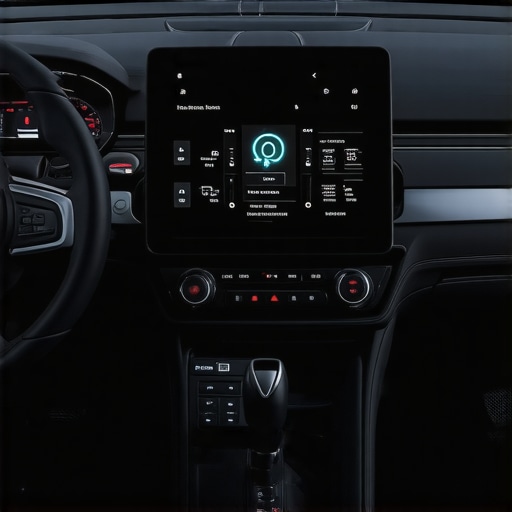
Your vehicle infotainment system functions as a high frequency data harvester that records every driver input and transmits it to third party brokers. This hardware is not merely for navigation or entertainment. It is a sophisticated sensor array that monitors throttle position, braking pressure, seatbelt engagement, and GPS coordinates with millisecond precision. These data points are compiled into a digital driver profile that is sold to companies like LexisNexis Risk Solutions and Verisk. Insurers then use this information to calculate a proprietary risk score that determines your premium. Unlike traditional rating factors such as age or credit score, this telemetry provides a real-time window into your behavior behind the wheel. The car is no longer a tool for movement. It is a witness for the prosecution in every future claim you might file. Underwriters view this as a way to eliminate the information asymmetry that has historically favored the policyholder. By knowing exactly how you drive, they can price your policy with surgical precision, often to your financial detriment.
“The data generated by a vehicle’s computer system constitutes a factual record of operation that supersedes testimonial evidence in a court of law.” – Forensic Underwriting Standard
How telemetry feeds the actuarial beast
Actuaries use vehicle telemetry to replace generalized demographics with individualized hazard modeling to maximize carrier profitability. In the old model of car insurance, you were grouped with thousands of other people who shared your zip code and vehicle model. This created a blind risk pool where safe drivers subsidized the dangerous ones. The infotainment data allows the carrier to shatter this pool. They are looking for specific indicators of high-risk behavior such as hard braking events, which are defined as a decrease in speed of more than seven miles per hour per second. Frequent hard braking is an actuarial proxy for tailgating or distracted driving. Further, late-night operation between the hours of midnight and 4:00 AM is flagged as a high-frequency accident window. This data is fed into algorithms that adjust your renewal rates without you ever receiving a formal explanation. The transparency of the quote process is replaced by a black-box calculation that prioritizes the loss ratio over the consumer relationship. The math is cold. If your data shows a propensity for high-speed cornering, your premium will rise because the probability of a total loss claim has increased by a measurable percentage. This is the death of the flat rate policy.
| Data Point | Actuarial Impact | Risk Correlation |
|---|---|---|
| Hard Braking | High | Predictive of future rear-end collision within 18 months |
| Late Night Driving | Medium | Increased probability of fatigue-related loss events |
| Average Speed Delta | High | Correlates directly with the kinetic energy of a crash |
| Rapid Acceleration | Low | Indicator of aggressive driving and engine wear |
The legal fiction of informed consent
Most drivers inadvertently consent to data sharing by clicking through complex end-user license agreements during the initial setup of their vehicle. When you purchase a modern car, you are prompted to accept the terms of the connected services platform. These agreements are often fifty pages of dense legal jargon that even many lawyers do not read. Hidden within these terms is a clause that grants the manufacturer the right to share vehicle performance data with affiliates and business partners. The insurance industry is a primary buyer of this information. In the context of car insurance, this creates a situation where you are providing the evidence used to raise your own rates. Legal insurance experts argue that this is a violation of the reasonable expectations doctrine, which suggests that a contract should be interpreted based on what a layperson would expect. Most people do not expect their radio to tell their insurance agent how fast they drive. However, the fine print is clear. By using the navigation system or the remote start feature, you are entering into a data-sharing ecosystem that you cannot easily escape. The burden of privacy is shifted entirely onto the consumer who lacks the technical expertise to disable the tracking modules.
“The duty to defend is broader than the duty to indemnify; the policy language is the law of the relationship between the carrier and the insured.” – Contractual Law Maxim
Why business insurance fleets are the primary targets
Commercial insurance carriers mandate the use of telematics for business fleets to lower their aggregate risk exposure and enforce driver compliance. For business insurance, the stakes are much higher than a personal auto policy. A single accident involving a commercial van can lead to a multi-million dollar liability claim. To mitigate this, insurers now require fleet managers to install integrated telematics that sync directly with the infotainment units. This allows the carrier to monitor the entire fleet in real-time. If a driver is caught speeding or driving erratically, the business insurance premium can be adjusted mid-term. This creates a high-pressure environment for employees where every movement is scrutinized by an automated system. Forensic underwriters look for patterns of systemic risk within a company. If ten percent of the drivers are consistently recorded with high-speed events, the entire business insurance account may be non-renewed. This is not about safety as much as it is about subrogation leverage. If the carrier can prove that the company was aware of the driver’s habits through the telematics data and did nothing, they can sometimes deny coverage for gross negligence. The data is a double-edged sword that protects the carrier more than the business owner.
A checklist for the privacy conscious driver
- Review the Connected Services Agreement in the vehicle settings menu to identify opt-out clauses.
- Request your Consumer Disclosure Report from LexisNexis and Verisk to see what data is being shared.
- Disable the usage-based insurance features in any manufacturer apps installed on your smartphone.
- Avoid using the built-in navigation system if it requires a persistent cellular connection for traffic updates.
- Ask your insurance agent specifically if your rate is being influenced by telematics data from your vehicle.
The death of the blind risk pool
The shift toward data-driven underwriting marks the end of collective insurance where risk was shared across a large and diverse population. We are moving toward a model of hyper-individualization. While this might sound fair in theory, it creates a systemic disadvantage for people who live in high-traffic areas or who work night shifts. Their data will naturally show more high-risk markers regardless of their actual driving skill. Health insurance is also watching this space with interest. There are already discussions about how vehicle data could be used to predict lifestyle-related health risks. For example, a person who spends four hours a day in sedentary commuting as recorded by their car might be flagged for higher health insurance premiums due to the long-term effects of inactivity. The integration of car insurance, health insurance, and lifestyle data is the ultimate goal for the actuarial industry. They want a 360-degree view of every risk in your life. The infotainment system is just the most convenient entry point for this surveillance. Once the data leaves the vehicle, it enters a global marketplace where it is scrubbed, analyzed, and weaponized against your bank account. The only way to win this game is to understand the math behind the curtain and take active steps to limit the digital trail you leave on the road.
Comments
One response to “Why Your Car’s Infotainment System Is Quietly Sharing Data With Insurers”
Reading this post made me reflect on how much digital surveillance has quietly infiltrated our daily lives, especially through our vehicles. I recently checked my car’s infotainment settings and found options to disable some data-sharing features, although it’s not well-advertised. It’s concerning that many people might not realize their driving habits are being monitored and used to determine insurance premiums or even employment considerations. From my experience, a simple step like requesting the Consumer Disclosure Report from LexisNexis can shed some light on what data is being collected and potentially give options to opt-out. Has anyone here experimented with disabling telematics features effectively without compromising essential vehicle functions? It seems like the key is being proactive about understanding the privacy settings now, as these systems are becoming more integrated into our driver’s identities. I wonder how the industry will respond as more consumers become aware of this level of surveillance and start demanding greater control over their data.