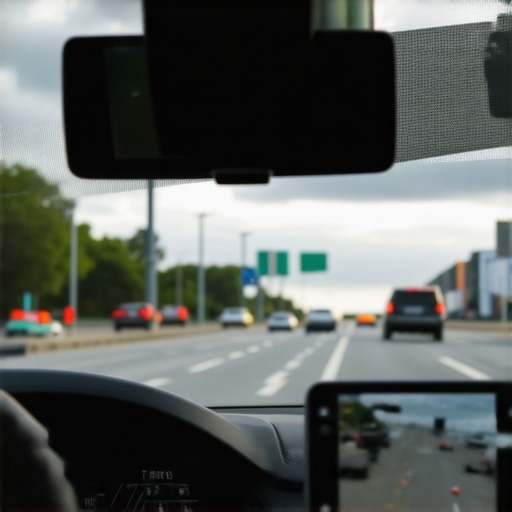
The digital witness that betrays you
A dashcam provides a digital record of events that insurers often use to establish comparative negligence or identify policy violations that negate your right to indemnification. While most drivers view these cameras as objective shields against liability, forensic underwriters view them as a goldmine of data points that can be used to mitigate a carrier’s payout. Every frame of video contains metadata, speed calculations, and audio cues that can turn a seemingly clear-cut car insurance claim into a legal nightmare for the insured. I watched a client lose their right to recover damages from a negligent contractor because they signed a waiver of subrogation in a simple service contract without realizing they were voiding their own insurance coverage. In a similar vein, a dashcam user once submitted footage of a collision thinking it proved their innocence, only for the carrier to use the timestamped GPS data to prove the driver was traveling 42 mph in a 35 mph zone two blocks before the impact. This established a pattern of negligence that allowed the insurer to apply a 20 percent reduction in the settlement based on comparative fault. The insurance policy is a contract of utmost good faith, and your own data can be the sharpest weapon used against you in a court of law. Carriers do not look for reasons to pay; they look for contractual deviations that allow them to preserve their loss reserves. If your video shows you failing to use a turn signal three minutes before an accident, or if the audio captures you distracted by a mobile device, you have effectively handed the legal insurance adjusters the evidence they need to deny the claim. Your dashcam does not have a bias, but the person interpreting the footage certainly does. In the world of high-limit indemnity, every second of footage is scrubbed for an admission of liability or a breach of the standard of care. This is the reality of the forensic autopsy performed on every high-value car insurance claim today.
“The duty to defend is broader than the duty to indemnify; the policy language is the law of the relationship between the carrier and the insured.” – Contractual Law Maxim
How the duty to defend evaporates
The presence of dashcam footage can trigger specific exclusions in a business insurance or personal auto policy if the video records illegal acts or intentional maneuvers. When a carrier receives video evidence, they do not just look at the moment of impact. They look at the minutes leading up to the event to find any evidence of ‘racing,’ ‘reckless endangerment,’ or ‘material misrepresentation’ of the driving environment. If the dashcam records you engaging in a delivery service without a commercial endorsement on your car insurance policy, the claim will be denied faster than you can hit the stop button. Forensic underwriters are trained to identify the subtle cues of distracted driving that audio recordings often reveal. The sound of a text message notification followed by a sudden swerve is enough to shift the burden of proof back onto the driver. This is not about being a ‘neighborly’ company; it is about the actuarial reality of risk. The insurer’s goal is to minimize the net recovery for the claimant. In states like Florida or Texas, where litigation costs are skyrocketing, insurers use every possible leverage point to avoid the courtroom. If your dashcam shows you had even a split second to avoid the accident but failed to do so, the carrier will argue that you failed to mitigate the loss. This is the ‘last clear chance’ doctrine in action, powered by your own $200 piece of hardware. Most people think a higher premium means better insurance, the truth is that carriers often raise prices on loyal customers while stripping away silent coverage in the fine print. They rely on the fact that you will not read the 120-page manuscript endorsement until it is too late.
The actuarial math of comparative negligence
Insurance adjusters use dashcam footage to calculate the exact percentage of fault by analyzing frame rates and fixed landmarks to determine precise vehicle velocity. This mathematical breakdown is then used to apply state-specific negligence laws which can drastically reduce the payout on a car insurance or business insurance claim. If the data suggests you were even 1 percent at fault in a contributory negligence state, you might recover nothing. In comparative negligence states, that footage of you ‘rolling’ through a stop sign three miles back can be used to attack your credibility as a witness. This is the forensic truth that most brokers won’t tell you. They want to sell the policy; I want to protect the capital. The following table illustrates how seemingly minor data points in your footage are interpreted by forensic claims adjusters during a high-stakes audit.
| Dashcam Data Point | Insured Perception | Forensic Insurer Interpretation |
|---|---|---|
| GPS Speed Stamp | Proof of steady driving | Evidence of consistent speeding patterns |
| Internal Microphone | Records the truth | Records driver distractions and admissions |
| Wide-Angle Lens | Captures the whole scene | Shows you had space to avoid the collision |
| Time/Date Stamp | Contextual proof | Used to cross-reference weather/light reports |
Why insurance carriers love your SD card
The insurance industry has successfully pivoted to using consumer-generated telematics and video data to validate their initial denial theories without the need for expensive private investigators. By voluntarily submitting your dashcam footage, you are often bypassing the discovery phase of a lawsuit and giving the carrier’s legal insurance team a head start on building a defense against you. They will look for the ‘proximate cause’ of the accident, and if the video suggests your lack of attention was a factor, the indemnity fortress will hold strong. I have seen cases where the ‘Actual Cash Value’ of a vehicle was further depreciated because the dashcam footage showed the driver regularly ignored dashboard warning lights, proving a lack of maintenance. The insurance company is not your friend; it is a counter-party to a legal contract. The language in that contract is designed to protect the solvency of the carrier, not the bank account of the policyholder. You must treat every interaction with a claims adjuster as a deposition. The video you think is your salvation is often the anchor that sinks your settlement. The math of the 1-in-100-year event is what insurers live for, and they use your data to prove your event was avoidable, thus not a covered ‘accident’ in the purest sense of the term.
“Insurance is an agreement whereby one undertakes to indemnify another against loss, damage, or liability arising from an unknown or contingent event.” – Standard Insurance Definition
The legal precedent of electronic discovery
Courts are increasingly ruling that dashcam footage is discoverable evidence that must be preserved, meaning you cannot simply delete the footage if you realize it hurts your case. Spoliation of evidence is a serious charge that can lead to a court instructing a jury to assume the deleted footage was unfavorable to you. This puts the insured in a ‘Catch-22’ situation. If you keep the camera, it may prove your fault. If you destroy the footage, the legal insurance implications are even worse. This is why a forensic audit of your own technology is vital before a claim is even filed. You need to understand what your camera is actually recording. Does it record the cabin? Does it record your speed? Does it record your heartbeat or brake pressure through an OBD-II connection? The more data you collect, the more ‘hooks’ the insurer has to snag your claim. In the Balkans, the lack of standardized earthquake endorsements in older Sarajevo builds creates a systemic risk, but in the United States, the litigation crisis is fueled by this very type of electronic data. Your policy is a mathematical fiction until a claim is filed; then it becomes a literal interpretation of every action you took leading up to the loss. Use the following checklist to audit your risk before the next time you turn the key.
- Disable audio recording to prevent the capture of private conversations or distractions.
- Check the GPS calibration weekly to ensure speed data is not erroneously high.
- Verify that the timestamp is synchronized with local time to avoid ‘material misrepresentation’ claims.
- Review the ‘Duty to Cooperate’ clause in your policy to see if you are required to hand over footage.
- Consult a legal insurance expert before submitting any digital media to a carrier.
The ghost in the fine print
The true danger of dashcam footage lies in the ‘Conditions’ section of your insurance policy where the requirement to mitigate damages is hidden. If the video shows you saw the hazard three seconds before the crash but did not apply the brakes with maximum force, the carrier will argue a breach of the mitigation clause. This is the ‘Actuarial Zooming’ that defines modern claims handling. They analyze the physics of the crash using your video to see if the G-forces match your story. If you claimed you were stopped but the video shows a 1 mph creep, you have committed ‘soft fraud’ in the eyes of the Special Investigative Unit. This blunt reality is what happens when technology meets 19th-century contract law. The insurance industry is moving toward a model where ‘best insurance’ is defined by how little the human driver is involved. Until then, your dashcam is a witness that cannot be cross-examined, cannot be intimidated, and cannot be coached. It tells a truth that may be mathematically accurate but legally devastating. Always remember that the carrier’s primary loyalty is to the shareholders and the loss ratio, not to your peace of mind. Protect your recovery rights by treating your dashcam like a loaded weapon. It can defend you, but if handled poorly, it will certainly cause self-inflicted wounds to your financial future.
Comments
One response to “Why Your Car’s Dashcam Evidence Could Actually Hurt Your Insurance Claim”
This post highlights a crucial but often overlooked aspect of dashcam use—while they can seem like a perfect safeguard, they also open up a can of legal worms if not used carefully. I’ve always been cautious about what my dashcam captures, especially audio, since recorded conversations could be used against me, even unintentionally. It made me wonder how many drivers are aware of their policies’ fine print, particularly regarding what’s recorded and how that data can be used in disputes. Has anyone here had experience with their footage being used in a way they didn’t expect? I think it’s wise to approach dashcam technology as a double-edged sword—always mindful of how data could be weaponized, even if your intention was to protect yourself. Would love to hear insights or tips on how to effectively manage dashcam settings to minimize the risk while still having reliable footage in case of an incident.