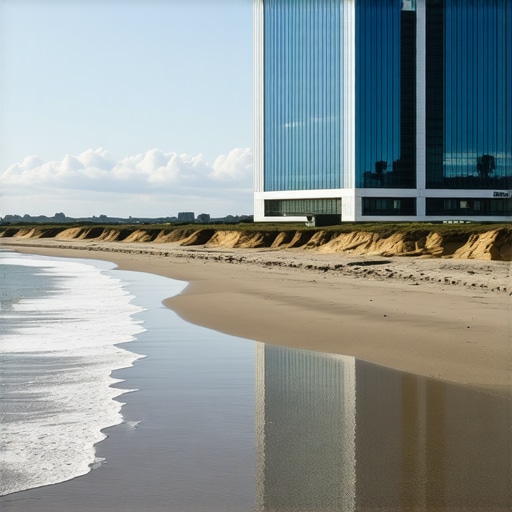
The autopsy of a coastal policy failure
I spent a week deconstructing a high-net-worth policy after a fire. The owner thought they were fully covered until they realized their guaranteed replacement cost had a cap that was set in 2012 dollars. This client believed the marketing brochures. They trusted the brand name on the letterhead. But the forensic reality was different. The policy contained a sub-limit on debris removal that accounted for less than four percent of the total dwelling value. In a coastal zone where labor is scarce after a storm, that amount was gone in forty eight hours. The owner faced a six figure gap before the first brick was even laid. This is not an outlier. It is the new standard. Carriers are not just raising rates. They are surgically removing themselves from risks they can no longer model with 1990s mathematics. The actuarial tables have shifted. The climate risk is now a legal and financial risk that exceeds the capacity of even the largest balance sheets. I see this every day. Brokers sell the price while the underwriters hide the exclusions. When you live within five miles of the ocean, your policy is no longer a safety net. It is a complex legal contract designed to limit the carrier exposure. The math is blunt. The math is cold. The math does not care about your view of the Atlantic.
The mathematical reality of coastal abandonment
Top-rated companies are dropping coastal coverage because the Combined Ratio exceeds 100 percent due to escalating climate volatility, surging reinsurance costs, and statutory litigation burdens. Carriers cannot achieve a sustainable loss-cost model when the frequency of secondary perils like convective storms outpaces their ability to adjust rates through state regulators. The probability of a total loss event has shifted from a one in one hundred year cycle to a one in twenty year cycle. This breaks the fundamental law of insurance. You cannot price for a near certainty. Insurance requires a spread of risk across a large pool of unlikely events. When every house on the coast is likely to suffer a major wind event within a single decade, the pool becomes a liability rather than an asset. The carrier stops being a risk partner and becomes a risk observer. They watch the loss ratios climb. Then they file for a non-renewal. Your loyalty to a brand for twenty years means nothing to an algorithm that sees your zip code as a red line on a heat map. This is the death of the relationship based insurance model. It is replaced by algorithmic rejection.
“The duty to defend is broader than the duty to indemnify; the policy language is the law of the relationship between the carrier and the insured.” – Contractual Law Maxim
The reinsurance trap and the global capital flight
Reinsurance is the insurance for insurance companies. It is the backstop that allows a local carrier to write a policy on a Florida beach house. Today, the global reinsurance market is in a hard cycle. Rates for catastrophe covers have increased by fifty to one hundred percent in some jurisdictions. When the reinsurer raises prices, the primary carrier must either raise your premium or drop the risk. In many coastal states, regulators block the price hikes. This creates a market distortion. The carrier is forced to sell a product for less than it costs to produce. No business survives that for long. They choose the only exit available. They stop writing new business and cancel the old. This is why car insurance and health insurance rates are also spiking in these regions. The financial strain of the property losses bleeds into every other line of business insurance. The capital moves to safer harbors. It moves to inland states where the losses are predictable. It moves to commercial paper and bonds. Capital is cowardly. It flees at the first sign of a non-modeled risk. If the carrier cannot predict the loss, they will not price the risk.
Understanding the technical divide in coverage quality
The distinction between Actual Cash Value and Replacement Cost Value is where most homeowners lose the battle. In a coastal environment, the salt air and high humidity accelerate the physical depreciation of every component of the structure. If you have an ACV policy, your recovery for a roof claim will be pennies on the dollar after ten years. Even if you have RCV, the fine print often requires you to complete the repairs before the full payment is released. This creates a liquidity crisis for the owner. You need the money to build, but the carrier needs the building to pay. It is a circular logic trap that destroys the middle class. Business insurance for coastal retailers faces similar hurdles. The business interruption coverage is often capped by a period of restoration that does not account for modern supply chain delays. If it takes eighteen months to get custom hurricane glass, but your policy only pays for twelve months of lost income, you are out of business. The carrier knows this. They count on it. It is part of the loss adjustment process.
| Coverage Feature | Actual Cash Value (ACV) | Replacement Cost (RCV) | Extended Replacement |
|---|---|---|---|
| Payout Logic | Fair Market Minus Wear | New for Old Cost | Cost Plus 25-50% Buffer |
| Cost Basis | Depreciated Value | Current Labor/Material | Protects Against Inflation |
| Risk to Owner | Extreme Equity Loss | Moderate Gap Risk | Lowest Risk |
The three words that kill a claim
Anti-concurrent causation clauses are the silent killers of coastal insurance. These clauses state that if two events happen at once, such as wind and water, and one is excluded, the entire claim is denied. If a hurricane blows your roof off but a storm surge also floods your living room, the carrier will use the flood exclusion to deny the wind claim. They will argue they cannot separate the damage. You will spend years in litigation trying to prove which molecule of water came from the sky and which came from the sea. This is the legal insurance reality of the modern era. You are not buying protection. You are buying a ticket to a courtroom. Most people think a higher premium means better insurance. The truth is that carriers often raise prices on loyal customers while stripping away silent coverage in the fine print. They add endorsements that limit mold, exclude cosmetic hail damage, or mandate high deductibles for named storms. You pay more and get less. It is a sophisticated form of contract cannibalization.
“Insurance is the mechanism of distributing the risk of loss among a large number of persons.” – ISO General Provisions Commentary
The checklist for a coastal risk audit
You cannot rely on your broker to protect you. You must conduct a forensic audit of your own declarations page. This requires looking past the premium number and looking into the guts of the endorsements. Here is the minimum requirement for a coastal survival audit.
- Verify the Windstorm Deductible is a flat dollar amount, not a percentage of the total insured value.
- Check for an Ordinance or Law endorsement that covers the cost of rebuilding to current building codes.
- Confirm the existence of Sewer Backup and Sump Pump failure coverage, which is almost always excluded by default.
- Review the policy for a Waiver of Subrogation that might exist in your service contracts with contractors.
- Identify any Cosmetic Damage Exclusions that prevent payouts for metal roofs or siding that still function but look destroyed.
The legal insurance crisis in Florida and beyond
In Florida, the current litigation crisis means your assignment of benefits clause is a ticking time bomb. For years, contractors would have homeowners sign over their insurance rights in exchange for quick repairs. The contractors would then sue the insurance company for inflated amounts. This created a legal feedback loop that drove carriers out of the state. Even if you are a responsible homeowner, you are paying the litigation tax of every fraudulent claim in your county. The legal system has become an extension of the insurance adjustment process. This is why some of the best insurance companies are no longer the household names you see on television. They are the surplus lines carriers. These are non-admitted companies that have more flexibility in pricing and forms. They are the only ones left willing to touch high-risk coastal property. They are expensive. They are unregulated by the state insurance departments. But they actually have the capital to pay when the big one hits. The household names are retreating to the suburbs. They want the easy premiums of a brick house in Ohio. They do not want the forensic complexity of a beach house in the Carolinas.
Final actuarial observations
The market will not fix itself. The coastal zones are undergoing a permanent repricing of risk. If you own property in these areas, you must treat your insurance as a dynamic liability. It is no longer a set it and forget it expense. You must be prepared to self-insure the smaller losses. You must increase your deductibles to keep the catastrophic coverage affordable. The era of the five hundred dollar deductible is over. The era of the twenty thousand dollar deductible has arrived. This is the only way to keep the carrier in the game. They want skin in the lung. They want to know that you are just as invested in the survival of the structure as they are. The contract is the law. Read it. Understand the exclusions. Because when the storm arrives, the only thing that matters is the ink on the page, not the promise in the commercial.