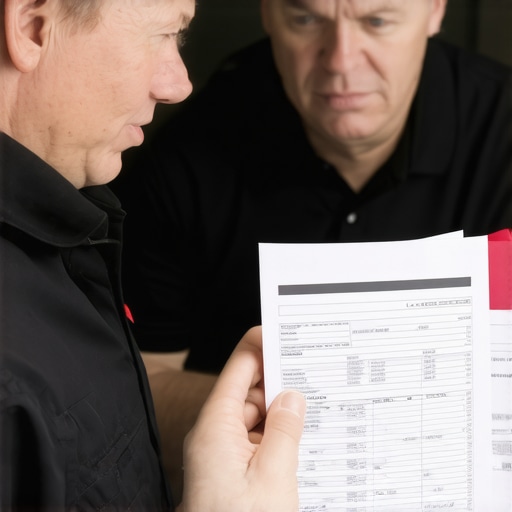
The car insurance industry operates on a friction-based profit model. It is designed to exhaust your patience through technical delays and actuarial attrition. I spent a week deconstructing a high-net-worth policy after a fire. The owner thought they were fully covered until they realized their guaranteed replacement cost had a cap that was set in 2012 dollars. This discrepancy left a six-figure gap that the carrier refused to bridge. Car insurance disputes follow the same clinical logic. The adjuster is not a helpful neighbor. They are a cost-containment specialist tasked with protecting the carrier’s loss ratio. To win a dispute over repair costs or total loss valuations, you must move past emotional pleas. You need a forensic data set that proves the carrier’s estimate is a mathematical impossibility. I have seen claims settled for pennies on the dollar simply because the insured did not understand the difference between Actual Cash Value and Replacement Cost. This article will provide the architectural blueprint for dismantling a low-ball insurance estimate using hard evidence and contractual law.
The ghost in the fine print
Winning a car repair dispute requires documented proof of the vehicle’s pre-accident condition, a line-by-line rebuttal of the carrier’s estimating software, and a formal invocation of the appraisal clause. Most disputes fail because the insured lacks the forensic paper trail needed to challenge the carrier’s standardized labor rates and aftermarket parts mandates. Insurance companies use automated systems like CCC One or Mitchell to generate estimates. These systems are calibrated to favor the insurer by selecting the lowest possible labor rates in a geographic region. If your shop charges one hundred dollars per hour and the carrier only pays sixty, you are stuck with the bill. You must gather the prevailing rate data from at least five local shops to prove the carrier’s data is skewed. This is the only way to overcome the bias inherent in their software. You also need to look at the parts. Most policies allow for Like Kind and Quality parts. This often means salvaged or cheap imitation components that do not meet the original safety specifications of your vehicle.
“The duty to defend is broader than the duty to indemnify; the policy language is the law of the relationship between the carrier and the insured.” – Contractual Law Maxim
Why your full coverage is a mathematical fiction
The term full coverage does not exist in the legal world of insurance and serves only as a marketing tool to sell policies. Most consumers mistakenly believe it protects them from all financial loss, but car insurance contracts are actually a patchwork of specific exclusions and sub-limits that can leave you exposed. You might have collision coverage, but your policy likely contains a Betterment clause. This allows the carrier to deduct money from your claim if they replace a worn part with a new one. If your five-year-old tire is damaged, they will only pay for a fraction of a new tire. This math adds up quickly. I have seen business insurance claims for commercial fleets where the carrier applied a twenty percent depreciation factor to every single part replaced. The owner was out thousands of dollars because they didn’t understand the actuarial reality of their contract. Best insurance is not the cheapest. It is the policy with the fewest hidden exclusions. You must audit your policy for the term Actual Cash Value. This is the market value of the car at the moment of the crash, not what you paid for it. If you have a loan, you need gap insurance, or you will be paying for a ghost car for years.
| Settlement Type | Definition | Impact on Claim Total |
|---|---|---|
| Actual Cash Value (ACV) | Replacement cost minus physical depreciation | Usually 20-40% lower than retail price |
| Replacement Cost Value (RCV) | The cost to buy a new equivalent vehicle | Maximum indemnity for the insured |
| Stated Amount | A pre-agreed value set at policy inception | Common for classic or high-end vehicles |
The three words that kill a claim
The phrases prior unrelated damage, prevailing labor rate, and betterment are the primary weapons adjusters use to reduce the value of your repair claim. If you cannot provide high-resolution photos of your vehicle taken within thirty days of the accident, the carrier will claim your scratches were pre-existing. Forensic truth in a repair dispute is found in the metadata of your photos. You must show the car was pristine before the impact. If you are dealing with a complex claim, you might need to look at your legal insurance options. Many people have legal plans through their employers that cover consumer disputes. This can provide the leverage needed to force a carrier into a fair settlement. Business insurance policies are even more complex. They often include subrogation waivers that prevent you from suing a third party if the insurance company pays the claim. This can limit your options if the repair shop commits fraud or negligence. You must be clinical in your approach. Document every phone call. Get every promise in writing. The carrier will try to use your own words against you if you admit any level of fault or uncertainty during the initial recorded statement.
[IMAGE_PLACEHOLDER]
The hidden nuclear option in the appraisal clause
The appraisal clause is a mandatory provision in most car insurance policies that allows you to bypass the adjuster and go to a neutral third-party panel. Invoking this clause is the most effective way to break a stalemate over the cost of repairs or the total loss value of a vehicle. It works like a mini-arbitration. You hire an appraiser, the carrier hires an appraiser, and they pick a neutral umpire. If the two appraisers cannot agree, the umpire makes the final call. This process is expensive, usually costing around five hundred dollars, but it is often the only way to get an honest valuation. I have seen appraisal awards come back twenty percent higher than the carrier’s final offer. It removes the conflict of interest inherent in the carrier’s internal estimating process. You should also check if your health insurance covers any medical costs related to the accident. Many people forget that their car insurance MedPay or PIP coverage is primary, but once that is exhausted, your standard health insurance takes over. Coordination of benefits is a complex actuarial puzzle that can save you thousands in out-of-pocket expenses if handled correctly.
“The standard for indemnity is the restoration of the insured to the position they occupied prior to the loss.” – ISO General Principles
The forensic math of the diminished value trap
Diminished value is the loss in resale value a vehicle suffers because it has an accident history on its Carfax report. Most insurance companies will not offer this payment voluntarily, but it is a legal right in many states if you are the third-party claimant. If someone hits you, their car insurance is responsible for making you whole. This includes the lost market value of your vehicle. A car with a major frame repair is worth significantly less than an identical car with a clean history. You need a professional diminished value report to prove this loss. This report uses historical sales data and dealer auctions to show the mathematical drop in value. Do not settle the physical damage claim until you have addressed diminished value. Once you sign the release, the case is closed. In many regions, the lack of standardized diminished value laws makes this a difficult battle. You must be aggressive. Use the phrase bad faith if the carrier refuses to even consider your documentation. This signals that you are prepared to escalate the matter to the state insurance department.
The Forensic Repair Audit Checklist
- Obtain a copy of the carrier’s estimating software log to see what parts were skipped.
- Request the local market labor rate survey used by the adjuster to justify their low rate.
- Take five hundred photos of the vehicle during the teardown phase at the repair shop.
- Check the policy for an OEM parts endorsement which forces the use of original components.
- Document all communication through a dedicated email folder for subrogation evidence.
- Verify if your business insurance covers loss of use if the vehicle was used for work.