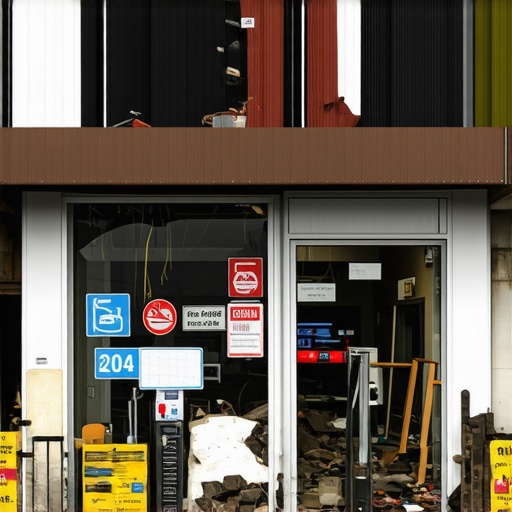
The hidden mechanics of policy failure during catastrophic events
I recently reviewed a $2 million commercial claim that was denied entirely because of a three-word endorsement buried on page 84 that the broker never even mentioned to the client. The owner sat across from me with trembling hands. They had paid their premiums for fifteen years. They thought they were safe. They were wrong. The carrier cited an anti-concurrent causation clause. This technicality stripped the business of its survival capital in seconds. Insurance is not a safety net. It is a legal combat zone where the carrier holds the map and the compass. If you do not understand the manuscript of your policy, you are not insured. You are merely donating money to a multibillion-dollar corporation.
The ghost in the fine print
Business insurance policies fail during natural disasters because of technical definitions regarding proximate cause and concurrent causation. If a flood follows a hurricane, your windstorm policy might be voided if a specific anti-concurrent causation clause exists. This legal loophole allows carriers to deny claims even when covered perils occur simultaneously with excluded ones. Most small business owners assume that if a fire starts after an earthquake, the fire coverage applies. This is a dangerous assumption. Carriers often argue that the excluded event, the earthquake, was the efficient proximate cause. This argument saves them billions while destroying local economies. The language of the contract is the only thing that matters. Your loyalty to the agent does not matter. The carrier is a machine built to protect its reserves. It views your claim as a threat to its actuarial health.
Why your full coverage is a mathematical fiction
Best insurance policies often hide depreciation schedules that reduce your payout to Actual Cash Value instead of Replacement Cost Value. This distinction means the difference between rebuilding your shop and going bankruptcy. Accountants often fail to realize that insurance is a legal contract, not a financial asset. If your building was constructed in 1990, an ACV policy will deduct thirty years of wear and tear from your payout. You will receive a check for forty percent of what it costs to actually buy materials in today’s market. This is the math of ruin. Furthermore, the coinsurance penalty remains a silent killer. If you underreport the value of your assets to save on monthly premiums, the carrier can penalize your claim payout by the same percentage. You become a self-insurer for the gap without even knowing it.
| Valuation Type | Calculation Method | Outcome for Small Business |
|---|---|---|
| Actual Cash Value (ACV) | Replacement cost minus depreciation | Insufficient funds for new equipment |
| Replacement Cost (RCV) | Current market price for new items | Full recovery of physical assets |
| Functional Replacement | Cost of equivalent utility equipment | Operational but lower quality assets |
| Agreed Value | Fixed amount determined at policy inception | Predictable but ignores inflation |
The three words that kill a claim
Legal insurance and commercial property forms often include the phrase arising out of or resulting from. These words are the teeth of the exclusion section. They expand the scope of a denial to anything even tangentially related to an excluded event. If your policy excludes mold, and a pipe bursts during a storm, the carrier may deny the entire water damage claim if they find a single spore of fungi. They will claim the damage arose out of the mold. It is a forensic trap. You must demand a write-back for these exclusions. Most brokers will not suggest this because it requires extra work and higher premiums. They want the easy sale. You want the survival of your legacy. The mismatch of interests is profound. Carriers use historical data from the ISO to price these risks, but they use proprietary manuscript endorsements to avoid paying them.
“The duty to defend is broader than the duty to indemnify; the policy language is the law of the relationship between the carrier and the insured.” – Contractual Law Maxim
The math of disaster probability
Insurance underwriting relies on 1-in-100-year event modeling. However, the climate is changing faster than the actuarial tables. This creates a protection gap. Small businesses are often located in zones where the maps are outdated. If you are in a flood zone B or C, you might think you are safe. You are not. Over twenty-five percent of flood claims occur outside of high-risk areas. Standard commercial policies exclude water damage entirely. Without a separate NFIP policy or a private flood wrap, you are naked. The carrier knows this. They rely on your ignorance to keep their loss ratios low. They use complex predictive analytics to identify which zip codes are likely to face total loss and then they quietly exit those markets by raising premiums to impossible levels. This is known as market hardening. It is not personal. It is just math.
“Insurance rates shall not be excessive, inadequate or unfairly discriminatory, yet the interpretation of adequacy remains a subjective tool for carrier solvency.” – National Association of Insurance Commissioners (NAIC) Principles
The regional peril logic in high risk zones
In Florida, the current litigation crisis means your assignment of benefits clause is a ticking time bomb. This clause allows contractors to take over your claim rights. It often leads to denied coverage and legal battles that last years. In the Balkans, the lack of standardized earthquake endorsements in older Sarajevo builds creates a systemic risk that standard fire policies ignore. Every region has a specific trap. In California, the wildfire sub-limits are often so low that they do not cover the cost of smoke remediation. You must audit your policy based on local geography. Do not trust a national template. A template is a recipe for failure. You need a forensic review of every endorsement attached to your primary form. Look for the exclusions that target your specific industry. A restaurant needs different endorsements than a machine shop. Most people buy car insurance with more care than they buy their livelihood protection. It is a tragedy of priorities.
The audit for survival
You must perform a forensic audit of your coverage every twelve months. This is not a suggestion. It is a requirement for business continuity. The following checklist identifies the most common points of failure observed in the last decade of catastrophic claims. If you cannot check every box, your policy is a liability.
- Verify that your Business Income coverage includes Extra Expense for at least 12 months.
- Confirm the existence of a Civil Authority clause that triggers if police block access to your street.
- Check for an Ordinance or Law endorsement to cover the cost of building code upgrades.
- Ensure your Equipment Breakdown coverage includes spoilage if you handle perishable goods.
- Remove any Anti-Concurrent Causation language that voids wind coverage during floods.
- Validate that your umbrella policy sits over your health insurance and liability limits correctly.
- Ask for a specific Utility Service Interruption endorsement for off-premises power failure.
The cost of cheap protection
While most people think a higher premium means better insurance, the truth is that carriers often raise prices on loyal customers while stripping away silent coverage in the fine print. This is price optimization. They calculate the maximum you will pay before switching and then they erode the quality of the contract. You are paying more for less. It is a predatory cycle. The only way to win is to hire a third-party risk manager who does not collect a commission from the carrier. You need someone whose only loyalty is to your balance sheet. The broker is often just a salesperson for the carrier. They are not your advocate in a courtroom. When the disaster hits, the carrier will send a forensic adjuster whose job is to find a reason to say no. You need to be ready to say yes with evidence. Keep your records in the cloud. Physical receipts are useless after a fire. The burden of proof is on the insured. If you cannot prove the loss, the loss did not happen in the eyes of the law.