Category: Business Insurance Solutions

  • The Hidden Risk of Using a Personal Laptop for Client Work

    The Hidden Risk of Using a Personal Laptop for Client Work

    The professional liability trap of the personal hardware pivot

    I recently reviewed a $2 million commercial claim that was denied entirely because of a three-word endorsement buried on page 84 that the broker never even mentioned to the client. This specific case involved a high-level consultant who used their personal MacBook for a weekend project. A sophisticated phishing attack compromised the local storage. Because the device was not registered under the company Managed Service Provider (MSP) protocol, the carrier invoked the ‘unmanaged hardware exclusion.’ The client was left to defend a massive data breach litigation on their own. This is the reality of the modern insurance market. It is a fortress of legal language designed to protect the carrier from the inherent chaos of the ‘Bring Your Own Device’ (BYOD) culture. If you think your business insurance or your homeowner policy will catch you when you fall, you are likely operating under a dangerous mathematical fiction. This forensic autopsy of policy language will explain why your personal laptop is a ticking time bomb for your professional indemnity.

    The ghost in the fine print

    Personal laptops used for commercial purposes often trigger commercial use exclusions in standard homeowners insurance policies such as the HO-3 or HO-5 forms. If a data breach occurs on a personal device that is not explicitly listed as scheduled property, the carrier will invoke the business pursuits exclusion to deny the indemnity. This is not a suggestion. It is a contractual certainty. Most professionals assume that because they work from home, their personal belongings are covered under the ‘contents’ section of their home policy. However, as soon as that device touches a client server or stores a piece of proprietary code, the risk profile shifts from a personal property claim to a commercial liability event. The home carrier will argue that they did not collect a premium for the professional risk associated with your client work. They will walk away from the claim. Your broker might call it a misunderstanding. I call it a failure of risk architecture.

    “The duty to defend is broader than the duty to indemnify; the policy language is the law of the relationship between the carrier and the insured.” – Contractual Law Maxim

    Why your ‘full coverage’ is a mathematical fiction

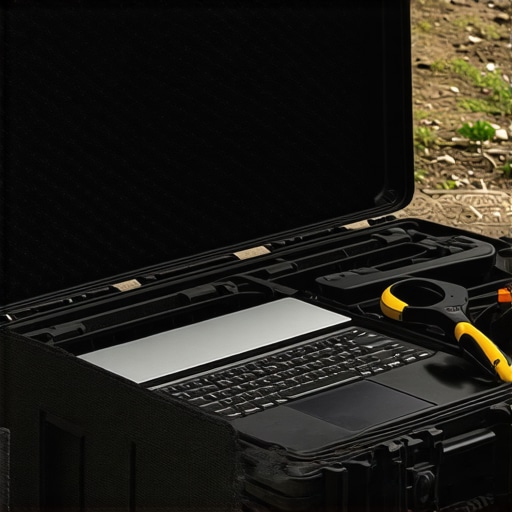
    Professional liability insurance and Errors and Omissions (E&O) policies are built on the premise of controlled environments and risk mitigation standards. When you move data to a personal laptop, you bypass the security protocols that were used to underwrite your policy. Actuaries set premiums based on the probability of a loss within a secured corporate network. They do not calculate for the 1-in-100-year risk of a consultant’s teenager downloading malware on the same machine used for client financial audits. This is known as risk aggregation. By using one device for both personal and professional life, you are effectively doubling the attack surface while halving the legal protection. The carrier will look for any forensic trace of non-compliance. If they find that the device lacked enterprise-grade encryption or multi-factor authentication (MFA) at the hardware level, the claim is dead before it reaches the adjuster’s desk.

    [IMAGE_PLACEHOLDER]

    The three words that kill a claim

    Exclusionary policy language often centers on terms like unencrypted mobile devices, non-commercial hardware, or unauthorized access points. These three words can negate millions of dollars in indemnity coverage. In the Balkans, for example, the lack of standardized cyber endorsements in emerging markets creates a systemic risk where professionals assume coverage that simply does not exist in their local language contracts. In the United States, the California Consumer Privacy Act (CCPA) and similar state-level mandates have increased the cost of a breach exponentially. If your personal laptop is stolen and it contains Personally Identifiable Information (PII), the statutory fines alone could bankrupt a small firm. Your business insurance might cover the theft of the physical laptop, but it will not cover the $150,000 in regulatory fines or the forensic notification costs associated with the data loss on that specific personal machine.

    The actuarial reality of the home network

    Home Wi-Fi networks are considered hostile environments by forensic underwriters because they lack the firewall segmentation of a corporate office. When you conduct client work on a personal machine, you are effectively introducing a toxic asset into your insurance portfolio. The carrier’s subrogation department will look to see if the breach originated from a smart home device or an unpatched router. If the breach can be traced back to a ‘negligent maintenance’ issue on your personal network, your business insurance carrier may attempt to subrogate against your homeowners insurance. This creates a circular legal battle where the only winners are the law firms billing by the hour. While most people think a higher premium means ‘better’ insurance, the truth is that carriers often raise prices on loyal customers while stripping away ‘silent’ coverage in the fine print through manuscript endorsements.

    FeatureHomeowners Policy (HO-3)Commercial Cyber / E&O Policy
    Data ReconstructionTypically ExcludedIncluded up to Sub-limit
    Third-Party LiabilityPersonal OnlyProfessional & Client Data
    Regulatory FinesNo CoverageSubject to Policy Limit
    Forensic Audit CostNot CoveredMandatory Coverage

    Forensic traces and subrogation leverage

    Subrogation leverage is the ability of an insurance company to recover the money they paid for a claim from a negligent third party. When you use a personal laptop, you become that third party. If you are an employee using your own machine, your company’s insurer might pay the client and then sue you personally to recover the loss. They will argue that your failure to secure your personal hardware constituted gross negligence. I have seen subrogation claims tear apart small businesses because the owner didn’t understand the ‘waiver of subrogation’ clause in their own contract. You must understand that the insurance carrier is not your friend. They are a capital preservation machine. Their primary goal is to find a proximate cause that allows them to shift the financial burden away from their balance sheet.

    “Insurance is an agreement whereby for a stipulated consideration, one party undertakes to compensate the other for loss on a specified subject by specified perils.” – NAIC Standard Definition

    The audit of the invisible risk

    Policy audits are the only way to ensure that your indemnification limits actually exist in the physical world. You cannot rely on a summary of benefits. You must read the full policy form, including the declarations page and all attached endorsements. Pay close attention to the definition of ‘Company Property’ and ‘Insured Equipment.’ If those definitions do not explicitly include employee-owned devices or BYOD hardware, you are effectively self-insuring. The following checklist provides a framework for hardening your professional standing before a loss occurs.

    • Verify the ‘Definition of Insured’ includes contractors and personal hardware used for business.
    • Confirm the existence of a ‘Cyber Liability Endorsement’ that covers data at rest on non-company assets.
    • Ensure all personal devices used for work meet the Minimum Security Standards defined in the policy.
    • Check for ‘Waiver of Subrogation’ clauses in client contracts that might conflict with your policy language.
    • Review the ‘Care, Custody, and Control’ exclusion to see if client data is specifically carved out.
    • Document the encryption status of all local drives and cloud-sync folders.

    The regional peril of modern litigation

    Regional risk logic dictates that your legal exposure varies wildly depending on your physical location and where your clients reside. In Florida, the current litigation crisis and the high volume of bad faith lawsuits have made carriers extremely aggressive in their underwriting requirements. They will inspect your IT infrastructure during a loss control survey. If they find you are running a business off a 2018 MacBook with no endpoint protection, they will non-renew your policy or add an exclusionary rider that removes all cyber coverage. Similarly, in the European Union, GDPR compliance is a mathematical certainty. The fines are calculated as a percentage of global turnover. No standard personal laptop insurance or car insurance add-on is going to cover a multi-million euro fine from a privacy regulator. You are playing a high-stakes game with a loaded deck.

  • Why Every Consultant Should Demand a Prior Acts Clause

    Why Every Consultant Should Demand a Prior Acts Clause

    I watched a client lose their right to recover damages from a negligent contractor because they signed a waiver of subrogation in a simple service contract without realizing they were voiding their own insurance coverage. This is the reality of the insurance world. It is not about the glossy brochures or the friendly agent. It is about the forensic reality of the contract language. As a Senior Risk Architect, I see these failures every day. Consultants often walk into professional engagements with a false sense of security, believing that a standard professional liability policy is a blanket of total protection. It is not. It is a minefield. The most dangerous explosive in that field is the absence of a Prior Acts Clause. Without this specific contractual language, you are effectively uninsured for every project you completed before your current policy inception. The carrier will deny the claim. The math of the risk will shift against you. You will be left to defend a multi million dollar suit with your personal assets. This is the forensic truth of the industry.

    The phantom of the retroactive date

    A prior acts clause, also known as a retroactive date, is a critical provision in claims-made insurance policies that provides coverage for professional services rendered before the policy inception. It acts as a chronological anchor, ensuring that the insurer remains liable for errors that occurred in the past but are only discovered and reported during the current policy term. Without this date, your coverage is strictly limited to future events. Professional liability, also known as Errors and Omissions, is almost always written on a claims-made basis. This means the policy in effect when the claim is filed is the one that must respond. If you performed a consulting project in 2021 and you are sued in 2024, your 2024 policy must have a Prior Acts Clause that reaches back to at least 2021. If your retroactive date is set to 2024, the carrier has zero legal obligation to defend you. They will cite the declarations page and walk away. They do not care about your loyalty. They care about the actuarial boundary of the risk they priced.

    “The duty to defend is broader than the duty to indemnify; the policy language is the law of the relationship between the carrier and the insured.” – Contractual Law Maxim

    Why the transition period kills careers

    Switching insurance carriers without securing a prior acts clause creates a coverage gap that can result in total financial exposure for past work. When you move to a new insurer, they typically only cover incidents happening after the new start date unless they explicitly agree to honor your original retroactive date. This is where the trap is set. A new broker might offer a lower premium to win your business. They achieve this price by stripping away the prior acts coverage. You see a smaller number on the invoice and feel successful. You have actually just committed professional suicide. If a client from three years ago sues you for a breach of duty, the new carrier will point to the inception date. The old carrier will point to the fact that the policy is no longer active and no claim was made during their term. You are caught in the void. This void is where consultants go bankrupt. The legal fees alone to argue about the gap can exceed the cost of the original insurance ten times over.

    [IMAGE_PLACEHOLDER]

    The math of the reporting tail

    The reporting tail, or the discovery period, represents the time lag between the commission of an error and the eventual filing of a lawsuit. In professional consulting, this lag can span years. A strategic recommendation made today might not manifest as a financial loss for the client until three years from now. Actuarial science accounts for this through IBNR (Incurred But Not Reported) reserves. When a consultant lacks a Prior Acts Clause, they are essentially self-insuring the entire IBNR period of their career. This is a mathematical disaster. You are taking on the risk of a high-limit loss for a zero percent discount on your current premium. The carrier is laughing. They have collected your premium but have insulated themselves from the most likely source of claims: your past history. The longer you have been in business, the more vital the retroactive date becomes. It is the cumulative record of your professional liability.

    FeatureClaims-Made PolicyOccurrence Policy
    Reporting TriggerMust be reported during active policy termTriggered by the date the error occurred
    Prior Acts DateRequires a specific Retroactive DateAutomatically covers the policy period
    Tail CoverageRequires an ERP endorsement to cover the pastNot required for past policy years
    Premium ImpactLower initial cost, increases over five yearsHigher stable cost from inception

    The strategy for full indemnity

    Securing full indemnity requires a consultant to demand a Prior Acts date that matches their first day of professional operation. This is often called full prior acts coverage. It means the policy does not list a specific date but rather covers any act occurring before the policy period as long as the claim is made now. Carriers hate giving this away. They want to limit their exposure. They will try to insert a specific date, often matching the start of your current policy. You must refuse this. You must provide evidence of continuous coverage to the new underwriter to force them to backdate the retroactive period. If you have a gap in coverage, even for one day, many carriers will reset your retroactive date to the present. This is the insurance equivalent of a hard reset on your professional protection. You lose all the years of coverage you previously paid for. It is a total forfeiture of the protection you purchased in previous years.

    “Insurance contracts are to be interpreted according to the reasonable expectations of the insured, but the clear and unambiguous language of a retroactive date limit will usually prevail in court.” – ISO Underwriting Principles

    A checklist for policy audits

    Conducting a policy audit is the only way to ensure your prior acts protection remains intact and functional. Most consultants never read their endorsements until the process server is at the door. By then, it is too late. The language is fixed. The carrier has already decided their position. You must be proactive. You must treat your insurance policy as a legal document that is more important than your client contracts. Here is the forensic checklist for your next renewal.

    • Confirm the Retroactive Date on the Declarations Page matches your business start date.
    • Verify the Continuity Date has not been moved forward during a carrier change.
    • Ensure there is no Specific Litigation Exclusion that carves out past clients.
    • Check for an Automatic Extended Reporting Period of at least 60 days.
    • Identify the cost of an Optional Extended Reporting Period for three or five years.
    • Review the definition of Professional Services to ensure it covers your past roles.

    The regional legislative trap

    Insurance regulations vary by jurisdiction, and local laws can impact how a Prior Acts Clause is interpreted in a court of law. In certain states, there are strict rules regarding the notice of a retroactive date. If the carrier fails to properly notify the insured that the policy restricts coverage for prior acts, the restriction might be held unenforceable. However, you cannot rely on the mercy of a judge. In high-stakes regions like New York or California, the litigation environment is predatory. A gap in your prior acts coverage in these markets is an invitation for plaintiff attorneys to target your personal assets. They will run a search for your insurance history. If they see a recent inception date with no prior acts, they know you are vulnerable. They will use that leverage to force a settlement you cannot afford. Professional protection is about removing that leverage. It is about building a fortress of contract language that makes you a difficult target.

  • The Subtle Difference Between Professional and General Liability

    The Subtle Difference Between Professional and General Liability

    The legal trap between professional and general liability

    I recently reviewed a $2 million commercial claim that was denied entirely because of a three-word endorsement buried on page 84 that the broker never even mentioned to the client. The business was a design-build firm in California that assumed their general liability policy was a catch-all safety net. When a structural beam failed due to a miscalculated load-bearing ratio, the carrier pointed to a professional services exclusion. The carrier argued that the failure was not an accident but a professional error. The client was left bankrupt because they did not understand that general liability covers your hands while professional liability covers your head. This is the clinical reality of the insurance industry. It is a world of definitions where a single misplaced comma can dissolve a million-dollar indemnity obligation.

    The three words that kill a claim

    General liability insurance focuses on third-party bodily injury and property damage resulting from your business operations or products, whereas professional liability insurance protects against financial loss caused by errors, omissions, or failure to perform professional duties. One covers physical mishaps while the other covers intellectual and technical failures. Mixing them up is a fatal mistake for any modern enterprise. Most business owners see the word insurance and assume it means safety. It does not. It is a contract of adhesion where the carrier holds the pen and you hold the risk. If you are an architect and you drop a hammer on a client, that is general liability. If you design a building that leans three inches to the left, that is professional liability. The two rarely meet, and the gap between them is where most businesses go to die. Professional liability is often called errors and omissions. This policy is written on a claims-made basis, which is a different beast entirely from the occurrence-based general liability forms. A claims-made policy only triggers if the policy is active both when the error happened and when the claim is filed. If you cancel the policy on Monday and get sued on Tuesday for work you did three years ago, you have no coverage. This is the retroactive date trap that wipes out small businesses every single year.

    “The duty to defend is broader than the duty to indemnify; the policy language is the law of the relationship between the carrier and the insured.” – Contractual Law Maxim

    Why your commercial general liability is not a shield for mistakes

    Commercial General Liability or CGL is designed to cover the premises, operations, and products of a company, specifically focusing on tangible harm like a slip and fall or fire damage to a rented office. It excludes the very things that professionals do for a living, which is provide specialized advice or services. You cannot use a CGL policy to fix a bad piece of software or a wrong legal opinion. Carriers use the professional services exclusion to strip away coverage for anything requiring a license or advanced training. This is why a contractor needs both CGL for the job site and PL for the blueprints. The math is simple. General liability rates are based on payroll and revenue. Professional liability rates are based on the specific risk of the profession. Actuaries separate these because the loss patterns are different. A slip and fall has a short tail, meaning the claim is settled quickly. A professional error has a long tail, where the damage might not be discovered for five years. Insurance companies hate long tails. They price them high and hide exclusions in the manuscript endorsements to limit their exposure to your incompetence. If you rely on a basic CGL policy while providing advice, you are essentially self-insuring your biggest risk without knowing it.

    FeatureGeneral Liability (CGL)Professional Liability (E&O)
    Primary TriggerBodily Injury or Property DamageFinancial Loss or Economic Damage
    Policy FormOccurrence Based (usually)Claims-Made (usually)
    Scope of CoverPhysical accidents at workErrors, omissions, and negligence
    Key ExclusionProfessional ServicesGeneral Property Damage
    Client RiskA visitor slips on a wet floorA consultant gives bad financial advice

    The ghost in the fine print of CGL policies

    Manuscript endorsements are custom-written additions to a policy that can completely negate the standard protections you think you purchased, often by narrowing the definition of an occurrence or expanding the list of excluded activities. These are the silent killers of the insurance world. I have seen policies where the definition of employee was changed to exclude independent contractors, leaving the business owner liable for a million-dollar truck accident. This happens because brokers are often more interested in the commission than the forensic audit of the policy language. You must read the definitions section of your policy with a magnifying glass. If the policy defines an accident in a way that requires sudden and accidental events, your slow-leak water damage claim is dead on arrival. The same applies to professional liability. Many policies exclude intentional acts, but the definition of intentional can be stretched by a clever adjuster to include any decision you made on purpose, even if you did not intend the bad outcome. It is a game of linguistic chess. The carrier wants to keep the premium and deny the claim. Your job is to force them into a corner where the language is so clear they have no choice but to pay. This requires an understanding of the eight corners rule, which states that an insurer’s duty to defend is determined by looking only at the four corners of the complaint and the four corners of the insurance policy. If the lawyer who wrote the lawsuit against you does not use the specific magic words that trigger the policy, the carrier will walk away.

    “Insurance is the only product where the buyer hopes they never use it and the seller hopes they never provide it.” – NAIC Industry Report

    Lessons from the Florida litigation crisis

    Florida insurance markets are currently in a state of total collapse due to a combination of high litigation rates and the assignment of benefits crisis, which has led to astronomical premiums and limited coverage options for business owners. If you are operating in the Florida market, you are likely paying three times what a business in Ohio pays for half the coverage. This is because the legislative environment has allowed for predatory litigation that forces carriers to settle even frivolous claims to avoid the risk of bad faith lawsuits. This has a direct impact on the professional vs general liability debate. Carriers in Florida are now adding even stricter exclusions to their CGL policies to avoid any crossover into professional errors. They are terrified of the specialized risk that comes with Florida’s construction and medical sectors. If your policy has an assignment of benefits clause, you might be signing away your right to control your own claim. This is a ticking time bomb for any professional. When you sign a contract with a vendor or a client, you need to look for the waiver of subrogation. This is a clause where you agree that your insurance company cannot go after the negligent party to get their money back. Most people sign these without a second thought. But if you sign a waiver of subrogation without your carrier’s permission, you might be voiding your own coverage entirely. The carrier will argue that you destroyed their right to recover, so they have no obligation to pay you.

    A checklist for the paranoid business owner

    Policy audits should be performed annually by a third party who does not sell insurance, ensuring that there are no gaps between your liability towers and that your retroactive dates are protected. Here is the clinical checklist for surviving an insurance audit:

    • Verify the Retroactive Date on all Professional Liability policies to ensure it matches your business start date.
    • Confirm the definition of Professional Services includes every single activity your business performs for a fee.
    • Look for the Care, Custody, or Control exclusion in your CGL policy, which often denies coverage for damage to items you are working on.
    • Ensure you have an Extended Reporting Period or Tail Coverage option if you decide to switch carriers.
    • Check for a Hammer Clause, which allows the carrier to force you to settle a claim even if you want to fight it to protect your reputation.
    • Review all manuscript endorsements for the word only or excluding, which are the anchors of claim denials.
    • Confirm that your policy includes Defense Costs Outside the Limits, so your legal fees do not eat up your actual insurance money.

    The carrier lied when they told you that you were fully covered. There is no such thing as full coverage. There is only a specific set of perils that have been negotiated into a contract. If you do not know what those perils are, you are not insured. You are gambling. The difference between general liability and professional liability is the difference between a physical accident and a mental error. Both can end your business. The General Liability policy is the foundation, but the Professional Liability policy is the roof. Without both, the structure will not hold when the storm of litigation arrives. You must treat your insurance policy like the legal document it is. It is not a bill. It is a fortress. If the fortress has a gap, the lawyers will find it. They will use that gap to bleed your capital until there is nothing left. Stop listening to the marketing. Start reading the exclusions. That is where the truth lives.

  • Why Your Home-Based Bakery Needs More Than a Homeowner Policy

    Why Your Home-Based Bakery Needs More Than a Homeowner Policy

    The kitchen floor is a legal minefield

    A home-based bakery requires specialized business insurance because standard homeowner policies explicitly exclude coverage for business pursuits, professional liability, and high-volume commercial equipment failures. Most entrepreneurs mistakenly believe their residential policy covers a fire caused by a commercial oven or a lawsuit from a sick customer. The reality is that carriers view your sourdough starter as a commercial risk that voids your personal indemnity contract. I watched a client lose their right to recover damages from a negligent contractor because they signed a waiver of subrogation in a simple service contract without realizing they were voiding their own insurance coverage. This baker had a fire in her kitchen caused by a faulty electrical repair. Because the fire started while she was baking a 50-cake order for a wedding, the carrier denied the claim under the Business Pursuits exclusion. She lost her home and her business in one afternoon. This is not a hypothetical risk. It is a mathematical certainty for the under-insured.

    The hidden poison in your standard HO-3 policy

    Your homeowner policy is a personal contract designed for personal risks. The Insurance Services Office (ISO) Form HO 00 03 contains specific language in Section II Exclusions that removes coverage for any bodily injury or property damage arising out of or in connection with a business. If a flour delivery driver trips on your porch, your residential liability will not pay. The carrier will argue that the driver was an invitee for a business purpose. This shifts the entire financial burden to your personal bank account. You are effectively self-insuring a commercial enterprise without the capital reserves to do so. The math of a poisoned croissant is equally brutal. If a customer develops salmonella from your lemon curd, the resulting medical bills and legal fees are professional liability exposures. Homeowner policies do not include product liability. Without business insurance, you are one bad batch of eggs away from total insolvency. This is why searching for the best insurance often leads professionals away from standard retail agents and toward forensic underwriters.

    “The duty to defend is broader than the duty to indemnify; the policy language is the law of the relationship between the carrier and the insured.” – Contractual Law Maxim

    The three words that kill a claim

    The phrase arising out of business is the most dangerous sequence of words in your insurance stack. In the eyes of an adjuster, any activity intended for profit constitutes a business. It does not matter if you have not made a profit yet. The intent is what triggers the exclusion. Actuarial loss-cost modeling shows that home kitchens are not designed for the sustained heat and electrical loads of commercial production. This increased risk of fire is why carriers charge higher premiums for commercial properties. When you hide a bakery inside a residential policy, you are committing a material misrepresentation of the risk. This allows the carrier to rescind the policy entirely. They will return your premium and walk away from the claim. Your car insurance is also at risk. If you are delivering cakes in your personal vehicle and get into an accident, your personal auto policy will likely deny the claim because the vehicle was being used for a commercial delivery. This is why a commercial auto endorsement is vital for any baker who does more than sell from their front door.

    The math of a poisoned croissant

    Product liability is a microscopic reality that most bakers ignore until a subpoena arrives. Forensic evidence in foodborne illness cases is incredibly precise. Health departments can trace a single strain of bacteria back to a specific kitchen. At that point, you are facing legal insurance challenges that exceed the value of your home. A commercial general liability policy provides a defense even if the claim is groundless. A homeowner policy provides nothing. The legal fees alone to defend a food poisoning case can reach six figures. Contrast this with a Business Owner Policy (BOP) which bundles liability and property coverage for a fraction of the potential loss. The actuarial probability of a kitchen fire or a slip-and-fall is significantly higher than the probability of a total lightning strike, yet people insure against the latter while ignoring the former. It is a failure of risk assessment.

    FeatureHomeowner Policy (HO-3)Business Owner Policy (BOP)
    General LiabilityPersonal OnlyCommercial & Personal
    Product LiabilityNoneIncluded
    Equipment BreakdownLimited to PersonalCommercial Grade Included
    Business InterruptionNoneReplaces Lost Income
    Spoilage CoverageNoneProtects Inventory

    The ghost in the fine print

    Spoilage coverage is the most overlooked asset in a bakery policy. A simple power outage can destroy five thousand dollars worth of high-quality butter, chocolate, and prepared dough. A standard policy considers this a non-recoverable loss. A business policy sees it as a covered peril. Further, business insurance provides for business interruption. If your kitchen is damaged by a pipe burst, the policy pays for your lost net income and continuing expenses like your health insurance premiums or loan payments. This keeps you afloat while the physical space is being repaired. Without this, the time it takes to rebuild is time you are going deeper into debt. Most people think a higher premium means better insurance, but the truth is that carriers often raise prices on loyal customers while stripping away silent coverage in the fine print. You must audit your endorsements annually to ensure your coverage hasn’t been gutted by a quiet update to the policy forms.

    “Insurance is a contract of indemnity, and its primary purpose is to make the insured whole, not to provide a windfall.” – National Association of Insurance Commissioners (NAIC)

    A policy audit for the serious baker

    To secure your financial fortress, you must move beyond the amateur stage of home-based business. This involves a clinical review of every contract you sign and every policy you hold. The following checklist serves as a forensic starting point for your risk mitigation strategy.

    • Confirm the presence of a Home-Based Business Endorsement or a standalone BOP.
    • Verify that your product liability limits are at least one million dollars per occurrence.
    • Check for a Waiver of Subrogation in your lease or vendor contracts.
    • Ensure your delivery vehicle has a commercial use rider on the auto policy.
    • Verify spoilage coverage limits match your peak inventory levels.
    • Document all commercial-grade equipment and its replacement cost value.

    The end of the neighborly marketing myth

    Insurance companies spend billions on ads to make you feel like they are your friend. They are not. They are capital preservation machines. Their goal is to minimize loss. When you run a bakery out of your home, you are providing them with an easy exit strategy for any claim you file. By not having the correct business insurance, you are giving the carrier a legal reason to say no. This is the blunt truth of forensic underwriting. Whether you are worried about car insurance during a delivery or legal insurance during a lawsuit, the only protection is a contract that explicitly acknowledges your business activities. Do not wait for a catastrophic loss to find out that your homeowner policy is just a piece of paper with no value for your professional life. Professional risks require professional indemnity. Anything less is just a gamble with your house as the stake.

  • The Document You Need to Prove Your Business Lost Revenue

    The Document You Need to Prove Your Business Lost Revenue

    I watched a client lose their right to recover damages from a negligent contractor because they signed a ‘waiver of subrogation’ in a simple service contract without realizing they were voiding their own insurance coverage. The carrier denied the $450,000 fire claim instantly. The insured thought they were saving money on legal insurance by not having a lawyer review the contract. They were wrong. This mistake cost them their entire livelihood because they assumed the insurance company was a safety net. It is not. It is a contract. If you violate the terms, the contract is dead. The carrier has no obligation to you. This is the reality of the business insurance world. Most policyholders do not understand that the ‘Period of Restoration’ is a mathematical cage. It defines exactly when the money stops flowing. If your contractor takes six months to fix a roof but the policy only covers four months of restoration, you are bleeding for those last eight weeks. No amount of begging will change the actuarial reality. You need to prove your loss with forensic precision or you will receive nothing.

    The phantom revenue of the idle enterprise

    Proving lost revenue requires a granular analysis of historical gross receipts and the specific Period of Restoration defined in your business insurance policy. The insurance company will look at your net income before the loss occurred. They will then look at your likely net income if no loss had occurred. This is not a guess. It is a calculation based on historical data. They will deduct any expenses that do not continue during the shutdown. This is where most business owners fail. They try to claim every penny of lost revenue without accounting for the fact that they are no longer paying for electricity or hourly labor. The carrier is only responsible for your net loss plus continuing normal operating expenses. If you cannot prove these numbers, your claim is a fiction. Unlike a standard car insurance claim where a bumper has a fixed price, business income is invisible. It must be reconstructed through paper. You are building a ghost of what your business should have been.

    “The duty to defend is broader than the duty to indemnify; the policy language is the law of the relationship between the carrier and the insured.” – Contractual Law Maxim

    The three words that kill a claim

    Actual loss sustained is the phrase that governs whether your business survives a catastrophic event or collapses under the weight of debt. If your policy includes this wording, you must prove that the loss was a direct result of the physical damage. You cannot claim loss of market. You cannot claim that the general economy slowed down during your repair. The carrier will look for any reason to attribute your lower revenue to external factors. This is why forensic accounting is required. If you are also dealing with health insurance issues for your employees during a shutdown, the complexity doubles. Every dollar spent must be categorized as either a ‘continuing expense’ or an ‘extra expense.’ Extra expenses are costs you incur to avoid further loss, such as renting a temporary space. If these expenses do not actually reduce the total loss, the carrier may refuse to reimburse them. They are not your partners. They are your contractual opposites.

    Document TypeEvidentiary WeightCommon Adjuster Rebuttal
    Profit and Loss StatementsHighQuestioning Extra Expenses as ordinary costs
    Tax ReturnsMediumDoes not account for seasonal peaks
    General LedgerHighRequires forensic filtering for accuracy
    Sales Tax RecordsHighThird-party verification of gross receipts

    Why your tax return is not enough

    Forensic underwriters despise tax returns because they are designed to minimize taxable income rather than accurately reflect true business potential. A tax return is a document for the government. An insurance claim is a document for a creditor. These two things are rarely the same. If you have been aggressive with deductions to lower your tax bill, you have effectively lowered the value of your insurance claim. You cannot have it both ways. The carrier will use your low reported net income against you. They will argue that your business was not as profitable as you now claim it is. This is the trap. You must provide point of sale reports, bank statements, and audited financial statements to prove the real flow of cash. If you think your ‘best insurance’ policy will just take your word for it, you are deluded. They will hire a forensic firm to find the holes in your story.

    • Audit your ‘Period of Restoration’ every twelve months.
    • Maintain a digital vault of all monthly financial statements offsite.
    • Identify ‘Extra Expenses’ before a disaster happens.
    • Review every service contract for ‘Waiver of Subrogation’ clauses.
    • Ensure your ‘Business Income’ limit includes a margin for inflation.

    “The objective of insurance is to return the insured to the same financial position as before the loss, not to provide a windfall.” – ISO Underwriting Standard

    The ghost in the fine print

    Concurrent causation is the legal theory that allows insurance carriers to deny claims when two events occur simultaneously, one covered and one excluded. If a windstorm damages your building but a flood causes the business interruption, you may find yourself with zero coverage. This happens daily. The ‘Proximate Cause’ must be a covered peril. In many jurisdictions, if an excluded peril contributes even one percent to the loss, the entire claim is void. This is why you need a forensic expert to document the exact sequence of events. Do not let the adjuster lead the narrative. They are trained to find the excluded peril. They will ask leading questions about the condition of your property before the loss. Your answers will be used to build a case against you. Every word is a piece of evidence. Every document is a potential weapon. Control the data or the data will control you.

  • Why your business needs a ‘key person’ policy before scaling

    Why your business needs a ‘key person’ policy before scaling

    The lethal vulnerability in your growth strategy

    I watched a client lose their right to recover damages from a negligent contractor because they signed a waiver of subrogation in a simple service contract without realizing they were voiding their own insurance coverage. That was a property claim. But the same lack of forensic oversight destroys businesses from the inside out when they ignore key person risk. When you scale, you are not just growing a brand. You are inflating a risk profile that rests on the shoulders of three or four critical individuals. If one of those pillars disappears, the architecture collapses. I have seen it happen to companies with fifty million dollars in revenue. They think they are invincible until the actuarial reality of human mortality or disability hits the balance sheet. The skeptical investor smells this weakness instantly. They see a company that has not immunized itself against the loss of its most valuable asset, which is never the equipment but always the intellect. Business insurance is often viewed as a commodity. This is a fatal misunderstanding of contract law. A key person policy is a clinical tool designed to provide the liquidity necessary to survive a catastrophic leadership vacuum. Without it, your valuation is a work of fiction. [image_placeholder_1]

    The math of human capital failure

    Key person insurance provides a death benefit or disability payout to a business when a vital employee dies or becomes incapacitated. It functions as a financial bridge to cover recruitment costs, debt obligations, and revenue losses during the transition period. This ensures the business remains a going concern for stakeholders. Most CEOs treat their business insurance as a checkbox for the landlord. They fail to understand that a key person policy is a hedge against the cost of chaos. When a founder or lead developer vanishes, the market reacts with immediate hostility. Creditors call in loans. Clients seek more stable partners. The policy provides the cash to hire a headhunter who will charge thirty percent of a high-salary placement. It covers the six months of lost productivity. We look at the loss-cost modeling for these events and the data is clear. Most small to mid-market firms do not have the cash reserves to withstand a twenty-four-month recovery period after a senior leadership loss. This is why the policy exists. It is not about sentiment. It is about capital preservation. You are buying time. You are buying the ability to tell your investors that the death of a founder is a tragedy but not a liquidation event. The math does not lie. The probability of a disability event for a forty-year-old executive over a twenty-year career is significantly higher than the probability of a total fire loss at the corporate headquarters. Yet, every business insures the building. Few insure the brain inside it.

    “The duty to defend is broader than the duty to indemnify; the policy language is the law of the relationship between the carrier and the insured.” – Contractual Law Maxim

    The ghost in the fine print

    A valid key person policy requires a specific insurable interest and strict adherence to IRS Section 101j notice and consent requirements. Failure to execute these documents before the policy is issued can result in the death benefit being treated as taxable income, which destroys the policy’s primary function of providing net liquidity. I once spent a week deconstructing a high-net-worth policy after a fire, and the owner realized their coverage was trapped in 2012 dollars. Key person policies suffer from the same stagnation. If you bought a five hundred thousand dollar policy when you were a three-person shop, that policy is useless now that your payroll is four million dollars. The policy must be indexed to your growth. It must account for the specific tax liabilities of the corporation. If you do not follow the notice and consent rules, the federal government will take forty percent of that payout. That is forty percent of your survival fund gone because of a clerical error. We call this the silent exclusion. It is not written in the policy by the carrier. It is created by the negligence of the insured. You must audit these contracts annually. You must ensure that the definition of the key person matches their actual role in the current version of the business. Roles evolve. A lead engineer might become a strategic visionary. If the policy specifies their role as an engineer, a sophisticated carrier might look for ways to adjust the settlement based on the change in risk profile. Do not give them that lever.

    The contract as a tactical fortress

    The legal structure of key person insurance involves the company acting as the owner and beneficiary of the policy while the employee is the insured party. This arrangement allows the business to control the asset and use the proceeds to stabilize operations or fund a buy-sell agreement. When we look at corporate governance, the lack of a key person policy is often seen as a breach of fiduciary duty. If a board of directors fails to protect the company against a known, quantifiable risk, they are exposed. This is where legal insurance and business insurance intersect. The policy is a defense mechanism. It protects the remaining shareholders from the predatory maneuvers of competitors who see a leadership vacuum as an opportunity for a hostile takeover. It provides the funds to execute a buy-sell agreement so that the heirs of the deceased key person do not become unintended, and often disruptive, business partners. This is the forensic truth. You are not buying a policy for the person who died. You are buying it for the people who are left behind to pick up the pieces. Look at this comparison to understand the stakes.

    Risk FactorWithout Key Person CoverageWith Forensic Grade Coverage
    Debt ServicingTechnical default on key person clausesImmediate liquidity to satisfy creditors
    RecruitmentDrain on operational cash flowFunded executive search and signing bonus
    Tax ImpactPotential income tax on proceeds (if 101j fails)Tax-free death benefit for corporate use
    Market Value30-50 percent haircut on valuationStability through funded transition plan

    Checklist for a forensic policy audit

    • Verify written notice and consent under IRS Section 101j before the policy issue date.
    • Confirm the policy limit matches the current enterprise value multiplier.
    • Ensure the definition of disability in the rider is own-occupation, not any-occupation.
    • Review the buy-sell agreement to ensure the insurance funding is harmonized with the valuation formula.
    • Check the carrier’s A.M. Best rating for long-term solvency.
    • Verify that the policy is owned by the correct legal entity to avoid probate delays.

    The carrier lied when they told you that a basic term policy was enough. They did not mention the complexity of the buy-sell integration. They did not mention the impact of the business being taxed on the gain if the ownership is not structured through a specialized trust or corporate resolution. They sold you a commodity when you needed a forensic instrument. In high-stakes commercial environments, the details are the only thing that matters. The skeptical investor knows that a business is a machine. A key person is a part of that machine. If you do not have a replacement part ready, the machine stops. You must treat this as a mathematical certainty, not a morbid possibility. Every year that you scale without increasing your key person limits, you are effectively taking a massive, unhedged bet on the life of your leadership team. That is not business. That is gambling. And in the world of high-limit indemnity, the house always wins unless you have the contract to prove otherwise. [image_placeholder_2]

    “Insurance is the only product where the contract is bought before the loss is realized; therefore, the quality of the wording is the quality of the asset.” – ISO Industry Standard Commentary

    The three words that kill a claim

    The phrase ‘material misrepresentation’ allows a carrier to void a policy entirely if the health history of the key person was not disclosed with surgical precision during the underwriting process. This often occurs when brokers rush the application to close a deal before a funding round. I have seen carriers deny ten million dollar claims because a founder failed to disclose a prescription for high blood pressure from five years ago. The clinical reality of underwriting is brutal. They will pull the pharmacy records. They will pull the physician notes. If there is a discrepancy, they will argue that they would never have issued the policy had they known the truth. This is why the forensic truth-teller demands a full medical disclosure. You do not want a policy that is easy to get. You want a policy that is impossible to contest. This is the difference between a quote-churner and a risk architect. We want the carrier to have no exit ramp. We want the contract to be so tightly bound to the facts that the payout is an inevitability. If your broker is not asking for your medical history, they are setting you up for a denial. They are taking your premium and giving you a false sense of security. It is a betrayal of the highest order. The scale of your business demands a commensurate scale of professional oversight. Do not let a three-word endorsement on page eighty-four of your policy turn your growth strategy into a bankruptcy filing. Ensure your key person policy is a fortress, not a facade.

  • Why your business liability fails if you hire an independent contractor

    Why your business liability fails if you hire an independent contractor

    I am a forensic truth-teller. I smell like strong black coffee and old paper. Your insurance policy is not a shield, it is a contract with a thousand trapdoors. I watched a client lose their right to recover damages from a negligent contractor because they signed a waiver of subrogation in a simple service contract without realizing they were voiding their own insurance coverage. This is not a hypothetical scenario. It happens every day in the world of high-limit commercial indemnity. You hire a contractor to save money or time. You think the risk follows the person doing the work. You are wrong. The legal reality of vicarious liability and the mathematical reality of loss-cost ratios prove that you are simply doubling your exposure. Carriers do not care about your intentions. They care about the precise language of the ISO forms and the exact definitions of the named insured. If your paper trail is weak, your coverage is a ghost.

    The shadow of vicarious liability

    Vicarious liability attaches to a hiring entity when an independent contractor commits a negligent act within the scope of their contractual duties. Your business insurance must account for non-delegable duties and agency law because courts often find the primary business responsible for third-party damages regardless of the contractor’s status.

    The law treats certain responsibilities as non-transferable. If you hire a roofing contractor and they drop a bucket of tar on a pedestrian, you are the one with the deep pockets. The plaintiff’s attorney will not care about your independent contractor agreement. They will sue the owner of the property and the business that hired the crew. This is the concept of respondeat superior applied through the lens of apparent authority. Your carrier will look for a reason to deny the claim. They will check if the contractor was truly independent or if you exerted too much control over their methods. If you provided the tools, the schedule, or the direct supervision, the contractor becomes a de facto employee. This triggers the employee exclusion in your general liability policy. Now you have no coverage and a massive legal bill.

    Why your general liability policy stays silent

    A standard General Liability policy often excludes independent contractor errors through classification limitations or designated work exclusions. Unless your insurance broker specifically adds an endorsement for vicarious liability or hired and non-owned auto, the insurance carrier will deny third-party claims involving outside vendors.

    Actuarial loss-cost modeling is cold. Carriers calculate your premium based on the payroll of your employees. When you hire a contractor, that payroll is not in the audit. Therefore, the carrier has not collected a premium for that specific risk. They use restrictive endorsements like the CG 21 39 to exclude coverage for operations performed for you by independent contractors. Most business owners never see this. They see a certificate of insurance from the contractor and assume they are safe. A certificate of insurance is a piece of paper with no legal weight. It is not the policy. It does not list the exclusions. It is an marketing tool, not a legal guarantee. [image placeholder]

    “The ISO GL policy forms provide that ‘insured’ status for others is only granted if the named insured has agreed in writing to provide such coverage.” – Contractual Law Maxim

    The failure of certificates of insurance

    The Certificate of Insurance or COI is a non-binding document that summarizes coverage limits but cannot modify the underlying insurance contract. Without an additional insured endorsement like the CG 20 10, the hiring business has no legal standing to claim indemnification or a defense from the contractor’s insurance carrier.

    I have audited thousands of these documents. Most are expired, forged, or so heavily restricted that they are worthless. If the contractor’s policy has a residential work exclusion and you hire them to work on your apartment complex, the policy is void from the start. You must demand the actual endorsements. You need to see the CG 20 37 which covers completed operations. If you only have the CG 20 10, your protection ends the moment the contractor packs their tools. If the building collapses two weeks later, you are standing alone. The math of the aggregate limit also comes into play. If that contractor is working for ten other people and has a one million dollar limit, the first person to file a claim might eat the entire pie. You are left with nothing but a breach of contract suit against a bankrupt contractor.

    Non-delegable duties that stay on your books

    Certain legal obligations known as non-delegable duties cannot be transferred to an independent contractor through an indemnity agreement. In cases involving public safety, premises liability, or statutory requirements, the hiring party remains primarily liable for damages and legal defense costs regardless of the contractual language used.

    Consider the case of a commercial landlord. You hire a snow removal company. They miss a patch of ice. A tenant falls. You are the one who owes the duty of care to the tenant. You cannot say it was the contractor’s fault and walk away. The court will find you negligent for failing to inspect the work. Your insurance policy needs to be structured to handle this pass-through liability. This requires a specific understanding of the contractual liability coverage part of the CGL. It is not automatic. It is earned through proper underwriting and disclosure. If you hid the fact that you use contractors to save on premium, the carrier will invoke the fraud or misrepresentation clause. They will rescind the policy. They will keep your premium. They will leave you to the lawyers.

    FeatureActual Cash Value (ACV)Replacement Cost Value (RCV)
    DepreciationApplied to all claimsNot applied if repaired
    Premium CostLower monthly paymentsHigher monthly payments
    Payout RealityMarket value minus wearCost to buy new today
    Risk LevelHigh for the businessLow for the business

    The math of the aggregate limit

    Your insurance limit is a finite resource that is eroded by claims and legal fees throughout the policy period. When an independent contractor triggers a claim on your business liability insurance, it reduces the available coverage for your primary operations, potentially leaving the business exposed to uninsured losses later in the year.

    Actuaries look at the burn rate of a policy. If your general aggregate is two million dollars, every dollar spent defending a contractor’s mistake is a dollar stolen from your own protection. This is why you must insist on being an additional insured on their policy on a primary and non-contributory basis. This forces their carrier to pay first. It keeps your loss-run clean. A dirty loss-run is a death sentence in a hard market. Carriers will see the frequency of claims and hike your rates by 40 percent. They do not care that it was the contractor’s fault. They see you as a high-risk manager who cannot control their vendors. The legal insurance world is not about fairness. It is about the distribution of risk through mathematical certainty.

    “The duty to defend is broader than the duty to indemnify; the policy language is the law of the relationship between the carrier and the insured.” – Contractual Law Maxim

    Auditing your policy before the disaster strikes

    A policy audit identifies coverage gaps and hidden exclusions that prevent your business liability insurance from responding to contractor errors. By reviewing manuscript endorsements and schedule of forms, a risk manager can ensure that contractual indemnification clauses are backed by actual insurance capacity and legal force.

    • Verify the Additional Insured status using form CG 20 10 04 13 or equivalent.
    • Check for the Primary and Non-Contributory endorsement to protect your own limits.
    • Confirm a Waiver of Subrogation is in place to prevent the carrier from suing your own vendors.
    • Ensure the contractor has Workers Compensation coverage to avoid statutory liability.
    • Review the Professional Liability or Pollution exclusions if the contractor is a specialist.
    • Demand a full copy of the contractor’s policy, not just a one-page certificate.

    While most people think a higher premium means better insurance, the truth is that carriers often raise prices on loyal customers while stripping away silent coverage in the fine print. You are paying for the illusion of safety. The only way to secure the fortress is to read the manuscript. Look for the words notwithstanding or subject to. These are the hinges on which million-dollar claims swing. In the Balkans, the lack of standardized earthquake endorsements in older Sarajevo builds creates a systemic risk. In the United States, the current litigation crisis in states like Florida or California means your assignment of benefits clause is a ticking time bomb. Do not trust the broker who smiles and says you are covered. Trust the paper. Trust the math. Trust the exclusions. Your business depends on the forensic reality of the contract, not the marketing promises of the carrier.

  • Why small business owners are ditching traditional liability for tech-focused riders

    Why small business owners are ditching traditional liability for tech-focused riders

    I watched a client lose their right to recover damages from a negligent contractor because they signed a ‘waiver of subrogation’ in a simple service contract without realizing they were voiding their own insurance coverage. This happens daily. Small business owners think a standard CGL policy protects them. It does not. The paper is old. The logic is based on physical slip-and-fall accidents from 1985. Modern business is digital. A physical door lock means nothing when your database is in a cloud controlled by a third party with a limited liability clause. You are unprotected. Your broker likely ignored the exclusions on page eighty four. This is where businesses go to die. The contract is a weapon. You are on the wrong side of the blade. Most policies are written to benefit the carrier. The actuarial math favors the house. Small firms are finally waking up to the reality of digital risk. They are abandoning the broad, useless promises of general liability. They want specific protection. They want tech riders that actually pay out when a server dies or a breach occurs.

    The failure of the 1985 liability model

    Traditional liability insurance is a legacy product built on the assumption that business risk is physical, tangible, and geographically fixed. It focuses on bodily injury and property damage, which fails to account for the modern reality where the most valuable assets of a small firm are digital, intangible, and stored in the cloud. The carrier wins by default. Most CGL forms explicitly state that data is not tangible property. If a fire melts your server, you get the price of the plastic and silicon. The five hundred thousand dollars of customer data inside it is worth zero in the eyes of the adjuster. This is a mathematical fiction designed to preserve the loss-cost ratios of the insurance company. They collect the premium. They avoid the payout. It is a perfect system for them. It is a disaster for you. Owners are realizing that the physical world is no longer where the primary danger sits. A slip on a wet floor costs fifty thousand dollars. A ransomware attack costs five hundred thousand dollars. The math is clear. The old policy is a relic. It belongs in a museum, not in your file cabinet.

    “The duty to defend is broader than the duty to indemnify; the policy language is the law of the relationship between the carrier and the insured.” – Contractual Law Maxim

    Intangible assets and the actuarial void

    Modern business owners face a fundamental gap in coverage because actuarial tables for digital risks are less mature than those for fire or theft. This uncertainty leads traditional carriers to use aggressive exclusions for any loss involving code, privacy, or network interruption. The forensic reality is brutal. If your business depends on an API, and that API fails, your traditional policy offers nothing. There is no physical damage. There is no fire. There is just a silent loss of revenue. This is the actuarial void. The carrier sees no physical trigger. They deny the claim. They cite the lack of ‘direct physical loss.’ This phrase is a graveyard for small business claims. It has been litigated for decades. The courts often side with the carrier. Tech-focused riders change the game. They define ‘loss’ differently. They include the disruption of digital services. They acknowledge that code is an asset. This is why owners are switching. They are tired of paying for paper that provides no shield against the modern world.

    FeatureTraditional CGL PolicyTech-Focused Rider
    Primary Asset FocusPhysical property and bodiesData, uptime, and digital reputation
    Trigger for ClaimDirect physical damageLogical failure or network breach
    Business InterruptionRequires physical premises damageTriggered by service provider outages
    Subrogation PotentialHigh for physical accidentsComplex, focused on vendor contracts

    Why your broker hates tech riders

    Insurance brokers often prefer standardized packages because they are easier to sell and carry lower professional liability risk for the broker themselves. Custom riders require actual work. They require reading the manuscript. They require understanding the tech stack of the client. Most brokers do not understand how a SaaS company operates. They do not know what an S3 bucket is. They sell you a ‘Business Owner Policy’ and tell you that you are fully covered. They lied. They are selling you a commodity. Tech riders are surgical. They address the specific failure points of your digital operation. They cover things like ‘dependent business interruption.’ This pays you if your cloud provider goes down. Your standard policy will never do this. It is too risky for the carrier. They want predictable, physical risks. They hate the volatility of the internet. The broker follows the path of least resistance. You pay the price when the claim is denied. Stop trusting the brochure. Read the endorsements. The truth is in the exclusions.

    “Standardized forms are a baseline, not a ceiling; the specific manuscript endorsement determines the ultimate solvency of the insured after a catastrophic loss event.” – NAIC Technical Review

    The three words that kill a claim

    Direct physical loss is the phrase that effectively eliminates most modern business insurance claims before they are even filed with the adjuster. If your loss is purely logical, you have no claim under a standard CGL. The carrier will point to the definitions section. They will show you that property must be tangible. Data is electrons. Electrons are not property in the eyes of a forensic underwriter. This is the trap. You think you have insurance. You have a receipt for a promise that cannot be fulfilled. Owners are ditching these shells for tech-focused riders that use ‘affirmative coverage’ language. These riders state clearly that data is property. They state that a network outage is a loss. They remove the ‘physical’ requirement. This is the only way to protect a digital-first business. Without this wording, your policy is just a donation to the carrier. They take your money. They give you a PDF. They hope you never have a claim. If you do, they use the physical loss exclusion to walk away. It is clinical. It is efficient. It is why you are losing money.

    • Audit your policy for the ‘tangible property’ definition.
    • Identify any ‘care, custody, and control’ exclusions for digital assets.
    • Check for ‘dependent business interruption’ triggers.
    • Review the ‘waiver of subrogation’ clauses in your vendor contracts.
    • Verify if ‘social engineering’ is included or explicitly excluded.

    The forensic truth about modern recovery

    Recovery in the digital age requires a policy that recognizes the speed of modern loss and the specific nature of cyber liability triggers. Traditional liability moves slowly. It involves lawyers and depositions. Digital loss moves at the speed of light. Your business can be erased in an hour. You need a policy that triggers an immediate response team. You need forensics. You need crisis management. You need a tech-focused rider that provides these services as part of the indemnity package. Standard policies do not provide this. They provide a lawyer three months later. By then, your business is dead. The reputation is gone. The customers have moved on. Tech-focused riders are the only way to ensure survival. They are not ‘extra’ coverage. They are the only coverage that matters. The shift is happening because the risk has shifted. The insurance industry is lagging. The smart owners are moving ahead of the curve. They are abandoning the ancient shells. They are buying surgical protection. They are protecting their future. The math is on their side. The logic is sound. The old guard is finished.

  • The specific liability risk for influencers that standard policies ignore

    The specific liability risk for influencers that standard policies ignore

    I spent a week deconstructing a high-net-worth policy after a house fire involving a prominent digital creator. The owner thought they were fully covered until they realized their guaranteed replacement cost had a cap set in 2012 dollars. But the real disaster was the secondary lawsuit. While the house burned, the creator accidentally livestreamed a neighbor’s private medical documents that were sitting on a desk. The neighbor sued for invasion of privacy. The insurance carrier denied the claim in under four hours. Why. Because the livestream was part of a brand deal, and the policy contained a business pursuits exclusion that wiped out every cent of liability protection. This is the forensic reality of the influencer economy. Your policy is not a safety net. It is a legal contract designed to exclude as much risk as possible while collecting as much premium as the market allows.

    The phantom of the business pursuit exclusion

    Standard insurance policies define a business pursuit as any activity engaged in for financial gain, profit, or compensation. If you accept a single dollar or a free product in exchange for content, you have triggered this exclusion. Your homeowners policy or personal umbrella will likely deny any resulting liability claim immediately. This is the fundamental disconnect in the modern insurance market. Brokers sell personal umbrella policies as a catch-all for catastrophic liability, yet these documents are littered with professional services exclusions. When an influencer offers advice on a financial product, a skincare routine, or a fitness program, they are performing a professional service in the eyes of an underwriter. The ISO HO 00 03 form, the gold standard for homeowners insurance, specifically excludes coverage for bodily injury or property damage arising out of the business engaged in by an insured. This language is absolute. It does not matter if the business is a lemonade stand or a multimillion dollar YouTube channel. If the proximate cause of the loss is linked to your commercial activity, you are standing alone in the courtroom.

    The intellectual property trap in the digital age

    Intellectual property claims involving copyright infringement and trademark violations represent the highest frequency of loss for digital creators. Most personal policies explicitly exclude advertising injury that occurs in the course of a business. This creates a massive gap for anyone producing monetized digital content. You might think that your car insurance or health insurance provides some level of general protection, but legal insurance for intellectual property is a specialized field. A standard personal umbrella policy often uses the ISO DL 98 01 endorsement which limits personal injury coverage to non-business activities. If you use a copyrighted song in a video that has a sponsorship, you have committed a commercial act. When the record label sues for six figures, your personal carrier will issue a Reservation of Rights letter before ultimately declining to provide a defense. The legal costs alone to fight a copyright claim can exceed fifty thousand dollars in the first month. Without a dedicated Media Liability policy, those funds come directly from your personal assets.

    Coverage FeatureStandard Homeowners (HO-3)Professional Media Liability
    Personal Injury (Libel/Slander)Excluded for BusinessIncluded for All Content
    Intellectual Property DefenseZero CoverageFull Legal Defense Included
    Advertising InjuryLimited to Personal UseBroad Commercial Coverage
    Worldwide TerritoryOften RestrictedGlobal Coverage Standard
    Subrogation RightsCarrier Retains AllNegotiable Terms

    The personal umbrella myth

    The personal umbrella policy is marketed as an extra layer of protection, but for influencers, it is often a mathematical fiction. These policies are designed to sit on top of primary personal lines like car insurance or homeowners insurance. They rarely drop down to cover business risks. I have seen countless influencers pay thousands in premiums for a ten million dollar umbrella policy, only to discover that every single one of those millions is unavailable for a business-related libel suit. The actuarial math is simple. Personal umbrellas are priced based on the low probability of a catastrophic car accident or a slip-and-fall on a sidewalk. They are not priced for the high-frequency risk of digital defamation or professional negligence. If your broker has not specifically added an Influencer Endorsement or a Home-Based Business Rider, you are paying for a shield that will shatter the moment it is struck by a commercial lawsuit.

    “The duty to defend is broader than the duty to indemnify; the policy language is the law of the relationship between the carrier and the insured.” – Contractual Law Maxim

    The professional services gap

    Professional liability is the silent killer of influencer wealth. When you recommend a product, you are acting as an expert or an endorser. If a follower suffers a loss based on your advice, they can sue for professional negligence. Standard policies do not cover this. This is where the forensic truth-teller sees the most pain. I worked on a case where a fitness influencer was sued because a follower followed a specific diet plan and ended up in the hospital with severe ketoacidosis. The influencer had a three million dollar personal umbrella. The carrier denied the claim because the advice was deemed a professional service. The influencer had to sell their home to cover the settlement and legal fees. The best insurance for this scenario is an Errors and Omissions (E&O) policy specifically manuscripted for digital media. This policy covers the specific act of giving advice or making claims about products. Without it, you are practicing a profession without a license or insurance.

    Actuarial logic in a digital world

    Insurance carriers use historical data to price risk, but the speed of digital media moves faster than actuarial tables. This results in broad exclusions as carriers try to protect their loss ratios from unknown variables like viral backlash or mass torts. Carriers are terrified of the aggregate risk. One bad post can lead to thousands of individual claims across multiple jurisdictions. To mitigate this, they use what we call silent cyber or silent media exclusions. They do not tell you the coverage is gone. They simply refine the definition of business pursuit so tightly that your activity is squeezed out of the policy’s intent. You must understand that the carrier is your adversary in the event of a claim. Their goal is to prove that the loss falls under an exclusion. Your goal is to ensure the policy is broad enough to make that impossible.

    “The National Association of Insurance Commissioners (NAIC) notes that the complexity of digital assets requires a fundamental shift in how personal and commercial lines are integrated.” – NAIC Regulatory Review

    The audit protocol for digital assets

    Protecting your capital requires a clinical audit of your current insurance portfolio. You cannot rely on the word of a generalist agent who primarily sells car insurance to families. You need a forensic review of every endorsement and exclusion. Follow this checklist to identify your exposure:

    • Identify the Business Pursuit Exclusion in your HO-3 or HO-5 policy.
    • Check your Personal Umbrella for a Professional Services Exclusion.
    • Verify if your policy includes a Social Media Liability Endorsement.
    • Confirm the definition of Insured in your Commercial General Liability policy.
    • Review the subrogation waiver in every brand contract you sign.
    • Audit your contract for indemnity clauses that favor the brand over the creator.
    • Ensure your Media Liability policy includes Worldwide Coverage.

    The contractual solution

    The solution to this systemic risk is the separation of personal and business assets through a dedicated commercial insurance structure. You must stop trying to patch a personal policy and instead build a commercial fortress. This means forming a legal entity and purchasing a stand-alone Media Liability and Cyber Liability policy. These products are built to handle the specific perils of the digital age. They understand that a tweet is an act of publishing. They understand that a sponsored post is a commercial contract. While the premiums are higher than a standard personal policy, the net recovery in the event of a loss is the difference between continued wealth and total bankruptcy. The carrier will not save you out of kindness. They will only pay if the contract says they must. Make sure your contract is written in your favor. Stop trusting the marketing and start reading the manuscript endorsements. Your financial survival depends on the fine print that everyone else ignores.

  • Stop overpaying for liability you don’t actually use

    Stop overpaying for liability you don’t actually use

    Stop overpaying for liability you don’t actually use

    I spent a week deconstructing a high-net-worth policy after a fire. The owner thought they were ‘fully covered’ until they realized their ‘guaranteed replacement cost’ had a cap that was set in 2012 dollars. This was not a mistake of the clerk. It was a failure of underwriting logic. Most people buy insurance based on a feeling of safety. Carriers sell that feeling. But safety is not a feeling. Safety is a contract. Specifically, a contract that you probably have not read. Your liability coverage is likely inflated in areas that do not matter and bone-dry in areas that do. You are likely paying for ghost liability while leaving your actual assets exposed to a forensic audit by an aggressive subrogation lawyer.

    The math of the unneeded premium

    Insurance liability limits often exceed the actual attachable assets of the policyholder, creating a situation where the insured pays for protection they can never trigger. Excess premiums accrue when the underlying risk profile does not justify the indemnity ceiling, leading to capital inefficiency and carrier windfall.

    The actuarial reality is simple. The carrier wants to collect the highest premium for the lowest probability of a loss. When you buy car insurance or business insurance, the broker often pushes for ‘maximum limits.’ They tell you it is only a few dollars more. But those dollars represent a pure profit margin for the insurer if your total asset value is lower than the limit. If you have fifty thousand dollars in assets and you carry two million dollars in liability, you are paying to protect someone else’s legal fees, not your own wealth. The plaintiff lawyer will only pursue what they can collect. If the policy limit is the only pot of gold, the carrier is the one holding the bag, but you paid for the bag’s size every month for a decade.

    “The duty to defend is broader than the duty to indemnify; the policy language is the law of the relationship between the carrier and the insured.” – Contractual Law Maxim

    Consider the logic of loss-cost development. Carriers look at the frequency and severity of claims within a specific risk class. If you are a low-risk driver or a low-risk business owner, the probability of hitting a million-dollar loss is statistically negligible. Yet, the premium for that top-tier layer of coverage does not scale linearly. You are paying a premium for a risk that the carrier knows is nearly impossible to trigger. This is the definition of a capital bleed. Every dollar sent to a carrier for a risk that does not exist is a dollar removed from your own investment portfolio or operating budget. The insurance industry relies on the fact that you will not do the math.

    The ghost in the fine print

    The fine print in most modern insurance policies contains endorsements that strip away coverage for the most common risks while maintaining high face-value limits. This creates a psychological sense of security while leaving the insured responsible for the most probable loss events through exclusions.

    We see this often in business insurance and health insurance. A policy might boast a five-million-dollar aggregate limit. On page fifty, there is an absolute pollution exclusion. Then on page sixty, there is an assault and battery exclusion. If you run a restaurant or a retail space, those are your primary risks. By excluding them, the carrier has essentially sold you a hollow shell. You are paying for a five-million-dollar limit that only applies if a satellite falls on your roof. This is forensic underwriting at its most predatory. The carrier is not lying about the limit. They are just making sure the limit is never reachable.

    FeatureActual Cash Value (ACV)Replacement Cost Value (RCV)
    Payout BasisMarket value minus depreciationCost to buy new today
    Premium CostLower, often 20 percent lessHigher, based on current inflation
    Long-term ValueDecreases every yearMaintains pace with construction costs
    Best ForAssets that lose value quicklyFixed assets and structures

    To fix this, you must demand a ‘Manuscript Policy Review.’ Do not accept the standard ISO forms. If you are a business owner, your risk is specific. Why are you paying for ‘Workplace Violence’ coverage if you operate a remote software firm? Why is your car insurance policy covering ‘Rental Reimbursement’ if you own three other vehicles? These are tiny leaks. Over twenty years, these leaks become a flood of wasted capital. The best insurance is not the one with the highest limit. The best insurance is the one with the fewest exclusions. A one-million-dollar policy with zero exclusions is worth infinitely more than a ten-million-dollar policy with a list of ‘Excepted Perils’ the size of a phone book.

    The three words that kill a claim

    Specific contractual phrases like ‘arising out of’ or ‘resulting from’ can expand exclusions to the point where coverage becomes an illusion. Forensic underwriters use these linguistic anchors to deny claims that the average consumer believes are clearly covered under their general liability.

    I have seen claims for legal insurance denied because the ‘proximate cause’ was deemed to be an excluded event. I have seen health insurance carriers deny life-saving treatments because of the word ‘experimental’ appearing in a 2018 internal memo that was never shared with the policyholder. The language is the law. If you do not understand the definitions section of your policy, you do not own a policy. You own a hope. Hope is not a risk management strategy. You need to look for the ‘Total Pollution Exclusion’ or the ‘Classification Limitation’ in your business insurance. If your business is classified as ‘Retail’ but you occasionally perform ‘Installation,’ a claim arising from an install will be denied. You paid the premium for a year, but the coverage was void from the moment you picked up a wrench.

    “Insurance is a contract of adhesion; ambiguities are construed against the drafter, yet clear exclusions are the absolute wall of indemnity.” – ISO Regulatory Brief

    Your audit should be clinical. Forget the brand of the insurance company. They all use the same actuarial tables. They all use the same reinsurance pools. The difference is in how they craft their endorsements. A local agent who plays golf with you is not a substitute for a forensic policy audit. They want the commission. They are not going to tell you that the ‘Care, Custody, and Control’ exclusion makes your business insurance useless for the primary service you provide. You have to find that yourself.

    • Review the ‘Schedule of Forms and Endorsements’ on the declarations page.
    • Identify every exclusion that starts with the words ‘Absolute’ or ‘Total.’
    • Compare your total net worth to your liability limits to identify over-insurance.
    • Check the ‘Definition of Insured’ to ensure all your subsidiaries or family members are actually covered.
    • Verify if your ‘Duty to Defend’ is inside or outside the limits of liability.

    Why your full coverage is a mathematical fiction

    The term ‘full coverage’ does not exist in any legal or insurance contract and is a marketing term used to simplify complex indemnity structures. Relying on this term often leads to significant out-of-pocket expenses during a catastrophic loss event.

    In the world of car insurance, people say they have ‘full coverage’ because they have comprehensive and collision. This is a dangerous lie. You might have those coverages, but do you have ‘Gap Insurance’? Do you have ‘Uninsured Motorist Property Damage’? If your car is totaled in a region like Sarajevo or even Florida, the local laws regarding ‘Valued Policy’ or ‘Total Loss’ will dictate your payout more than your monthly premium will. If you do not understand the local legislation, you are overpaying for a promise that the law might not even allow the carrier to keep. You are buying a product without checking if it is legal in your jurisdiction.

    Take the ‘Assignment of Benefits’ crisis. In some regions, signing a simple repair contract after a pipe burst means you have signed away your entire insurance claim to a contractor. The carrier might pay out, but they pay the contractor, not you. You still have to pay your deductible. You still have the claim on your record. This is a liability you did not use, but you paid for the privilege of being a middleman in your own financial disaster. The only way to stop the bleed is to treat insurance like a legal defense, not a subscription service.