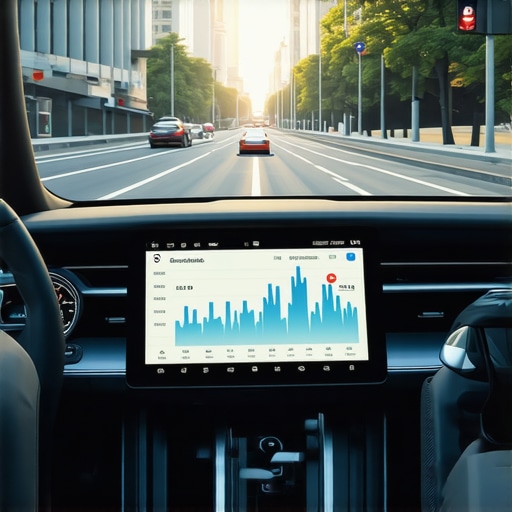
I recently watched a client lose their right to recover damages from a negligent contractor because they signed a waiver of subrogation in a simple service contract without realizing they were voiding their own insurance coverage. This clinical disregard for the fine print is exactly how the modern driver is being dismantled by their own vehicle. I have spent decades as a forensic underwriter looking at the cold math of risk and the reality is that your car is now a snitch. It is a mobile telemetry laboratory that reports directly to the people who determine your financial worth. The leather smells nice but the software is calculating your ruin. Most owners treat their vehicle as a tool of transport. The carrier treats it as a data stream. When you activate that in-car subscription for remote start or advanced navigation, you are not buying a feature. You are selling your anonymity. I have reviewed thousands of pages of manuscript endorsements and I can tell you that the language of modern risk is no longer written in ink. It is written in GPS coordinates and brake sensor logs.
The silent telemetry harvesting in your cabin
In-car subscriptions and connected vehicle services allow manufacturers to harvest driver behavior data such as hard braking, rapid acceleration, and nighttime driving frequency. This data is sold to LexisNexis or Verisk, creating a telemetry-based risk profile that insurers use to adjust auto insurance premiums without the driver explicit knowledge of the specific pricing impact. The machine does not care why you braked hard. It does not care that a child ran into the street. It only records the negative G-force and updates your risk score. This is a binary world where context is dead and only the event remains.
The mathematical fiction of your privacy policy
The privacy policy you clicked through on your dashboard is a legal fortress. It is designed to be unreadable for the average human. Within those tens of thousands of words is a clause that grants the manufacturer the right to share your driving habits with third party data aggregators for the purpose of risk assessment. This is where the insurance industry hides its most aggressive tools. The carrier does not need to follow you. They just need to buy the report from the company that makes your car. This creates a feedback loop where your movements are monetized twice. You pay for the subscription and then you pay the increased premium that the subscription data generated. It is a perfect circular economy for the capital holders.
“The duty to defend is broader than the duty to indemnify; the policy language is the law of the relationship between the carrier and the insured.” – Contractual Law Maxim
The three words that kill a claim
The forensic reality of a claim denial often rests on the phrase proximate cause. If your car logs show that you were traveling five miles per hour over the limit when an accident occurred, the carrier has the mathematical leverage to argue that your behavior was the primary driver of the loss. They will use your own subscription data against you. I have seen claims for thousands of dollars evaporate because a telemetry log showed the driver was on their phone via the car’s native interface. The carrier argues that the car is a distraction machine. They are the ones who insured it but they are also the ones who will use its complexity to deny the payout. You are paying for the privilege of providing the evidence for your own denial.
The data points that determine your premium
| Vehicle Feature | Risk Data Harvested | Actuarial Impact |
|---|---|---|
| Remote Start App | Location Stability | High Premium Adjustment |
| Adaptive Cruise Control | Following Distance Accuracy | Medium Risk Profiling |
| Real Time Traffic Navigation | Destination Risk Level | Dynamic Geographic Rating |
| In-Car Wi-Fi Hotspot | Total Cabin Engagement | Secondary Risk Factor |
The logic of the actuarial loss cost
Insurance is not about safety. It is about the loss cost ratio. Every byte of data that comes out of your dashboard helps the underwriter tighten the belt on their reserves. If the data shows that drivers with heated seat subscriptions are 4 percent more likely to have a fender bender because they are fiddling with a touchscreen, the premium for every driver with that feature will rise. The carrier does not need a reason that makes sense to you. They only need a correlation that satisfies the state regulator. This is the cold truth of the industry. Your comfort is a variable in a spreadsheet. When the variable moves, the price moves. There is no loyalty in an algorithm.
“Insurance companies must act with the utmost good faith, yet the burden of disclosure often shifts to the insured through technical interfaces.” – NAIC Regulatory Overview
The trap of usage based insurance models
Many people believe that opting into a usage based program will save them money. They think they are good drivers. They are wrong. The criteria for a good driver in an actuarial model are nearly impossible for a human to meet. If you drive after 11 PM, you are a risk. If you drive in a city with high pedestrian density, you are a risk. If you brake at a yellow light, you are a risk. The subscription services in your car are the trojan horse for these models. They collect the data before you even sign up for the discount program. By the time you ask for a lower rate, the carrier already knows you do not deserve one. They have months of your data already archived in a Verisk vault.
A checklist for the policy audit
- Request your consumer disclosure report from LexisNexis and Verisk to see what your car is saying.
- Enter the privacy settings of your vehicle dashboard and disable all data sharing for research or third parties.
- Read the terms of service for your manufacturer app on your smartphone and revoke location permissions.
- Ask your broker specifically if your premium is being influenced by telematics data from the manufacturer.
- Check for any hidden endorsements in your policy that allow the carrier to pull data from your car’s black box.
The legal precedent of reasonable expectations
There is a legal doctrine called the reasonable expectations of the insured. It suggests that a policy should cover what a reasonable person thinks it covers. But the technology is moving faster than the law. Most judges do not understand how a car’s infotainment system can be a witness for the defense. While you think you are buying a car with a nice map, the carrier knows they are buying a 24 hour surveillance feed. The contrarian truth is that the older, dumber car is actually the cheaper one to insure in the long run because it does not generate the data that justifies a rate hike. Every new sensor is just another way for the insurance company to say no. The forensic trail you leave on the road is permanent. It is time you started treating your car like the legal liability it actually is.