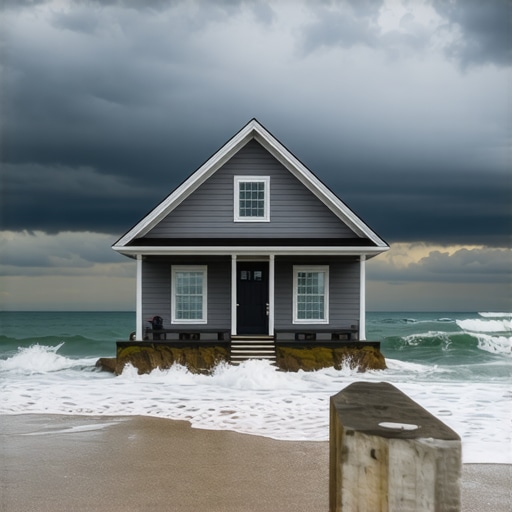
The mathematical fiction of standard coverage
High-risk coastal insurance requires specific surplus lines carriers, windstorm deductibles, and flood endorsements that standard homeowners policies lack. Carriers like Chubb, AIG, and Pure offer high-limit indemnity, while Lexington and Lloyds of London dominate the non-admitted market for hurricane-exposed zones. Standard policies are designed for inland risk. They are built on the assumption that total loss is a statistical anomaly. In coastal regions, total loss is a seasonal probability. I spent a week deconstructing a high-net-worth policy after a fire. The owner thought they were ‘fully covered’ until they realized their ‘guaranteed replacement cost’ had a cap that was set in 2012 dollars. This is the reality of the coastal market. The paper in your desk drawer is likely a collection of exclusions masquerading as protection. We are seeing a historic hardening of the market where the word insurance no longer guarantees indemnification. It is merely a ticket to a legal lottery where the house always wins. If your property sits within five miles of the Atlantic or Gulf, you are not buying a policy. You are purchasing a complex financial derivative of disaster. Most brokers do not understand the math. They see a premium and a commission. I see the subrogation gaps and the anti-concurrent causation clauses that will leave you bankrupt after the first major storm surge. [image1]
The ghost in the fine print
Anti-concurrent causation clauses dictate that if two perils occur simultaneously, such as wind and flood, and one is excluded, the entire claim is denied by the carrier. This legal mechanism is the primary weapon used by surplus lines insurers to avoid massive payouts after hurricane events or storm surges. This is not a clerical error. It is a calculated architectural feature of modern underwriting. When a hurricane hits, it brings wind. It also brings water. If your homeowners policy excludes flood, and the wind rips your roof off while the water guts your first floor, the carrier will point to the ACC clause. They will argue that because the excluded peril (flood) contributed to the loss, the covered peril (wind) is no longer their responsibility. This has been upheld in multiple appellate courts. It is the forensic reality of the industry. You must look for the manuscript endorsements. Standard ISO forms are the baseline, but the high-risk market uses custom language to strip away the very protection you think you are buying.
“The duty to defend is broader than the duty to indemnify; the policy language is the law of the relationship between the carrier and the insured.” – Contractual Law Maxim
The carrier does not care about your marble floors. They care about the loss-cost ratio. If the loss-cost ratio exceeds the actuarial projection, the claim is scrutinized for any linguistic exit ramp. I have seen claims denied because a property owner failed to install a specific type of hurricane shutter mentioned in a secondary endorsement. The insurer is not your neighbor. They are a pool of capital managed by professionals whose job is to minimize outflows.
Why your full coverage is a mathematical fiction
Replacement cost value is often limited by ordinance or law coverage, meaning if local building codes have changed since construction, your policy will not pay for the mandatory upgrades. This creates a capital gap that homeowners must fill out of pocket during a total loss scenario. Most people assume that if their house costs two million to build, they should insure it for two million. This is a fatal mistake in the coastal sector. Construction costs in disaster zones do not remain static. They spike by 300 percent the moment a storm clears. This is called demand surge. If your policy does not have an uncapped extended replacement cost provision, you are underinsured by default. The math of 2021 does not apply to the reality of 2024. Inflation in the construction sector has outpaced general CPI for three years straight. A policy written twenty-four months ago is now a liability. We must also discuss the deductible. Coastal policies often move from a fixed dollar amount to a percentage of the dwelling limit. A five percent deductible on a three million dollar home is a hundred and fifty thousand dollars. That is your skin in the game before the carrier pays a cent. This is not insurance. This is catastrophic risk sharing. | Feature | Admitted Carrier | E&S (Surplus) Carrier | |—|—|—| | Regulation | State-backed guarantee fund | No guarantee fund | | Flexibility | Rigid forms (ISO) | Manuscript endorsements | | Pricing | State-approved rates | Market-driven rates | | Availability | Limited in coastal zones | High availability for risk | The table above highlights the trade-off. You trade the security of a state guarantee fund for the flexibility of a carrier that actually has the appetite to write the risk. In Florida or the Carolinas, the admitted market is a graveyard. You are forced into the E&S market. This is where the forensic truth-teller thrives. You must read every single page. If you do not, you are signing a blank check to a corporation that has a fiduciary duty to its shareholders to deny you.
The three words that kill a claim
Actual Cash Value settlements reduce your payout by depreciation, meaning the insurance company pays only what your aged roof or siding was worth before the damage occurred. This is the opposite of Replacement Cost Value and is often hidden in cosmetic damage exclusions for coastal properties. The carrier will look at your fifteen-year-old roof and decide it has lost seventy percent of its value. They will write you a check for thirty cents on the dollar. You cannot build a new roof for thirty cents on the dollar. This creates a secondary disaster. The property owner cannot afford the repairs, the house sits open to the elements, and the mold begins to grow. The carrier then denies the mold claim because you failed to mitigate the loss. It is a feedback loop of financial ruin.
“Insurance is an agreement by which one party, for a consideration, promises to pay money or its equivalent, or to do an act valuable to the insured, upon the destruction, loss, or injury of something in which the other party has an interest.” – NAIC Standard Definition
This definition sounds simple. The execution is anything but. In the forensic autopsy of a denied claim, we usually find a failure in the ‘Duty to Notify.’ Coastal policies have shortened windows for reporting damage. If you wait three weeks to report a roof leak after a tropical storm, you have violated the contract. The carrier will argue that the delay allowed the damage to worsen. They are technically correct. The law does not care about your stress levels. It cares about the timeline of the loss.
- Review the Ordinance or Law coverage (Coverage O) to ensure it covers 25% of the dwelling limit.
- Verify the Percentage Deductible for Named Storms and calculate the out-of-pocket maximum.
- Check for the Water Back-up and Sump Overflow rider specifically for finished basements.
- Audit the Replacement Cost Provision for the roof to ensure it is not an ACV-only endorsement.
- Confirm the presence of ‘Ensuing Loss’ language to protect against secondary water damage.
This checklist is the bare minimum for survival. If your broker cannot explain these terms, find a new broker. The current market does not allow for amateurism.
The litigation crisis and the assignment of benefits
Assignment of Benefits contracts allow third-party contractors to take control of your insurance claim, which often leads to inflated invoices and litigation that causes carriers to cancel coastal policies. In Florida, this has reached a breaking point. The state has seen a massive exit of domestic carriers because the legal environment is toxic. When you sign a paper for a roofer that gives them the right to bill your insurance directly, you are losing control of your primary asset. The carrier fights the roofer. The roofer sues the carrier. Your home remains damaged. Eventually, the carrier stops writing policies in your zip code entirely. This is why premiums are skyrocketing. You are paying for the legal fees of a thousand lawsuits you never signed up for. The forensic reality is that insurance is becoming a luxury good. We are moving toward a model where only the ultra-wealthy can afford true indemnification. The rest will be left with the NFIP, the National Flood Insurance Program, which is essentially a debt-trap for the middle class. The NFIP has limits that are laughably low for modern coastal real estate. Two hundred and fifty thousand dollars for a structure is nothing in a market where a kitchen remodel costs a hundred thousand. You need private excess flood. You need a carrier that understands the hydrology of your specific lot. While most people think a higher premium means better insurance, the truth is that carriers often raise prices on loyal customers while stripping away silent coverage in the fine print. They call this price optimization. I call it a breach of faith. But the law allows it. The law is a cold room. You should dress accordingly.”