I spent a week deconstructing a high-net-worth policy after a fire. The owner thought they were fully covered until they realized their guaranteed replacement cost had a cap that was set in 2012 dollars. The same logic applies to your vehicle. I recently audited a file where a safe driver saw their rates spike by forty percent. The carrier claimed the telematics data showed high-risk behavior. When we pulled the raw logs, we found the accelerometer was miscalibrated. It recorded every speed bump as a hard braking event. The carrier did not care. They had the data, and the data said the driver was a liability. You must understand that insurance is a mathematical fortress. Your telematics device is not a friendly co-pilot. It is a forensic witness for the prosecution.
The strategy behind a telematics data audit
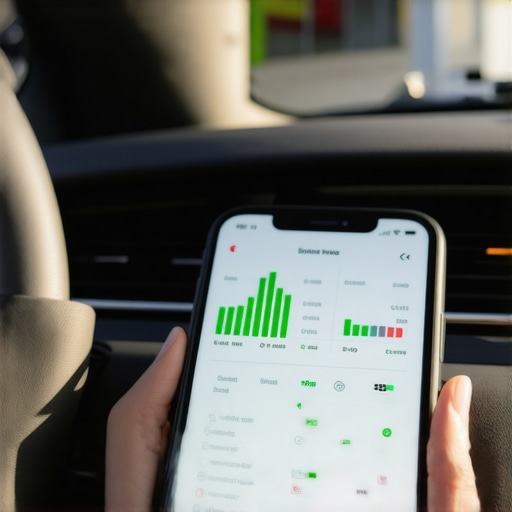
To save on car insurance by asking for a telematics review, you must request a formal disclosure of your raw driving logs to identify and contest erroneous data points like false hard-braking events. Carriers rely on the opacity of their algorithms to maintain higher premiums while appearing to offer discounts for good behavior. The first step is demanding the raw CSV file of your driving telemetry. This includes every timestamp, GPS coordinate, and G-force reading recorded by the device or mobile application. Most policyholders never ask for this. They accept the score provided by the dashboard. This is a mistake. The dashboard is a curated marketing tool. The raw logs are the contractual truth. You are looking for anomalies where the hardware failed to distinguish between a pothole and a collision-avoidance maneuver. If you find these, you have the leverage to demand a manual underwriting review.
“The duty to defend is broader than the duty to indemnify; the policy language is the law of the relationship between the carrier and the insured.” – Contractual Law Maxim
Mechanical reality of the black box
Telematics systems use accelerometers and GPS pings to measure velocity changes and location-based risk factors that directly influence your monthly premium calculations. The sensors in your phone or the plug-in OBD-II device are not scientific grade instruments. They are cheap components prone to signal drift and vibration interference. A hard braking event is typically defined as a decrease in speed of more than seven miles per hour per second. If the GPS pings are slow, the system might perceive a gradual stop as a sudden one. This is a technical failure of the carrier, not a failure of your driving. When you request a telematics review, you are challenging the precision of their measurement tools. You are forcing the actuary to defend a margin of error that they usually ignore. In places like California, consumer privacy laws give you more leverage to see this data, whereas in states like Florida, the lack of oversight allows carriers more freedom to hide their proprietary scoring models.
The three words that kill a discount
Late night driving and high mileage are the primary factors that negate any savings earned through smooth acceleration or cautious braking during a telematics period. Carriers view the hours between midnight and four in the morning as a statistical graveyard. It does not matter if you are a perfect driver. If you are on the road during these hours, your risk profile triples. This is known as the environmental risk factor. Many drivers find that their discount vanishes because of a single late-shift commute. During a review, you should argue for the exclusion of these events if they do not correlate with your actual loss history. The carrier wants to use the law of large numbers to justify your specific rate. You must force them to look at your individual data. If you have no claims in ten years, a three-minute drive at 1 AM should not dictate a twenty percent increase in your premium. Be blunt with your agent. Demand a loss-cost analysis that justifies the surcharge.
| Metric Category | Traditional Underwriting | Telematics Underwriting | Potential Savings |
|---|---|---|---|
| Braking Frequency | Not Tracked | Threshold: 7mph/sec | 10-15% |
| Time of Use | Stated Usage | Real-time GPS Logs | 5-20% |
| Cornering Speed | Not Tracked | Lateral G-Force | 5% |
| Total Mileage | Self-Reported | Odometer Sync | 10-30% |
Legal ownership of your acceleration logs
Ownership of telematics data is a contested legal frontier where the language in your policy dictates whether the insurer can sell your habits to third-party aggregators. Most people sign the terms of service without reading the indemnity clauses. You are often granting the carrier a perpetual license to your movement patterns. This data is then sold to LexisNexis or Verisk, which creates a permanent risk profile that follows you from carrier to carrier. A telematics review is also an opportunity to revoke data sharing permissions. Tell the carrier that you are exercising your right to limit the use of your data for underwriting purposes only. If they refuse, you are likely at the wrong carrier. The best insurance is not the one with the slickest app. It is the one with the most transparent contract. Stop treating your car insurance like a utility. Treat it like the legal shield it is supposed to be.
“Insurance rates shall not be excessive, inadequate, or unfairly discriminatory, and the commissioner shall consider the data provided by the insurer to justify such rates.” – National Association of Insurance Commissioners (NAIC) Model Law
Audit checklist for car insurance telematics
- Request the raw CSV or Excel data from the carrier’s telematics department.
- Cross-reference hard-braking timestamps with your own dashcam or calendar.
- Identify signal loss periods where GPS drift may have caused artificial speed spikes.
- Compare the telematics discount against the base rate of a non-telematics policy.
- Submit a written dispute for every event occurring on roads with known infrastructure issues.
- Ask for the specific actuarial weight assigned to time-of-day versus driving behavior.
[IMAGE_PLACEHOLDER_1]
The ghost in the fine print
Hidden exclusions in telematics-based policies can allow insurers to deny claims if the data suggests the vehicle was operated outside of the primary driver’s typical patterns. This is the subrogation trap. If you let a friend borrow your car and they trigger ten hard-braking events, your premium might not just go up. The carrier might use that data to argue that the risk has materially changed, potentially complicating a future claim. The insurance company is looking for a reason to pay zero dollars. They are not your neighbor. They are a capital preservation machine. By demanding a telematics review, you are signaling to the carrier that you are a sophisticated insured who understands the math. This often leads to a retention specialist offering a flat discount to avoid a forensic audit of their scoring system. The carrier knows their data is flawed. They are betting that you are too lazy to check. Prove them wrong.