The ghost in the medical statement
To overturn an incorrect medical code, you must first secure the itemized bill and the Explanation of Benefits to cross-reference CPT codes against the physician’s medical notes. You identify the discrepancy, submit a formal written appeal to the insurance carrier’s grievance department, and invoke your rights under state prompt-payment laws or federal ERISA regulations. Most billing errors are not accidents. They are systemic failures of a complex actuarial machine. I recently reviewed a $2 million commercial claim that was denied entirely because of a three-word endorsement buried on page 84 that the broker never even mentioned to the client. This same level of contractual betrayal happens in health insurance every hour. Your medical bill is a legal document based on a code. If that code is wrong, the legal basis for the debt evaporates. I smell the stale black coffee on my desk as I review these 1500 forms. I see the ghosts of services never rendered and the footprints of upcoding. You are not a patient to the carrier. You are a loss-ratio variable. To win, you must stop being a victim and start being a forensic auditor of your own life.
The predatory nature of hospital upcoding
Upcoding occurs when a healthcare provider submits a CPT code for a more expensive service than what was actually performed to increase reimbursement rates from the insurer. This practice is a violation of the contractual agreement between the provider and the carrier, yet it remains a primary driver of inflated medical costs. Specifically, a common tactic involves billing a Level 3 office visit as a Level 4 or Level 5. This one-digit shift changes the mathematical risk profile of the claim. Hospitals often use proprietary software that automatically suggests higher codes. This is not medical care. This is revenue cycle management. When you see an incorrect code, you are looking at a breach of the implied covenant of good faith. Furthermore, providers may engage in unbundling. This is where they charge for multiple components of a single procedure separately. It is the equivalent of a mechanic charging you for a whole engine replacement but billing for every bolt, spark plug, and gasket as a separate line item. You must demand the physician’s clinical notes. If the notes do not support the code, the code is fraudulent. The carrier will usually side with the code because it justifies their high premium structures, but a forensic audit forces their hand. The law of the relationship is the policy. If the policy says they cover the service, but the code says something else, you are in a contract dispute.
“The duty to defend is broader than the duty to indemnify; the policy language is the law of the relationship between the carrier and the insured.” – Contractual Law Maxim
Forensic steps for a billing audit
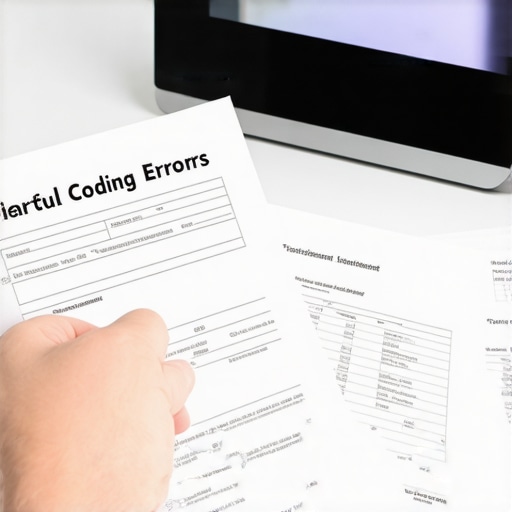
A forensic audit of a medical bill requires a line-by-line comparison of the CPT and ICD-10 codes against the National Correct Coding Initiative (NCCI) edits. You must verify that the modifiers, such as Modifier 25 for significant, separately identifiable evaluation and management services, were used correctly and not as a tool for double-billing. The carrier relies on your ignorance. They expect you to pay the balance after insurance without question. Do not do this. Start by requesting the HCFA 1500 or the UB-04 form. These are the standardized forms providers use to bill insurers. They contain the raw data. [IMAGE_PLACEHOLDER] Use the following checklist to ensure your audit is comprehensive. Specifically, look for codes that indicate a higher level of complexity than your actual physical experience in the office. If you spent five minutes with a nurse but were billed for a 45-minute specialist consultation, the code is a lie. Actuarial science depends on the accuracy of these codes. When the code is wrong, the data is corrupted, and your premium reflects that corruption. Consequently, fighting the code is the only way to restore the mathematical integrity of your policy.
| Code Type | Primary Function | Impact on Your Bill |
|---|---|---|
| CPT Code | Identifies the procedure performed | Determines the base price of the service |
| ICD-10 Code | Identifies the medical diagnosis | Determines the medical necessity of the CPT |
| HCPCS Level II | Identifies supplies and equipment | Adds granular costs for items like crutches |
| Modifier | Adjusts the description of a code | Can double the price if used incorrectly |
- Request the Itemized Bill (with CPT/HCPCS codes)
- Request the Explanation of Benefits (EOB) from the insurer
- Compare CPT codes to the Physician’s Daily Progress Notes
- Verify the ICD-10 diagnosis justifies the CPT procedure
- Check for NCCI bundling edits to prevent double-charging
- Submit a written appeal citing specific coding inaccuracies
Legal leverage via the ERISA framework
The Employee Retirement Income Security Act (ERISA) provides a federal framework that governs most employer-sponsored health plans and dictates the specific timeline and process for appeals. If your health insurance is through your employer, ERISA is your primary weapon. It mandates that insurers provide a full and fair review of denied claims. This is not a suggestion. It is a federal requirement. If the carrier refuses to correct a code that you have proven is incorrect, they may be acting in bad faith. Specifically, section 503 of ERISA requires that insurance companies provide a clear explanation for any denial. Vague statements like ‘not a covered benefit’ are often used to hide coding errors. You must force them to address the code itself. In many cases, the regional department of insurance can intervene. In California or Florida, the regulatory scrutiny on insurers is higher due to recent litigation crises. Use this to your advantage. Mentioning your intent to file a complaint with the state regulator often miraculously clears up ‘clerical errors’ that have persisted for months. The carrier knows that a patterns of coding errors can lead to a market conduct examination. They want to avoid that audit more than they want your $500. Furthermore, the doctrine of reasonable expectations suggests that if a reasonable person would expect a service to be covered based on the policy language, the court should rule in favor of the insured. The code is a technicality, but the policy is the promise. Hold them to the promise.
“State insurance departments serve as the primary regulators of the insurance industry, ensuring that carriers maintain solvency and adhere to fair claims practices.” – NAIC Regulatory Overview
The truth about replacement cost in health indemnity
In health insurance, the concept of a ‘contracted rate’ functions similarly to Replacement Cost Value (RCV) in property insurance, where the insurer pays a pre-negotiated amount regardless of the provider’s sticker price. When a code is incorrect, the contracted rate is applied to the wrong service. This drains your lifetime maximums if your policy has them, or it pushes you toward your out-of-pocket limit faster than necessary. While most people think a higher premium means ‘better’ insurance, the truth is that carriers often raise prices on loyal customers while stripping away ‘silent’ coverage in the fine print. They hope you do not notice the coding shifts. They hope you do not realize that your ‘full coverage’ is a mathematical fiction. The forensic reality is that insurance is a game of shifting liability. By correcting a medical code, you are shifting that liability back to the provider and the carrier where it belongs. I have seen claims fail because a single decimal point was moved. I have seen families ruined by a code for ‘chronic’ instead of ‘acute’ care. The difference is one of probability and cost. Acute care is a one-time loss. Chronic care is a recurring liability. The carrier will always try to code toward the recurring liability to justify higher future premiums. You must be the barrier. You must be the architect of your own defense. The policy is your fortress. Ensure the gates are locked. Ensure the codes are right. Audit every line. Trust no one. Pay nothing until the math is perfect.