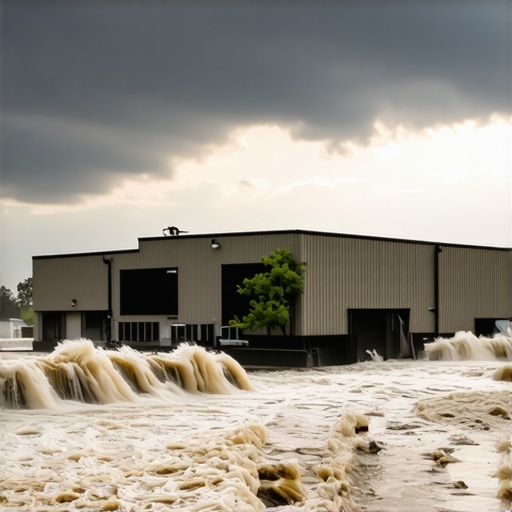
I recently reviewed a $2 million commercial claim that was denied entirely because of a three-word endorsement buried on page 84 that the broker never even mentioned to the client. The business owner stood in two feet of silt contaminated water, clutching a policy they believed was a fortress. They had the best insurance money could buy, or so the marketing glossy claimed. They had legal insurance for employment disputes and expensive car insurance for the delivery fleet. Yet, the forensic reality was different. The policy contained a specific anti-concurrent causation clause. This clause meant that if a flood and a covered peril, such as a windstorm, occurred simultaneously, the entire loss was excluded. The carrier did not care that the roof blew off first. They only cared that the water touched the floor. This is the cold math of the insurance industry. It is not about protection. It is about the precise transfer of risk based on contractual syntax. Most executives treat their business insurance as a static line item. They assume that paying a high premium equates to comprehensive indemnity. This is a dangerous fiction. The market is currently hardening. Carriers are stripping away silent coverage while increasing rates. If you do not understand the actuarial logic of your exclusions, you are not insured. You are merely gambling with a very expensive piece of paper.
The trap of the anti-concurrent causation clause
Business property insurance policies use anti-concurrent causation (ACC) language to deny claims where a flood and a covered peril happen together. If surface water or overflow contributes to the loss in any capacity, the ISO CP 10 30 form typically triggers a total exclusion of coverage. This applies regardless of any other contributing cause or event. You must understand that in the eyes of an underwriter, water is a predator. It is the most common cause of unrecoverable loss in the commercial sector. People buy health insurance to manage personal risk and car insurance for road liability, but they neglect the microscopic wording of their property forms. An ACC clause is a legal guillotine. It removes the ambiguity that usually favors the insured. In many states, including Texas and Florida, courts have upheld these clauses with clinical efficiency. They do not care about the intent of the business owner. They care about the four corners of the document. If your policy has this language, a hurricane is not a wind event. It is an excluded flood event the moment the storm surge crosses your threshold. [IMAGE_PLACEHOLDER_1]
The technical definition of a deluge
Flood damage is defined by the National Association of Insurance Commissioners (NAIC) as an overflow of inland or tidal waters or the unusual and rapid accumulation of surface water from any source. This definition is purposefully broad to capture almost any moisture that touches the ground before entering your building. Most business owners fail to distinguish between a pipe burst and a flood. A pipe burst is an internal failure. A flood is an external invasion. The distinction is worth millions of dollars. If a pipe freezes and bursts, you are likely covered under a standard broad form policy. If a heavy rain sends water flowing under your door, you are facing an excluded peril. This is the forensic trace of a claim denial. Underwriters look for the high water mark on the drywall. If that mark exists, the burden of proof shifts to you. You must prove that the water did not come from the ground. In a forensic audit, this is nearly impossible without expensive hydrologist reports. You are fighting an uphill battle against a carrier that has billions of dollars in reserves to prove you wrong. Furthermore, the math of 100 year floods is broken. We are seeing 500 year events every five years. The actuarial tables used to price your risk are often decades out of date, leading to massive underinsurance when the water finally rises.
“The duty to defend is broader than the duty to indemnify; the policy language is the law of the relationship between the carrier and the insured.” – Contractual Law Maxim
Why your broker failed the audit
Insurance brokers often prioritize premium volume over manuscript endorsement review because they operate on commission structures that reward sales, not forensic accuracy. A broker might tell you that you have the best insurance because the carrier has an A++ rating, but that rating does not pay a claim that is contractually excluded. You need to look for the Water Exclusion Endorsement. It is often a separate document that overrides the main policy body. If your broker did not present you with a Difference in Conditions (DIC) policy, they left you exposed. A DIC policy acts as a safety net for perils like flood and earthquake that standard policies ignore. Most commercial brokers do not mention this because it complicates the sale. They want to show you a quote that looks competitive against your car insurance or health insurance costs. They are selling a price point, not a recovery strategy. This is professional negligence dressed up as customer service. You must demand a gap analysis. Ask specifically about the sub-limits. A policy might say it covers flood, but then limit that coverage to $50,000 on a $5,000,000 building. That is not insurance. That is a rounding error. It is a cynical way for carriers to claim they offer coverage while ensuring they never have to pay a meaningful amount.
| Term | Coverage Scope | Typical Payout Basis |
|---|---|---|
| Standard BPP | Fire, Theft, Wind (Non-Water) | Replacement Cost (RCV) |
| NFIP Policy | Defined Flood Events (Limited) | Actual Cash Value (ACV) |
| Private Flood | Broad Water Definitions | RCV or Negotiated |
| Excess Flood | Catastrophic Overlays | Agreed Value |
The three words that kill a claim
Insurance adjusters look for the phrases arising out of, resulting from, or directly or indirectly to trigger exclusions and protect the carrier’s capital. These words are the legal anchors of an exclusion. If a fire is caused by a flood, and your policy excludes losses arising out of a flood, your fire damage is not covered. This is the doctrine of proximate cause being used as a weapon. In many jurisdictions, if the excluded peril is anywhere in the chain of causation, the entire claim is tainted. This is why you must fight for Ensuing Loss provisions. An ensuing loss provision states that if an excluded peril causes a covered peril, the resulting damage is covered. It is the only way to bypass the anti-concurrent causation trap. Without it, you are at the mercy of the carrier’s forensic team. They will find a way to link the damage to the water. They will hire engineers to say the foundation shifted because of soil saturation, not because of the wind. They will argue that the mold was pre-existing. They will use every tool in their arsenal to keep their money. You are not just buying a policy. You are entering a legal contract with a multi-billion dollar entity that has no emotional interest in your survival. Treat the negotiation with the same aggression you would a merger or a lawsuit.
“The Flood Exclusion applies regardless of the cause of the excluded event, whether it be an act of nature or otherwise.” – ISO Form CP 10 30
A checklist for the forensic policy audit
- Identify the specific ISO form number used in your property coverage.
- Locate the Anti-Concurrent Causation clause and check for Ensuing Loss exceptions.
- Verify if the definition of Water includes back-up of sewers and drains.
- Compare the sub-limits for flood against the actual replacement cost of the first floor.
- Review the Waiver of Subrogation in your lease to ensure you have not voided your own coverage.
- Determine if your Business Interruption coverage is triggered by a flood event or only by direct physical loss.
The reality of the current market is that business insurance is becoming a bespoke product. The days of the off the shelf policy are over for any serious enterprise. You must scrutinize the legal insurance aspects of your contracts. You must ensure that your best insurance plan is actually a set of interlocking policies with no gaps. If you rely on a single carrier for everything from your car insurance to your warehouse, you have a single point of failure. Diversify your risk. Look into the private flood market. Often, private carriers offer better terms than the National Flood Insurance Program because they use more sophisticated modeling. They can cherry-pick the risks and offer higher limits. However, they also have more complex exclusions. There is no shortcut. You must read the manuscript. You must understand the math. You must prepare for the deluge before the clouds even form. The carrier is not your neighbor. They are your contractual counterparty. Their profit is your unpaid claim. Act accordingly.