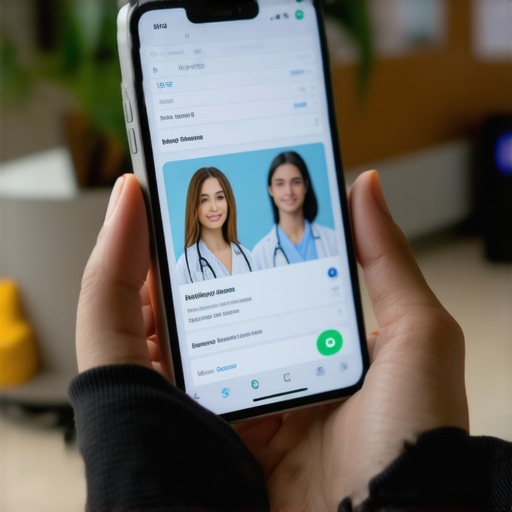
I spent a week deconstructing a high-net-worth health policy after a catastrophic illness. The owner thought they were fully covered until they realized their preferred provider status was revoked via an app update they ignored. This is the reality of the digital health revolution. Carriers are not your friends. They are financial entities governed by the laws of probability and loss-ratios. I have spent twenty-five years as a forensic underwriter, and I can tell you that the migration to mobile platforms is not a gesture of convenience. It is a strategic move to secure the most valuable asset in the modern insurance market, which is real-time behavioral data. When you download that app, you are not just simplifying your claims process. You are inviting a forensic auditor into your pocket. Most policyholders see a sleek interface. I see a massive data-harvesting operation designed to de-average risk and identify the exact moment an insured individual becomes a liability. The insurance industry operates on the principle of information asymmetry. The less they know about your specific risks, the more they must charge a broad pool to cover potential losses. By using an app, you are voluntarily surrendering that asymmetry.
The biometric surveillance engine
Health insurance apps function as data collection nodes that harvest non-clinical behavioral information. These platforms track GPS location, accelerometer data, and sleep patterns to create a behavioral risk profile. This allows carriers to bypass HIPAA protections by gathering data through third-party software agreements rather than medical records.
The actuarial logic is cold and undeniable. Traditional underwriting relies on a snapshot of your health taken once a year during an exam or via a questionnaire. This is a static risk assessment. It is imprecise. It is prone to the error of self-reporting. A mobile app transforms this into dynamic underwriting. By tracking your daily movements, the carrier can infer a multitude of risk factors. If the GPS shows you spend late nights at bars, or if the accelerometer detects a sedentary lifestyle, that data is logged. While the Affordable Care Act prevents them from raising your individual premium based on this data today, it does not prevent them from using it to categorize you into specific risk pools for future plan designs or marketing steerage. They are looking for the moral hazard. This is the insurance term for the tendency of a person to take more risks because they are protected from the financial consequences. The app is a leash designed to mitigate that hazard through constant digital observation.
“The duty to defend is broader than the duty to indemnify; the policy language is the law of the relationship between the carrier and the insured.” – Contractual Law Maxim
The math of human surveillance is hidden behind the term Value-Based Care. This sounds like a benefit for the patient. In the world of high-limit indemnity, it is a method to control the cost of the claim before the claim even occurs. By nudging you toward cheaper providers or automated chat-bots, the company reduces its Loss Adjustment Expense. Every time you use an app to ask a medical question instead of visiting a doctor, the carrier saves the cost of a professional consultation. Over a million policyholders, these micro-savings constitute billions in profit. [IMAGE_PLACEHOLDER_1] The app is the ultimate gatekeeper. It uses algorithms to triage your needs, and those algorithms are programmed with the bottom line as the primary constraint. They want you to use the app because it removes the human element from the decision-making process. A human nurse might advocate for your care. An algorithm only advocates for the contract.
The math of wellness surveillance
Actuarial loss-cost modeling utilizes telemetry data to predict future medical expenses. By incentivizing app usage through premium discounts or reward points, insurers reduce adverse selection. This process identifies high-risk individuals who may be under-reporting health conditions during the initial underwriting phase.
Consider the legal precedent of the Reasonable Expectations doctrine. This doctrine generally holds that the ambiguities in an insurance contract should be interpreted in favor of the insured. However, when you agree to the Terms of Service of a mobile app, you are often entering a secondary agreement that is not technically part of the insurance policy. This creates a legal gray area. Carriers use this to their advantage. They can implement changes to the app interface or the data-sharing permissions that would require a formal endorsement if they were part of the master policy. It is a backdoor maneuver to alter the relationship between the carrier and the insured without the oversight of state insurance departments. I have seen claims denied because the insured failed to follow a protocol only found in the app, not in the physical policy booklet. The carrier argued that the app was a necessary tool for navigating the network, and the court agreed.
| Category | Manual Process | Digital App Process | Financial Benefit to Carrier |
|---|---|---|---|
| Claims Filing | Human review of paper | OCR and AI triage | 40% reduction in LAE |
| Provider Search | Call center assistance | In-app Preferred list | Steerage to low-cost nodes |
| Wellness Data | Self-reported | Automated telemetry | Permanent risk de-averaging |
Furthermore, the insurance company wants you to use the app to facilitate subrogation. Subrogation is the process where an insurance company goes after a third party that may be responsible for your injury to recover the costs they paid out. If you have an accident, and the app’s GPS shows you were at a location that contradicts your claim, they will use that data to deny the claim or to sue someone else. Your phone is a witness that never sleeps and never forgets. It is a forensic tool that the carrier uses to protect its capital at your expense. They are looking for proximate cause. If they can prove that your behavior, as recorded by the app, was a contributing factor to your illness or injury, they have a legal lever to reduce their liability. This is the cold, hard truth of the matter. You are not a customer to them. You are a set of variables in a massive, ongoing calculation.
“The use of external data sources in underwriting must not result in unfair discrimination against protected classes.” – National Association of Insurance Commissioners (NAIC)
Algorithms as the new gatekeepers
Automated triage systems replace human case managers to minimize administrative overhead. These algorithms utilize predictive analytics to determine the medical necessity of procedures. This shift reduces the human cost of denial by placing the burden of proof on the policyholder through digital interfaces.
There is a contrarian data point that most people ignore. While carriers claim that apps help lower premiums, the reality is that they often use the savings to increase their marketing budgets or executive compensation. The Medical Loss Ratio mandated by the ACA requires that 80 percent of premiums be spent on clinical services and quality improvement. Carriers have discovered that they can categorize the cost of developing and maintaining these apps as a quality improvement expense. This allows them to spend more on technology and less on actual medical care while still meeting the legal requirements. It is a mathematical shell game. They are shifting the definition of care from a doctor’s visit to a digital notification.
The digital trail of subrogation
Subrogation departments leverage metadata from mobile applications to identify third-party liability. This forensic evidence allows carriers to recoup indemnity payments by proving contributory negligence. The insured often unknowingly provides this evidence through background tracking permissions.
In regions like Florida or the Balkans, the regulatory environment is constantly shifting. In Florida, the litigation crisis has led to strict new rules about how claims are reported. An app ensures that you report a claim in the exact format the company wants, which often includes waivers that you might not notice. In Sarajevo, the lack of standardized digital health records means the app is the only source of data for the carrier, giving them immense power over the insured. No matter where you are, the app is a tool of control. It limits your options while making you feel like you have more. It is the illusion of agency in a world of predetermined actuarial outcomes.
A checklist for digital indemnity
- Review the Third-Party Data Sharing clause in the EULA before clicking accept.
- Disable background location tracking for all health and insurance applications.
- Revoke access to microphone and camera permissions within the system settings.
- Audit the Terms of Service for any hidden subrogation waivers or arbitration clauses.
- Check for Incentive-Based premium adjustments that could penalize you for inactivity.
- Ensure that the app is not the only way to access your provider directory.
The ghost in the fine print is always there. It is waiting for you to miss a notification or to agree to a new set of permissions. The app is the medium through which the carrier enforces its will. It is a contract that breathes. It changes as the algorithms find new ways to predict your demise. If you want to protect yourself, you must treat the app with the same suspicion you would treat a process server at your door. You must understand that every click is a legal affirmation. Every step tracked is a data point for an underwriter. The house always wins because the house owns the deck, and in this case, the deck is the app on your phone. You must be vigilant. You must be clinical. You must be as cold as the math they use against you.