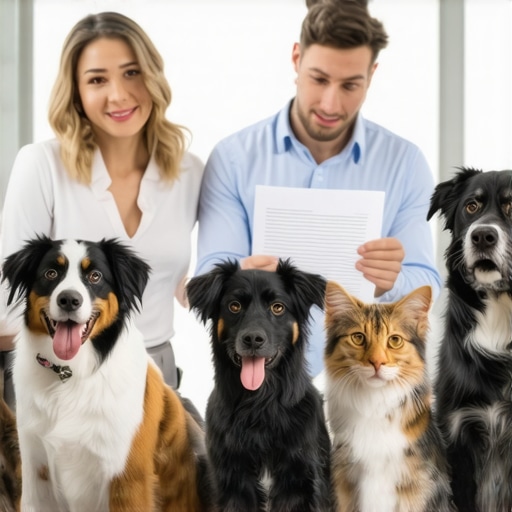
The subrogation trap in pet friendly environments
I watched a client lose their right to recover damages from a negligent contractor because they signed a waiver of subrogation in a simple service contract without realizing they were voiding their own insurance coverage. This happened in a boutique office space that prided itself on being pet friendly. A plumbing failure caused significant damage. Because the business owner allowed animals, the contractor’s legal team argued the pipes were compromised by corrosive biological waste from pets. The waiver meant the insurance carrier could not pursue the contractor, and the claim was denied under a pollution exclusion. This is the reality of the pet friendly niche. It is a legal minefield where standard policies often fail to protect the assets of the business owner. Insurance is not a commodity. It is a mathematical fortress. When you invite animals into a commercial space, you change the risk profile from a controlled environment to a chaotic one. Actuaries look at animal behavior as a series of high frequency, low severity events that can occasionally transform into a catastrophic liability. Selecting a provider requires a forensic approach to policy language rather than a simple price comparison.
The illusion of standard general liability
A pet friendly business requires a general liability policy that explicitly overwrites the standard animal exclusion found in ISO form CG 00 01. Most standard business owners policies contain language that excludes damage caused by animals owned or handled by the insured. If your business allows customers to bring dogs, you need a specific endorsement that defines these animals as invited guests rather than exclusions. The best insurance providers for pet friendly businesses are those that offer a manuscript endorsement tailored to animal related risks. This means the carrier has reviewed the specific exposure of your business and agreed to cover bite incidents, property damage, and allergic reactions. Without this, your $1 million limit is a mathematical fiction. You are paying for a piece of paper that will provide zero defense when a customer’s dog bites another patron. The carrier will simply point to the exclusion and close the file. You must demand a policy that includes an affirmative coverage grant for animal related incidents.
“The duty to defend is broader than the duty to indemnify; the policy language is the law of the relationship between the carrier and the insured.” – Contractual Law Maxim
The three words that kill a claim
Care, custody, or control. These three words are the most dangerous terms in any insurance contract for a business that handles pets. If you are a pet groomer, a doggy daycare, or even a retail shop that offers water bowls, the insurance carrier may argue that the animal was in your care, custody, or control at the time of an incident. Standard liability policies do not cover damage to property in your care, custody, or control. In the insurance world, an animal is considered personal property. If a dog is injured while in your shop, a standard policy will not pay for the vet bills or the loss of value of the animal. You need a specialized bailee’s coverage or a professional liability rider. Forensic underwriters look for these gaps. They know that a pet owner treats their animal like a child, but the law treats it like a toaster. This disconnect creates massive litigation risk. You must ensure your provider understands the difference between general liability and professional bailee liability. Selecting a carrier that bundles these correctly is the only way to avoid a total loss when a pet is injured on your premises.
The actuarial reality of animal interaction
Providers must demonstrate a deep understanding of the loss cost modeling associated with pet interactions to be considered viable for a high risk business. Data shows that the presence of dogs increases the probability of trip and fall claims by 14 percent in retail environments. This is a cold, hard number that your premium reflects. If a provider is offering you a bargain basement rate, it is because they have not factored in the pet risk. This means they will be aggressive in finding a reason to deny your claim later. High quality carriers use specific North American Industry Classification System codes that reflect the pet friendly nature of the business. They will require a higher deductible but will provide broader coverage. You are looking for a carrier that asks about your flooring material, your cleaning protocols, and your animal incident reporting procedures. If they do not ask these questions, they are not underwriting the risk. They are simply taking your money until the first claim arrives. Then, they will drop you and leave you in the non-standard market where premiums triple.
| Policy Type | Standard Coverage | Pet Friendly Requirement | Risk Mitigation Level |
|---|---|---|---|
| General Liability | Bodily Injury/Property Damage | Animal Bite Endorsement | Moderate |
| Professional Liability | Errors and Omissions | Care, Custody, Control Rider | High |
| Bailee Insurance | Loss of Property | Livestock/Pet Injury Coverage | Maximum |
| Umbrella Policy | Excess Liability | Follow-Form Animal Coverage | Critical |
The pollution exclusion and biological hazards
Most business owners do not realize that animal waste is often classified under the pollution exclusion in a standard commercial policy. If a pet has an accident on your expensive hardwood floors or carpets, and the damage is extensive, the carrier may cite the pollution exclusion to deny the claim. They define animal waste as a biological contaminant. The best insurance providers for pet friendly businesses will provide a sub-limit for cleanup and property damage caused by animals. This is a specific carve-back to the pollution exclusion. Without it, you are self-insuring against one of the most common risks in a pet friendly environment. This is the microscopic reality of the policy. You must read the definition of a pollutant in your contract. If it includes biological materials or waste, you are at risk. A forensic truth teller will tell you that the carrier is not your friend. They are a counterparty to a legal contract. Their goal is to minimize their loss ratio. Your goal is to ensure that the contract is airtight. You need a provider that specializes in the pet industry because they have already adjusted their definitions to account for these biological realities.
Why your full coverage is a mathematical fiction
While most people think a higher premium means better insurance, the truth is that carriers often raise prices on loyal customers while stripping away silent coverage in the fine print. This is known as price optimization. They know you are unlikely to switch, so they increase the rate and quietly add restrictive endorsements. For a pet friendly business, this often manifest as a specialized animal exclusion added at renewal. You must audit your policy every single year. Look for forms that start with the letters IL or CG followed by a string of numbers. These are the endorsements that change the base policy. If you see an endorsement titled Exclusion – Injury to Animals, your coverage just evaporated. The carrier has shifted 100 percent of the risk back to your balance sheet while still collecting your premium. This is why the best provider is not always the biggest or the most famous. It is the one that maintains consistency in its form usage and provides a clear summary of changes at every renewal cycle. Do not trust a slick marketing brochure with a picture of a smiling golden retriever. Trust the form numbers and the definitions section of your policy.
“Insurance is a contract of adhesion where the stronger party, the insurer, prepares the terms and the weaker party, the insured, must accept them as is.” – ISO Regulatory Commentary
The checklist for a pet friendly policy audit
Before you sign a binder with a new carrier, you must run your policy through a forensic filter. Use this checklist to ensure you are not buying a useless piece of paper.
- Verify the absence of a blanket animal exclusion in the 2100 series endorsements.
- Confirm that the definition of an insured includes employees handling pets.
- Check for a Care, Custody, or Control endorsement with a minimum limit of $25,000 per animal.
- Ensure the pollution exclusion has a carve-back for biological fluids and waste.
- Identify if the policy is an occurrence form or a claims-made form to understand your tail risk.
- Look for a waiver of subrogation clause that protects you when third party contractors are involved.
The ghost in the fine print
The duty to mitigate is a clause that carriers use to deny pet related claims more than almost any other. If an animal causes damage, the policy requires you to take immediate action to prevent further loss. In a pet friendly office, if a dog chews through a data cable and you do not immediately replace the entire run, the carrier may deny any subsequent fire claim caused by the damaged wire. They will argue you failed to mitigate the risk. This is the clinical reality of forensic underwriting. The best providers for pet friendly businesses offer a small amount of first party property coverage that pays for these minor mitigations before they become major liabilities. They understand that a dog chewing on a chair or a wall is a precursor to a larger loss. They want you to fix it and they are willing to pay for it. This is the difference between a partner in risk and a carrier that is just waiting for a reason to cancel your policy. When selecting a provider, ask about their loss control services. A carrier that sends an inspector to look at your pet safety protocols is a carrier that intends to pay claims. They are investing in the relationship by helping you avoid the loss in the first place.
The regional risk of pet friendly operations
In Florida, the current litigation crisis means your assignment of benefits clause is a ticking time bomb, especially if you deal with pet related property damage. If you hire a restoration company to clean up after a pet incident and sign away your benefits, you may find yourself in the middle of a lawsuit between the carrier and the contractor. This will result in your policy being non-renewed. In other regions, like the Pacific Northwest, mold exclusions are particularly aggressive. If a pet spills a large water bowl and it seeps under the floorboards, you have a mold risk that standard policies ignore. You must adapt your insurance selection to the regional perils of your specific location. A provider that understands the local legal climate and the local physical risks is worth a 20 percent premium over a national carrier with no local presence. You need a broker who can explain the valued policy laws in your state and how they apply to commercial structures that allow animals. This is not about being a neighborly business. This is about protecting your capital from the predictable chaos of animal behavior. The carrier lied if they told you that a standard policy covers everything. Only a forensic, manuscript policy provides true indemnity.{“@context”:”https://schema.org”,”@type”:”Article”,”headline”:”How to Select the Best Insurance Providers for Pet-Friendly Businesses”,”author”:{“@type”:”Person”,”name”:”Senior Risk Architect”},”datePublished”:”2024-05-22″,”description”:”An expert guide to forensic underwriting and selecting commercial insurance for businesses that allow pets, focusing on subrogation, exclusions, and actuarial risk.”,”publisher”:{“@type”:”Organization”,”name”:”Insurance Insights”}}