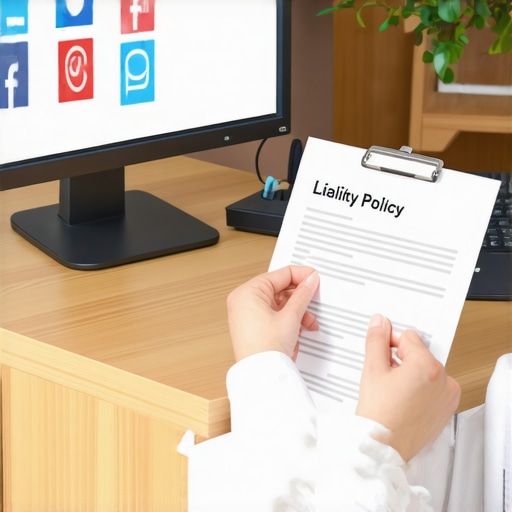
I recently reviewed a $2 million commercial claim that was denied entirely because of a three-word endorsement buried on page 84 that the broker never even mentioned to the client. The business owner had posted what they thought was a clever retort on a social media platform. By the time the legal fees hit six figures, the carrier pointed to a tiny exclusion regarding the ‘Electronic Distribution of Material.’ This is the reality of modern risk. Most General Liability Insurance policies are fossils. They were written when ‘advertising’ meant a physical billboard or a local radio spot. They were not built for the viral velocity of a TikTok dispute or a brand account’s snarky reply to a competitor. If you think your business insurance is a safety net for your digital presence, you are likely operating without a harness. Most policies are mathematical fictions designed to collect premiums while shrinking the window of actual indemnification. You are paying for the illusion of safety while the fine print constructs a wall between your assets and the carrier’s capital.
The fiction of full coverage in a digital world
General Liability Insurance providers often market their products as best insurance solutions for all business risks, but they rarely mention the Coverage B limitations. This section covers Personal and Advertising Injury, yet it contains landmines for anyone using social media for brand growth. The Commercial General Liability (CGL) form, specifically the ISO CG 00 01 standard, was designed for physical world torts. It addresses libel and slander, but the modern definition of an occurrence in the digital space often triggers exclusions that underwriters use to slam the door on claims. The speed of digital communication creates a high probability of knowing falsity. If a carrier can prove your social media manager knew a statement might be false or didn’t perform due diligence, the duty to defend evaporates. Carriers do not want to insure your lack of editorial oversight. They want to insure accidents. A social media post is rarely viewed as an accident in the eyes of a forensic underwriter.
“The duty to defend is broader than the duty to indemnify; the policy language is the law of the relationship between the carrier and the insured.” – Contractual Law Maxim
The three words that kill a claim
Exclusionary endorsements often contain the phrase knowing violation of rights, which serves as a massive loophole for insurance carriers. If your business is accused of copyright infringement or trademark violation on Instagram, the carrier will look for evidence of intent. In the world of legal insurance and business insurance, intent is the enemy of coverage. Most car insurance or health insurance users understand clear-cut rules, but commercial liability is more fluid. When you post a meme using a celebrity’s likeness, you are technically violating their right of publicity. Your CGL policy likely has a specific exclusion for intellectual property rights that do not occur in your ‘advertising.’ The problem is that many courts define ‘advertising’ so narrowly that a single post does not qualify, leaving you to pay the defense costs out of your own pocket. I have seen companies liquidated because they relied on a standard liability policy that didn’t have a Media Liability rider.
Why your advertising injury definition is obsolete
Personal and Advertising Injury is a specific legal category that includes disparagement, slander, and privacy violations. However, the standard ISO definitions are often bypassed by manuscript endorsements that strip away digital protections. For instance, if you are a business owner and you share a customer’s photo without a signed release, you are violating their privacy rights. While you might assume your business insurance covers this, many modern policies exclude electronic data or web-based interactions unless specifically added via an expensive endorsement. The actuarial math has changed. The frequency of social media lawsuits is rising, and carriers are responding by narrowing the definition of what constitutes an insured peril. They are moving the goalposts while your premium stays the same. It is a systematic stripping of value that most brokers are too lazy or too uninformed to explain to you.
| Risk Factor | General Liability (CGL) | Media Liability (Specialized) |
|---|---|---|
| Defamation | Standard Coverage | Broad Media Coverage |
| Copyright Infringement | Limited to Ad Content | Full Digital Scope |
| Privacy Torts | Frequently Excluded | Specific Protection |
| Data Breach Risks | Excluded (Requires Cyber) | Cyber Integration |
The ghost in the fine print
Underwriters utilize prior acts exclusions and retroactive dates to limit their exposure to your social media history. If you bought your legal insurance today but posted a defamatory comment six months ago, you are likely uncovered even if the lawsuit happens tomorrow. This is the subrogation trap. Carriers will look for any reason to shift the loss. If your employee posts something offensive from their personal account that links back to your business, the vicarious liability might be excluded under ‘unauthorized acts.’ The carrier will argue that the employee was not acting within the scope of employment, leaving the business to face the judgment alone. This is why a policy audit is not just a suggestion. It is a survival requirement. You must look for the Recording and Distribution of Material exclusion. It is a silent killer of businesses. [image placeholder: A forensic insurance auditor reviewing a complex contract with a magnifying glass to find hidden exclusions.]
“Advertising injury is not a catch-all for every commercial tort; it is a specifically defined set of perils restricted by policy definitions.” – ISO Underwriting Guidelines
Where Coverage B goes to die
Commercial liability is built on the concept of the insured’s expected or intended injury. When a brand engages in a ‘Twitter war’ or a public call-out, the insurance carrier views this as a deliberate act. They will argue that the resulting damages were expected. This is a forensic truth that many business owners ignore. They treat their insurance like car insurance, where an accident is an accident. In the digital space, the line between an accident and a strategic decision is thin. If your marketing team decides to use a competitor’s name in a hashtag to siphoning traffic, that is a willful act. Standard business insurance does not cover willful acts. It covers fortuitous events. If you are intentional about your digital strategy, you are likely moving yourself out of the realm of indemnification. You are gambling with your balance sheet because you didn’t read the definitions section of your insuring agreement.
The professional liability disconnect
Errors and Omissions (E&O) or Professional Liability is often thought of as the solution, but it has its own set of contractual exclusions. Most E&O policies focus on the failure to perform a professional service. They do not necessarily pick up the advertising injury that a CGL policy drops. This creates a coverage gap. You are caught between two policies, and both carriers will spend years in court arguing that the other one is responsible while your business bleeds cash. This is the duty to defend paradox. Even if you win the case, the legal fees can bankrupt you. The best insurance is the one that has been manuscripted to include digital media as a core professional service. If your insurance doesn’t specifically mention social media, blogging, or web publishing, assume you are 100% self-insured for those risks.
A protocol for digital risk auditing
Policyholders must take a proactive approach to their risk management rather than waiting for a summons and complaint. The actuarial probability of a social media mistake is nearly 100% over a five-year window if you have an active presence. You cannot rely on a broker who only sells car insurance or basic health insurance to understand the nuances of media liability. You need a forensic review of your schedule of forms. Use this checklist to determine your level of exposure:
- Identify if your Coverage B includes ‘Web-based activities’ or if it is restricted to traditional media.
- Search for Endorsement CG 21 06 or similar exclusions for access or disclosure of confidential information.
- Check the definition of advertising to see if it includes social media posts and interactions.
- Verify if independent contractors or influencers are listed as additional insureds.
- Confirm the retroactive date on your claims-made policy covers your entire digital history.
The insurance industry is not your friend. It is a capital preservation engine for the carriers. They use actuarial science to price your risk, and they use legal drafting to avoid paying for it. If you are not auditing your policy with the same intensity that you audit your financial statements, you are leaving your business vulnerable. The proximate cause of most business failures after a lawsuit isn’t the judgment itself, it is the denial of coverage. Stop believing in the ‘neighborly’ marketing of the big carriers. Start reading the manuscript endorsements. Your social media strategy is a liability. Treat it like one.