I watched a client lose their right to recover damages from a negligent contractor because they signed a waiver of subrogation in a simple service contract without realizing they were voiding their own insurance coverage. This is the brutal reality of the commercial insurance world. Most business owners operate under the delusion that their premium buys them peace of mind. In truth, your premium buys you a contract, and that contract is a minefield. When a claimant falls on your property, the insurance carrier is not your friend. They are a ledger looking for an exit. If you cannot prove you were not negligent, the carrier will either settle with your money or deny the claim and leave you to the vultures of the plaintiff bar. I have spent decades in the trenches of forensic underwriting, and I can tell you that negligence is not an accident. It is a failure of documentation and a breach of contractual discipline.
The anatomy of a negligence defense
Proving a lack of negligence requires a business to demonstrate that it maintained the duty of care owed to invitees through systematic inspections and hazard mitigation. You must establish that no dangerous condition existed or that the business had no notice of the condition before the incident occurred. Evidence must be contemporaneous and verifiable.
The legal standard for negligence hinges on the concept of the reasonable person. In a commercial setting, this translates to the reasonable business owner. If a liquid spills on a grocery store floor, the owner is not immediately liable. Liability only attaches if the owner knew about the spill (actual notice) or should have known about it through reasonable diligence (constructive notice). Proving the negative, that you were not negligent, requires a forensic reconstruction of the minutes leading up to the event. Did your employee walk past that aisle three minutes prior? Is there a log entry? Without the log, the employee testimony is worthless. Plaintiff attorneys will shred a verbal memory in seconds. They cannot shred a timestamped, signed inspection report that survives the scrutiny of a forensic auditor.
The truth about constructive notice
Constructive notice is a legal fiction that presumes a business should have known about a hazard because of the length of time it existed. To defeat this, you must prove a consistent inspection cadence that narrows the window of exposure. If your records show an inspection every fifteen minutes, you limit the potential liability significantly.
Consider the math of the slip. A grape falls in a produce section. If it sits there for forty minutes, you are negligent. If it sits there for four minutes, you have a defense. The burden of proof in many jurisdictions, including high-litigation states like Florida or New York, often shifts to the defendant to prove they had a reasonable inspection procedure in place. This is where the actuarial zooming becomes vital. We look at the loss-cost modeling for businesses with manual logs versus those with digital, GPS-verified maintenance systems. The difference in settlement outcomes is staggering. Digital systems create a metadata trail that is nearly impossible for a plaintiff to ignore. Manual logs, often filled out at the end of a shift in a practice known as ghost-booking, are a liability in themselves.
“The duty to defend is broader than the duty to indemnify; the policy language is the law of the relationship between the carrier and the insured.” – Contractual Law Maxim
Surveillance as a forensic weapon
Video surveillance provides the only objective record of an incident, allowing for the determination of proximate cause and the identification of claimant fraud. To be effective, footage must capture the entirety of the incident and the period of time preceding it to establish the origin of the hazard. High-definition recording is non-negotiable for forensic defense.
I have seen cases where the surveillance footage showed the claimant pulling a water bottle from their pocket and splashing the floor themselves. Without that footage, the business would have paid a six-figure settlement. However, surveillance is a double-edged sword. If your cameras show a spill that sat for an hour while employees chatted nearby, you have just filmed your own bankruptcy. The storage of this data is another contractual trap. Many policies have endorsements requiring the preservation of evidence. If you overwrite your hard drive every seven days and a claim comes in on day ten, you have committed spoliation of evidence. This creates a legal presumption that the evidence was unfavorable to you. You lose before the trial even starts.
| Defense Doctrine | Legal Definition | Burden of Proof |
|---|---|---|
| Open and Obvious | The hazard was so visible that the claimant should have avoided it. | Defendant must prove visibility. |
| Comparative Fault | The claimant is partially responsible for their own injury. | Jury assigns percentage of blame. |
| Lack of Notice | The business did not know and could not have known of the hazard. | Defendant must provide inspection logs. |
| Assumption of Risk | The claimant knowingly engaged in a dangerous activity. | Evidence of warning signs required. |
Maintenance logs as legal evidence
Maintenance records serve as the primary defense against claims of systemic negligence by providing a factual timeline of property management. These documents must include specific locations, employee signatures, and precise timestamps to withstand legal discovery. Incomplete logs are often viewed as admissions of failure in a courtroom setting.
When a forensic truth-teller looks at a maintenance log, we look for inconsistencies in pen ink or digital signatures that occur at exactly the same minute every day. This suggests fraud. A real inspection log is messy. It shows that an inspection was missed because of a rush or that a spill was found and cleaned. Clean logs are fake logs. We want to see the reality of the operation. In the Balkans, for instance, where insurance standards are often in flux, the lack of standardized maintenance endorsements creates a massive risk for commercial builds. If you are operating a business in a region with weak regulatory oversight, your internal standards must be even higher to compensate for the lack of legal protection.
“Insurance is a contract of utmost good faith, but the burden of proving a loss falls squarely upon the shoulders of the insured or the claimant depending on the breach.” – ISO Regulatory Guide
The mathematics of floor safety
Slip resistance is measured by the Static Coefficient of Friction, and maintaining a level above 0.5 SCOF is the industry standard for safety. Forensic engineers use tribometers to measure the frictional properties of a floor after an accident. Proving your floors meet these mathematical standards is a powerful affirmative defense.
If you have high-gloss marble floors, you have a high-gloss liability. Every choice in flooring material is an actuarial decision. I have advised clients to strip and replace floors that were mathematically impossible to keep safe. The cost of a new floor is always lower than the cost of a catastrophic brain injury claim. You must also consider the chemicals used to clean the floors. Some waxes reduce friction to dangerous levels. A business that can produce the Material Safety Data Sheets for its cleaning products and prove they were applied according to the manufacturer’s specifications has a strong defense. This is the level of detail required to survive a high-stakes lawsuit.
Comparative fault in state jurisdictions
Comparative negligence laws vary by state, determining how damages are apportioned when both the business and the claimant share responsibility. In pure comparative negligence states, a claimant can recover damages even if they are 99 percent at fault. Understanding local statutes is vital for risk assessment.
In a pure comparative negligence state like California, a claimant who was staring at their phone and walking through a clearly marked wet floor sign can still sue you. They might be 90 percent at fault, but you still pay 10 percent of their medical bills and lost wages. If the claim is 1 million dollars, you are out 100,000 dollars plus legal fees. This is why the open and obvious defense is so vital. You must prove the hazard was so apparent that any reasonable person would have seen it. We use forensic light meters to prove that the lighting in the area was sufficient for the claimant to see the hazard. We use architectural drawings to prove the line of sight was unobstructed. We leave nothing to chance.
Contractual shields and the indemnity trap
Indemnity agreements and additional insured endorsements transfer the financial burden of a claim to third-party contractors. If a cleaning company failed to dry the floor, your contract should require their insurance carrier to defend the claim. Without proper wording, you remain the primary target for litigation.
This brings us back to the waiver of subrogation. If you hire a third-party janitorial service, their contract must include a hold harmless agreement in your favor. They must name you as an additional insured on a primary and non-contributory basis. If you miss this, your own insurance carrier will pay the claim and then they will be unable to sue the janitorial company to get their money back. This results in a massive hit to your loss history and an inevitable premium hike. Your broker should be reading every word of these contracts, but they usually do not. They are too busy selling the next policy. You must be the forensic architect of your own protection.
- Conduct daily floor inspections and document the results in a digital, tamper-proof system.
- Ensure all video surveillance covers high-traffic areas and has at least a 30-day retention period.
- Verify that all third-party vendors provide certificates of insurance with your business named as an additional insured.
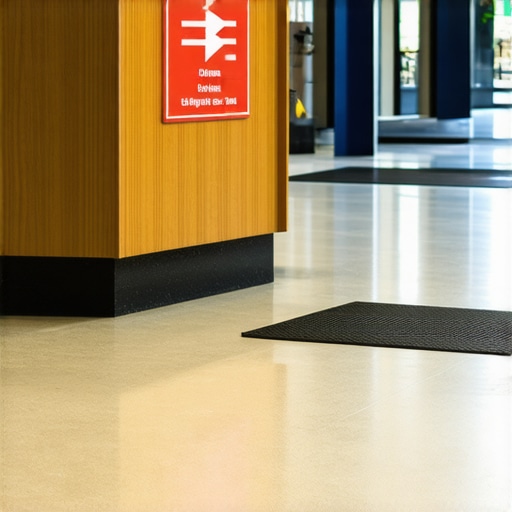
- Install high-traction flooring or mats in areas prone to moisture, such as entryways and produce sections.
- Train every employee on the immediate incident response protocol, including how to take photos and collect witness statements.
- Regularly audit your cleaning chemical concentrations to ensure they do not leave a slippery residue.
- Retain a forensic engineer to perform annual slip-resistance testing on all public walking surfaces.
The forensic audit of maintenance records
A forensic audit involves the systematic review of all safety protocols to identify lapses in compliance before they become litigation triggers. This process includes cross-referencing payroll records with inspection logs to ensure that the staff members listed were actually on-site. Authenticity is the foundation of a legal defense.
Plaintiff attorneys are increasingly using forensic experts to look at the metadata of digital logs. If your log says the floor was checked at 2:00 PM, but the GPS data from the employee handheld device shows they were in the breakroom, the defense collapses. This is the level of scrutiny you must prepare for. The carrier will look for any reason to deny the claim, and the plaintiff will look for any reason to inflate it. You are caught in the middle. The only way out is a mountain of undeniable, objective data. You must treat your business not just as a place of commerce, but as a site of potential forensic investigation. Every spill is a crime scene. Every witness is a potential deposition. Every log is a legal document. This is the blunt truth that quote-churners will never tell you.
The final audit
The duty to protect your capital is yours alone. Insurance carriers are in the business of collecting premiums and minimizing payouts. If you rely on them to defend you without providing the necessary ammunition, you will lose. Proving you were not negligent is a mathematical and contractual exercise. It requires a relentless focus on the microscopic details of your operation. From the coefficient of friction on your floors to the indemnity clauses in your service contracts, every detail matters. The ghost in the fine print will either be your savior or your executioner. Choose wisely. Documentation is the only shield that holds up under the pressure of a million-dollar lawsuit. Without it, you are just another premium payer waiting for a disaster.
“, “image”: {“imagePrompt”: “A high-angle forensic photograph of a retail floor with a yellow caution sign, wet floor marks, and a digital overlay of friction measurements.”, “imageTitle”: “Forensic analysis of floor safety”, “imageAlt”: “A forensic view of a slip and fall prevention setup with technical data overlays.”}, “categoryId”: 0, “postTime”: “”}