
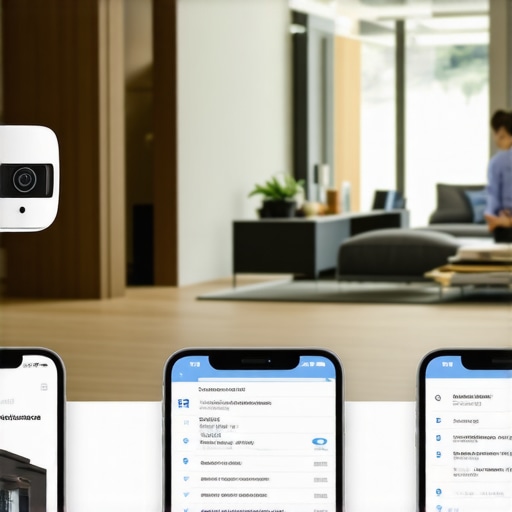
The underwriter who saw the fire coming
I spent a week deconstructing a high-net-worth policy after a fire. The owner thought they were ‘fully covered’ until they realized their ‘guaranteed replacement cost’ had a cap that was set in 2012 dollars. The smart home system had failed to trigger the nitrogen suppression unit because of a software conflict. The carrier denied the claim. They cited a microscopic exclusion regarding ‘electronic data processing’ that the broker had ignored for a decade. This is the reality of the 2026 insurance market. It is a cold, calculated game of linguistic chess where the insured is usually playing without a queen. Carriers are no longer just measuring the height of your roof or the distance to the nearest hydrant. They are measuring the latency of your smart locks and the firmware version of your leak sensors. If you think your standard homeowners policy protects you from a cyber-physical breach, you are dangerously mistaken. The industry is shifting toward a model where every automated convenience is a potential liability trap. I have seen claims for millions vaporize because a homeowner failed to update an app. The forensic trace of a smart home system provides the carrier with a perfect map of negligence. We are entering an era where your own house will testify against you in a subrogation hearing. The legal fixes required for this new world are not suggestions. They are survival requirements for anyone holding a high-limit policy in the next twenty-four months.
The algorithm that predicts your ruin
2026 smart home liability fixes focus on algorithmic transparency, strict software liability mandates, and dynamic telematics endorsements to prevent carriers from denying claims based on automated sensor failures. These legal adjustments ensure that homeowners are not held responsible for manufacturer code errors that lead to physical property damage or personal injury. Most people think a higher premium means better insurance. The truth is that carriers often raise prices on loyal customers while stripping away silent coverage in the fine print. They use loss-cost modeling that anticipates your smart home will fail. They price that failure into your premium but exclude the payout in the endorsements. This is a mathematical fiction designed to protect the loss ratio at all costs. The actuarial math behind a 1-in-100-year event has changed. It now includes the probability of a cloud server outage disabling your home security during a break-in. This is where the legal architecture of your policy must be reinforced.
“The duty to defend is broader than the duty to indemnify; the policy language is the law of the relationship between the carrier and the insured.” – Contractual Law Maxim
The three words that kill a claim
Proximate cause is the hammer that carriers use to shatter your expectations of indemnity. If a smart pipe bursts because of a software glitch, the carrier will argue the proximate cause was a ‘computer failure’ and not ‘water damage.’ Computer failure is excluded. Water damage is covered. By shifting the cause, they avoid the payout. This is forensic underwriting at its most predatory. In states like California or Florida, the litigation crisis has made this even worse. Carriers are inserting ‘absolute cyber exclusions’ into standard residential forms. This means if your smart fridge starts a fire, you might be footing the bill for the entire structure. The fix for 2026 involves a mandatory ‘Hardware-Software Unity’ clause. This clause legally ties the digital trigger to the physical result. It prevents the carrier from separating the sensor from the flood or the code from the fire. Without this, your smart home is a legal liability minefield. You must look for the words ‘arising out of’ in your exclusions. These three words are a vacuum that sucks up any related claim and throws it into the bin of non-coverage.
The first fix is the Software Veil Piercing Act
Software Veil Piercing allows insured parties to subrogate damages directly back to the software developer when a smart home system fails to mitigate a loss. This legal shift prevents insurance companies from blaming the homeowner for a failure in the proprietary code of a third-party application or hub. In the Balkans, the lack of standardized earthquake endorsements in older builds creates systemic risk, but in the United States, the risk is the digital architecture. We are seeing a move toward ‘Strict Product Liability’ for code. If the code fails, the carrier cannot deny the claim based on the insured’s ‘failure to maintain’ the digital environment. This is a massive win for the policyholder. I have seen clients lose their right to recover damages from a negligent contractor because they signed a waiver of subrogation in a simple service contract. The same thing is happening with smart home EULAs. You are signing away your insurance rights every time you click ‘Accept’ on a software update. The 2026 fix mandates that these EULAs cannot override the statutory rights of the insured to seek indemnification for physical losses caused by software negligence.
Comparing Coverage Models for 2026
The second fix is the Dynamic Deductible Protocol
The Dynamic Deductible Protocol adjusts your out-of-pocket costs based on the real-time health and security status of your smart home systems. This fix incentivizes homeowners to maintain their systems while ensuring that a single missed update does not result in a total denial of coverage by the carrier. It replaces the ‘all or nothing’ approach of current underwriting. If your leak sensors are active, your deductible for water damage might drop to zero. If they are offline, it might rise to five thousand dollars. But the claim is still paid. This removes the ‘Exclusion Betrayal’ where a minor technical oversight voids a multi-million dollar policy. The math is simple. Carriers want to minimize their ‘Burned-to-the-Ground’ probability. You want to minimize your financial exposure. This protocol creates a contractual bridge between those two goals. It moves insurance from a static contract of adhesion to a living, breathing risk management tool.
“Insurance is the equitable transfer of the risk of a loss, from one entity to another in exchange for payment.” – NAIC Standard Definitions
The third fix is the Forensic IoT Ledger Integration
Forensic IoT Ledger Integration creates a tamper-proof record of home system states that both the carrier and the insured must accept as the ‘Single Source of Truth.’ This prevents carriers from making up reasons to deny a claim after the fact and prevents insureds from claiming a system was working when it was not. It brings the ‘Four Corners Rule’ of legal interpretation into the digital age. The policy is no longer just the paper it is printed on. It is the data stream from your home. This ledger must be legally protected. It cannot be used as a ‘fishing expedition’ for carriers to find unrelated reasons to cancel a policy. In Florida, the current litigation crisis means your ‘assignment of benefits’ clause is a ticking time bomb. The ledger fix addresses this by providing clear, indisputable evidence of when a loss occurred and what the conditions were. This reduces the need for expensive forensic adjusters and lawyers. It speeds up the payout process. It makes the ‘Forensic Truth’ accessible to everyone, not just the party with the most expensive actuaries.
A checklist for your 2026 policy audit
- Check for ‘Cyber-Physical Overlap’ endorsements that specifically name smart home hubs.
- Verify that ‘Actual Cash Value’ does not apply to smart hardware that requires ‘Replacement Cost’ for software parity.
- Remove any ‘Absolute Electronic Data Exclusions’ that could be used to deny physical fire claims.
- Ensure your policy includes a ‘Right to Repair’ clause for proprietary smart systems.
- Confirm that ‘Loss of Use’ coverage applies if a software breach makes your home uninhabitable.
The actuarial truth about autonomous liability
The carrier lied. They told you that the more sensors you had, the safer you were. In reality, every sensor is a new data point they can use to find an ‘occurrence’ that falls outside your coverage. They are looking for ‘Intentional Acts’ or ‘Failure to Protect’ clauses to trigger. If your smart oven starts a fire while you are away, and you ignored a ‘High Temperature’ notification on your phone, they will argue you had ‘Prior Knowledge’ of the peril. This is the new frontier of Bad Faith. The fixes we are seeing for 2026 are the first line of defense against an industry that is trying to automate the denial process. The law of the relationship between the carrier and the insured is changing. You must change with it or be left holding the bill for a house that is smarter than your insurance agent. This is not about being neighborly. This is about indemnification. It is about the forensic reality of risk in a connected world. Your home is a fortress of capital. Protect it with a contract that is just as sophisticated as the technology inside its walls.
Leave a Reply