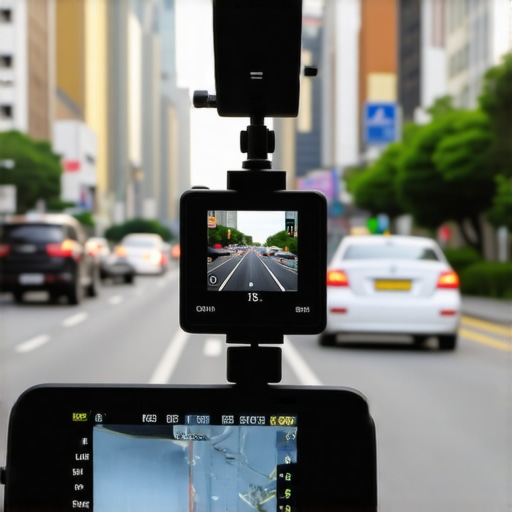
I watched a client lose their right to recover damages from a negligent contractor because they signed a waiver of subrogation in a simple service contract without realizing they were voiding their own insurance coverage. This pattern repeats in car insurance claims involving video. Most drivers install a dashcam thinking it is a shield against fraud. They believe the lens provides an indisputable record of truth that forces a carrier to pay. This is a naive assessment of risk and litigation. In reality, that digital file is often the very lever a forensic underwriter uses to dismantle a liability claim. It documents not just the other party’s error, but your own micro-failures in the seconds leading up to impact.
The digital witness that betrays its owner
Dashcam footage provides an objective record of an accident, but it often reveals contributory negligence, speeding, or distracted driving that would otherwise remain hidden. Carriers use this forensic data to apply comparative fault statutes, reducing the indemnity payout or denying the car insurance claim entirely. While you focus on the truck that cut you off, the adjuster is looking at your speedometer overlay or the timestamp that proves you were traveling three miles per hour over the limit. In a courtroom, that three-mile variance is the difference between a total recovery and a thirty percent reduction in damages.
“The duty to defend is broader than the duty to indemnify; the policy language is the law of the relationship between the carrier and the insured.” – Contractual Law Maxim
Insurance is a mathematical fortress. When you provide video evidence, you are handing over raw data to a professional whose job is to minimize loss-cost. If the video shows you were looking at a GPS device or failing to maintain a proper lookout, you have effectively self-incriminated. The carrier does not care about the spirit of the law. They care about the letter of the contract and the probability of a successful subrogation. If your footage weakens their ability to recover funds from the other party’s insurer, your own policy becomes a trap. This is the clinical reality of forensic claims handling.
The math of comparative negligence in digital evidence
Comparative negligence is a legal principle where the total damages are divided based on the percentage of fault assigned to each party. Dashcam evidence often provides the forensic proof needed to shift ten or twenty percent of the blame onto the insured party. This mathematical shift saves car insurance companies millions of dollars annually by shaving down settlement values. Even if the other driver ran a red light, your video might show you failed to take evasive action. This is known as the Last Clear Chance doctrine. If the video suggests you could have avoided the hit, your payout dies on the vine.
| Evidence Type | Insurance Impact | Risk Factor |
|---|---|---|
| Speeding Overlay | Proves Contributory Negligence | High |
| Audio Recording | Documents Distraction or Anger | Moderate |
| Wide Angle Lens | Shows Avoidance Opportunities | Critical |
| GPS Metadata | Verifies Compliance with Laws | Variable |
Actuaries look at the numbers. Attorneys look at the words. When these two worlds collide in a claims file, the dashcam is the catalyst. I have seen cases where the audio recording inside the cabin captured the driver using a mobile phone or engaging in a heated argument. These sensory details are gold for a defense attorney. They transform a simple rear-end collision into a complex debate over driver focus. The carrier will use every frame to find a reason to apply a deductible or reduce the total loss valuation. They are not your neighbor. They are a capital preservation machine.
Privacy violations as a subrogation lever
Legal insurance experts warn that dashcam recordings can trigger privacy lawsuits or statutory violations depending on the jurisdiction. In certain states, recording audio without consent is a felony, which can complicate an insurance claim or lead to the evidence being suppressed. This creates a legal liability that far outweighs the benefits of proving who hit whom. If your device records a private conversation on a sidewalk or inside the vehicle without permission, you are no longer the victim. You are a defendant in a wiretapping case. This is a strategic nightmare for any risk manager.
“Insurance policy interpretation is governed by the rules of contract construction; any ambiguity is resolved in favor of the insured, yet clear exclusions must be enforced.” – ISO Regulatory Standard
The technical specifications of the camera matter more than the brand. A cheap camera with a low frame rate can make a car appear to be moving faster than it actually is. This is a phenomenon called aliasing. If your camera produces a distorted image, the carrier might use an accident reconstructionist to argue that you were at fault based on a faulty visual representation. You are paying for protection, but you are providing the rope for your own hanging. Every byte of data is a potential exclusion waiting to be triggered by a sharp-eyed underwriter.
A checklist for policyholders using surveillance
- Review the audio recording settings to ensure compliance with local wiretapping laws.
- Disable the speed overlay if you tend to drive with the flow of traffic rather than the strict limit.
- Verify that your policy does not have a cooperation clause that mandates the turnover of all digital files.
- Regularly format the memory card to ensure the data is not corrupted during a critical event.
- Consult with a legal professional before submitting any video to an insurance adjuster.
The forensic truth is blunt. Most people are not as good at driving as they think they are. When you record your commute, you are recording your mistakes. In the world of high-limit indemnity, mistakes are expensive. The insurance company is looking for a reason to say no. Your dashcam often gives them exactly what they need. It is a record of your speed, your reaction time, and your attention span. Before you mount that camera to your windshield, ask yourself if you want a permanent record of every second you spend behind the wheel. The answer might save your claim. One wrong pixel can invalidate a million-dollar policy. That is the architecture of risk. It is cold. It is calculated. It is final.