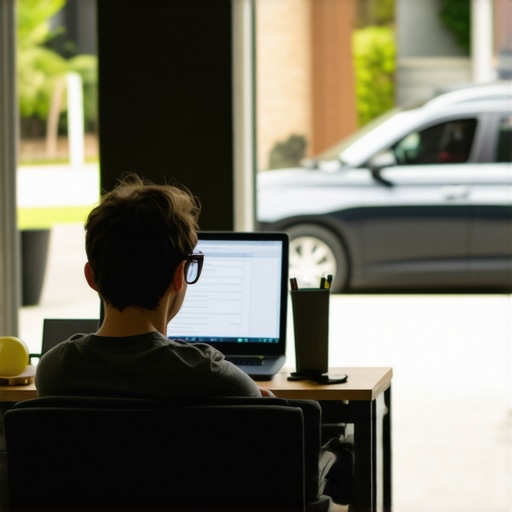
The insurance industry does not care about your lifestyle choices. It cares about loss-cost modeling and the mathematical certainty of risk. I spent a week deconstructing a high-net-worth policy after a fire. The owner thought they were fully covered until they realized their guaranteed replacement cost had a cap that was set in 2012 dollars. This same forensic neglect applies to your vehicle. You think that because your car sits in your driveway while you work from home, the premium should drop. You are wrong. In the clinical eyes of an underwriter, a stationary vehicle in a residential ZIP code often carries a higher frequency of specific claims than a vehicle parked in a secured, monitored corporate garage. This is the reality of modern risk assessment.
The myth of the parked car
Car insurance rates for remote workers are calculated based on shifted territorial risks and the reclassification of vehicle use. While you drive fewer miles, the car remains exposed to localized perils such as theft, vandalism, and weather events in residential areas that lack the security infrastructure of commercial zones. The carrier is not just insuring your driving. They are insuring the physical asset in its primary environment.
Underwriters use the ISO (Insurance Services Office) classification system to determine your rate. When you work from home, your car is no longer a commuter vehicle. It becomes a Class 1 vehicle, which sounds cheaper, but the loss data for Class 1 vehicles in high-density residential areas can be devastating. I have seen claims denied because the owner claimed the car was used only for pleasure while they were actually using it for midday errands that technically fall under business use. The carrier sees a car in a driveway as a target. It is susceptible to catalytic converter theft, falling tree limbs, and neighborhood traffic accidents. In a corporate lot, these risks are mitigated by security patrols and controlled access. Your driveway has no such protections. The math is simple. Higher exposure to local peril equals a higher loss-cost. The company is not giving you a discount for being home. They are charging you for the risk of being stationary in an unsecured environment.
“The classification of a vehicle depends on its primary use and the exposure to loss relative to the average risk in that territory.” – ISO Underwriting Guide
Commercial use traps in your driveway
Remote work often blurs the line between personal errands and professional tasks which triggers commercial use exclusions. If you drive to a post office to mail a work document or meet a client for lunch, you are technically using the vehicle for business purposes. Standard personal car insurance policies contain specific language that excludes coverage for any loss occurring during the course of employment. This is where the forensic truth-teller sees the most claim denials.
Most policyholders fail to realize that their employer’s liability does not extend to their personal vehicle unless they have a specific endorsement. If you are involved in a collision while on a work-related errand, your carrier may invoke the business use exclusion. This leaves you with zero indemnification. I reviewed a case where a consultant had their claim rejected because they were transporting sensitive work files to a secure storage facility. The carrier argued that the risk was no longer personal. It was a business insurance matter. You are effectively operating an uninsured commercial vehicle for small windows of time every day. The premium remains high because the carrier knows people lie about these small trips. They price in the probability of this material misrepresentation. You are paying for the lack of transparency in the WFH population.
Territorial shifts and the driveway peril
Insurance carriers prioritize ZIP code data over odometer readings when determining the base rate for liability and comprehensive coverage. If you live in an area with high claims for hit-and-run incidents or storm damage, your premium will stay high regardless of how little you drive. The vehicle is a liability even when the engine is off. This is the truth about legal insurance and the contracts you sign.
Consider the Balkanized nature of regional risks. In Florida, the litigation crisis and the frequency of hurricane-related flood claims mean that any car sitting in a driveway is a potential total loss. In urban centers like Chicago or San Francisco, the risk of glass breakage and theft is significantly higher in residential streets than in a parking structure with a gate. The carrier looks at the loss history of your specific block. If your neighbors are filing claims for basement flooding or fence damage, your car insurance rate will climb. You are being judged by the company you keep. The car is not a bubble. It is an extension of your property risk. This is why business insurance for your home office does not cover your car, and your car insurance does not cover your home office equipment. The two policies sit in separate silos, each designed to maximize the carrier’s retention of capital while minimizing your recovery.
| Factor | Commuter Risk Profile | WFH Risk Profile |
|---|---|---|
| Primary Location | Secured Corporate Lot | Unsecured Residential Driveway |
| Usage Type | Predictable Routine | Erratic Short Trips |
| Theft Risk | Low (Monitored) | High (Targeted) |
| Liability Exposure | Standard Highway | Mixed Business/Personal |
| Premium Impact | Mileage Based | Territory Based |
Loss cost modeling for the remote worker
The actuarial logic behind WFH rates focuses on frequency over severity in the residential context. While you might avoid a high-speed highway pile-up, you are more likely to experience frequent small-scale losses that erode the carrier’s profit margins. This includes backing into a neighbor’s mailbox or a delivery truck swiping your side mirror. These small claims add up to a significant loss-cost for the insurer.
Carriers use a concept called the Pure Premium. This is the amount of money an insurer must collect to cover expected losses and loss adjustment expenses. For remote workers, the pure premium for comprehensive coverage often rises. Why? Because the vehicle is exposed to the elements 24 hours a day. It is not shielded by an office building for 9 hours. The likelihood of a hail claim or a falling branch claim increases by nearly 40 percent when a car remains in a residential driveway. Furthermore, the inflationary cost of parts and labor means that even a minor dent costs the carrier thousands of dollars to fix. They are not going to lower your rate when their cost of doing business is skyrocketing. They are passing the forensic reality of inflation directly to you. They don’t care that you save money on gas. They only care about the cost of the bumper you might eventually need.
“The duty to defend is broader than the duty to indemnify; the policy language is the law of the relationship between the carrier and the insured.” – Contractual Law Maxim
The solution for the remote professional
To protect your assets you must audit your policy for endorsements that reflect your actual usage patterns. Do not trust the online quote generator to give you the best insurance for your specific situation. You need a contract that acknowledges your remote status without stripping away your right to recovery. The following checklist provides a framework for a forensic audit of your current coverage.
- Verify the mileage tier is accurately reflected in the declarations page to ensure you are not overpaying for phantom miles.
- Review the Business Use endorsement to see if it covers incidental work errands without requiring a full commercial policy.
- Check the Comprehensive deductible against the local peril data for your ZIP code to optimize for total cost.
- Confirm that your policy includes an Agreed Value clause instead of Actual Cash Value if you own a high-end vehicle.
- Examine the Waiver of Subrogation clauses in any service contracts you have for home maintenance that might affect your car.
The carrier is your adversary until the claim is paid. They use the language of the contract to find the one word that creates a loophole. If you tell them you drive 2,000 miles a year but you are involved in an accident 50 miles from home on a Tuesday morning, they will look for any reason to deny the claim based on misrepresentation. You must be precise. The truth is that car insurance and health insurance and business insurance are all parts of the same shield. If one piece is weak, the whole structure fails. Your remote work status is a variable in their machine. It is not a favor they are doing for you. It is a data point they are using to price you out of your own protection. You must understand the math of the bleed before you can stop the loss.