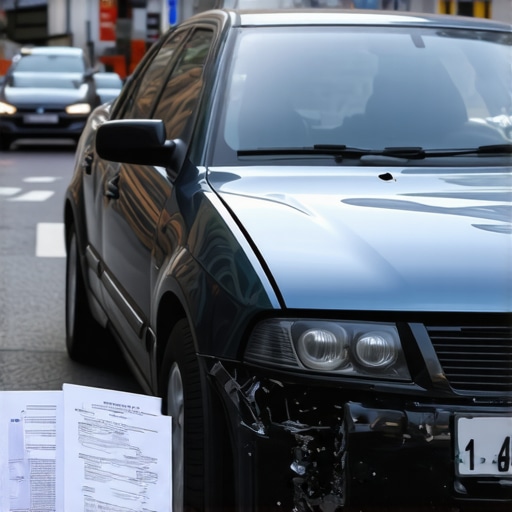
I watched a client lose their house because of a $25,000 property damage limit. They rear-ended a late-model electric sedan. The battery pack and rear sensors alone cost more than the entire policy limit. The carrier paid the $25,000 and walked away, fulfilling their contractual obligation but leaving the client to face a $90,000 judgment and a subsequent lien on their primary residence. This is the reality of state minimums. They are not a safety net. They are a mathematical trap designed for legal compliance, not financial protection.
The mathematical illusion of compliance
State minimum car insurance limits are the absolute floor of legal operation and offer zero protection for personal assets in a modern litigation environment. These limits were established decades ago and have failed to keep pace with medical inflation or the rising costs of vehicle technology. When you carry the minimum, you are effectively self-insuring for the majority of the risk. The carrier is only responsible for the first few thousand dollars, while you remain personally liable for every cent beyond that arbitrary cap. This is an actuarial disaster waiting to happen.
“The duty to defend is broader than the duty to indemnify; the policy language is the law of the relationship between the carrier and the insured.” – Contractual Law Maxim
The forensic reality of an accident involves immediate assessment of limits. Plaintiff attorneys do not look for the truth. They look for the money. If you have a state minimum policy, you are a target. They will bypass the insurance company and go directly for your wages, your savings, and your real estate. The cost of a few stitches and an MRI in a modern emergency room can exceed $15,000 in minutes. If your state bodily injury limit is $15,000, your insurance is exhausted before the patient even leaves the triage unit.
Why medical inflation kills the minimum policy
Bodily injury liability at state minimum levels fails to account for the exponential growth in healthcare costs and specialized surgical interventions. A simple orthopedic surgery to repair a fractured tibia can cost $50,000 when including anesthesia, facility fees, and physical therapy. In states like California or Florida, where bodily injury limits can be as low as $15,000 per person, the policy is mathematically irrelevant. You are left defending yourself against a professional legal team with a checkbook that is already empty. The lack of a sufficient buffer creates a systemic risk for the insured.
| Limit Category | State Minimum (Typical) | Recommended Limit | Personal Financial Risk |
|---|---|---|---|
| Property Damage | $5,000 – $25,000 | $100,000+ | Total asset exposure |
| Bodily Injury (Person) | $15,000 – $25,000 | $250,000+ | Wage garnishment |
| Bodily Injury (Accident) | $30,000 – $50,000 | $500,000+ | Involuntary bankruptcy |
Actuarial loss-cost modeling suggests that the frequency of high-value claims is increasing. It is no longer just the catastrophic multi-car pileups that exceed limits. It is the everyday intersection collision involving a driver with a pre-existing condition or a vehicle equipped with advanced driver-assistance systems. The price of sensors and calibrations alone has turned minor fender benders into $10,000 property damage claims.
The lethal gap in property damage recovery
Property damage limits are often the most overlooked component of a car insurance policy and represent a massive point of failure for underinsured drivers. Most people assume that $25,000 is enough to fix a car. They forget that they are not just paying for the metal. They are paying for the rental car for the claimant, the diminished value of the vehicle, and the labor rates of certified repair facilities which can exceed $150 per hour. If you hit a luxury SUV or a commercial delivery van, your $10,000 or $25,000 limit will be evaporated in days. The claimant’s insurer will pay their own client under an uninsured/underinsured motorist (UM/UIM) claim and then pursue you through subrogation for every penny they spent.
“Insurance is the distribution of the few’s losses among the many, but when the limit is reached, the distribution stops and the individual is isolated.” – National Association of Insurance Commissioners (NAIC) General Principles
Subrogation is a ruthless process. The insurance company of the person you hit has an entire department dedicated to getting their money back. They do not care if you have the funds. They will obtain a judgment and wait. They will garnish your tax refunds. They will put a lien on your inheritance. Carrying state minimums gives these corporate entities a green light to dismantle your financial future. They see a minimum policy as a lack of sophistication and a lack of defense.
The cold reality of personal asset attachment
Personal asset attachment occurs when an excess judgment is rendered against an insured whose policy limits were insufficient to cover the total damages. This is not a theoretical risk. It is a daily occurrence in civil courts. When your insurance company pays out the maximum of $25,000, they usually ask for a release of liability for you. However, a smart plaintiff attorney will refuse to sign that release if they believe you have other assets. They would rather take the $25,000 as a partial payment and go after your home equity for the remaining $200,000. The policy you bought to save fifty dollars a month just cost you your life savings.
- Audit your current declarations page for limits under 100/300/100.
- Calculate your total net worth including home equity and retirement accounts.
- Verify if your policy includes a ‘Duty to Defend’ clause that continues after limits are exhausted.
- Review the subrogation waiver language in your standard policy form.
- Compare the premium difference for an umbrella policy which requires higher underlying limits.
The logic of the insurance market is counter-intuitive. Carriers often charge the highest rates per thousand dollars of coverage to those at the state minimum level. They know these drivers are higher risks. By moving to higher limits, you often find that the cost per unit of protection drops significantly. This is the ‘Risk Premium’ paradox. You are paying a premium for the privilege of being underinsured. It is a bad investment by any objective financial standard.
The ghost in the fine print
Many policies at the state minimum level strip away essential coverages like Uninsured Motorist protection or Personal Injury Protection to keep the price low. This means that not only are you a threat to others, but you are also unprotected if someone hits you. If an uninsured driver hits your car, your state minimum liability-only policy does nothing. You are left with a totaled vehicle and medical bills that you must pay out of pocket. This is the ‘Silent Exclusion’ of the budget policy. It is a contract designed to satisfy a police officer during a traffic stop, not to handle a crisis.