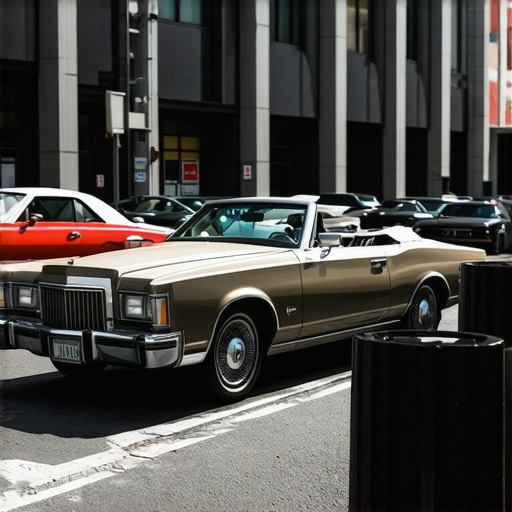
The vanishing math of the classic grand tourer
The smell of burnt coffee and stale toner usually signals a long night of forensic underwriting. I spent a week deconstructing a high-net-worth policy after a fire involving a 2002 Bentley. The owner thought they were fully covered until they realized their guaranteed replacement cost had a cap that was set in 2012 dollars. This is the reality of the high-limit indemnity world. Your old luxury car is not a vehicle to an insurer. It is a cluster of deteriorating electronic components and unobtainable alloy panels. The actuarial math no longer supports the traditional premium models. Carriers are fleeing this segment because the loss-cost ratio has inverted. You pay for the badge, but the insurer pays for the scarcity. Most brokers ignore the manuscript endorsements that strip away your rights. They care about the commission while I care about the subrogation leverage. If you drive a twelve-cylinder monument to German or British engineering from twenty years ago, you are driving a mathematical liability.
The ghost in the fine print
Insurance carriers utilize predictive modeling to identify vehicles where repair costs exceed seventy percent of the Actual Cash Value. For aging luxury cars, a single headlight assembly or an air suspension failure can trigger a total loss declaration. This mathematical threshold makes fair premium rates impossible to maintain long term.
Underwriters look at the frequency and severity of claims. Older luxury vehicles present a unique severity risk. A minor fender bender on a 2008 Mercedes-Benz CL-Class is not just a bodywork issue. It involves distronic sensors that are no longer in production. It involves paint codes that require three-stage processes no longer permitted by environmental regulations in certain jurisdictions. The insurance company sees a car worth twenty thousand dollars with a repair estimate of eighteen thousand dollars. They will total it. This creates a friction point between the owner’s emotional valuation and the cold reality of the indemnity contract. Actuaries call this the severity spike. It is why your premium is rising even if your driving record is clean. The risk pool is shrinking. Fewer companies want to touch these assets. They prefer the predictable loss curves of a new Honda. The complexity of legacy luxury systems acts as a poison pill in the underwriting file.
“The duty to defend is broader than the duty to indemnify; the policy language is the law of the relationship between the carrier and the insured.” – Contractual Law Maxim
Why your full coverage is a mathematical fiction
Actual Cash Value policies for older luxury assets fail to account for the exponential inflation of specialized labor and parts. Replacement Cost Value is rarely offered for vehicles over ten years old. This leaves a gap where the insured remains under-indemnified despite paying high monthly premiums regularly.
The concept of full coverage is a marketing term used by quote-churners to simplify a complex legal agreement. In forensic underwriting, we look at the specific language of the physical damage section. Most policies for older cars are settled on an Actual Cash Value basis. This means the insurer takes the replacement cost and subtracts physical and functional depreciation. For a high-end vehicle, that depreciation is a cliff. The moment the vehicle left the showroom, the math started working against you. Twenty years later, the depreciation has eaten the core of the policy. You are paying a premium based on the risk of a high-speed accident but the payout is based on a wholesale auction price. It is a losing bet. I have seen clients spend five thousand dollars a year to insure a car that the company will only value at twelve thousand dollars in a total loss. That is not insurance. That is a bad investment. You are subsidizing the carrier’s safer bets on suburban crossovers.
| Feature | Standard Daily Driver | Aging Luxury Asset | Impact on Premium |
|---|---|---|---|
| Parts Availability | High (OEM/Aftermarket) | Critical Shortage (NLA) | Increases Severity Risk |
| Labor Rate | Standard Shop Rate | Specialist Rate Only | 3x Repair Cost Factor |
| Electronics | Modular/Replaceable | Integrated/Proprietary | High Total Loss Probability |
| Valuation | Market Data Available | High Volatility | Low Indemnity Recovery |
The three words that kill a claim
Actual Cash Value is the phrase that terminates most luxury car recovery dreams. It allows the insurer to apply depreciation to every component of the vehicle. This legal mechanism ensures the carrier never pays for the true cost of restoring a complex mechanical system to its original state.
When the adjuster says those three words, your claim is effectively dead. They are not looking at what it costs to fix your car. They are looking at what a dealer would pay for it at a distressed auction. If you have a classic Ferrari or a vintage Porsche, you might have an Agreed Value policy. But for the 2005 BMW M5 or the Audi A8, you are likely stuck in the ACV trap. The proximate cause of your financial loss is the contract wording you didn’t read. Forensic analysis of these policies often reveals that the pollution exclusion or the wear and tear clause is used to deny mechanical failures that lead to accidents. If an oil line bursts and you hit a wall, the carrier might argue the fire was caused by mechanical failure which is an excluded peril. They are looking for the loophole. They are looking for the one word that creates a barrier to payment. I have seen it happen a hundred times. The broker sells you a dream and the claims department gives you a nightmare.
“The primary purpose of insurance is to return the insured to the same financial position they occupied prior to the loss, not to provide a windfall.” – ISO General Principles
Actuarial erosion of the secondary market
Loss-cost modeling proves that older luxury vehicles have a higher probability of catastrophic electrical failure. This data driven approach allows insurers to justify premium hikes that exceed the annual appreciation of the vehicle itself. It is a deliberate strategy to force these risks out.
Insurance is about the law of large numbers. But the numbers for old Mercedes and Jaguars are getting small and ugly. The reinsurance treaties that back your local carrier often have specific exclusions for vehicles over a certain age with high repair complexity. The carrier is not just being mean. They are being managed by a larger entity that sees your car as a liability. The secondary market for these cars is flooded with vehicles that have deferred maintenance. This creates a moral hazard. If a car needs ten thousand dollars in service and is worth eight thousand, the incentive for a staged accident increases. Actuaries build this moral hazard into the price. You are paying for the sins of other owners who treat their policy like a maintenance plan. The technical term is adverse selection. The only people who want to insure these cars are the ones most likely to file a claim. To counter this, the industry simply makes the price prohibitive.
- Check for Agreed Value endorsements instead of Actual Cash Value.
- Verify if the policy covers OEM parts or allows for recycled components.
- Identify the specialized labor rate cap in the policy fine print.
- Audit the mileage limitations that might void coverage during a claim.
- Confirm if the glass coverage includes specialized rain sensors and heaters.
The salvage value paradox
Salvage value on high-end vehicles remains high due to the demand for used parts. This creates a perverse incentive for insurers to total your vehicle rather than repair it. They recover more of their payout through the auctioning of your car’s remaining components.
This is the cold truth of the salvage yard. Your engine is worth more in pieces than the car is worth as a whole. When your car is totaled, the insurer takes the title. They then sell the wreckage to a salvage aggregator. For an old luxury car, the engine, transmission, and interior modules are highly liquid assets. The carrier calculates the net loss. If they pay you fifteen thousand and sell the wreck for seven thousand, their net loss is eight thousand. If they spend twelve thousand to fix it, their loss is twelve thousand. They will choose the eight thousand dollar loss every time. They don’t care about your attachment to the car. They care about the recovery. This is why getting a fair rate is impossible. The car is more valuable to the insurance company dead than alive. This is the forensic reality of the luxury market. You are fighting against a system that is designed to minimize the net payout by any means necessary. The math is against you. The contract is against you. The salvage market is against you.