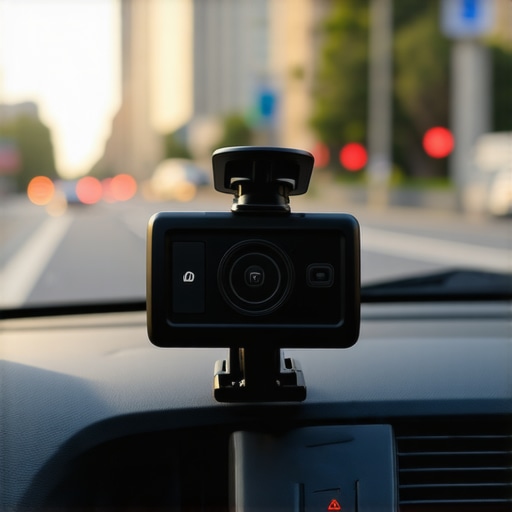
The dashcam is the ultimate double-edged sword in the world of high-limit indemnity. While you view that plastic lens as your digital witness, I view it as a forensic liability that often provides the exact evidence a carrier needs to reduce your payout. In my twenty-five years as a forensic underwriter, I have seen more claims decimated by ‘perfect’ video evidence than I have seen won by it. The reality of insurance recovery is not about what happened; it is about what the contract says happened and how the physics of the recording can be twisted to serve the carrier’s bottom line.
The mirage of digital proof
Dashcam footage often fails because it lacks the telemetric context required to establish liability under strict carrier guidelines. While drivers believe a video is a smoking gun, adjusters use it to find comparative negligence or technical voids in the policy’s duty to provide undisputable evidence of fault. Most people do not understand that insurance companies operate on a mathematical model of risk avoidance. They are not looking for the truth; they are looking for a reason to apply a percentage of fault to you. I spent a week deconstructing a high-net-worth policy after a fire and a subsequent vehicle collision. The owner thought they were fully covered until they realized their video footage proved they were traveling three miles per hour over the speed limit. That minor infraction, captured by their own device, triggered a fifteen percent liability shift. In a high-value claim, that small percentage represents tens of thousands of dollars stripped from your recovery. The camera does not lie, but it also does not stay silent about your own errors. Every frame is a potential confession.
“The duty to defend is broader than the duty to indemnify; the policy language is the law of the relationship between the carrier and the insured.” – Contractual Law Maxim
The trap of comparative negligence
Comparative negligence is the legal mechanism that allows insurance companies to reduce their payout based on the claimant’s contribution to the accident. Dashcam footage is frequently the primary tool used to prove that you had a last clear chance to avoid the collision. If the video shows that you did not swerve or brake exactly 0.5 seconds after a hazard appeared, the adjuster will argue you were distracted. They use the video to perform a frame-by-frame analysis of your reaction time. They compare your performance against an idealized, superhuman standard. If you are found even ten percent at fault in many jurisdictions, your settlement is slashed accordingly. I have watched clients lose their right to recover damages because their dashcam captured them singing along to the radio or looking at a GPS device three seconds before impact. The carrier will argue that these three seconds were the difference between a collision and a near-miss. In the eyes of the law and the actuarial tables, you become a partner in your own misfortune.
Technical failures in the courtroom
Digital evidence must meet a high bar of authenticity and chain of custody to be admissible in a formal insurance arbitration or a court of law. Most consumer-grade dashcams fail this test due to corrupted metadata, incorrect timestamps, or lack of GPS synchronization. If your timestamp is off by even an hour, a skilled defense attorney or a forensic adjuster can move to have the evidence suppressed. They will argue that the footage cannot be verified as belonging to the specific incident in question. Furthermore, the rolling shutter effect found in cheap CMOS sensors can distort the perceived speed of oncoming vehicles. This optical illusion can make a stationary car look like it is moving or make a speeding car look like it is traveling at a safe velocity. Without a secondary telemetric log, the video is just an unverified movie. We look for the G-force data and the hardcoded GPS coordinates. If those are missing, your 4K video is little more than a suggestion. Carriers bank on the fact that your hardware is probably failing or improperly configured.
| Feature | Raw Video Evidence | Telemetric Log Data |
|---|---|---|
| Admissibility | Subject to challenge | High legal standing |
| Speed Verification | Estimated by frames | Hardcoded via GPS |
| Impact Vector | Visual estimation only | Accelerometer data |
| Chain of Custody | Easily manipulated | Securely encrypted |
The ghost in the metadata
Metadata is the hidden layer of data that tells the story of when, where, and how a video was created. In forensic underwriting, we examine the file headers to ensure the video has not been edited or compressed in a way that hides information. Many people try to ‘clean up’ their video before sending it to the adjuster. They might trim the beginning where they were driving erratically or remove audio where they used a cell phone. This is a catastrophic mistake. Modern forensic software can detect these edits in seconds. Once an adjuster finds a single edit, the entire video is flagged as fraudulent. This not only kills the claim but can lead to a referral to the state insurance fraud bureau. The lack of integrity in the file structure is a red flag that no amount of explanation can fix. We look for the original, raw files. Anything less is treated with extreme skepticism. In the Balkans, for example, the lack of standardized digital evidence laws means that any hint of tampering leads to an immediate denial of coverage under ‘bad faith’ clauses that favor the carrier.
How carriers weaponize your own data
Insurance carriers are not your neighbors; they are sophisticated capital preservation machines that use your data to protect their reserves. When you volunteer dashcam footage, you are providing a window into your driving habits that goes far beyond the accident. I have seen cases where an adjuster reviewed the ten minutes of footage preceding an accident and used it to argue that the insured has a pattern of reckless behavior. They might see you rolling through stop signs or failing to signal a mile back. While these actions did not cause the current accident, they are used to paint a picture of a high-risk driver. This can lead to a non-renewal of your policy or a massive premium hike. You think you are proving your innocence for one event, but you are actually providing a character assassination reel. This is why I always tell clients to have their counsel review the footage before it ever touches an adjuster’s desk. You cannot ‘un-ring’ the bell of a digital confession.
“Insurance policy interpretation is a matter of law, and any ambiguity must be resolved in favor of the insured, yet the facts are governed by the evidence provided.” – ISO General Counsel Perspective
- Verify CMOS sensor hertz matches local power grid flicker to avoid video strobing.
- Format SD cards every thirty days to prevent cell fatigue and file corruption.
- Hardwire the device to the battery to capture the pre-impact buffer and post-impact scene.
- Disable internal audio to avoid self-incrimination via cabin noise or conversations.
- Ensure the GPS lock is active before every trip to provide a verified speed overlay.
The three words that kill a claim
The phrase ‘Actual Cash Value’ is often the final nail in the coffin for a vehicle claim involving expensive aftermarket technology like high-end dashcams. Most policies only cover the car as it left the factory, meaning your two-thousand-dollar camera system is worth nothing. If your car is totaled, the carrier will pay you the market value of the metal and plastic, not the value of the protection you thought you bought. This mathematical fiction is the foundation of the industry. People spend thousands on safety tech and dashcams, thinking they are making their ‘best insurance’ even better. In reality, they are often just adding more variables that the carrier can use to complicate the settlement process. The only way to truly win is to have a policy that acknowledges the tech and a video that is technically flawless. Anything else is just a digital gamble. You must audit your policy annually to ensure that your ‘full coverage’ actually includes the technology you are using to defend yourself. Most people realize this far too late, standing amidst the wreckage of a car and a denied claim.