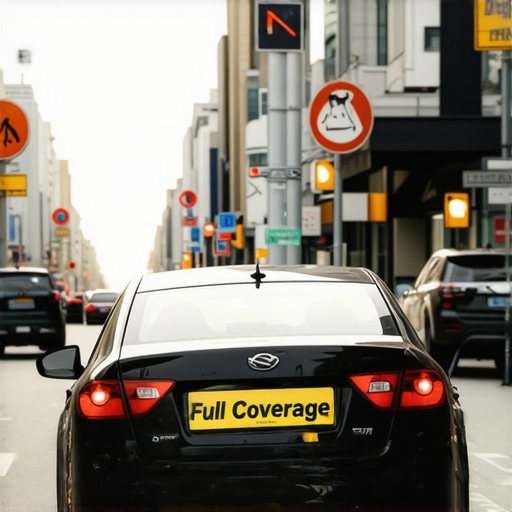
I spent a week deconstructing a high-net-worth policy after a fire. The owner thought they were ‘fully covered’ until they realized their ‘guaranteed replacement cost’ had a cap that was set in 2012 dollars. The car in the garage, a classic restoration, was treated as a standard total loss because of a missing agreed value endorsement. This is the reality of the insurance industry. It is a fortress of legal text where words like ‘full’ have no meaning. I see this every day. Drivers walk into my office with a smug sense of security. They tell me they have the best insurance money can buy. I look at their declarations page for thirty seconds and find the holes. Their broker sold them a feeling, not a contract. The math does not lie. The contract does not care about your assumptions. The industry relies on your ignorance to maintain its loss ratios.
The semantic trap of the full coverage label
The term full coverage is a linguistic fabrication used by agents to simplify complex risk transfers. It holds no legal standing in a court of law or within an ISO standard policy form. Most drivers believe it implies total indemnification, but it usually only refers to the presence of both liability and physical damage coverage with significant gaps. When an agent says you have full coverage, they are usually saying you have the minimum required liability, collision, and comprehensive coverage. They are not telling you that your collision coverage has a two thousand dollar deductible. They are not telling you that your comprehensive coverage excludes rodent damage or specific types of glass. It is a marketing term designed to end a conversation. In the forensic world of underwriting, we look for specific endorsements. We look for exclusions. We look for the limits of liability. A policy with fifty thousand dollars in property damage liability is not full coverage if you hit a late-model electric vehicle. You are underinsured the moment you leave the lot.
The mathematical fiction of the total loss
Actual Cash Value is the primary mechanism carriers use to reduce their payout obligations during a total loss event. It calculates depreciation with brutal efficiency, often leaving the policyholder with a significant financial shortfall. Most drivers assume that if their car is destroyed, the insurance company will buy them a new one. This is a fantasy. Unless you have a specific replacement cost endorsement, the carrier calculates the value of your vehicle at the exact microsecond before the impact. They factor in every scratch, every mile, and the current market saturation. This is where the term full coverage fails the most. If you owe thirty thousand dollars on a loan and the car is worth twenty-two thousand, your full coverage leaves you with an eight thousand dollar debt. Without Gap insurance, which is a separate contractual layer, you are exposed. The carrier is not your friend. They are a counterparty in a zero-sum financial game. Every dollar they save on your ACV calculation is a dollar that stays in their reserves. [image_placeholder]
“The duty to defend is broader than the duty to indemnify; the policy language is the law of the relationship between the carrier and the insured.” – Contractual Law Maxim
The three words that kill a claim
Specific policy exclusions like the business use clause or the racing exclusion can void your entire coverage in seconds. These terms are often buried in the definitions section of the policy where most drivers never look. I once handled a claim where a driver was delivering food for a side hustle. He had what he called the best insurance. When he hit a pedestrian, the carrier denied the claim instantly. Why. Because the policy excluded ‘livery use’ or the transport of goods for a fee. He was technically ‘fully covered’ for personal use, but the moment he accepted that delivery, his policy became a useless stack of paper. Legal insurance definitions are rigid. There is no room for ‘I didn’t know’ in the world of forensic underwriting. You either have the endorsement or you do not. If you are using your vehicle for anything other than commuting or pleasure, your standard policy is a ticking time bomb. You are paying premiums for a ghost.
The liability ceiling and the litigation crisis
State mandated minimums are almost never enough to protect personal assets in a litigious environment. Drivers often confuse being legal with being protected. In many regions, the minimum property damage liability is as low as ten thousand or twenty-five thousand dollars. In a world where a bumper replacement on a luxury SUV costs five thousand, those limits are a joke. If you cause a multi-car pileup, your full coverage will pay out its maximum and then leave you to face the remaining hundreds of thousands in personal judgments. The lawyers will come for your house. They will come for your savings. A real insurance architect looks at your net worth and builds a liability wall. This usually involves an umbrella policy, but most ‘quote-churning’ agents do not want to explain the math. They want to give you a price that makes you happy today, even if it ruins you tomorrow.
| Policy Feature | Actual Cash Value (ACV) | Replacement Cost (RCV) |
|---|---|---|
| Payout Logic | Market value minus depreciation | Cost to buy new equivalent |
| Premium Impact | Lower monthly cost | Higher monthly cost |
| Financial Risk | High (Gap risk) | Low (Total recovery) |
| Standard Policy | Default setting | Requires endorsement |
The forensic audit for real protection
A policy audit requires a line-by-line review of the manuscript endorsements and the specific limits of the Uninsured Motorist coverage. If you want to know if you are actually protected, stop looking at the premium. Look at the language. You need to verify your limits for bodily injury and property damage. You need to check for UM/UIM stacking rules in your state. You need to see if your glass coverage is ‘full’ or if it has a deductible that makes a chip repair cost-prohibitive. Use this checklist to evaluate your current risk profile:
- Check the Property Damage Liability limit. Is it at least $100,000?
- Verify the presence of Gap Insurance if you have a loan or lease.
- Confirm if Uninsured Motorist coverage matches your Bodily Injury limits.
- Identify any ‘Step-Down’ provisions that reduce coverage for guest drivers.
- Review the ‘Excluded Drivers’ list to ensure no household members are barred.
- Check for an ‘Agreed Value’ endorsement on classic or modified vehicles.
- Look for ‘Rental Reimbursement’ limits. Is $30 a day enough for a functional car?
“Insurance is a contract of adhesion; ambiguities are resolved against the drafter, but clear exclusions are absolute.” – National Association of Insurance Commissioners (NAIC)
The ghost in the fine print
Modern policies are increasingly stripping away silent coverage by refining the definition of an occurrence. What used to be a simple claim process is now a maze of forensic requirements. For example, some carriers are now excluding ‘electronic data’ or ‘integrated software’ from standard collision repairs unless a specific tech-rider is added. As cars become computers on wheels, the definition of a ‘part’ is changing. The carrier will try to pay for a refurbished sensor while the manufacturer demands a new one. This delta is where the driver gets squeezed. It is not just about the accident. It is about the technology. If your policy has not been updated in three years, it is obsolete. The actuarial loss-cost modeling has moved on, and your old policy language likely contains loopholes that the carrier will use to mitigate their payout. Do not be a victim of a label. Read the contract. Understand the exclusions. Recognize that ‘full coverage’ is the lie that insurers tell to keep the premiums rolling in without the commitment of true indemnification. True protection is expensive, specific, and rarely found in a standard five-minute quote. It requires the precision of a forensic underwriter and the cynicism of a lawyer. Anything less is just a gamble you are destined to lose.