The Mechanical Autopsy of a Denied Auto Claim
I spent a week deconstructing a high-net-worth policy after a total loss. The owner thought they were fully covered until they realized their guaranteed replacement cost had a cap that was set in 2012 dollars. I recently reviewed a personal auto claim where a driver hit a retaining wall because their brake line failed. The carrier denied the entire $45,000 repair bill. They did not deny it because of the collision. They denied it because of a maintenance exclusion. The adjuster proved the brake line had corroded over years. The crash was merely the final outcome of a long, predictable decay. This is the reality of the industry. Car insurance is a legal fortress designed to protect the carrier from paying for your neglect. Most drivers treat their policy like a warranty. It is not. It is a contract of indemnity for fortuity. If the event was predictable, it is not an accident. It is a maintenance issue. I have seen thousands of these letters. They are cold. They are clinical. They are mathematically sound. When you sign that policy, you agree to maintain the vehicle. If you fail, the carrier walks away. This article dissects the specific actuarial and legal logic that turns a car accident into a maintenance denial.
The ghost in the fine print
Car insurance companies define indemnity as coverage for sudden and accidental losses only. Wear and tear is a contractual exclusion because it lacks fortuity, meaning insurers refuse to pay for predictable degradation of mechanical components like brake pads, transmissions, or tires over years of use. Carriers view these items as the financial responsibility of the vehicle owner. The language is found in the ISO Personal Auto Policy under Exclusions. It is unambiguous. It is final. You cannot insure a house against the roof getting old. You cannot insure a car against the alternator dying. The policy is for the tree falling on the car, not the car falling apart because of rust. Adjusters are trained to look for rust. They look for frayed belts. They look for sludge in the engine. If they find it, the claim is dead on arrival. They will cite the lack of maintenance as the proximate cause of the loss. In legal terms, the proximate cause is the primary act that sets the chain of events in motion. If that act is your failure to change the oil, you are the one paying the bill.
Why your full coverage is a mathematical fiction
Full coverage is a marketing term, not a legal insurance definition. Most car insurance policies consist of Liability, Collision, and Comprehensive coverages, but none of these protect against mechanical breakdown or component failure resulting from age or usage. The carrier assumes the risk of external perils, not internal deterioration. People believe that if they pay a high premium, they are protected against everything. This is a delusion. The premium is calculated based on the probability of an accident. It does not account for the probability of your transmission failing at 150,000 miles. That is a 100 percent probability event over a long enough timeline. Insurance cannot function if it pays for certainties. It only functions for possibilities. This is why a mechanical breakdown insurance policy is a separate product. Even then, those policies have strict maintenance requirements. If you do not have a paper trail of every oil change, they will deny you too. The industry is built on documentation. Without it, you have no leverage. You are just a person with a broken car and a very expensive piece of paper that says you are not covered.
“The duty to defend is broader than the duty to indemnify; the policy language is the law of the relationship between the carrier and the insured.” – Contractual Law Maxim
The three words that kill a claim
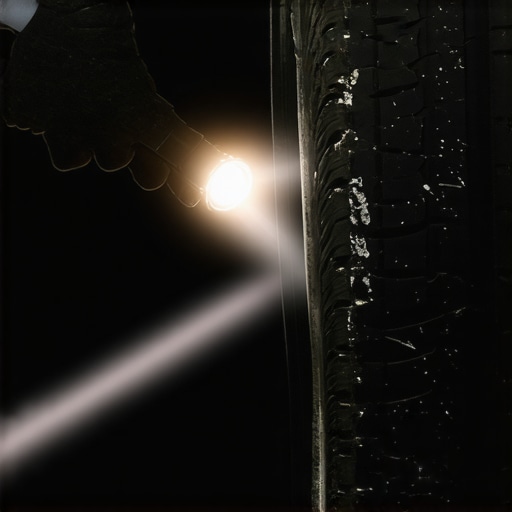
Sudden and accidental are the three words that determine if your business insurance or car insurance claim survives the underwriting autopsy. If a loss is gradual, it is classified as wear and tear, which is uninsurable under standard indemnity contracts. This exclusion prevents moral hazard, where an insured party neglects vehicle maintenance knowing the insurance carrier would cover the repair costs later. Think about a tire blowout. If you hit a nail, that is sudden. It is accidental. It is covered. If the tire blows out because the tread was down to the wires, that is wear and tear. It was not an accident. It was an inevitability. The forensic adjuster will measure the tread depth. They will take photos of the dry rot. They will send a report to the claims department that says the tire failed due to neglect. This logic applies to every part of the vehicle. It applies to the cooling system. It applies to the electrical harness. It even applies to the paint. If your clear coat peels because of the sun, that is not a comprehensive claim. That is the environment. Insurance is not a shield against the passage of time. It is a shield against the unexpected blow.
| Feature | Standard Car Insurance | Mechanical Breakdown Insurance (MBI) | Extended Warranty |
|---|---|---|---|
| Source of Coverage | Insurance Carrier | Insurance Carrier | Manufacturer or Third Party |
| Cause of Loss | Accident/Peril | Mechanical Failure | Defect/Failure |
| Wear & Tear Inclusion | Strictly Excluded | Limited Coverage | Often Excluded |
| Typical Cost | Monthly Premium | Add-on Premium | Upfront or Financed |
The forensic trace of a mechanical failure
Forensic adjusters use Event Data Recorders and fluid analysis to distinguish between sudden impact and chronic neglect. If a claim for engine failure is filed after a minor collision, the carrier will investigate if the mechanical damage existed before the accident. This is called pre-existing damage analysis. They will look at the color of the fluid. They will look for carbon buildup. They will look at the service history on Carfax. If they see a gap in service, they have their out. They do not need to prove you are a liar. They only need to prove the failure was more likely caused by wear than by the impact. This is the balance of probabilities. In most states, the burden of proof for an exclusion lies with the insurer. However, they are very good at proving it. They hire engineers. They hire metallurgists. They spend $5,000 on an expert to avoid paying $20,000 on a claim. It is a simple calculation of return on investment. They are protecting the pool of capital for the other policyholders. Or so they say. In reality, they are protecting the bottom line.
“Insurance is an agreement whereby one undertakes to indemnify another or pay a specified amount upon determinable contingencies.” – NAIC Model Act
The math of metal fatigue
Actuarial science relies on the Law of Large Numbers to predict accidents, but it cannot predict when a specific alternator will fail due to metal fatigue. Because wear and tear is a non-fortuitous event, it is stripped from the loss-cost modeling of best insurance products. This keeps premiums stable for drivers who maintain their vehicles properly. If insurance covered wear and tear, premiums would triple. Everyone would wait until their car was old and then file a claim for a new engine. The system would collapse. Therefore, the exclusion is a structural necessity of the market. It is the boundary between insurance and maintenance. When you buy a policy, you are buying a promise for the 1 in 1,000 event. You are not buying a service plan for the 1 in 1 event. The math does not support it. This is why you must read the definitions section. Look for the word deterioration. Look for the word inherent vice. Look for the word latent defect. These are all synonyms for things that were wrong with the car before the accident happened. They are the tools the carrier uses to say no.
Policy Audit Checklist
- Review the Exclusions section of your ISO Form PP 00 01 for specific mechanical breakdown language.
- Verify if your policy includes a Mechanical Breakdown Insurance endorsement for newer vehicles.
- Maintain a digital folder of all service receipts to prove the loss was not caused by neglect.
- Check for the ‘Physical Damage’ section to see how your carrier defines ‘Actual Cash Value’ vs ‘Replacement Cost’.
- Confirm if your state has a ‘Valued Policy Law’ that might override certain depreciation exclusions in total loss scenarios.
The subrogation trap and preventative neglect
Subrogation is the process where your insurance company pursues a third party that caused your loss. If your car insurance claim is denied for wear and tear, you lose the carrier’s help in recovering damages from a negligent mechanic or parts manufacturer. You are left to fight the legal battle alone. This happens often with aftermarket parts. A cheap part fails. It causes a crash. The insurer denies the claim because the part was faulty. They call it a mechanical failure, not an accident. Now you have a wrecked car and no lawyer. You have to sue the parts manufacturer yourself. Most people do not have the resources for this. The carrier knows this. By denying the claim, they exit the situation entirely. They do not have to spend money on subrogation. They do not have to pay the claim. They just close the file. This is why maintaining your car is not just about safety. It is about maintaining your right to be indemnified. If you let the car fall into disrepair, you are effectively self-insuring. You are taking the risk onto your own shoulders. The carrier is just watching from the sidelines, waiting for you to fail. They are not your neighbor. They are your contractual counterparty. Always remember that.