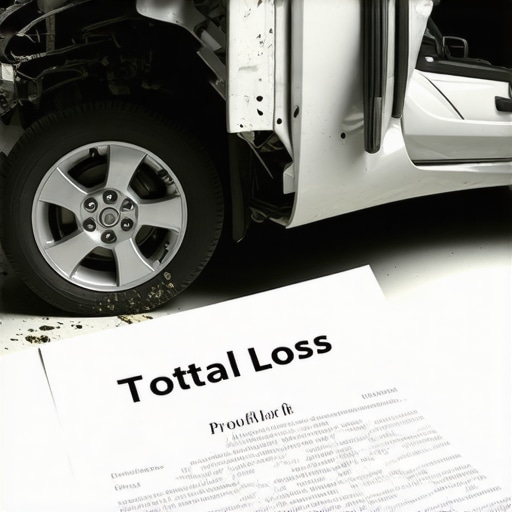
I spent a week deconstructing a high-net-worth car insurance policy after a fire. The owner thought they were fully covered until they realized their guaranteed replacement cost had a cap that was set in 2012 dollars. This same mathematical negligence happens every day in the world of fender benders. I recently reviewed a claim where a simple bumper tap on a late-model SUV led to a denial of total loss status. The carrier insisted on a six thousand dollar repair. We commissioned a forensic line-item audit. That single document proved the frame was out of alignment by four millimeters. The car was a total loss. The carrier blinked and wrote a check for fifty-two thousand dollars. This is the reality of the industry. Carriers are not your neighbor. They are financial entities managing loss ratios. They use software designed to minimize payouts. If you want to win, you must speak their language of actuarial certainty.
The math of the seventy percent threshold
A car is a total loss when the cost of repair plus the salvage value exceeds the actual cash value of the vehicle. Most states use a specific percentage, often between seventy and eighty percent, to trigger a mandatory total loss. This calculation determines if a vehicle is legally repairable or if it must be branded with a salvage title. The carrier wants the repair cost to stay just below this line. They want to avoid the high cost of a full payout. You must prove the math is wrong. You need to show that the actual cash value is higher or the repair cost is deeper than their estimate suggests. This is not about feelings. This is about the rigid application of state statutes and policy language. In the world of car insurance, the estimate provided by the carrier is a opening bid, not a final verdict. It is an invitation to a mathematical duel.
The specific document that wins the war
An Independent Certified Appraisal Report is the only document that successfully forces a carrier to total a vehicle after a fender bender. This document is not a simple body shop estimate. It is a comprehensive forensic analysis performed by a licensed independent appraiser. It includes a market valuation based on localized sales data of identical vehicles. It also includes a teardown analysis that identifies hidden structural damage that standard adjusters ignore. When you present this report, you are no longer a complaining policyholder. You are a litigant with evidence. This report functions as a legal insurance policy against lowball offers. It strips away the carrier’s ability to claim ignorance of the vehicle’s true state. If you rely on the carrier’s internal software, you lose. If you bring an independent audit, the carrier must respond to the data or risk a bad faith lawsuit.
“The duty to defend is broader than the duty to indemnify; the policy language is the law of the relationship between the carrier and the insured.” – Contractual Law Maxim
The software bias in modern car insurance
Insurance carriers use proprietary software like CCC One or Mitchell to generate artificially low actual cash value reports for totaled vehicles. These systems often select comparable vehicles that are not truly comparable. They might pick a vehicle with higher mileage or fewer options to drag down your settlement. They call it a market survey. I call it a systematic reduction of liability. When you look at their report, check the line items for adjustments. They will deduct value for minor wear and tear that is standard for any used car. This is where business insurance principles apply to your personal car. You are managing an asset. The carrier is trying to depreciate that asset faster than reality allows. Best insurance practices dictate that you must audit these software-generated reports line by line. Look for the missing options. Look for the geographic bias in the sales data. If they use a car sold two hundred miles away, the data is flawed.
| Feature | Actual Cash Value (ACV) | Replacement Cost Value (RCV) |
|---|---|---|
| Calculation | Market value minus depreciation | Cost to buy a new identical car |
| Policy Type | Standard for most car insurance | Rare and expensive endorsement |
| Payout | Lower, reflects used car status | Higher, reflects showroom price |
| Applicability | High-limit commercial and personal | High-net-worth individual policies |
The audit of a biased estimate
A forensic audit of an insurance estimate identifies missing labor hours and omitted safety procedures required by the manufacturer. Most adjusters use a flat-rate manual that does not account for the complexity of modern sensors and calibrations. If your car has advanced driver assistance systems, a fender bender is never just a fender bender. It is a recalibration event. A proper audit will list the specific OEM procedures that the carrier left out to save money. This is where health insurance logic intersects with your vehicle. If the car is not repaired to original equipment manufacturer standards, the safety systems may fail in a second impact. You are not just fighting for money. You are fighting for the structural integrity of a machine that protects your life. The audit document proves that the repair is more expensive than the carrier admits, pushing the car over the total loss threshold.
- Verify all vehicle options and trim levels are accurately listed
- Check for localized comparable sales within a 50-mile radius
- Identify hidden labor costs for structural recalibration
- Confirm the use of original equipment manufacturer (OEM) parts in the estimate
- Challenge arbitrary depreciation percentages on wear items
- Request the full valuation methodology from the carrier
The salvage value trap
Carriers often manipulate salvage value estimates to keep a vehicle from being declared a total loss in high-value claims. If the salvage value is high, the carrier has more incentive to total the car. If the salvage value is low, they might try to force a repair. I have seen cases where carriers use ghost bids from salvage yards to justify their numbers. This is a clinical manipulation of the loss-cost model. You must verify what your car is worth as scrap. If the carrier claims the salvage value is negligible, they are likely trying to avoid a total loss payout. This is a common tactic in both personal and business insurance scenarios. The numbers must be grounded in the actual secondary market for parts. Aluminum-intensive vehicles have high salvage value. Carbon fiber components do not. The materials of your car dictate the math of its demise.
“The primary purpose of insurance regulation is to protect the solvency of the insurance companies while ensuring fair treatment of the policyholders through standardized forms.” – NAIC Standard
The legal reality of actual cash value
Actual cash value is a legal term defined by the local market price of a vehicle immediately before the loss occurred. It is not a blue book value. It is not what you owe on your loan. If you have a car loan that is higher than the ACV, you are underwater. This is why gap insurance exists. However, even without gap insurance, you are entitled to the fair market value. In many jurisdictions, the Valued Policy Law dictates how these settlements are handled. If the carrier fails to provide a comparable vehicle at the price they state, they are in breach of contract. This is the heart of car insurance litigation. The document you need must prove that their ACV is a mathematical fiction. You do this by providing three real-world examples of cars for sale in your zip code that cost more than their offer.
The connection to health insurance and personal injury
A total loss claim often precedes a health insurance subrogation event where the carrier seeks to recover medical payouts from the at-fault party. If your car is a total loss, the force of the impact was likely significant. This triggers an investigation into personal injury protection or medical payments coverage. The forensic report that totals your car is also evidence of the kinetic energy involved in the crash. This is vital for your legal team. If a car is totaled, the argument for soft tissue injury or structural bodily harm becomes much stronger. The carrier knows this. They hate totaling cars because it validates the severity of the accident. They would rather say it was a minor fix. This keeps the car insurance payout low and the health insurance liability manageable. You must break this cycle with the independent appraisal.
The best insurance is a contract you read
Finding the best insurance requires reading the manuscript endorsements that limit your right to an independent appraisal. Some policies now include clauses that force you into internal arbitration or limit your ability to challenge their valuation software. This is a predatory trend in the industry. You want a policy that honors the right to appraisal. This clause allows you to hire your own expert if you and the carrier disagree on the value of the loss. It is the most powerful tool in your contract. Without it, you are at the mercy of the carrier’s internal math. Always look for a policy that offers replacement cost for the first two years of ownership. This removes the entire argument over actual cash value. It turns a complex legal fight into a simple transaction. The best insurance is the one that has the fewest loopholes for the carrier to crawl through.