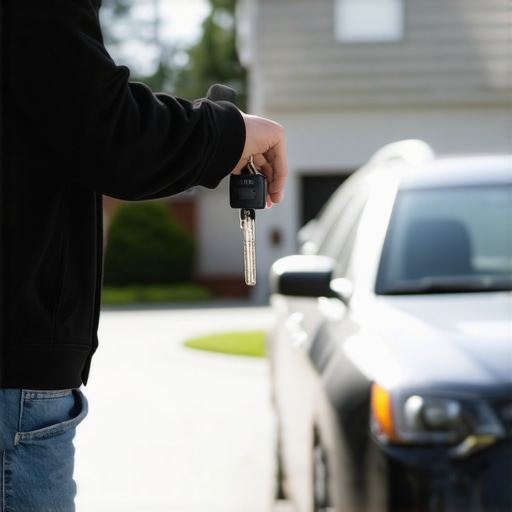
I watched a client lose their right to recover damages from a negligent contractor because they signed a waiver of subrogation in a simple service contract without realizing they were voiding their own insurance coverage. This is the forensic reality of indemnity. It is not about being a good friend. It is about the cold math of risk transfer. When you hand your keys to someone else, you are not just lending a vehicle. You are lending your entire financial future and your insurance loss history. The carrier does not care about your friendship. The carrier cares about the contract.
The contract follows the steel
In most jurisdictions, auto insurance follows the vehicle, meaning the owner’s policy acts as the primary layer of protection. When a friend drives your car, your liability limits and loss history are first in line to be depleted if an accident occurs. This is the fundamental principle of the omnibus clause. It dictates that coverage extends to any person using the vehicle with the permission of the named insured. If that friend causes a multi-car pileup, your policy pays first. Your friend’s policy, if they even have one, usually only acts as excess coverage. This means your limits are exhausted before their carrier even looks at the file. You are essentially providing a free subsidy to your friend’s risk profile at the expense of your own equity.
“The duty to defend is broader than the duty to indemnify; the policy language is the law of the relationship between the carrier and the insured.” – Contractual Law Maxim
The mathematical fiction of full coverage
The term full coverage does not exist in a forensic underwriting audit because it ignores the specific policy exclusions and liability caps. Most people carry the state minimums or slightly above, which is a recipe for disaster. If your friend causes a catastrophic injury, the medical bills will likely exceed your $50,000 or $100,000 limit within forty-eight hours. At that point, the claimant’s attorney will look for secondary targets. Since you are the owner of the vehicle, you are liable under the doctrine of vicarious liability. The legal system views the car as a dangerous instrument. You are responsible for its use. This is where the bleed begins. Your personal assets are now on the table because you wanted to be helpful on a Saturday afternoon.
The ghost in the fine print
Every policy has a permissive use clause that sounds simple but is actually a minefield of conditions. If your friend lives with you but is not listed on the policy, many carriers will deny the claim entirely. This is the unlisted household member exclusion. Underwriters hate undisclosed risk. If the carrier finds out the friend has regular access to the keys, they will argue you committed material misrepresentation by not listing them. The claim is dead. The lawsuit is yours to fund. I have seen families lose their homes because they let a cousin stay for a month and drive the car to the grocery store once. The carrier viewed it as a permanent risk change that was never priced into the premium.
[IMAGE_PLACEHOLDER]
Why your friend is a walking exclusion
Liability is not the only concern when the car is out of your sight. Physical damage coverage like collision and comprehensive also follows the car, but the deductible remains your responsibility. If your friend totals the car, you are the one paying the $1,000 or $2,500 deductible. You are the one who gets the non-renewal notice at the end of the term. You are the one whose CLUE report (Comprehensive Loss Underwriting Exchange) is stained for the next five years. Your friend walks away. You stay behind to pay the higher premiums. The actuarial logic is simple. You have demonstrated poor judgment in risk management by allowing an unauthorized operator to control a high-value asset. The carrier will price that poor judgment accordingly.
| Feature | Primary Policy (Owner) | Excess Policy (Driver) |
|---|---|---|
| Liability Coverage | First dollar response | Only after owner’s limits are gone |
| Collision Coverage | Subject to owner’s deductible | Usually non-existent |
| Premium Impact | 100% impact on owner | Zero impact on driver |
| Legal Defense | Carrier provides attorney | Only if limits are breached |
The financial ruin of vicarious liability
Vicarious liability is a legal doctrine that holds the owner of a vehicle responsible for the actions of the driver. Even if you were not in the car, you are the proximate cause of the risk because you enabled the driver. In high-stakes litigation, the owner is often the primary target because they are more likely to have stable assets or a larger umbrella policy. The plaintiff’s attorney does not care about the driver’s intentions. They care about the deep pockets. If you do not have a signed waiver of liability or a formal rental agreement that specifies indemnity, you are flying blind. You have essentially given your friend a blank check signed with your name.
“Insurance is a contract of indemnity where the insurer agrees to make the insured whole, subject to the specific limitations and conditions of the written instrument.” – ISO Regulatory Standard
The subrogation trap
Subrogation is the process where your insurance carrier sues the responsible party to get their money back. If your friend is at fault, your carrier might actually sue your friend. Most people do not realize this. You think the insurance company is just paying the claim. No. They are looking for someone to blame. If your friend was grossly negligent, the carrier might pay the victim and then turn around and demand repayment from your friend. This creates a legal civil war between you, your friend, and your carrier. It destroys friendships and bank accounts simultaneously. The only way to prevent this is through complex waivers of subrogation, which almost no standard personal auto policy allows without prior written consent.
The three words that kill a claim
The words business use exclusion are the most dangerous in the entire contract. If your friend is driving your car for a side gig, like delivering food or groceries, and they crash, you have zero coverage. Period. Most personal policies explicitly exclude any activity related to the transportation of goods for hire. The carrier will look at the driver’s phone, see the app was open, and close the file. You are now responsible for the property damage and the medical bills of every party involved. This is the ultimate betrayal. You thought you were helping a friend make a few bucks. Instead, you just bankrolled a six-figure lawsuit against yourself.
Five steps to protect your equity
Before you ever hand over the keys, you must treat the transaction like a commercial underwriting event. If you cannot answer these questions, do not give up the keys. The risk is too high. The reward is non-existent. You are essentially acting as an unlicensed insurance company for your friend.
- Verify the driver has their own active high-limit liability policy with a non-owned auto endorsement.
- Confirm the driver is not a household resident who should have been listed on your policy.
- Restrict use to a specific radius and a specific timeframe to limit exposure.
- Explicitly forbid any commercial activity or ride-sharing use during the loan period.
- Check your own umbrella policy to ensure it does not have a restrictive operator clause.
The regional peril logic
In states like Florida or California, the litigation environment is so aggressive that a minor fender bender can quickly escalate into a bad faith claim. In Florida, the Dangerous Instrumentality Doctrine is particularly harsh on owners. It makes the owner of a vehicle strictly liable for any damages caused by anyone they allow to drive it. There is no escape. There is no defense of ‘I didn’t know they were a bad driver.’ The law assumes you knew the risk the moment you gave them the keys. In these jurisdictions, the lack of a formal waiver is not just a mistake. It is financial suicide. You are essentially handing over a loaded weapon and hoping for the best.