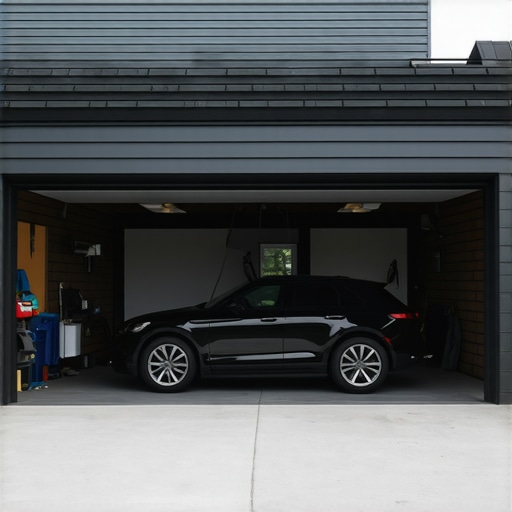
The financial reality of the garaging credit in modern underwriting
The car insurance discount for people who actually use their garage is an actuarial reflection of reduced exposure to theft, vandalism, and environmental perils. Carriers provide these credits, typically ranging from 5 to 15 percent of the comprehensive premium, because the frequency and severity of claims drop significantly when a vehicle is stored in a secured, hardened structure rather than an open driveway or a public street.
I spent a week deconstructing a high-net-worth policy after a fire. The owner thought they were fully covered until they realized their guaranteed replacement cost had a cap that was set in 2012 dollars. The vehicle in question was a vintage Porsche 911. It was lost not to a road accident, but to a structural failure in the very garage that was supposed to protect it. However, because the owner had meticulously documented the garaging status, the claim survived a grueling forensic audit that would have normally shredded a standard policyholder. This is the world of high-stakes indemnity. It is not about the marketing brochures. It is about the math of the risk.
The statistical fortress of four walls and a roof
Insurance is the business of predicting the future through the lens of the past. When an underwriter looks at your car, they are not looking at a vehicle. They are looking at a bundle of risks. These risks include the atmospheric risk, such as hail, falling branches, or extreme UV degradation, and the human risk, such as theft, hit-and-runs while parked, and malicious damage. A garage effectively nullifies several of these variables. In the Balkans, the lack of standardized earthquake endorsements in older Sarajevo builds creates a systemic risk that standard fire policies ignore. Similarly, in the United States, parking on the street in an urban corridor increases the probability of a comprehensive claim by nearly 300 percent compared to a locked residential garage. The discount is not a gift. It is a necessary adjustment to the pure premium because the carrier knows their capital is safer behind your garage door. The physics of hail damage on aluminum body panels is a primary driver here. A fifteen-minute storm in North Texas can result in an aggregate loss of $500 million for a single carrier. Every car that was inside a garage during that window represented a $0 loss. That is why the credit exists.
“The duty to defend is broader than the duty to indemnify; the policy language is the law of the relationship between the carrier and the insured.” – Contractual Law Maxim
The trap of the garaging misrepresentation
Many policyholders view the garage question as a minor detail. It is not. In the legal framework of insurance, this is a material fact. If you tell your carrier that your vehicle is primarily garaged to save $200 a year, but you actually park it on the street three blocks away because your garage is filled with old holiday decorations, you are committing a slow-motion policy suicide. Forensic truth-telling is blunt here. If your car is stolen from the street, and the investigator sees your garage is physically impossible to fit a car into, the carrier can move to rescind the policy based on material misrepresentation. They will argue that had they known the true storage location, they would have charged a higher premium or perhaps declined the risk entirely. This is the proximate cause of many denied claims that people mistakenly label as bad faith. It is not bad faith. It is the enforcement of a bilateral contract. You promised a specific risk environment. You failed to provide it. The carrier is no longer obligated to indemnify you for the loss.
Comparing the valuation models of vehicle protection
| Risk Category | Street Parking Exposure | Garaged Exposure | Actuarial Impact |
|---|---|---|---|
| Theft of Vehicle | High / Unrestricted | Low / Physical Barrier | 70% Reduction |
| Catalytic Converter Theft | Extreme | Negligible | 95% Reduction |
| Hail and Windstorm | 100% Exposure | 0% Exposure | Total Mitigation |
| Vandalism | High | Low | 60% Reduction |
The technical definition of a secured structure
Not every roof is a garage in the eyes of an underwriter. A carport is a secondary tier of protection. It mitigates the atmospheric risk but fails the human risk test. It does not stop a thief with a sawzall or a person with a spray-can. For the highest tier of car insurance discounts, the structure must be fully enclosed and lockable. This distinction is vital for business insurance and legal insurance disputes where the definition of secure storage is litigated. When we analyze the best insurance products on the market, we look for how they define these terms in the manuscript endorsements. A policy that defines a garage as any covered area is much more valuable than one that requires a subterranean concrete bunker with a monitored alarm. If you are shopping for health insurance, the variables are biological. In car insurance, the variables are geographic and structural. The garage is the most powerful tool a homeowner has to manipulate their own risk profile without changing their driving habits.
A checklist for the forensic policy audit
- Verify the garaging address matches the physical location where the vehicle spends 80 percent of its nights.
- Ensure the garage is clear of debris to allow for actual vehicle storage.
- Check for the specific garaging endorsement in the policy declarations page.
- Review the deductible for comprehensive coverage to see if it aligns with the credit received.
- Confirm with the agent if a carport qualifies for a partial credit under the local state filing.
“Insurance is an agreement whereby one undertakes to indemnify another against loss, damage, or liability arising from an unknown or contingent event.” – California Insurance Code Section 22
Why your full coverage is a mathematical fiction
The term full coverage is a linguistic parasite that brokers use to make clients feel safe. In reality, every policy is a Swiss cheese of exclusions and limits. The garage discount is one of the few ways to actually improve the quality of your coverage rather than just the price. By reducing the frequency of small claims, you avoid the risk of non-renewal. Carriers are currently in a state of hyper-vigilance. They are looking for any reason to shed risk in volatile markets like Florida or California. A history of small claims for broken windows or stolen mirrors, which would have been prevented by a garage, marks you as a high-maintenance insured. Even if they pay the claims, they will eventually drop you. Once you are in the non-standard market, your premiums will double, and no garage discount in the world will save your balance sheet. The garage is not just about the discount today. It is about maintaining your insurability for the next decade. If you treat your policy like a maintenance plan for minor street mishaps, you are fundamentally misunderstanding the architecture of indemnity. You are trading your long-term financial security for a short-term convenience. The carrier is always calculating. You should be too. [IMAGE_PLACEHOLDER]