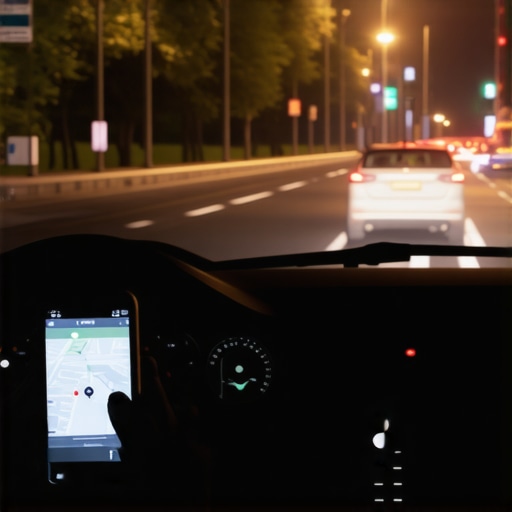
I spent a week deconstructing a high-net-worth policy after a fire. The owner thought they were fully covered until they realized their guaranteed replacement cost had a cap that was set in 2012 dollars. That case taught me that what you think you own is often just a lease on a promise that the carrier can revoke through a single sub-clause. Car insurance is currently undergoing a similar, silent transformation. Most drivers believe they are paying for their driving record, their age, and their zip code. The reality is far more clinical. You are likely being tracked through a digital matrix of sensors that log your every acceleration, your every hard brake, and most importantly, your late-night movements. The carrier is not your friend. The carrier is a risk-mitigation machine. If you are on the road at 2 AM, you are no longer a person to them. You are a statistical outlier with a high probability of a total-loss event. This is the autopsy of the modern telematics surveillance state.
The surveillance state in your glove box
Telematics tracking occurs when your insurer collects real-time data via mobile apps, factory-installed hardware, or plug-in devices. They monitor speed, braking force, and time of day to adjust premiums. You can identify this by checking your policy for usage-based insurance endorsements or reviewing the data sharing permissions in your vehicle’s connected services menu. Most modern vehicles manufactured after 2020 are equipped with embedded cellular modems that transmit telemetry directly to the manufacturer. This data is then sold to aggregators like LexisNexis or Verisk. When you apply for car insurance or business insurance, the underwriter pulls a report that looks much like a credit score, but it is built on your driving physics. If you see a discount labeled as a Smart Ride or Safe Driver program, you have already opted into a surveillance program. The carrier uses these data points to build a forensic profile of your risk profile without ever needing to see your car.
Why your midnight drive costs more
Actuarial data shows that driving between the hours of 11 PM and 4 AM carries a 300 percent higher risk of fatality compared to daylight hours. Insurers use telematics to penalize this behavior because late-night driving correlates with fatigue, impaired visibility, and a higher density of intoxicated drivers. Even if you are perfectly sober, the math is against you. Every minute you spend on the road during these hours increases your loss-cost projection in the carrier’s algorithm. This is why your best insurance quote might suddenly spike at renewal even if you have no tickets or accidents. The system has flagged your routine 1 AM gym trips as a high-risk habit. They do not care about your reasons. They only care about the probability of a claim. The actuarial zooming on this specific metric is intense. Carriers look for frequency and duration. One late-night drive is a fluke. Five late-night drives in a month is a pattern that triggers a rate adjustment. They call this a surcharge, but it is effectively a privacy tax.
“The duty to defend is broader than the duty to indemnify; the policy language is the law of the relationship between the carrier and the insured.” – Contractual Law Maxim
| Data Point | Traditional Weight | Telematics Weight | Impact on Premium |
|---|---|---|---|
| Hard Braking | Low | High | 15% Increase |
| Midnight Driving | Moderate | Extreme | 25% Increase |
| Annual Mileage | High | Absolute | Variable |
| Rapid Acceleration | None | Moderate | 10% Increase |
The invisible data broker network
Data brokers like LexisNexis and Verisk act as the central clearinghouse for your driving telemetry, selling it to dozens of insurance carriers. Even if you never download your insurance company app, your car manufacturer might be leaking your data through a connected services agreement you signed at the dealership. This is a massive information gain for insurers who previously relied on self-reported data. Now, they have the forensic truth. They know if you take corners too fast. They know if you frequently exceed the speed limit on the highway. This data is stored in a consumer disclosure report. You have a legal right to request this report under the Fair Credit Reporting Act, but few drivers ever do. When you see your rates for health insurance or business insurance remain stable while your car insurance climbs, the culprit is often this invisible ledger of your driving sins. The carrier uses these reports to justify premium hikes that would otherwise seem arbitrary.
The three words that kill your privacy
The phrase Connected Services Agreement is the primary legal mechanism used by car manufacturers to track and sell your personal driving behavior. When you click accept on the infotainment screen to use navigation or remote start features, you are often signing away your right to driving privacy. These agreements are purposefully dense. They hide the data-sharing clauses behind pages of technical specifications about software updates. The forensic reality is that your car is a mobile data terminal. It pings the manufacturer’s servers every few seconds with your GPS coordinates and speed. This is how the carrier knows you were driving late at night in a neighborhood they consider high-risk. While most people think a higher premium means better insurance, the truth is that carriers often raise prices on loyal customers while stripping away silent coverage in the fine print. They use your own data to price you out of the market if your habits do not align with their ideal risk profile.
- Check your vehicle’s infotainment settings for a Data Privacy or Connected Services menu.
- Review your insurance policy declarations page for any mention of Telematics or Usage-Based Insurance.
- Request your LexisNexis Consumer Disclosure Report to see what driving data is being shared.
- Turn off Location Services for any insurance-related apps on your smartphone.
- Opt out of manufacturer programs like OnStar Smart Driver or FordPass rewards that track behavior.
How to scrub your driving record
Scrubbing your digital driving record requires a multi-front approach involving both the vehicle manufacturer and the third-party data aggregators who store your telemetry. You must contact the privacy office of your car brand and formally withdraw consent for data sharing for insurance purposes. Furthermore, you must dispute any inaccurate data on your LexisNexis report. This is not a simple process. It requires persistence. You are fighting against a system designed to maximize the carrier’s profit by minimizing their exposure. If you are looking for the best insurance, you might need to seek out carriers that explicitly state they do not use telematics for rate setting, though these are becoming rare. Legal insurance can sometimes help you navigate the privacy disputes involved in these cases. Ultimately, the only way to ensure you are not being tracked is to drive a vehicle that lacks a cellular modem or to be extremely vigilant about every digital contract you sign.
“Insurers must provide clear and conspicuous notice of any reduction in coverage or change in the method of risk assessment.” – NAIC Model Regulation Guidelines