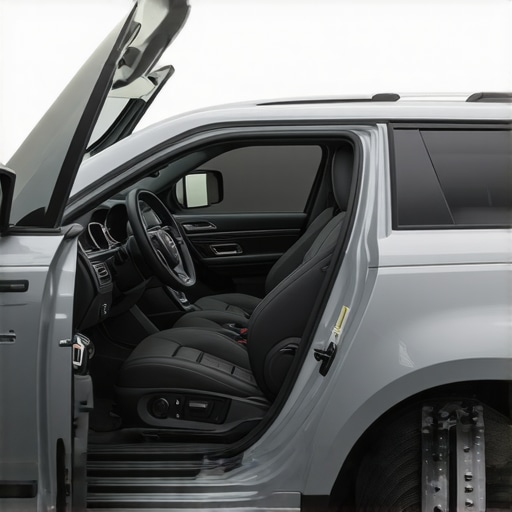
I spent a week deconstructing a high-end automotive claim after a catastrophic fire. The owner was convinced they were fully covered until they realized their guaranteed replacement cost had a cap set in outdated dollars. The carrier tried to value the vehicle as a base model. They ignored the fourteen specific safety sensors that transformed a standard sedan into a fortress of technical engineering. This is the reality of the insurance industry. Carriers do not look for ways to pay you. They look for ways to reconcile a loss against a spreadsheet that prioritizes the lowest possible denominator. Most adjusters are not forensic experts. They are data entry clerks who rely on automated valuation systems. These systems often fail to recognize the difference between a standard braking system and a high-frequency collision avoidance array. If your vehicle is reduced to a charred frame, the burden of proof rests entirely on your shoulders. You must prove the existence of every sensor, every camera, and every line of code that added value to that machine.
The ghost in the VIN
Vehicle Identification Numbers serve as the primary identifier for insurance carriers during the total loss process, yet they frequently fail to decode optional safety equipment. Most valuation software used by adjusters, such as CCC Intelligent Solutions or Mitchell, pulls data from the VIN that only identifies the base trim. This creates a valuation gap that can cost policyholders thousands of dollars in unpaid indemnity.
The actuarial reality is simple. Carriers use the most conservative data available. If the VIN says it is a mid-level trim, the software assumes it has the mid-level safety features. It will not account for the Driver Assistance Plus package you paid five thousand dollars for at the dealership. This is a mathematical fiction designed to protect the carrier’s loss ratio. To combat this, you must understand that the VIN is not the final word. It is a starting point for an argument. You need the original build sheet. This document is the DNA of your vehicle. It lists every specific component installed at the factory. Without it, you are arguing against an algorithm. Algorithms do not have ears. They only have data points. If you cannot provide a data point that contradicts the VIN decode, you will lose. The insurance contract is a legal fortress. You need the right key to enter. That key is documentation. I have seen claims where the difference between a VIN-based offer and a build-sheet-based offer was twenty percent of the total vehicle value. In the world of high-limit indemnity, twenty percent is the difference between a recovery and a financial disaster.
“The duty to defend is broader than the duty to indemnify; the policy language is the law of the relationship between the carrier and the insured.” – Contractual Law Maxim
Why your full coverage is a mathematical fiction
Actual Cash Value is calculated by subtracting depreciation from the replacement cost, but carriers often ignore the residual value of safety technology. Most auto insurance policies are written to provide indemnity, which means returning you to the same financial position as before the loss. However, the valuation engines used by insurance companies often treat safety features as standard equipment with zero added value.
This is where the forensic truth-teller sees the bleed. The carrier will argue that a safety feature like blind-spot monitoring is so common that it adds no market value. This is a lie. Market value is determined by what a willing buyer would pay a willing seller. A buyer will always pay more for a vehicle with an active collision avoidance system than one without. The carrier’s logic is designed to suppress the payout. They use a method called comparable searching. They look for similar cars for sale in your area. The problem is that these listings often lack detailed feature descriptions. The adjuster will find three cars within fifty miles. They will see the price. They will not see that those cars lack the thermal imaging night vision or the pedestrian detection logic that your car possessed. You are being compared to inferior machines. This is not indemnity. This is a systemic failure of the valuation process. You must demand a line-item adjustment for every safety feature. If the adjuster refuses, you must invoke the appraisal clause. This is a contractual right that allows you to hire an independent appraiser to challenge the carrier’s numbers. It is the only way to break the algorithm’s grip on your money.
| Safety Component | Valuation Impact | Primary Evidence Source |
|---|---|---|
| Adaptive Cruise Control | High | Manufacturer Build Sheet |
| Lane Keep Assist | Moderate | Original Window Sticker |
| Night Vision Sensors | Extreme | Dealer Purchase Agreement |
| Collision Avoidance System | High | Software Version Logs |
The three words that kill a claim
Proximate cause and pre-existing conditions are the primary tools used by underwriters to deny total loss enhancements. If a car insurance carrier can argue that a safety sensor was damaged before the accident, they will exclude its replacement value from the settlement. This is why service records are the most critical part of your claim file.
I once reviewed a case where a Tesla was totaled. The carrier tried to deny the value of the Full Self-Driving hardware. They claimed the sensors were out of calibration at the time of the crash. They based this on a single error code from six months prior. It was a clinical execution of a claim reduction. We fought back with the service logs from the cloud. Those logs showed a successful calibration thirty minutes before the impact. The carrier had to fold. This is why you must maintain a digital paper trail. If your car has advanced safety features, you must have records showing they were functional. This includes software updates, sensor calibrations after windshield replacements, and routine diagnostics. Without these, the carrier will assume the tech was broken. They will treat your high-tech vehicle like a pile of scrap metal. They will pay you for the steel and the plastic. They will not pay you for the intelligence of the machine. The law of the relationship is dictated by the policy, but the outcome is dictated by the evidence. You are a litigant in a non-judicial proceeding. Act like one. Collect the data. Store it in the cloud. Never assume the carrier has your best interest at heart. Their interest is the bottom line. Your interest is the truth.
“Actual Cash Value is not a fixed number but a range of probability influenced by local market conditions and specific vehicle enhancements.” – NAIC Valuation Guidelines
The audit of a destroyed asset
Forensic evidence of safety equipment can often be recovered even after a catastrophic total loss through telematics data and cloud storage. Modern connected vehicles transmit diagnostic data to the manufacturer in real-time, providing an irrefutable record of the vehicle configuration and safety status at the moment of impact.
If the car is a melted husk, the physical evidence is gone. You cannot point to a camera that has turned into a puddle of glass. You must go to the source. The manufacturer’s servers hold the truth. Companies like Ford, GM, and BMW keep detailed records of every VIN’s build and its service history. You must request a full data dump. This is often called a vehicle history report, but you need the technical version. You need the list of RPOs (Regular Production Options). In the Balkan regions or other areas where insurance standards vary, this becomes even more critical. Standardized earthquake endorsements or regional fire policies might ignore these details, but the manufacturer’s data is global. It is a universal language. When you present a technical build sheet to an adjuster, you are shifting the burden of proof back to them. Now they have to explain why they are ignoring a factory-installed component. They hate this. It creates more work. It requires them to justify their low-ball offer to their supervisor. Most adjusters will eventually give in if the documentation is overwhelming. They want to close the file. They want you to go away. Give them so much evidence that paying you is the easiest path to closing the file.
- Download your vehicle telematics report from the manufacturer’s app.
- Contact the original selling dealer for a duplicate of the Monroney label.
- Obtain all service records related to ADAS calibration and software updates.
- Create a side-by-side comparison of your vehicle versus the carrier’s comparables.
- Submit a formal demand letter citing the specific missing features and their value.
The legal reality of specialized indemnity
Bad faith litigation often centers on the insurance company ignoring documented evidence of vehicle value during a total loss settlement. If a carrier refuses to acknowledge safety features that are clearly listed on a build sheet, they may be in violation of state insurance regulations regarding fair claims practices.
This is the nuclear option. You do not start here, but you must be prepared to go here. In states like California or Florida, the departments of insurance have strict rules about how total losses are calculated. They require carriers to use fair and consistent methods. If you can show that the carrier ignored your evidence, you have leverage. This is where the High-Stakes Lawyer persona comes into play. You stop being a victim. You become a predator. You remind the adjuster that their failure to consider relevant data points is a sign of bad faith. Mention the state-specific Valued Policy Laws if they apply. Mention the specific administrative codes that govern automotive settlements. The tone of the conversation changes when you start quoting the law. The adjuster realizes they are no longer dealing with a civilian. They are dealing with someone who understands the rules of the game. The game is rigged, but it has rules. If you know the rules better than the dealer, you can win. The carrier wants a cheap settlement. You want an accurate one. Accuracy is expensive for them. It is necessary for you. Do not settle for the first offer. Do not settle for the second. Settle when the math reflects the reality of the machine you lost. Insurance is a contract of indemnity, not a gift. You paid for that coverage with your premiums. Every dollar of that safety tech was insured. Make them pay for it.