The ghost in the fine print
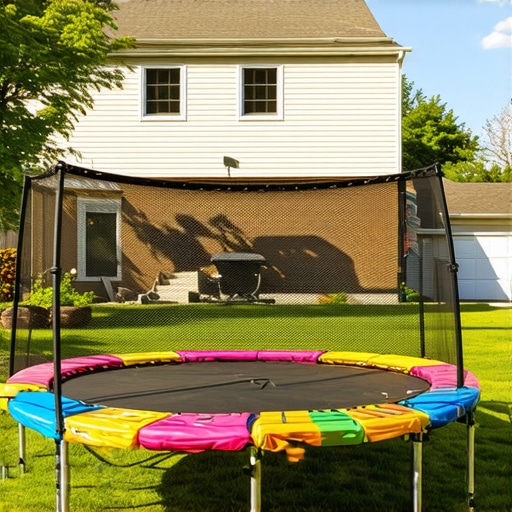
Homeowner’s insurance coverage for trampolines is often restricted or entirely excluded because carriers define these devices as a high-frequency liability risk. Most insurance contracts contain underwriting guidelines that categorize trampolines as attractive nuisances, meaning the carrier may deny claims or cancel the policy if the device lacks specific safety features like netting and anchoring. I recently reviewed a claim where a family lost their entire liability defense because of a three-word endorsement buried on page 84 that the broker never even mentioned to the client. The policy explicitly stated that any recreational device with a frame exceeding twelve feet was a prohibited exposure. The family had a fourteen-foot model. The claim was dead before the first lawyer was even retained. This is not an anomaly. It is the cold reality of the insurance industry. Carriers do not want to subsidize your child’s spinal injury or a neighbor’s broken leg. They are in the business of managing actuarial probability, and the probability of a trampoline accident is statistically inevitable given a long enough timeline.
The math of gravity and the actuarial void
Actuarial loss-cost modeling indicates that backyard trampolines contribute to a significant percentage of homeowner liability payouts, leading many best insurance companies to exclude them from standard HO-3 forms. The insurance department of most states allows carriers to set their own risk appetite, which often results in policy cancellations or premium hikes upon the discovery of a trampoline. From a forensic underwriting perspective, the trampoline is a concentrated point of proximate cause. It is a legal magnet for tort litigation. When a guest is injured, the medical payments portion of your health insurance might cover the initial ER visit, but it will not stop the injured party’s health insurance provider from pursuing subrogation against your homeowner’s policy. If your insurance agent was not notified of the trampoline, the carrier has a valid path to deny the indemnification based on a material change in risk. They will argue that the contract was signed under one set of conditions and you changed those conditions without notification. This is the subrogation trap that catches thousands of families every year. They think they are fully covered until the forensic autopsy of their policy language begins.
“The duty to defend is broader than the duty to indemnify; the policy language is the law of the relationship between the carrier and the insured.” – Contractual Law Maxim
Why your backyard is a mathematical liability
Legal insurance experts note that the doctrine of attractive nuisance applies specifically to items that attract children who cannot appreciate the danger, such as trampolines or swimming pools. This doctrine creates a strict liability environment where the homeowner is often found negligent regardless of whether the child was invited onto the property. In the world of business insurance and high-limit commercial indemnity, we call this a catastrophic exposure. The average car insurance claim is a minor fender bender compared to the litigation costs of a traumatic brain injury sustained on a backyard trampoline. If you are shopping for the best insurance, you need to realize that the lowest premium often correlates with the most aggressive exclusionary language. Some carriers will write a policy but include a ‘no-trampoline’ warranty. If you violate that warranty, you have effectively nullified your liability coverage for any incident on the property, not just trampoline-related ones. This is the contractual betrayal that occurs when policyholders treat their insurance like a simple commodity rather than a complex legal fortress.
| Policy Feature | Standard HO-3 (Basic) | High-Risk Endorsement | Umbrella Policy Layer |
|---|---|---|---|
| Trampoline Liability | Usually Excluded | Covered with Surcharge | Secondary Coverage Only |
| Medical Payments | $1,000 – $5,000 Cap | Increased to $25,000 | N/A (Liability Focus) |
| Safety Requirements | None (Immediate Denial) | Netting, Anchor, Fence | Strict Adherence Required |
| Premium Impact | Low (Hidden Risks) | 15-30% Increase | Additional $200-$500/yr |
The three words that kill a claim
Forensic truth-tellers in the underwriting world look for phrases like ‘arising out of’ or ‘resulting from’ in the endorsements section of the insurance contract. These terms are used to broaden exclusions, ensuring that if a trampoline is even tangentially involved in a loss, the carrier is relieved of its duty to defend. While most people think a higher premium means ‘better’ insurance, the truth is that carriers often raise prices on loyal customers while stripping away ‘silent’ coverage in the fine print. You might be paying for legal insurance protections that are actually restricted by a manuscript endorsement you never signed. I have seen subrogation units recover hundreds of thousands of dollars from homeowners because they failed to disclose a ‘material fact’ during the application process. That material fact was a $300 trampoline from a big-box store. The insurance company does not care about your family’s fun. They care about the actuarial loss-cost ratio. If the math does not work, they will cut you loose. Your business insurance or car insurance agent might not mention these overlaps, but the forensic reality is that all your risks are interconnected. One denial can trigger a financial cascade that compromises your entire net worth.
“Insurance is a contract of utmost good faith, but the burden of disclosure often rests on the shoulders of the insured to ensure all material risks are declared.” – NAIC Risk Management Overview
The high cost of a childhood bounce
Personal liability coverage under Coverage E is intended to protect your assets, but insurance companies are increasingly moving toward named peril limitations for high-risk recreational items. If your policy does not specifically list the trampoline as a covered exposure, you are operating in a gray market of risk. In states like Florida or California, where the insurance market is already strained, a trampoline is often an automatic ‘no-quote’ for many carriers. They see the litigation crisis and decide that the premium they could charge is not worth the legal exposure. You must perform a policy audit. Look for the ‘Schedule of Exclusions.’ If you see ‘recreational equipment’ or ‘gymnastic apparatus,’ you are likely unprotected. Do not trust a verbal ‘you’re good’ from a broker. Brokers are not the ones who sign the checks during a settlement. The underwriter does. And the underwriter follows the contract to the letter. This is why legal insurance and umbrella policies are becoming necessary additions for any homeowner with a backyard that looks like an amusement park. The forensic truth is that most homeowners are one bounce away from bankruptcy because they didn’t read page 84.
How to audit your policy for hidden exclusions
- Review the Declaration Page for any Endorsement Codes that reference ‘Recreational Equipment’ or ‘Liability Limitations.’
- Confirm with your insurance agent in writing that the trampoline is an accepted risk on the underwriting file.
- Check your Personal Umbrella Policy (PUP) to see if it requires the primary homeowner policy to have specific liability limits for trampolines.
- Inspect the physical safety measures on your trampoline to ensure they meet the ISO standards for risk mitigation.
- Request a full certified copy of your policy to read the manuscript endorsements that are often omitted from the summary.
The final audit of your insurance portfolio should be clinical. The carrier lied if they told you ‘everything is covered.’ Nothing is ever ‘everything.’ Every contract has a boundary. Every indemnity has a limit. Your job as the insured is to find those boundaries before the plaintiff’s attorney does. If you wait until the claim is filed to understand your exclusions, you have already lost the battle of the contract. The best insurance is the one where the underwriter knows exactly what you have and has priced the risk accordingly. Anything else is just a mathematical fiction that will evaporate when the gravity of a lawsuit hits. Stop looking at the monthly premium and start looking at the net recovery. That is how a Senior Risk Architect views the world. That is how you should view your home.