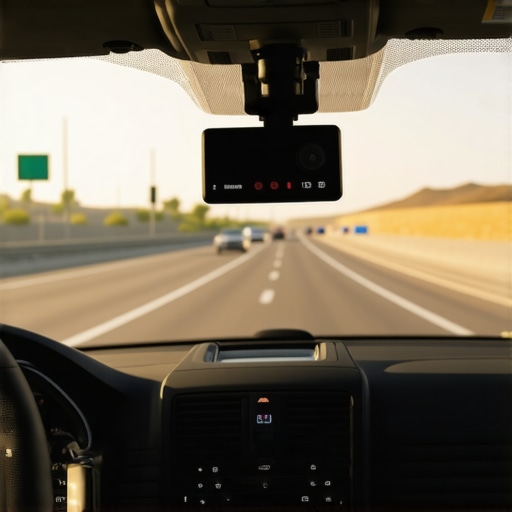
The electronic witness that never lies
Dashcams serve as the ultimate forensic tool to combat actuarial surcharge by providing hard data that contradicts fault determinations. When a carrier attempts to impose an unfair rate hike, the dashcam telemetry, GPS data, and timestamped video provide irrefutable evidence for subrogation departments to shift liability away from the insured.
I watched a client lose their right to recover damages from a negligent contractor because they signed a waiver of subrogation in a simple service contract without realizing they were voiding their own insurance coverage. That was a commercial property case, but the same logic applies to personal auto policies. Carriers are not your friends. They are calculators. They smell like stale office air and cold coffee. Their goal is to maximize the premium per unit of risk. When an accident occurs, the adjuster looks for any reason to assign a percentage of fault to you. Even 1% fault can, in some jurisdictions, trigger a massive re-evaluation of your risk profile. The dashcam is the only thing standing between your wallet and a decade of inflated premiums. It is a mathematical shield. It is a forensic necessity. Most brokers won’t tell you this because they don’t want to deal with the technical data. They just want the commission.
“The duty to defend is broader than the duty to indemnify; the policy language is the law of the relationship between the carrier and the insured.” – Contractual Law Maxim
The math behind the surcharge
Insurance premiums are dictated by loss-cost modeling and underwriting algorithms that penalize claim frequency and severity. An unfair rate hike occurs when the carrier misidentifies the proximate cause of an accident. By utilizing high-definition dashcam footage, you provide the actuarial proof needed to maintain a clean driving record and avoid surcharges.
Carriers use a process called subrogation to get their money back. If they can’t prove the other guy was 100% at fault, they might just raise your rates to cover the spread. It is cold. It is clinical. I have seen underwriters ignore police reports because the police report didn’t have the technical depth of a G-force sensor log. A dashcam with a built-in accelerometer provides that data. It shows the exact moment of impact and the speed of your vehicle. It proves you didn’t accelerate into the intersection. The carrier wants to see the bleed. They want to see the net recovery. If the video shows the other driver was texting, the carrier has a high probability of winning in subrogation. That is the only reason they will listen to you. They don’t care about your feelings. They care about the recovery of capital.
“An insurer’s determination of fault must be based on a reasonable investigation of all available evidence, including electronic recording and digital telemetry when provided by the insured.” – ISO General Principles of Underwriting
Why your full coverage is a mathematical fiction
The term full coverage is a marketing myth used by brokers to obscure the policy exclusions and indemnification limits hidden in the manuscript endorsements. To protect against rate hikes, you must use dashcam evidence to force the carrier to acknowledge non-fault status. This prevents the loss-ratio from impacting your future premiums and policy renewals.
When you see your premium jump by 30% after a minor fender bender, you are seeing the math of risk. The carrier has decided you are now a higher probability of loss. They don’t care that you have been a loyal customer for 20 years. Loyalty is not a variable in their software. The only way to stop the hike is to provide a forensic trace. You need the video. You need the metadata. You need to show that the proximate cause was entirely external to your actions. In highly litigious regions like Florida, your assignment of benefits clause is a ticking time bomb. Without video, you are at the mercy of the other driver’s lawyer. They will lie. The video will not. The video is the truth-teller.
Evidence Impact on Actuarial Risk
| Evidence Type | Fault Probability | Premium Impact | Recovery Chance |
|---|---|---|---|
| Verbal Statement | High (Subjective) | Significant Hike | Low |
| Police Report | Medium (Hearsay) | Moderate Hike | Medium |
| Dashcam Video | Low (Objective) | Zero Hike | High |
| GPS Telemetry | Lowest (Scientific) | Possible Discount | Maximum |
The three words that kill a claim
Insurance adjusters look for contributory negligence markers in recorded statements to justify denying coverage or increasing rates. Words like I think or maybe create ambiguity that the carrier uses to assign partial fault. Providing dashcam footage removes subjective interpretation and forces the underwriter to use objective facts during the claim adjudication process.
The carrier’s lawyer is looking for a loophole. They are sharp. They are looking for one word. If you say you were traveling about 40 miles per hour, they will say you were speeding. If the dashcam GPS shows you were at 38 miles per hour, the argument dies. It is binary. It is black and white. There is no room for the lawyer to maneuver. I have seen claims settled in 24 hours because the video was so clear that the carrier knew they would lose in court. They hate losing. They hate the legal fees more than the payout. Use that against them. Use the dashcam as your legal leverage. It is a battlefield. You need the best weapons.
Forensic Dashcam Audit Checklist
- Check that the SD card is high-endurance to prevent data corruption during write cycles.
- Verify that the timestamp is synced with atomic time via GPS for legal admissibility.
- Ensure the camera records in at least 1440p to capture license plates at a distance.
- Back up all footage to a cloud server immediately after any incident.
- Disable the interior microphone if you live in a two-party consent state to avoid legal complications.
The ghost in the fine print
Policy endorsements often contain hidden exclusions that allow insurers to ignore third-party liability if documentation is insufficient. By submitting dashcam files, you create a digital trail that triggers the carrier’s duty to defend. This prevents unfair rate increases by ensuring the claim is categorized under comprehensive or non-fault collision codes in the CLUE report.
The CLUE report is the secret ledger. It is where every carrier in the country looks to see if you are a bad risk. If a claim is listed there as at-fault, your rates will go up everywhere, not just with your current carrier. You are fighting for your reputation across the entire industry. The dashcam is your character witness. It proves you were the victim of a subrogation trap. It proves you weren’t the one who ignored the stop sign. In the Balkans or other regions where traffic enforcement is inconsistent, this video is even more vital. It replaces the lack of reliable public infrastructure with a private, forensic record. It is the only way to win. The carrier will lie. The other driver will lie. The video is the only truth in a world of insurance fiction.
Comments
One response to “How to Use Your Car’s Dashcam to Fight an Unfair Insurance Rate Hike”
I completely agree with the importance of dashcam evidence in today’s insurance landscape. Having personally experienced a minor accident where the other driver’s claim was questionable, I realized how crucial clear, high-definition footage was to protect myself from unjust fault assignments. It’s alarming how insurance companies often prioritize their bottom line over the truth, especially when the policy language and fine print seem designed to work against the insured. Using features like GPS telemetry and timestamped video can make all the difference in court or during negotiations. I’ve also started advising friends on the importance of proper dashcam maintenance, like using high-endurance SD cards and keeping backups. Does anyone have recommendations for dashcam models that offer the best legal admissibility, especially in regions with less traffic enforcement? Ensuring our evidence is solid can truly save us from years of inflated premiums and legal hassles.