
The hidden surcharge in your car software
I spent a week deconstructing a high-net-worth policy after a catastrophic loss involving a semi-autonomous sedan. The owner thought they were ‘fully covered’ until they realized their ‘guaranteed replacement cost’ had a cap that was set in 2012 dollars, but the real betrayal was the software exclusion. The carrier denied the claim because the vehicle had received an Over-the-Air (OTA) performance update forty-eight hours prior to the accident. The broker never mentioned that a software patch could be classified as a ‘material modification’ to the risk profile. This is the new reality of car insurance in 2026. Your vehicle is no longer a machine of steel and rubber. It is a rolling subscription service. Insurers have realized that they can no longer price risk based solely on the year, make, and model. They are now tracking the version number of your firmware. The actuarial math is shifting toward a model where every code deployment represents a potential liability shift. If you are not reading the digital endorsements in your policy, you are effectively uninsured.
The phantom cost of the digital update
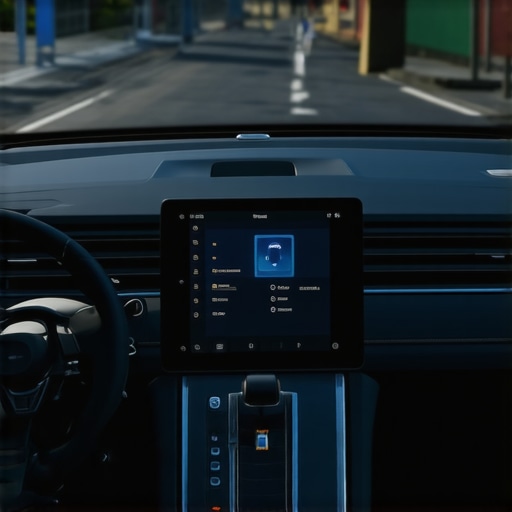
Car insurance companies in 2026 use telematics and API integration to monitor firmware updates and autonomous software versions in real-time. If an OTA update increases vehicle horsepower or changes braking distance, the premium adjusts to reflect the new actuarial risk and loss-cost probability immediately. The carrier is not just insuring the hardware. They are insuring the logic. When Tesla or Rivian pushes a patch that alters the sensitivity of the Advanced Driver Assistance Systems (ADAS), the underlying risk changes. The insurer views a vehicle with Version 11.4 software differently than a vehicle with Version 11.5. This is because the probability of a ‘phantom braking’ event or a failure to detect a trailer changes with the code. If your policy has a ‘software-defined vehicle’ clause, you might be paying more for your insurance the moment you click ‘Install’ on your dashboard. Most consumers ignore the notification. The insurance company does not. They see the change in the vehicle’s kinetic potential and the shift in the manufacturer’s liability. The cost is often buried in a ‘technological parity’ fee. It is a silent tax on innovation.
“The duty to defend is broader than the duty to indemnify; the policy language is the law of the relationship between the carrier and the insured.” – Contractual Law Maxim
Why your car is a software subscription
The hardware of your vehicle is static, but the capability is fluid. This fluidity is an actuarial nightmare. Traditional underwriting relies on historical data. Software-defined vehicles create a future where historical data is obsolete every six months. I have reviewed internal memos from major carriers that describe the ‘Autonomous Gap.’ This gap is the period between a software update and the accumulation of enough road data to prove the update is safe. During this gap, the insurer raises the rate to cover the unknown. They call it a ‘predictive volatility surcharge.’ It is a blunt instrument. It penalizes early adopters of safety technology. If your car gets a new ‘Smart Summon’ feature, the insurer calculates the probability of a low-speed collision in a parking lot. They do not wait for you to use the feature. They charge you for the existence of the feature. The policy language is shifting toward ‘usage-based’ risk, but the truth is it is ‘capability-based’ risk. Your premium is no longer a fixed cost. It is a variable expense tied to the manufacturer’s development cycle.
| Feature Update | Estimated Premium Impact | Actuarial Reason |
|---|---|---|
| Performance Boost (OTA) | +12% to +18% | Increased kinetic energy and risk of high-speed impact. |
| Full Self-Driving Beta | +25% to +40% | Unknown liability shift between driver and manufacturer. |
| Advanced Collision Avoidance | -5% to -10% | Reduced frequency of low-impact claims. |
| Entertainment/Gaming Unlock | +3% to +5% | Increased driver distraction potential while parked or idling. |
The actuarial math behind the algorithm
Insurers are now employing data scientists who specialize in forensic code analysis. They look at the delta between software versions. They are looking for the ‘ghost in the fine print.’ I recently analyzed a case where a claim was denied because the owner had opted out of a critical safety update. The policy had a clause requiring the ‘maintenance of all manufacturer-recommended digital safeguards.’ By ignoring the update, the owner breached the contract. The carrier argued the accident was preventable. They won. The court ruled that in the era of the software-defined vehicle, an unpatched car is a defective car. This is a terrifying precedent for anyone who values their privacy or their autonomy. It turns the insurance carrier into a digital enforcer. They are no longer just a safety net. They are a partner in the manufacturer’s ecosystem. They want the car to be as predictable as possible. Humans are unpredictable. Code is supposed to be predictable. When the code fails, the carrier looks for a way to subrogate the claim against the manufacturer. If the manufacturer has a ‘hold harmless’ agreement with the owner, the owner is stuck in the middle. The owner loses. The carrier wins.
“Insurance companies must ensure that the use of external data sources and algorithms is not unfairly discriminatory and complies with existing state laws regarding transparency and accountability.” – NAIC Model Bulletin on Artificial Intelligence
The hidden liability in the code
When you sign your 2026 renewal, you are likely agreeing to a data-sharing mandate. This mandate allows the carrier to pull logs from the vehicle’s central compute unit. They are not just looking at your speed. They are looking at how often the system had to intervene to save you. They are looking at the ‘disengagement’ rate. If you disengage the autopilot frequently, the insurer assumes you are a high-risk driver. They assume the software is safer than you. This is a fundamental shift in the concept of individual responsibility. The machine is the benchmark. The human is the outlier. The forensic reality is that every button press is recorded. Every software glitch is logged. If you have a claim, the adjuster will not just look at the skid marks. They will look at the timestamp of the last firmware handshake. They will check if the LIDAR was calibrated. They will check if the cameras were obscured. If any of these digital requirements were not met, the ‘Full Coverage’ you paid for becomes a legal fiction. You are left with a pile of scrap and a massive legal bill.
- Review the ‘Electronic Maintenance’ section of your policy for mandatory update requirements.
- Verify if ‘Performance Unlocks’ are classified as aftermarket modifications.
- Check the ‘Subrogation Waiver’ regarding manufacturer software errors.
- Inquire about the ‘Digital Depreciation’ of software-locked features after an accident.
- Demand a disclosure of what telematics data is being shared with third-party underwriters.
- Analyze the ‘Cyber Exclusion’ to see if a vehicle hack is covered under comprehensive.
The three words that kill a claim
The most dangerous words in a 2026 policy are ‘Unapproved Software State.’ This covers everything from a third-party app to a missed security patch. I have seen carriers use this to deny total loss claims. They argue that the vehicle’s value was diminished by the ‘unauthorized’ state of the software. It is a clinical, cold-blooded way to reduce a payout. In cities like San Francisco or Austin, where autonomous fleets are common, the local courts are seeing a surge in ‘Software Bad Faith’ lawsuits. The carriers are fighting back with complex jurisdictional arguments. They claim the ‘loss’ occurred in the cloud, not on the road. It sounds like science fiction. It is actually a calculated legal strategy. They want to move the battleground away from consumer-friendly state laws and into federal arbitration. This is why you need a legal insurance rider that specifically covers ‘algorithmic disputes.’ Without it, you are bringing a knife to a laser fight. The carrier has an army of engineers. You have a brochure. The math is not in your favor. It never was.
The truth about full coverage in 2026
The concept of ‘Full Coverage’ is a mathematical fiction designed to sell premiums to the uninformed. In the Balkans, the lack of standardized earthquake endorsements in older Sarajevo builds creates a systemic risk, but in the United States, the ‘Software Gap’ is the new systemic risk. If you are driving a car that receives updates, your coverage is in a constant state of flux. You must treat every update as a new insurance event. You must call your agent. You must ask if the ‘Firmware Version 12.0’ is an approved risk. If they cannot answer, you are at risk. The industry is moving toward ‘per-mile, per-version’ pricing. It is the only way the actuarial models can survive the volatility of modern tech. The carrier lied when they said your premium was fixed. They just forgot to tell you that the car they insured no longer exists. It was replaced by a new car the moment you downloaded that last patch. Welcome to the future of indemnity. It smells like ozone and looks like a line of code you can’t read.
Leave a Reply