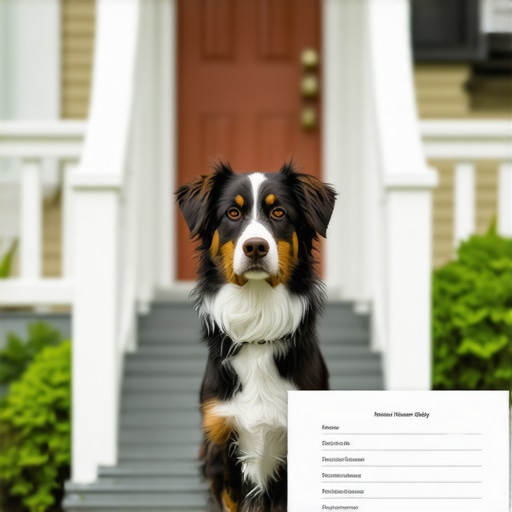
I spent a week deconstructing a high-net-worth policy after a fire. The owner thought they were fully covered until they realized their guaranteed replacement cost had a cap that was set in 2012 dollars. During that forensic audit, I discovered something even more damaging. A three-word animal liability exclusion buried in the manuscript endorsements rendered their fifty thousand dollar umbrella policy useless. They owned a Presa Canario. The carrier knew it. The broker missed it. The math of insurance is cold, clinical, and entirely indifferent to your emotional bond with a pet. I have seen the same cold logic applied to business insurance and car insurance, but homeowners coverage is where the most visceral contract betrayals happen. When an underwriter looks at your backyard, they do not see a family member. They see a mobile, biological liability asset with a statistical probability of triggering a six-figure claim. Your premium is not a reflection of your dog’s behavior. It is a reflection of the actuarial loss-cost modeling for that specific genetic lineage. Insurance is a game of risk transfer. If the risk is too high, the price follows or the coverage vanishes.
The actuarial reality of your backyard
Dog breed classifications impact homeowners insurance premiums because carriers use historical loss data to predict future claims severity. Statistical trends show certain breeds are involved in more frequent and expensive litigation. This forces underwriters to raise rates or exclude specific animals to protect the carrier’s solvency and loss ratio. The math of the bite is simple and brutal. According to the Insurance Information Institute, dog-related injuries accounted for over one billion dollars in homeowners insurance claims in a single year. The average cost per claim has risen nearly one hundred percent over the last decade. This is not because dogs are getting more aggressive. It is because medical costs are skyrocketing and the legal insurance environment has become increasingly predatory. Carriers do not care if your Pit Bull is a therapy dog. They care that the average settlement for a bite from that breed exceeds the pure premium collected over a lifetime of the policy. In the world of best insurance practices, the carrier must maintain a combined ratio below one hundred. Every dollar paid out for a canine attack is a dollar that threatens the stability of the entire risk pool. [IMAGE_PLACEHOLDER]
The math of canine risk
Carriers use loss-cost development factors to determine which breeds represent a threat to their underwriting profitability. These calculations analyze the frequency of attacks and the severity of the resulting injuries. High-severity breeds are often placed on a prohibited list to prevent catastrophic liability losses that exceed standard policy limits. When we talk about health insurance or car insurance, we deal with known variables like age and driving history. Dog liability is more volatile. A dog bite is not just a medical event. It is a legal event. In states with strict liability laws, the owner is responsible for damages regardless of the dog’s prior behavior. This creates a vacuum where the carrier has no defense. They are forced to pay. To mitigate this, underwriters look at bite force, territorial instincts, and historical litigation data. The following table illustrates the typical risk profile that underwriters use to categorize animal exposure.
| Breed Category | Risk Level | Typical Premium Impact | Coverage Status |
|---|---|---|---|
| Restricted (Pit Bull, Rottweiler) | Extreme | 15 to 40 percent increase | Often Excluded |
| Intermediate (German Shepherd, Husky) | High | 5 to 15 percent increase | Requires Inspection |
| Standard (Labrador, Golden Retriever) | Low | Negligible | Standard Coverage |
| Low Risk (Beagle, Pomeranian) | Minimal | None | Automatic Inclusion |
The silent exclusion in the fine print
The animal liability exclusion is a contractual provision that removes all coverage for damages caused by specific breeds or all animals. These endorsements are often added during policy renewals without significant notification to the policyholder. Failing to identify this exclusion can lead to a total loss of personal assets during a lawsuit. I have seen clients lose their homes because they assumed their liability coverage was comprehensive. It is a mathematical fiction. Most people think they have the best insurance because their agent was friendly. In reality, the policy language is the law of the relationship between the carrier and the insured. If your dog is on the prohibited list, you are essentially self-insuring.
“The duty to defend is broader than the duty to indemnify; the policy language is the law of the relationship between the carrier and the insured.” – Contractual Law Maxim
This means even if you win the case, you are responsible for the legal fees. In some cases, the carrier will not even provide a defense attorney if the breed is explicitly excluded in the binder. This is why a forensic audit of your policy is not an option. It is a necessity. You must look for keywords like canine exclusion, limited liability for animals, or specific breed endorsements. If you see these, your protection is compromised.
The subrogation trap you didn’t see
Subrogation occurs when an insurance company pays a claim and then sues the responsible party to recover the costs. In dog bite cases, the carrier may pay the victim and then pursue the dog owner personally if the policy terms were violated. This can result in a legal insurance nightmare for the pet owner. This is the forensic truth that brokers rarely discuss. Even if the victim is a friend or family member, their health insurance carrier will likely subrogate against your homeowners policy. If your policy has a breed exclusion, your own carrier will deny the claim. Then, the health insurance company will come after your personal assets. They will look at your savings, your equity, and your future earnings. The carrier’s goal is to minimize their net loss. They have entire departments dedicated to finding reasons to deny a claim based on the failure to disclose a high-risk animal during the application process. This is why honesty is the only path to indemnity. If you hide the breed of your dog, you are committing material misrepresentation. This voids the entire contract. You are not just losing dog coverage. You are losing your entire homeowners protection.
The strategy for the uninsurable owner
Insuring a restricted breed requires a shift from standard market carriers to excess and surplus lines. Specialized canine liability policies offer carved-out protection that covers the animal independently of the primary homeowners policy. This strategy ensures that a dog-related incident does not trigger a total financial collapse. To navigate this, you must follow a strict audit protocol. Do not rely on your agent’s verbal assurance. Get everything in writing.
“Insurance contracts shall be interpreted according to the plain meaning of the words, but ambiguities are often construed against the drafter to protect the reasonable expectations of the insured.” – ISO Regulatory Standard
Use the following checklist to audit your current liability exposure.
- Review the declarations page for any form numbers starting with HO 24 or similar animal-specific codes.
- Verify if your state follows the One-Bite Rule or Strict Liability statutes to understand your legal baseline.
- Check the definition of insured premises to ensure coverage extends to parks or public spaces where the dog may travel.
- Compare the cost of a standalone animal liability policy versus the premium hike on a standard HO-3 form.
- Ask for a written confirmation from the underwriter that your specific breed is accepted and covered under the current liability limit.
While most people think a higher premium means better insurance, the truth is that carriers often raise prices on loyal customers while stripping away silent coverage in the fine print. This is especially true in regions like Florida or California where the insurance market is in a state of constant flux. In those areas, a dog breed can be the excuse a carrier needs to non-renew a policy they already view as too risky due to wildfires or hurricanes. You are not just a pet owner. You are a risk manager. Treat your policy like the legal battlefield it is. Analyze the math. Read the endorsements. Protect your capital. The carrier will not do it for you.