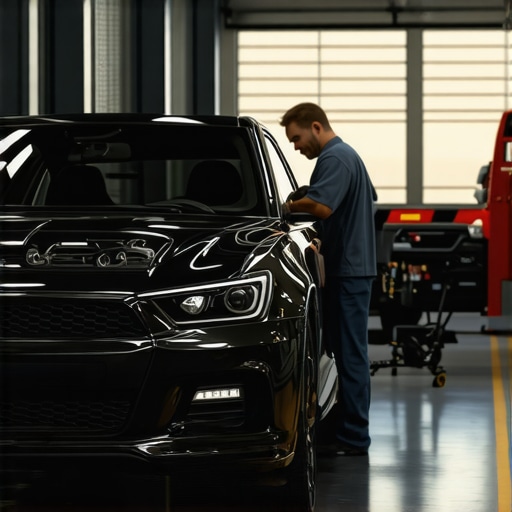
I spent a week deconstructing a high-limit auto policy after a high-speed collision involving a structural total loss. The owner thought they were fully covered until they realized their like kind and quality clause allowed the carrier to use salvage-yard suspension components on a vehicle with only 5,000 miles. This is the reality of the modern insurance market. The carrier is not your friend. The carrier is a risk-mitigation machine designed to minimize the cost of indemnity. When you file a claim for a damaged bumper or a crumpled hood, the adjuster is looking at a spreadsheet. They see two numbers: the cost of a factory-original part and the cost of a knockoff manufactured in a facility with zero oversight. They will choose the knockoff every single time unless you have built a contractual fortress around your vehicle. This guide is for the person who refuses to let their car become a graveyard for cheap steel and plastic.
The fiction of like kind and quality
Like Kind and Quality (LKQ) is a contractual standard that allows insurance carriers to replace damaged components with non-OEM parts or used salvage parts. To bypass this, you must demonstrate that the aftermarket part is not functionally equivalent in terms of fit, finish, and structural safety performance.
Insurance adjusters worship the acronym LKQ. It is their shield against paying the actual cost of a proper repair. From an actuarial perspective, the carrier views your vehicle as a depreciating asset. They argue that because your car is three years old, installing a brand-new factory fender would result in betterment. They claim you would be in a better position than before the loss. This is a mathematical lie. A factory fender is part of a designed crumple zone. It is made of specific alloys with predictable deformation rates. A cheap aftermarket fender often uses inferior grade steel. It might look the same to a layman, but in a second collision, it will not perform the same. The carrier saves four hundred dollars while you lose the structural integrity of your vehicle. You must understand that the policy is a contract of adhesion. You did not negotiate the terms. You simply accepted them. This gives you certain legal advantages when the language is ambiguous. If the carrier cannot prove the aftermarket part is truly equivalent, they are failing their duty to indemnify.
“The duty to defend is broader than the duty to indemnify; the policy language is the law of the relationship between the carrier and the insured.” – Contractual Law Maxim
The hidden endorsement that guarantees steel
An OEM parts endorsement is a specific policy add-on that mandates the use of Original Equipment Manufacturer components for all covered repairs regardless of the vehicle age. Without this endorsement, most standard policies defaults to the cheapest available alternative that meets basic cosmetic standards.
Most brokers will not mention the OEM endorsement. It adds a small amount to your annual premium, perhaps thirty to fifty dollars. For the broker, it is extra paperwork for a negligible commission. For the carrier, it is a liability. It forces them to pay retail prices for parts instead of wholesale prices for junk. You must audit your declarations page. Look for terms like “Original Equipment Manufacturer Coverage” or “Repair Standard.” If those words are absent, you are at the mercy of the adjuster’s budget. In states like Texas or Illinois, the law provides some protection, but it usually only requires the carrier to disclose that they are using non-OEM parts. It does not forbid them from doing it. You are signing away your car’s resale value the moment you accept an aftermarket part. When you go to sell that car, a savvy buyer with a paint depth gauge and a flashlight will see the poor fitment of a non-OEM hood. They will see the gap in the shut line. You lose thousands in diminished value because you saved fifty dollars on your premium.
| Part Type | OEM (Original) | Aftermarket (Cheap) | Salvage (Used) |
|---|---|---|---|
| Steel Quality | High-Strength Alloy | Mild or Recycled Steel | Unknown Fatigue |
| Fitment | Precision Engineered | Varies (Gaps Common) | May be Distorted |
| Crash Rating | Manufacturer Certified | Rarely Tested | Potentially Compromised |
| Warranty | Manufacturer Backed | Third-Party Only | None |
Why your carrier hates original equipment
Carriers prioritize aftermarket parts because the profit margins on claims are found in the delta between OEM retail and salvage wholesale prices. Every dollar saved on a radiator or a headlight is a dollar that stays in the carrier’s loss-reserve fund for shareholder dividends.
The math is cold. If a carrier processes one million claims a year and saves two hundred dollars per claim by using cheap junk, they have protected two hundred million dollars in capital. This is why they train adjusters to be aggressive. They will tell you that the aftermarket part is CAPA certified. CAPA stands for the Certified Automotive Parts Association. It sounds official. It is a private organization funded largely by the insurance industry. A CAPA seal does not mean the part is identical to the one that came off the assembly line. It means it is close enough to pass a basic inspection. As a forensic truth-teller, I can tell you that close enough is a dangerous phrase in automotive engineering. Airbag sensors are calibrated to detect specific vibration frequencies and deceleration speeds. If you change the rigidity of the front-end components by using non-spec steel, you are changing the timing of the airbag deployment. You are literally gambling with your life to save the insurance company money. They know this. They just don’t care because the probability of a second crash occurring in the same spot before the policy expires is statistically low.
The legal precedent for structural integrity
Courts have increasingly ruled that insurance companies must restore a vehicle to its pre-loss condition, which includes its safety performance and market value. If an aftermarket part cannot be proven to restore these specific metrics, the carrier is in breach of contract.
You must use the language of the law against them. When the adjuster refuses to pay for OEM parts, ask for the metallurgical report comparing the aftermarket part to the factory specification. They will not have one. Ask for the crash-test data for that specific brand of aftermarket bumper. They will not have that either. Use the term “proximate cause.” Tell them that by installing a non-spec part, they are creating a new risk for which they will be liable if a future failure occurs. This is the only language they respect. They are terrified of bad faith litigation. In many jurisdictions, if a carrier knowingly installs a part that compromises safety, they can be sued for triple damages. You are not just a policyholder. You are a party to a legal agreement. Hold them to the standard of full indemnification. The goal is to make you whole. A car with a knockoff fender and a used radiator is not whole. It is a compromised asset.
“Insurance contracts are interpreted according to the reasonable expectations of the insured at the time of contracting, with ambiguities resolved in favor of coverage.” – National Association of Insurance Commissioners (NAIC) General Principle
Winning the argument at the body shop
Securing OEM parts requires a three-way coordination between the vehicle owner, the collision center manager, and the insurance adjuster to document why aftermarket alternatives are insufficient. You must force the shop to document every fitment issue and structural discrepancy in writing to the carrier.
The body shop is your primary ally or your worst enemy. Many shops are part of DRPs, or Direct Repair Programs. These shops have contracts with insurance companies to provide discounts and use the parts the carrier dictates. Avoid these shops. They serve the carrier, not you. Find an independent shop that specializes in your specific make of vehicle. Tell the shop manager on day one that you will not accept anything but OEM parts. When the adjuster sends the initial estimate with used or aftermarket junk, have the shop manager write a formal supplement. This supplement should state that the aftermarket part interferes with the ADAS (Advanced Driver Assistance Systems) or that the tolerances are outside of the manufacturer’s specification. Most modern cars have sensors behind the bumper and the grille. Aftermarket plastics often have different densities that can cause radar interference. This is your leverage. A carrier cannot force you to use a part that breaks your car’s safety tech.
- Check your policy for an OEM endorsement before a crash happens.
- Demand a written guarantee from the carrier that the aftermarket part is identical in metallurgy and crash performance.
- Avoid Direct Repair Program (DRP) shops that work for the insurance company.
- Invoke the Appraisal Clause if the carrier refuses to pay the difference for factory parts.
- Document the pre-loss condition of your car with high-resolution photos.
The math of a depreciated bumper
The adjuster will talk about depreciation. They will say your bumper was old. They will try to apply a percentage of wear to the part cost. This is a tactic used in commercial property insurance that they have tried to bleed into personal auto. In most states, there is no such thing as depreciation on a repair part for a liability or collision claim. If you need a new bumper to make the car safe, they owe you a bumper. They do not owe you 70% of a bumper. The staccato of their denials is a test of your resolve. The carrier lied. He cited the Like Kind and Quality clause as a mandate. It is not. It is a cost-containment strategy masquerading as a standard of care. You must be prepared to walk away from the negotiation and file a formal complaint with your state’s Department of Insurance. In places like Sarajevo or Belgrade, the lack of standardized earthquake endorsements in older builds creates a systemic risk, and similarly, in the United States, the lack of OEM enforcement creates a systemic risk on our highways. The road is full of cars held together by wishful thinking and cheap imported steel. Do not let yours be one of them.