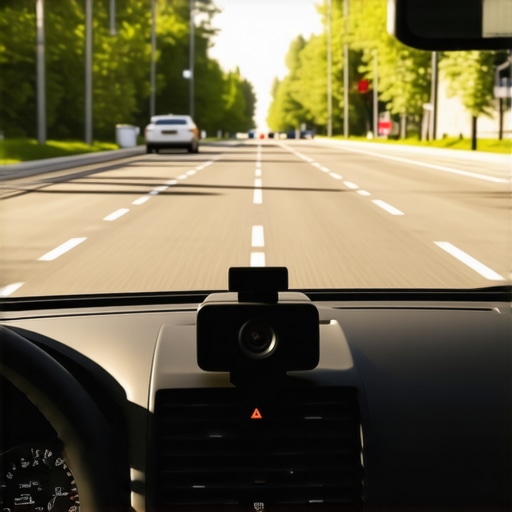
The insurance industry is built on a foundation of shifting probabilities and cold, hard contractual language. Most drivers assume that if someone hits them from behind, the case is closed. They believe the rear driver is always at fault. This is a dangerous simplification. As a forensic underwriter, I have seen thousands of claims where a clear-cut rear-end collision was twisted into a 50-50 liability split because the lead driver lacked objective proof of their own innocence. The dashcam is no longer a gadget for tech enthusiasts. It is a piece of forensic equipment that preserves the truth of a collision against the erosion of memory and the lies of desperate claimants. I watched a client lose their right to recover damages from a negligent contractor because they signed a waiver of subrogation in a simple service contract without realizing they were voiding their own insurance coverage. This taught me that without ironclad evidence, the carrier will always look for the path of least resistance, which usually involves denying your claim or shifting blame onto you.
The mathematical reality of proximate cause
Proximate cause and liability in a rear-end collision hinge on the ability to prove that the trailing vehicle failed to maintain a safe following distance or speed. In a legal context, proving no-fault status requires demonstrating that your actions as the lead driver were predictable, legal, and unavoidable by the party behind you. Dashcams provide the telemetry needed to establish this fact beyond a reasonable doubt. The actuarial math of a crash involves force, mass, and time. If a vehicle weighing 4,000 pounds strikes you while you are stationary at a red light, the dashcam captures the exact moment of impact. It records the absence of any erratic braking on your part. It documents the signal status. Carriers prefer to settle for partial liability because it saves them money on subrogation efforts. A dashcam prevents this by providing a digital witness that cannot be cross-examined or intimidated by aggressive adjusters.
“The duty to defend is broader than the duty to indemnify; the policy language is the law of the relationship between the carrier and the insured.” – Contractual Law Maxim
The ghost in the fine print
Your car insurance policy is a contract, not a guarantee of fairness. Most people think they have the best insurance until they try to use it. Carriers often hide behind vague language regarding driver negligence. If the person who hit you claims you cut them off or slammed on your brakes for no reason, the insurance company will use that ambiguity to reduce your payout. This is where the dashcam becomes a legal shield. It records the minutes leading up to the impact. It proves you did not make an unsafe lane change. It shows that you were established in your lane for a sufficient duration before the hit occurred. Without this video, the adjuster relies on police reports. Police reports are often hearsay. They are based on what people said after the adrenaline of a crash clouded their memory. A dashcam does not have adrenaline. It has a CMOS sensor and a timestamp. It provides the forensic trace needed to force a carrier to accept 100 percent liability.
| Evidence Type | Reliability Rating | Legal Weight in Court | Actuarial Impact |
|---|---|---|---|
| Eyewitness Testimony | Low | Subjective | Variable |
| Police Report | Medium | Hearsay-Heavy | Moderate |
| Dashcam Video | High | Objective Fact | Definitive |
| Physical Damage | Medium | Circumstantial | Inconclusive |
Why your full coverage is a mathematical fiction
Insurance agents love the term full coverage because it sounds safe. In reality, full coverage does not exist. You have limits, exclusions, and conditions. If you are in a rear-end collision in a state like Florida, you deal with No-Fault laws and Personal Injury Protection (PIP). In these jurisdictions, the litigation crisis has reached a boiling point. Carriers are desperate to find any reason to categorize you as partially at fault to avoid paying out over the PIP limit. If you cannot prove your no-fault status, your own insurance premiums will skyrocket. The dashcam is the only way to bypass the system of comparative negligence. It shows that the rear driver was distracted, perhaps looking at a phone or speeding. By capturing the speed of the vehicles around you, the dashcam provides a baseline for the trailing vehicle’s velocity. This data is vital for accident reconstruction experts who need to calculate the Delta-V of the collision. Without it, you are just another file on a desk, destined for a generic settlement that leaves you out of pocket.
The three words that kill a claim
I saw it happen. I saw it. The adjuster said, You were distracted. These four words can end your hopes of a fair recovery. If the other driver lies and says you were on your phone, and you have no evidence to the contrary, the carrier will use that to assign 20 to 30 percent of the fault to you. This is the logic of loss-cost modeling. Carriers want to minimize the total indemnity paid across all claims. A dashcam with an interior-facing lens can prove you were focused on the road. It shows your hands on the wheel. It shows your eyes on the mirror. This level of forensic detail is what separates a successful recovery from a total loss. Business insurance policies for fleets are even more aggressive. They use telematics to track every move. As a private citizen, you should use the same tools to protect your capital. The cost of a high-quality dashcam is negligible compared to the thousands of dollars you lose in depreciated vehicle value and increased premiums after an unfair fault determination.
“Insurance is an agreement whereby one undertakes to indemnify another or pay a specified amount upon determinable contingencies.” – NAIC Standard Definitions
The forensic audit of a crash scene
To win a liability dispute, you must behave like a crime scene investigator. The dashcam starts the process, but you must complete it. Follow this protocol to ensure your no-fault status is undeniable.
- Secure the SD card immediately after the collision to prevent loop-recording from overwriting the footage.
- Check the GPS coordinates and timestamp on the video to ensure they align with the official police report.
- Save the 60 seconds of footage prior to the impact to prove your driving was stable and legal.
- Capture the license plate of the offending vehicle in the video before they have a chance to flee.
- Provide the raw file to your attorney and the insurance adjuster, but keep the original copy in a secure cloud storage.
The regional peril of litigious zones
In regions like California or the Balkans, the legal environment for insurance claims is a battlefield. In California, the pure comparative negligence rule means even if you are 1 percent at fault, your recovery is reduced. In the Balkans, the lack of standardized earthquake endorsements in older builds creates a systemic risk, but in the automotive world, the risk is the lack of institutional trust. Whether you are in Los Angeles or Sarajevo, the dashcam serves the same purpose. It provides a universal language of truth. In high-traffic urban areas, rear-end collisions are often staged. Fraudsters will pull in front of you and slam on their brakes. This is the swoop and squat maneuver. Without a dashcam, you are the hitter, and you are presumed guilty. With a dashcam, you can show the adjuster the fraudulent intent of the other driver. You can show the sudden, unnecessary braking. This turns the tables and allows your carrier to pursue the fraudsters for insurance fraud, protecting your record and your wallet.
The logic of replacement cost vs actual cash value
Proving you are not at fault is only the first half of the war. The second half is getting the carrier to pay the correct amount. If your car is totaled, the difference between Actual Cash Value (ACV) and Replacement Cost is massive. ACV is a clinical, depreciated number. If the carrier thinks you are even slightly at fault, they will negotiate the ACV downward with extreme prejudice. By proving 0 percent liability with dashcam footage, you gain the leverage needed to demand a fair market valuation. You can push for a total loss payout that reflects what it actually costs to buy a similar vehicle in today’s inflated market. The insurance company is a business. They are not your neighbor. They are not on your side. They are a pool of capital designed to remain a pool of capital. Your goal is to force a withdrawal from that pool. The dashcam is the key that unlocks the vault. It removes the variables. It removes the doubt. It makes the truth of the collision a mathematical certainty that no adjuster can ignore.