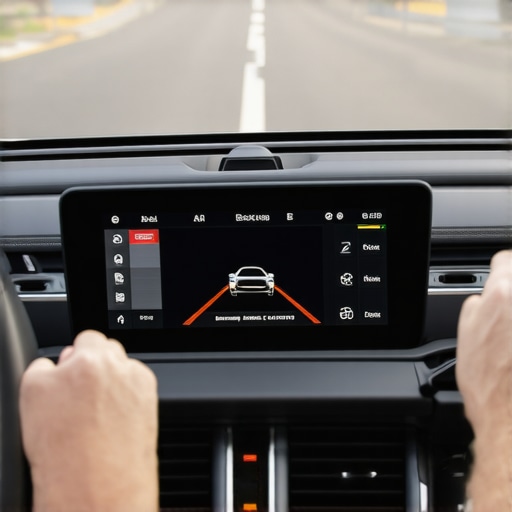
I spent a week deconstructing a high-net-worth policy after a collision. The owner thought their safe driving record meant everything until they realized their telematics data recorded thirty-two hard braking events in a single month. The carrier used this granularity to move them from a Preferred tier to a Standard tier before the renewal notice even arrived. This is the new reality of underwriting. Your car is no longer a machine. It is a forensic witness for the prosecution. When you agree to that five percent discount for installing a tracking app or a plug-in device, you are not just saving money. You are granting a multi-billion dollar carrier the right to build a mathematical model of your mortality and your financial liability. This is the autopsy of the modern insurance relationship.
The myth of the safe driver discount
Car insurance companies use telematics to track hard braking events because these incidents serve as a direct proxy for lack of situational awareness and high-risk behavior. By quantifying deceleration rates exceeding seven miles per hour per second, carriers can predict future loss-cost ratios with 40 percent more accuracy than traditional demographic factors. The industry calls it usage-based insurance or UBI. You call it a discount. The actuarial truth is that it is a surcharge mechanism in disguise. If you do not trigger the sensors, you stay at the baseline. If you do, your premium drifts upward based on a volatility index you never signed. The math is cold. A driver who brakes hard frequently is statistically three times more likely to involve the carrier in a rear-end subrogation claim within a twenty-four month window. They are looking for the bleed before it happens. They are pricing your inability to anticipate traffic flow. Most policyholders believe that car insurance is a static product based on their age and zip code. That era ended with the democratization of the accelerometer.
“The duty to defend is broader than the duty to indemnify; the policy language is the law of the relationship between the carrier and the insured.” – Contractual Law Maxim
The physics of a hard braking event
A hard braking event is defined by the Insurance Services Office as a deceleration rate that suggests a near-miss collision. These events are captured by the onboard diagnostic system and transmitted via cellular link to the carrier servers where they are analyzed against GPS data and weather patterns. When you slam on the brakes, the accelerometer measures the change in velocity over time. A standard stop is gradual. A hard stop involves a G-force spike that suggests the driver was distracted or following too closely. The insurance carrier does not care if a child ran into the street or if you were avoiding a collision. They care about the frequency. To an actuary, frequency equals severity. They use a weighted average. One hard brake in a year is an anomaly. Five hard brakes in a week is a behavioral pattern. This pattern is then fed into a machine learning algorithm that adjusts your risk profile in real-time. This is why your car insurance rates can fluctuate even if you have never had an accident. The data is the accident that has not happened yet. They are charging you for the probability of the metal bending.
How telematics kills the duty to defend
The presence of telematics data in a car insurance policy significantly complicates the legal landscape during a liability dispute. If a carrier can prove through hard braking data that a driver has a history of reckless deceleration, they may use this as leverage during settlement negotiations or to justify premium hikes. Imagine a scenario where you are sued for a multi-car pileup. The plaintiff attorney will subpoena your telematics records. If those records show a history of hard braking, the attorney will argue that you have a habit of negligence. Your own insurance data becomes the primary evidence against you. This is the subrogation trap. The carrier may pay the claim, but they will then use that same data to non-renew your policy or move you into a high-risk pool with a three hundred percent rate increase. They are essentially monitoring your every move to find a reason to limit their long-term exposure. This is not just about car insurance. It is about the fundamental shift in how risk is distributed. We are moving from a collective risk model to an individualized surveillance model where your premium is as volatile as the stock market. This affects business insurance too. Fleet managers now use these tools to fire drivers before they ever have a claim. It is a preemptive strike against the balance sheet.
“Insurance data collection must be transparent, yet the complexity of proprietary algorithms often masks the true impact of consumer behavior on final rate determinations.” – NAIC Underwriting Commentary
The data brokers and the insurance exchange
The information gathered from your vehicle does not stay with your car insurance company. It is often sold to or shared with third-party data aggregators like LexisNexis or Verisk who build a comprehensive consumer risk profile that follows you across multiple insurance lines. This means your hard braking in a Honda could theoretically impact your life insurance or health insurance rates in the future. If the data suggests a high-stress, high-risk lifestyle, every carrier you interact with will see you as a liability. This is the silent erosion of privacy. You are traded on an exchange of risk. The actuarial zooming here is intense. They look at the time of day of your hard braking. Was it at 2 AM? That suggests fatigue or intoxication risk. Was it in a school zone? That suggests a catastrophic liability risk. They are not just looking at the brake pedal. They are looking at your soul through the lens of a sensor. This is why finding the best insurance is no longer about the cheapest price. It is about finding the carrier with the most favorable data privacy endorsement. Most brokers do not even know these endorsements exist. They are too busy selling the slick PR of a friendly neighbor.
| Metric Tracked | Actuarial Significance | Impact on Premium |
|---|---|---|
| Hard Braking | Predicts Rear-End Collisions | 15% to 40% Increase |
| Rapid Acceleration | Indicates Aggressive Driving | 10% to 25% Increase |
| Late Night Usage | Fatality Probability Multiplier | 20% surcharge |
| Cornering Speed | Lateral G-force Risk | 5% to 15% Increase |
The three words that kill a claim
Every car insurance policy contains a section on cooperation and disclosure that can be used to deny a claim if the telematics data contradicts the drivers statement. The words Material Misrepresentation are the most dangerous phrases in the insurance industry when data is involved. If you tell the adjuster you were going forty miles per hour, but the telematics shows you were going sixty and braked hard at the last second, your claim is dead. The carrier will cite a violation of the cooperation clause. They will claim you lied. They will void the coverage. I have seen it happen. A simple white lie to avoid a ticket becomes the basis for a total denial of a fifty thousand dollar property damage claim. The machine does not lie. The machine does not have a memory lapse. It only has a timestamp and a G-force reading. This is why you must treat your car insurance policy like a legal contract under constant audit. The tracking device is a silent deposition. Every time you start the engine, you are under oath. If you do not understand the math behind the sensor, you do not own the policy. The policy owns you.
Strategic Audit Checklist for Policyholders
- Request a copy of your telematics data report annually to check for errors.
- Verify if your business insurance covers telematics-based liability for employees.
- Read the privacy disclosure to see which third parties receive your driving data.
- Check the threshold for what your carrier defines as a hard braking event.
- Evaluate if the five percent discount is worth the potential three hundred percent surcharge.
- Inquire about the right to challenge automated rate increases based on sensor data.
The future of premium volatility
The trend toward real-time underwriting means that the concept of a fixed annual premium is dying. We are entering an era where your car insurance cost could change daily based on your driving performance and the local weather conditions. This creates a massive financial risk for those on a fixed income. It also creates a legal nightmare for legal insurance providers who must now litigate against algorithms. The forensic truth is that insurance is no longer a safety net. It is a behavioral modification tool. If you want the best insurance, you have to be the best driver in the eyes of a cold, unfeeling computer. You have to ignore the urge to drive fast. You have to anticipate every stop. You have to become a robot to satisfy the robot. The cost of human error is becoming too expensive for the insurance industry to bear. They are pricing humanity out of the driver seat. Whether you are looking for car insurance, health insurance, or business insurance, the data is the new currency. Protect it like your life depends on it because your bank account certainly does.